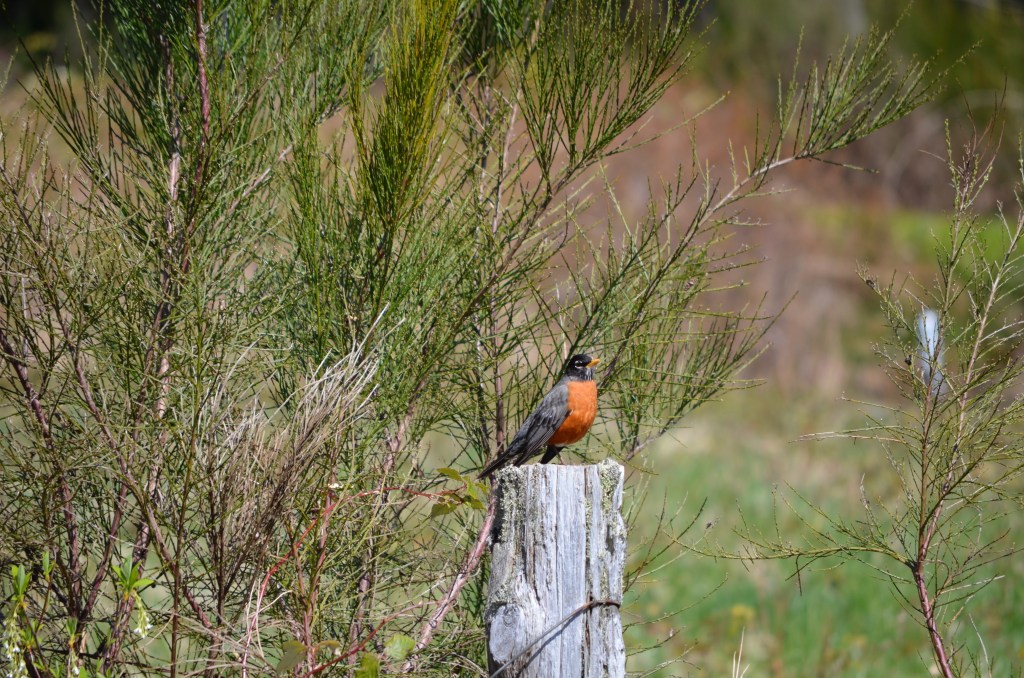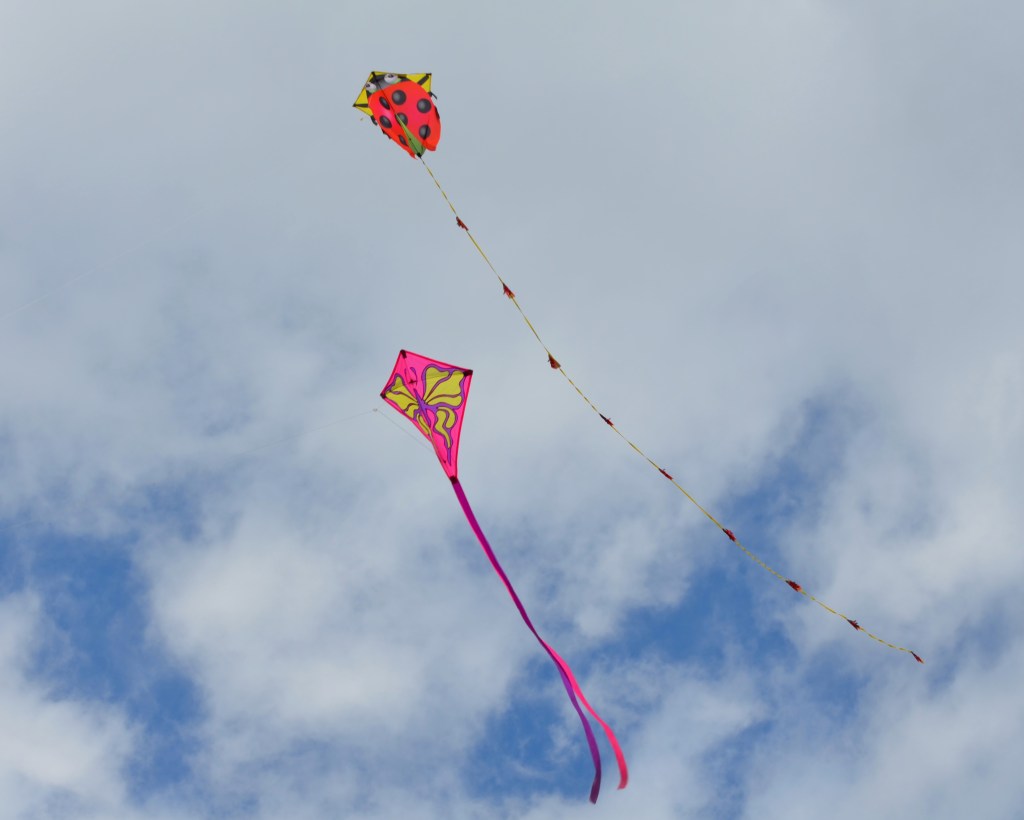
AWE


                                              It is not as important to know as to feel.

                                                                            Rachel Carson

                  We enjoy an annual two weeks on the island of Maui, same time of year, same location, even familiar faces on the beach. I have given up fantasies of climbing Mt. Everest or photographing penguins at the South Pole.  Kahana Sunset, on the north shore of Maui, is my vacation destination.

                  Mornings, before the sun is too hot, I set out for a long walk along the Honoapiilani Road –north one day, south the other. Some mornings I am kept company by an audible book, and this, trip against a backdrop of crashing waves, I am listening to The Power of Wonder by Monica C. Parker.  In the book, she sites social scientists and medical experts to define Wonder and then argues how living with Wonder one’s life is not only enriched but extended. Having recently passed my 80th birthday, I can’t think of a better time of life to visit what space I have for Wonder.  Is there anything new under the sun?  Does a Taylor Swift concert make me drop my jaw in amazement?  I had a Presley, then Beetles youth – Elvis held my hand when I was thirteen.  I have “been there / done that.”  Nonetheless I too want to experience Wonder and foster the habits that might refresh Awe, if not in something brand new, then in experiences renewed. 

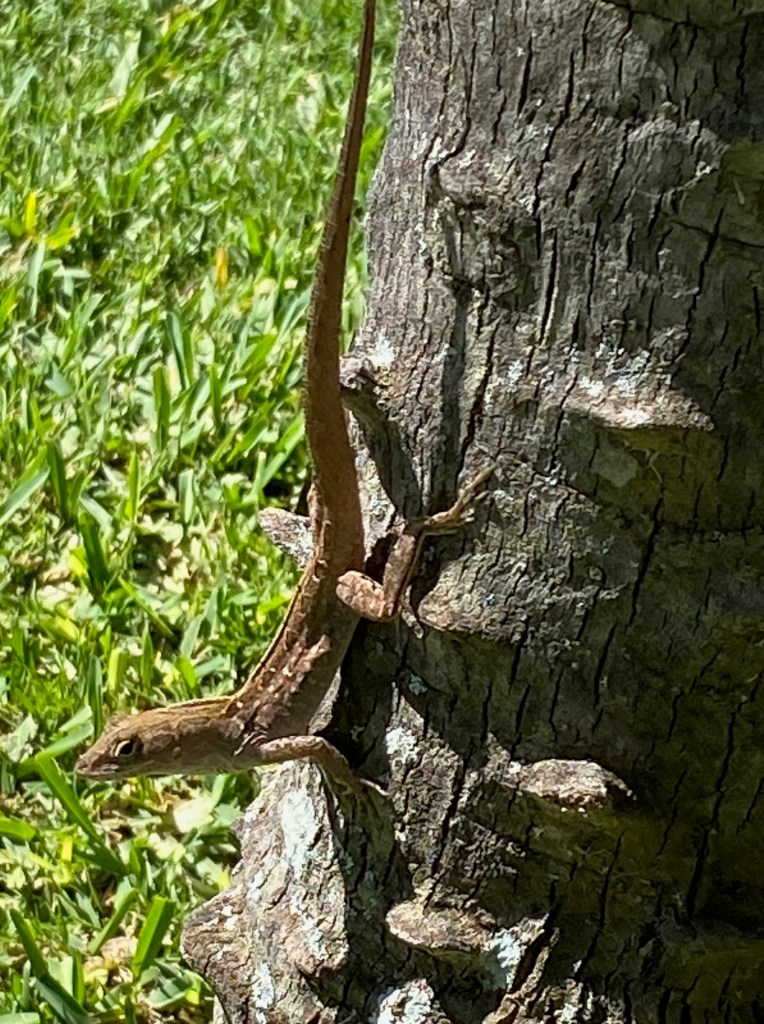
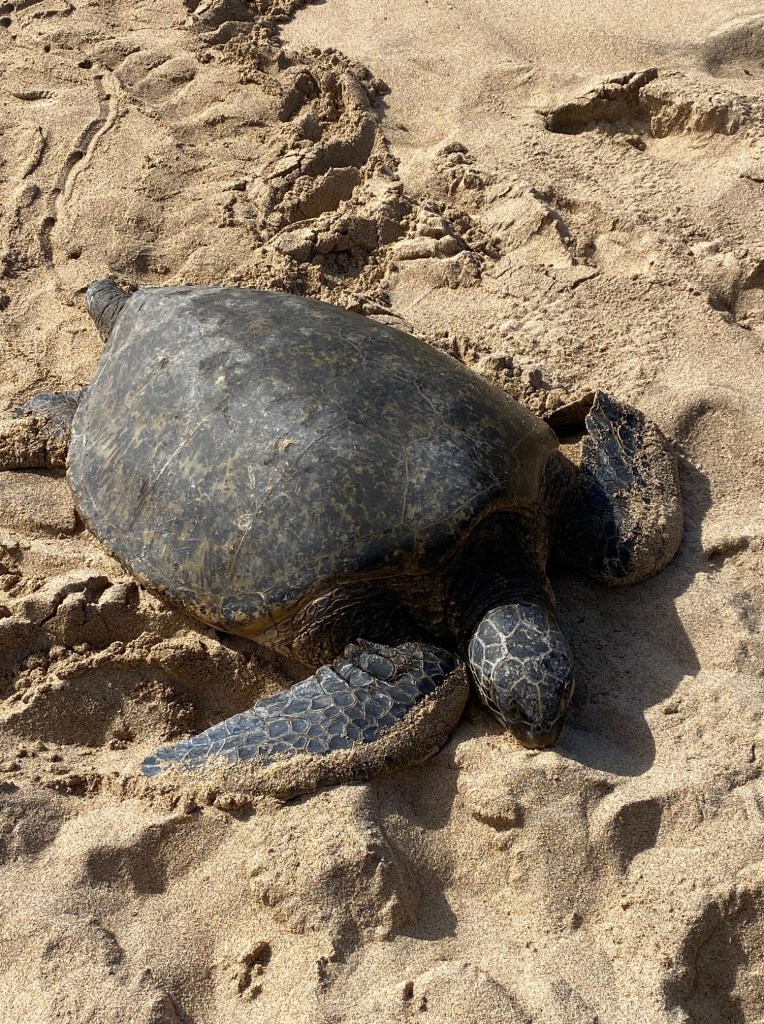
                  Wonder, awe, surprise, amazement are often used interchangeably, but what they have in common is a felt experience not expected, an experience that stops our quotidian existence to express, “Whoa. What’s That?”  It is a pause that can be minute or monumental, a comma or stanza break in our narrative. Here are my Awe-some moments of recent Maui days.  There is that beautiful sunset – every day so far. Coming from cold, rainy Seattle, how can I not Wonder at such beauty?  Looking up from my beach book this morning, I spot a companion — a slender arched gecko poised as a sculpture on the tree trunk beside me. It surprised me, and I tingled with glee as I pulled out my cell phone to capture its pose. 

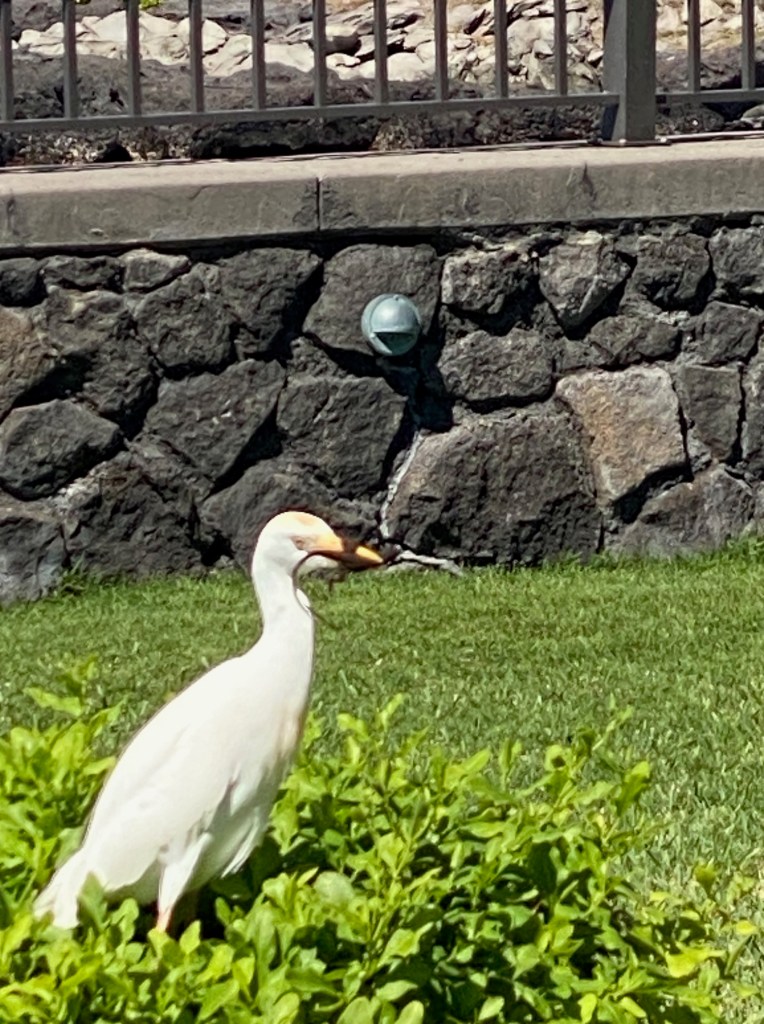
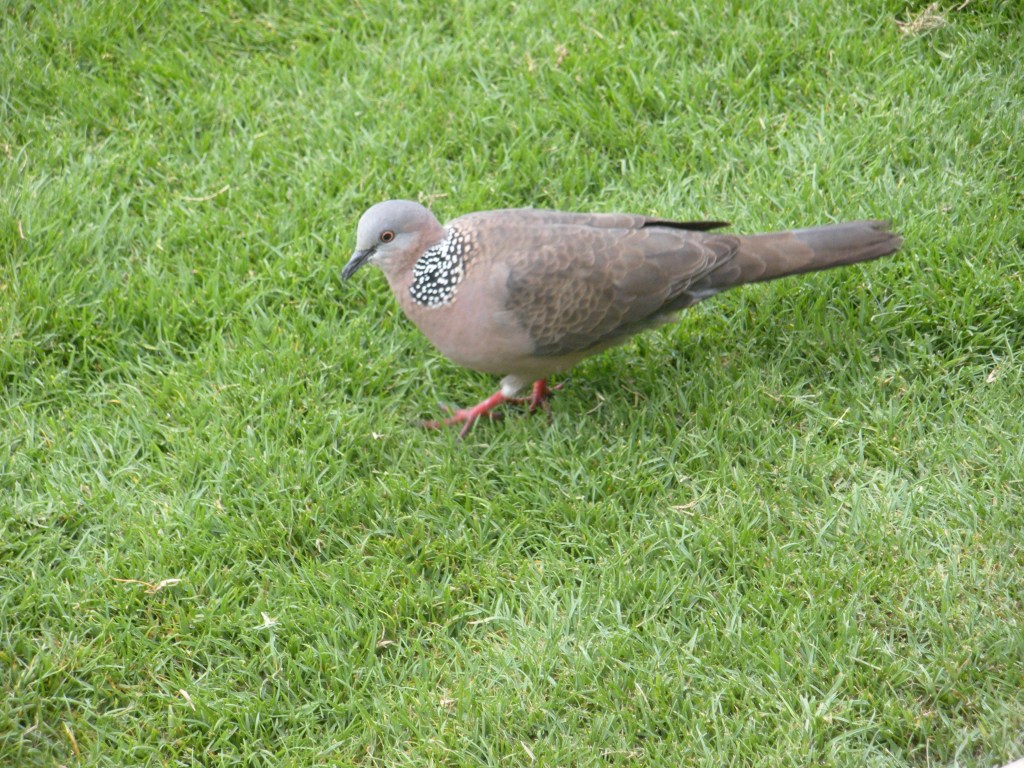
                  On my walk, white wings flew into sight – a graceful egret lit on an adjacent shrub.  it paced as gracefully as a back-home heron walks on tidal flats.  I stopped walking to examine its movement.  A wave-like thing itself, the bird seemed to flick forward then back, its body undulating in grace.  Until it stopped, a sudden arrest, its beak thrust into the hedge and returned erect again, a small gecko its flailing victim.  Yes, everything must eat.  Nonetheless, I had two awesome sightings in a day, and one ate the other!

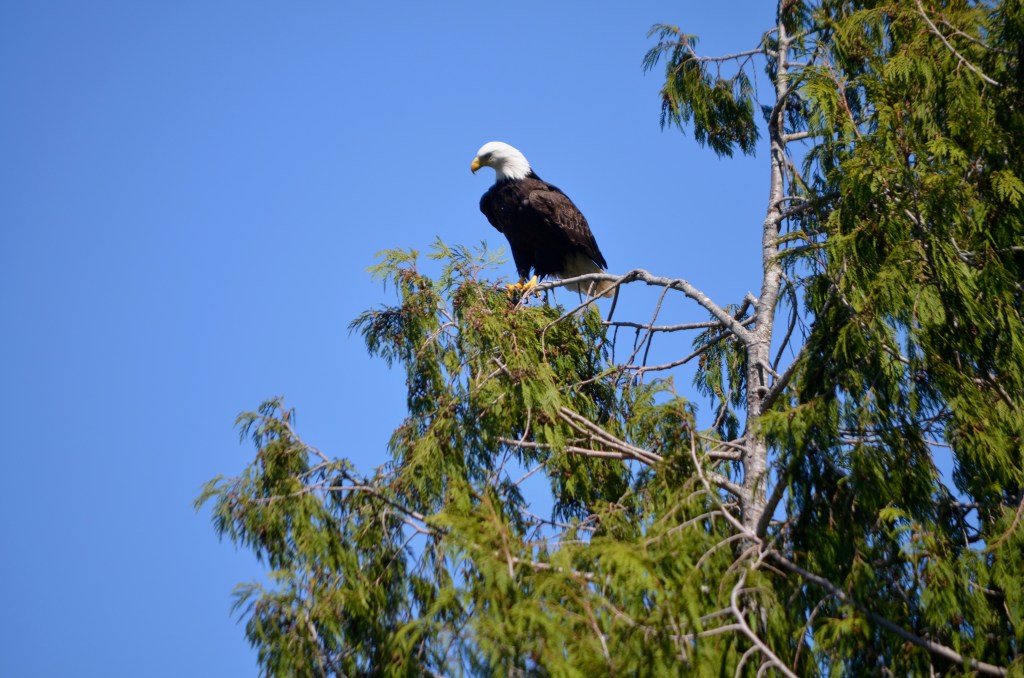
                  I returned to questioning the values of Wonder.  Do we need new experiences to awake us to wonder, and is that the value of travel so we can see the flora and fauna of places unlike home?  Surely those summer sunsets over the snow-peaked Olympics are as beautiful.  From my Hood Canal home I have watched eagles swoop down to Quilcene Bay to fetch a flashing salmon as large as the eagle itself before bringing the meal to a stick-built nest high on top of a Douglas fir.   

                  Monica Parker argues that we must be open to Wonder, for Awe doesn’t fall on closed senses.  When we take adventures we open the doors, we expect surprise.  We pay for surprise.  I wish I could share one of my most memorable photos taken about forty years ago.  The second day of a European trip, we are in Amsterdam with our daughter, then a teenager, who did not want to go with us.  She begged to stay at home so she would not miss out on a few weeks’ summer fun with friends. In the photo, our daughter slumps on a museum bench, legs wide, elbows on knees, cheeks buried in her clenched fists.  Behind her looms the original Van Gogh Sunflowers. She had closed the wonder door.  To be fair, as an adult mom she organized yearly vacations on this continent and beyond so her children, now in their twenties, seek out the wonders of art, music, and travel.

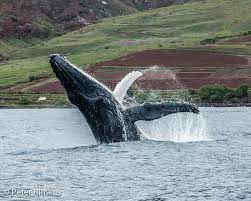
                  Even at eighty, open to learning goes on.  I am among a generation that is making popular neologisms such as Lifelong Learners, acknowledging that folks well past their school years are seeking ways to learn.  Wonder is a fundamental requirement for learning.  After being surprised into a Wow moment having watched a whale breach the waters on the horizon, I am eager to learn more about this annual migration.  I can be an autodidact (one of my favorite words),and hurry my walk back to the condo to do an internet search about whales offshore in Maui. I find many up-close photos of whales and their calves along with explanations of the entire migration, so that my next Wonder moment with these magnificent mammals will fill with educated Awe, like getting the whole cake with the frosting.

                  I will go so far to say that Wonder is contagious.  I recall my days teaching high school English.  After many years teaching required novels, it was hard to find something new in The Adventures of Huckleberry Finn, yet I wanted my students to be engrossed in this pivotal American masterpiece.  Did the fault lie in my inability to ignite my own Wonder year after year?  When I finally adopted  Toni Morrison’s Beloved and taught it to my senior English students, I had more questions than answers.  So much I admired in the book but didn’t completely understand.  The students sensed my questioning engagement.  Teaching that novel was one of the most successful of my career.  I didn’t feel as if I was teaching so much as learning in community with my students. Morrison’s book instilled me with a wonder my students joined.

                  I am barely scratching the surface of Awe and Wonder as I share with you my photos and positive experiences of opening up to the surprising and often unknowable natural world.  Yet today I return to my piece after a conversation with a local Hawaiian who survived the recent, devastating Lahaina fire.  Her condo in a compound of condos was saved.  Her neighbor’s unit was destroyed.  The ravishing fires took lives and homes and streets of one of the most historic towns in the state.  “I never knew fire could move so fast, or snatch one place and not another,” she explained.”  For her it remains a memory of Awe and Wonder.  Just as we were finishing our conversation, the afternoon wind picked up, blowing our hair, making helicopters of dropped leaves around us.  “The wind frightens me,” she said.  “It was windy when the fires started.  I never imagined such wind.”


WITHOUT

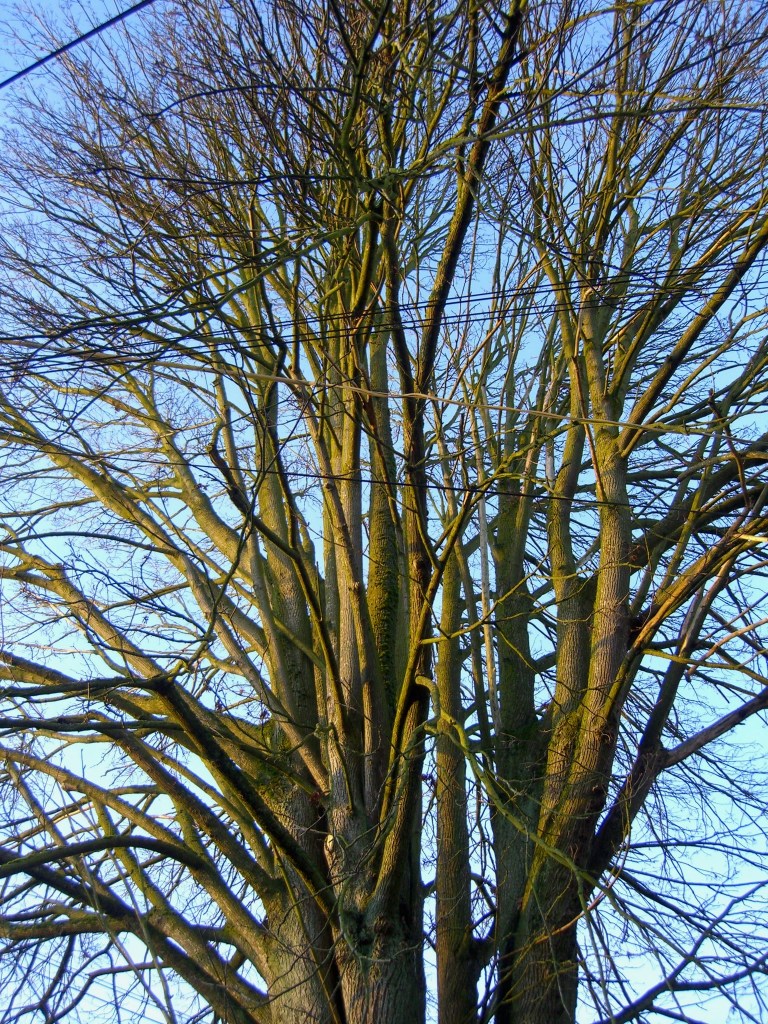
Walking in January, I praise what is absent.  Usually lined with sweet gum trees — a canopy of broad green leaves in summer, large golden leaves in autumn–in January not a stubborn leaf remains on a tree.   It is as if this part of Capitol Hill did a thorough house cleaning, stripping each tree, but for the brownish gray branches.  They reach outwards and upwards, a tangle of geometric limbs, reminding me of Nature’s architecture.  Each limb seems to have purpose as a balance for another on the other side, or an extension from which thinner branches reach out like tendrils to the sun.  Rather than admire a shower of leaves, I note the rounded burls up the trunk, like moss-covered hats.  Thick moss paints itself between heavy limbs that decided to make their own way from a massive trunk.  On this twenty-seven-degree day, surely insects must snuggle in the soft moss.  Grateful for the absence of leaves, I see high in some trees, baskets of crazily assembled twigs and grasses.  Perhaps they are nests for squirrels cleverly camouflaged in other seasons, but out there now vulnerable to winter’s wind.

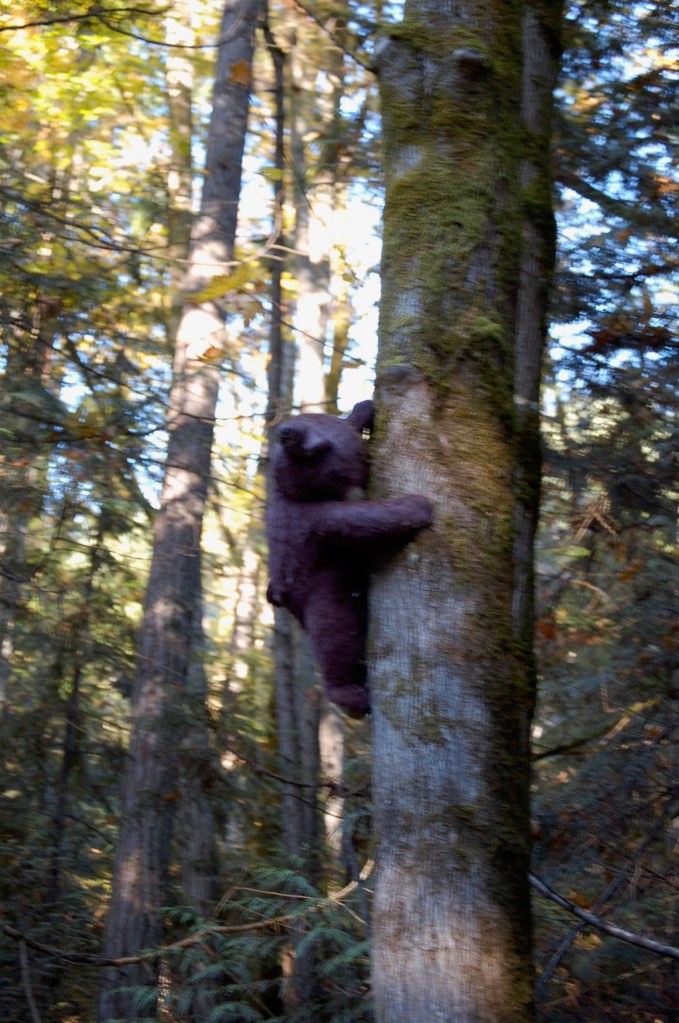
In the absence of abundance, I look for things to note, as if I were in a museum where the major exhibition is closed, and so I take time to view a few treasures I had ignored on other visits.  Last week, a wooded walk on Hood Canal revealed a giant stuffed bear attached to a tree. This morning, it is the angle of the sun on my neighbor’s door.  Although the solstice has passed, and each day may be a bit longer, it is as if the sun barely creeps over the horizon, casting long shadows even at 11:00 AM.  Today the light captured my neighbor’s front door where a Christmas wreath still hangs, a deep black-green circle with a velvet red bow.  Shadows from surrounding leafless trees dance around the wreath.

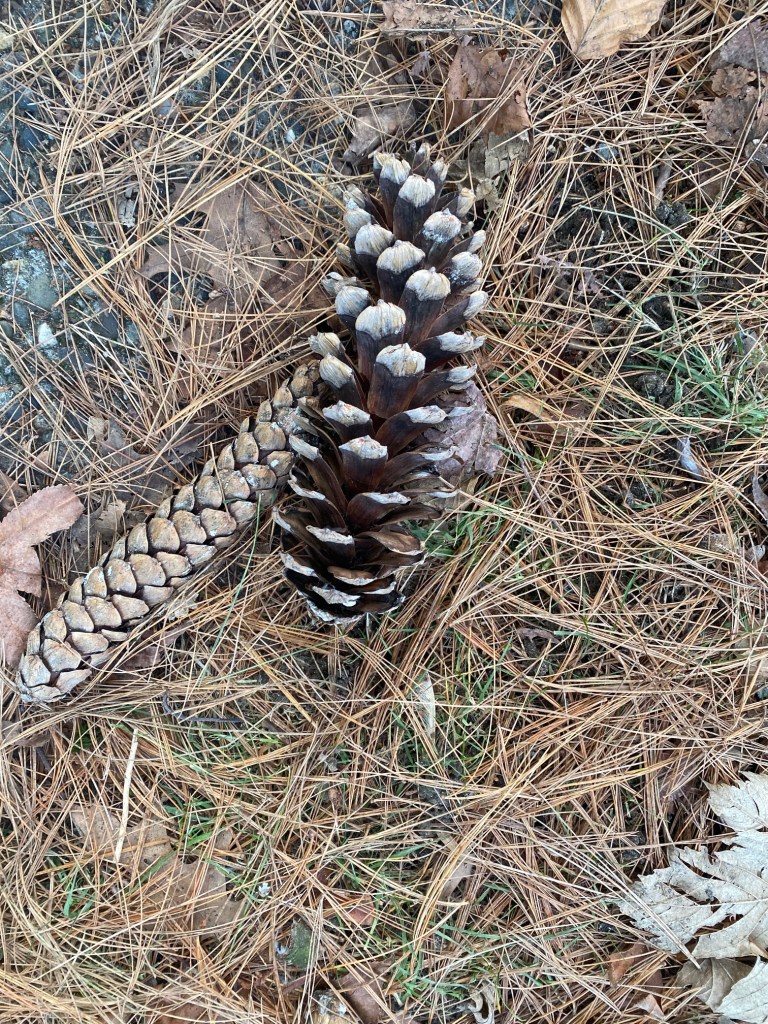
Granted this is a sunny day, uncommon in the Pacific Northwest winter, so sun and shadows grab my attention.  But rain or shine, there is interesting stuff dropped on parking strips and sidewalks.  A gigantic pine tree on the corner drops pinecones as large as ten inches long and three inches wide.  They lie atop a bed of thin dry needles.  Surely they would be a treasure if I imagined a creative use for them.  A friend celebrated Christmas by gathering large cones and stuffing them with suet and peanut butter, then hanging the cones around a park adjacent to her home.  She said her project was her gift to the many birds that winter-over in the woods. 

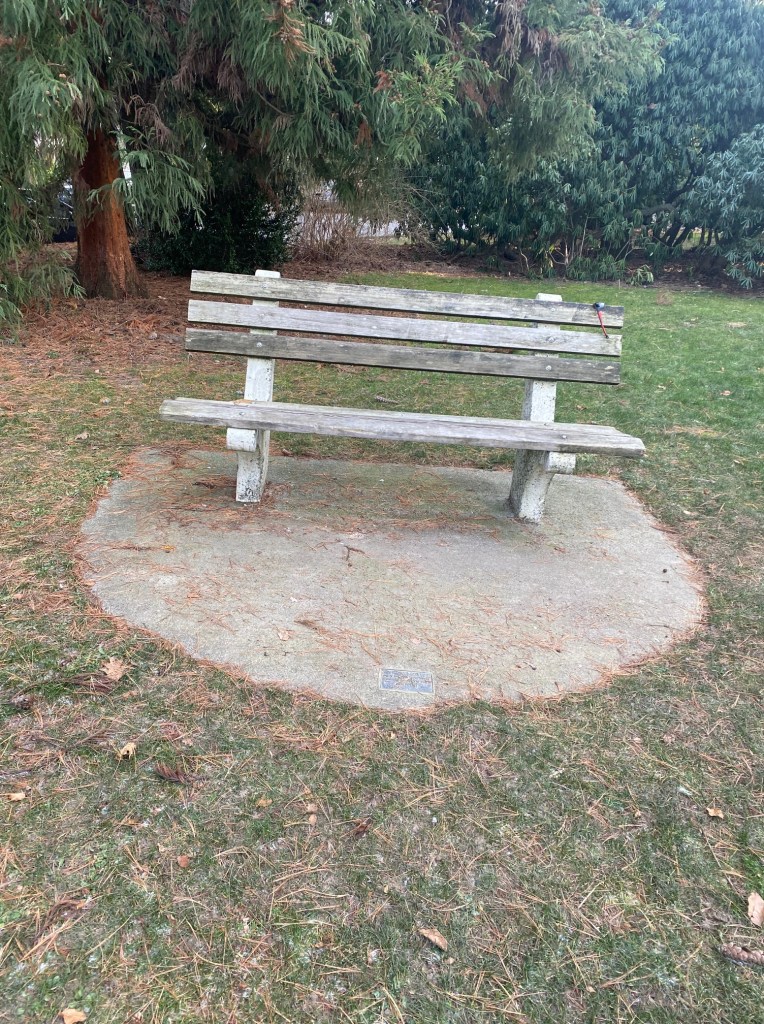
Walking through Volunteer Park, I note park benches and picnic tables without people enjoying them.  In summer they would be full.  There is something poignant about an empty park bench.  Is it waiting to be occupied?  Does it hold a memory of a couple resting there in June, holding hands, planning their future together?  And the playground, too cold for children today.  Iron poles chill a child’s hands.  I recall those warnings we shared in childhood about not putting your tongue on a frozen iron pole, then daring a kid to do it, but fearing consequences if the child accepts the dare.  The playground also remains in Waiting mode. 

Perhaps it is waiting that defines January.  There is no definitive Christmas on the horizon.  Even spring is far off, so waiting becomes waiting for what?  Yesterday my mailbox had three seed catalogs, each with a colorful cover of abundance:  golden carrots, blushing tomatoes, leafy lettuce.  If I fill out the order sheet, will my garden be ready any sooner? In my backyard,  I walk past raised beds where today skeletons of  tomato and pepper plants droop, bowing in submission to the freeze.  There too, a kind of beauty in the plants without fruit.  

At noon, I took a walk with my grandson to have a good, long visit before he returns to New York after his semester break.  As we walked along Prospect Street, an historic avenue of old Seattle wealth and mature maples, I shared with him my attraction to leafless trees. “Sure, Nana,” he agreed.  I have a leafless tree outside my New York apartment.  I love it in November when the last leaves drop.  Inside, I have more light.”  That’s it!  In a month when daylight only lasts seven or eight hours at best, we can feel as if we are deprived.  Yet a tree’s bare branches let the light shine through.

UNHURRIED

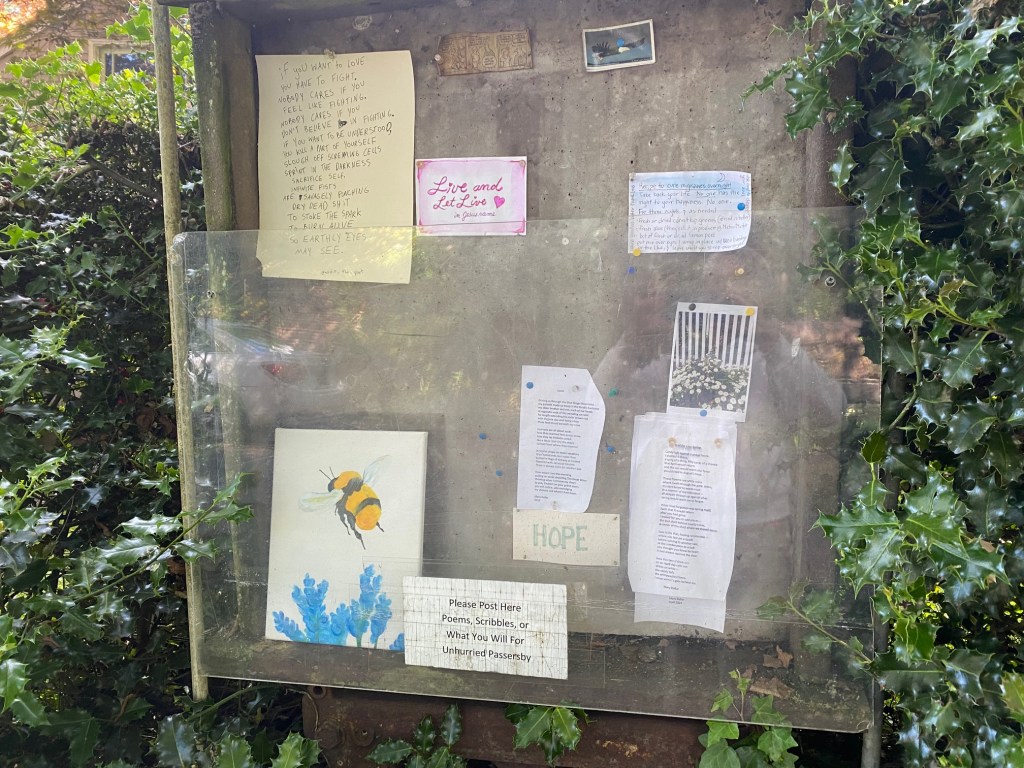
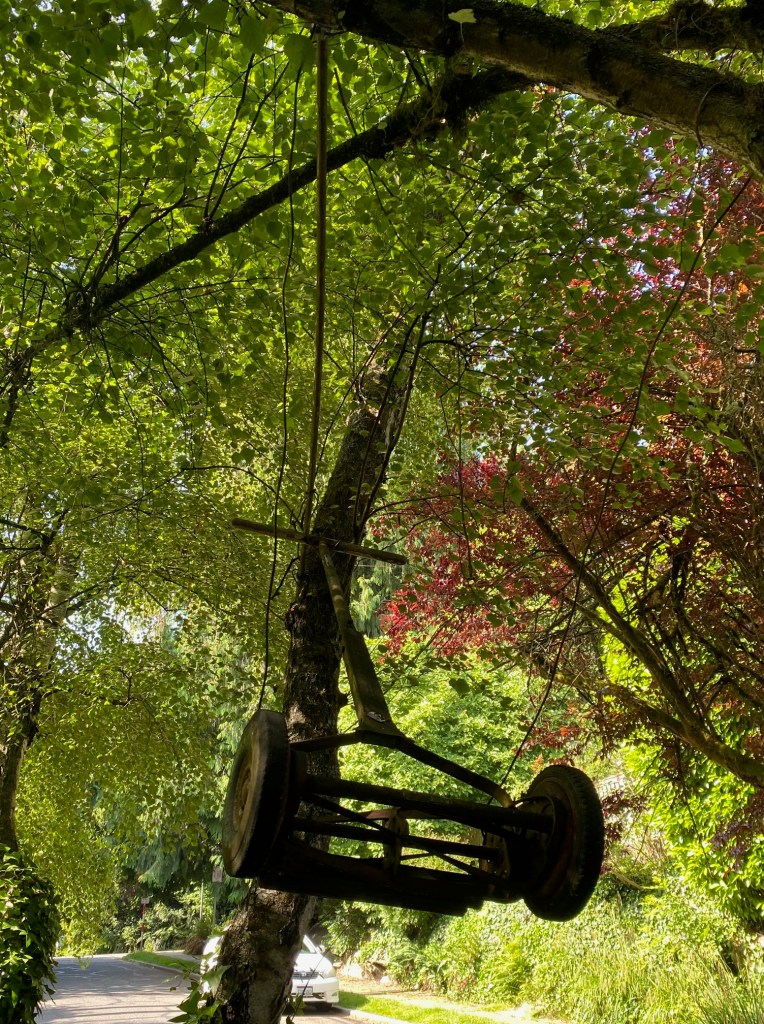
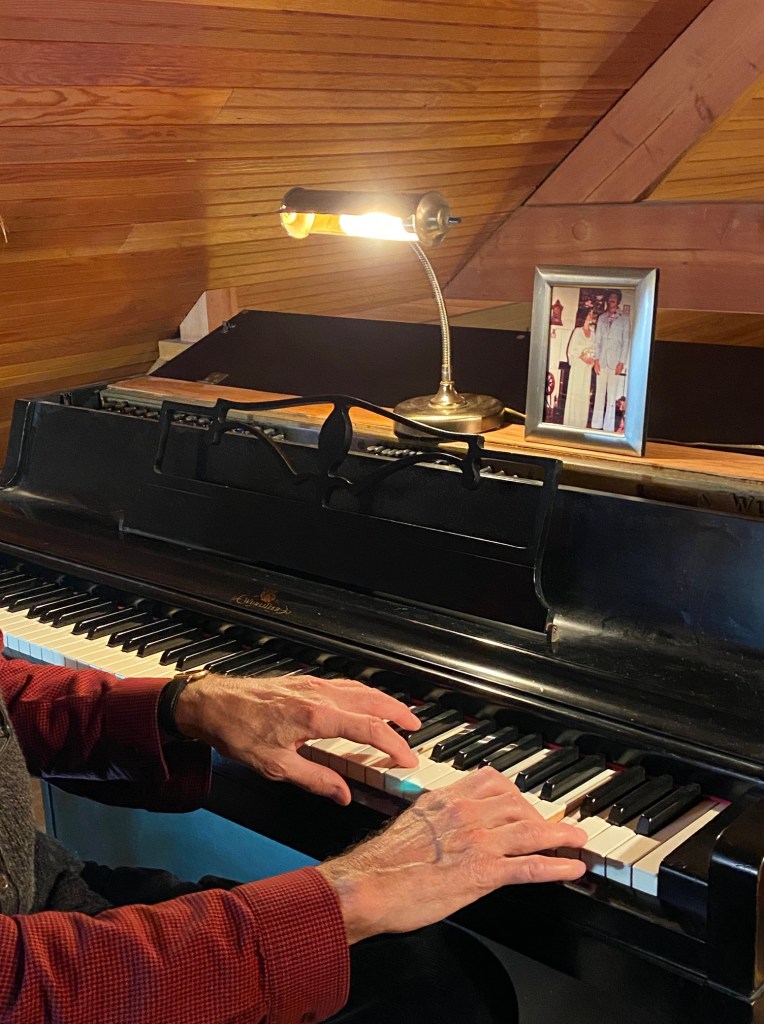
Thursday mornings, I walk down the east side of Capitol Hill for my 8:00 AM piano lesson with Peter Mack, my teacher and friend, who lives in a Tudor home set amidst a lush garden that backs up on the UW Arboretum.   Walking to Peter’s, I pass a residence hidden behind a thick hedge into which is erected a roughly weathered poster-board with a sign: Please Post Here Poems, Scribbles, or What You Will For Unhurried Passersby.  What little is posted there is brief and weather-worn, suggesting whoever tacked it with the available tacks has long since gone their way.  I learned from Peter that the homeowner is Paul, an elderly (my age) gentleman  long retired.  I could have guessed it from other monuments on his parking strip. Hanging from each of two trees: a rusty lawnmower and a flat-tire bicycle.  Both are clearly out of commission.  The passersby may be hurried, but surely Paul has seized full leisure.

To a writer, there is something beseechingly abandoned about a blank surface inviting messages. I feel called to post a poem, much as a graffiti artist is summoned by a blank wall.  Now, a one-time inclination has morphed into an obsessive commitment.  For months, every Wednesday evening, in addition to practicing my piano piece for Thursday morning, I also write a poem to post on my way to or from my lesson.  With each posting, I would take down the poem from the prior week and toss it into the recycle bin always sitting on the parking strip.  That is, I did that UNTIL I met Paul walking out of his gate while I was pushing the fourth thumbtack on my new poem.  He thanked me for posting the poems but continued to scold me for taking them down.  That was HIS job. Besides, I sometimes removed them before he had a chance to read them.  Surely this man is unhurried. After his admonition, I left the poems in place until the entire board was wallpapered with poems by Mary Kollar.  Enough!  Today, I removed them all, stacking them like a deck of cards one on top of the other and returned them in one corner with one nail at the bottom of the board.  Only today’s poem remains dead center.

I have a little contest of wills with Paul.  Who is in a hurry to write, to read, to take down what is posted?  I am the one usually in a hurry, walking crisply up and down the hill, looking straight ahead or a short distance ahead so I don’t fall.  I must have walked beneath that hanging rusted bike and lawnmower for weeks before I noticed them.  Today, I decided to slow down, take longer to get home, enjoy the sun shining warmly on my shoulders – the unhurried passerby.  Up the steep hill home, I stopped for coffee that I sipped on a picnic table outside the Volunteer Park Café.  I wrote in my journal about the puffy haired spaniel leashed to the table where I sat.  I was alone and yet somehow with the other outside patrons and their dogs.

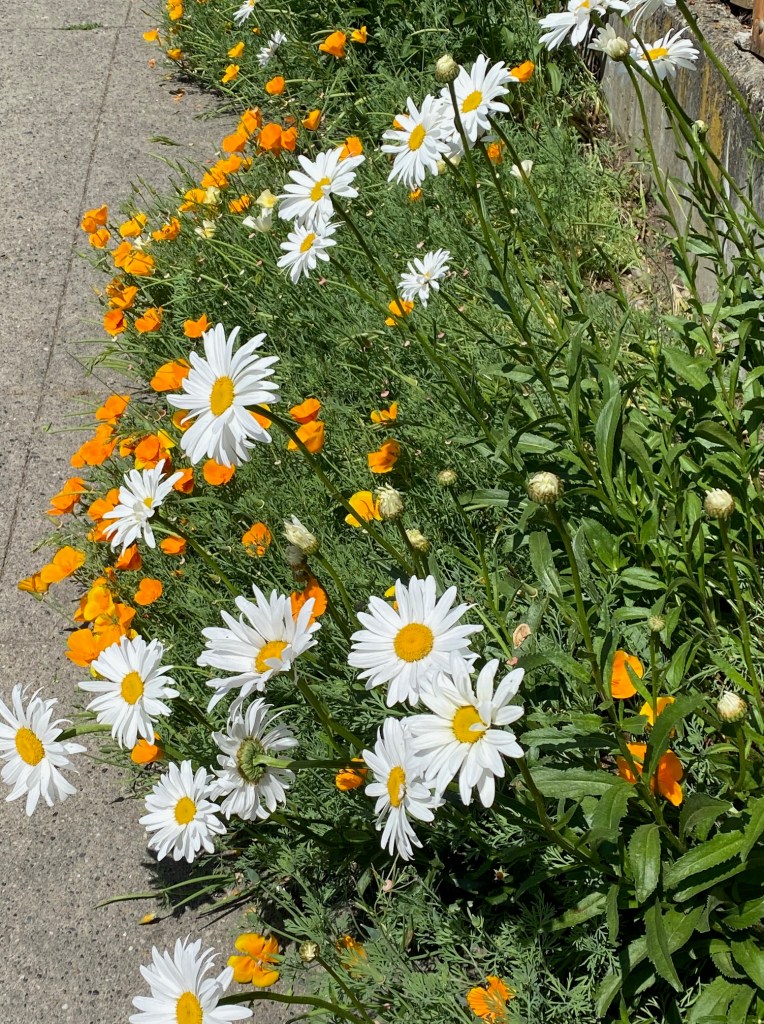
Continuing on up the steep hill, I passed a dense and colorful ribbon of orange California poppies mixed with tall daisies thriving in a narrow strip between sidewalk and property fence.  Two fat bumblebees worked away at the center of an orange flower.  I focused my I-phone camera on their buzzing, while thinking, “Who plants such a bevy of flowers OUTSIDE their backyard fence?  Only someone who wants to share with passersby, not to hoard beauty where only they could see them. “

My stopping to focus the camera blocked the sidewalk from two young women pushing a stroller with three toddlers inside. “Oh my!” I gasped.  “A three-seater cruiser.”  The women laughed, and a child slid from his seat to hold the woman’s hand. He complained of sticky fingers she explained to him came from the pine tree he had climbed in the park.  I imagined his fingers in mine, having taken my grandson to that same park two decades ago.  Three children, two women and I felt like a spontaneous community.

Spontaneous Communities:  How often do we create them at bus stops or check-out lines in a grocery store?   It occurs to me that Paul’s sign is not about slowing down so much as connecting with each other.  Easier perhaps, at a slower pace, but possible within an imagined reach.

FINDING OURSELVES IN TIME

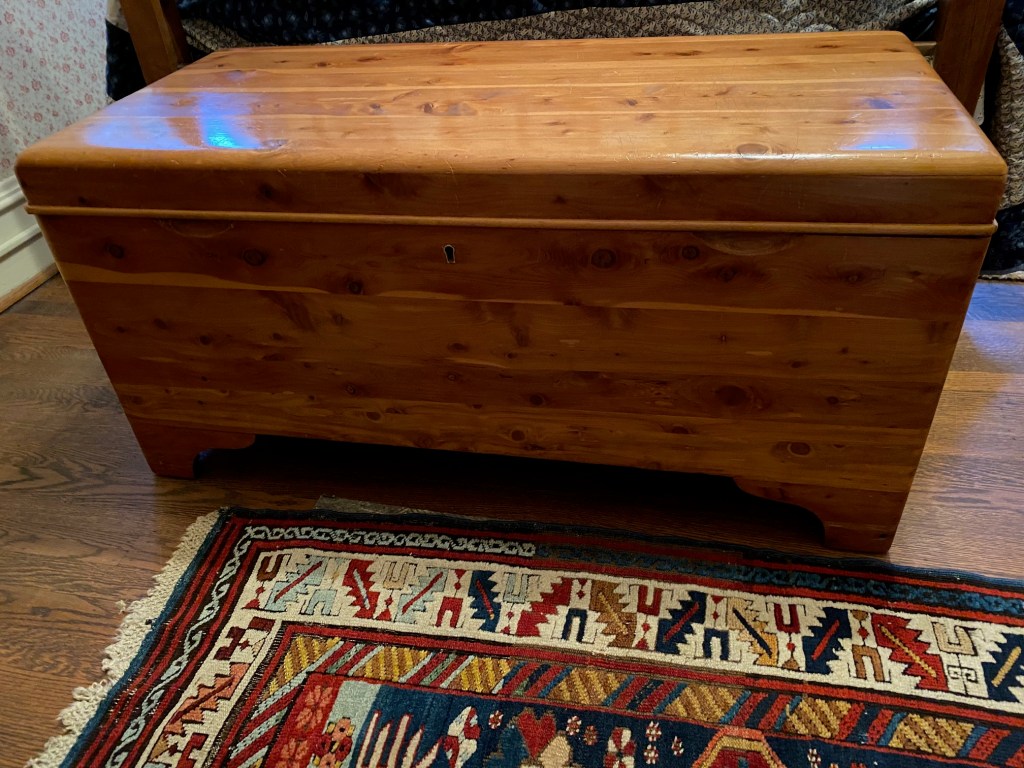
Shortly after my 70th birthday, I began my infrequent blog — https://thoughtsafterseventy.com or Mary’s Room With a View.   My mind has always brimmed with thoughts, each new one elbowing aside the one before it.  I needed a blog, like a hope chest, to drop them in, and, like a hope chest, with a plan that at some future date I would find those thoughts useful, perhaps for self-knowledge.   That metaphor makes me chuckle: Do any of my readers know what a Hope Chest is/was? Footnote: A Hope Chest serves as storage for a young woman, a place where she places linens, housewares, items she would want when she marries.  The underlying motif stands that all young women live on the hope of a married life in which they play the role of homemaker, so good to be prepared, to look ahead with hope.

Age seventy felt like the summit from which one enjoys a view of life lived.  Having climbed the steep grade of decades, I could look down and around, reflect on my ascent and offer a panorama to readers.  After all, my husband once jokingly told a friend, “I married Mary for her opinions.”  For my looks, my intelligence, even for my apple pies would be more welcomed.  In four weeks, I will reach eighty, an age of Acceptance.  Yes, I am opinionated.

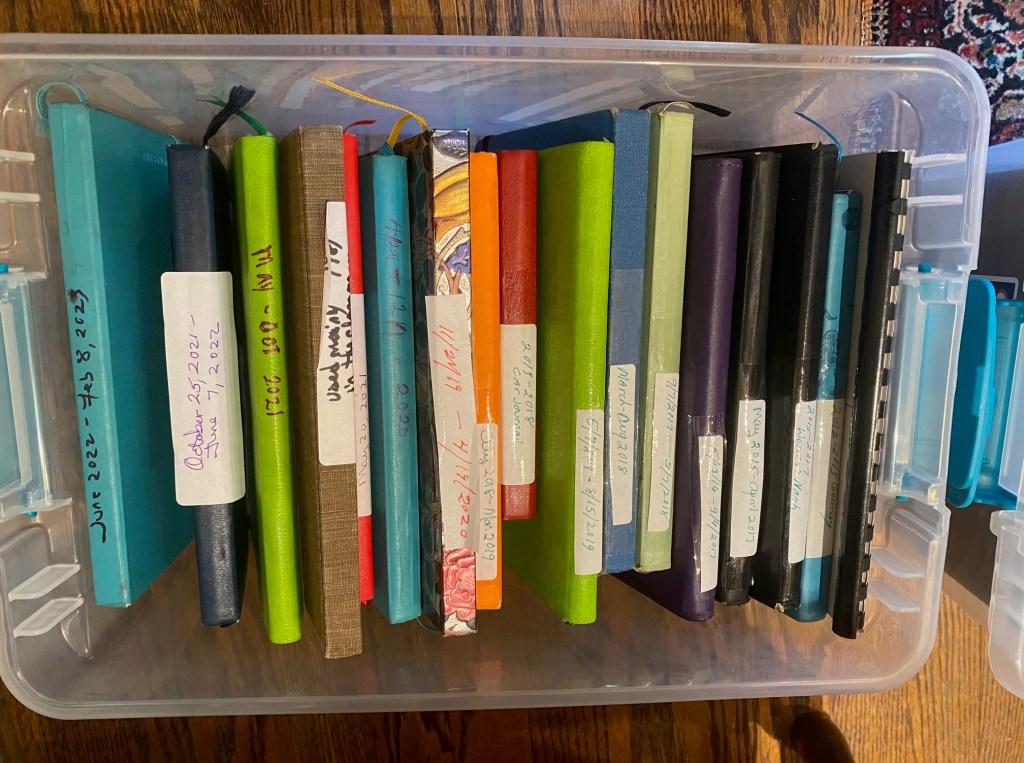
Julia Louis-Dreyfus, in her podcast Wiser Than Me, suggests that those of us over seventy should look back to our earliest memories, walking forward with them so we might value our life’s challenges and rewards.  Two crates of daily journals, and I rarely devote an hour for rereading.  Too busy with “what’s next?”  And if I did return my attention to the first two decades, I believe my journal entries would all long for the future:  How long until I’m sixteen so I can drive, seventeen so I can graduate high school, twenty for a university degree, employment, first marriage (a blind loop in the ascent.)  At some plateau, those thoughts started to turn from anticipation to reflection.  At ten the decade to twenty was distant, and oh if I could scramble up to it faster!  But at eighty?  The next decade? 

Why return to those old journals?  Who I was or am cannot be found there alone.  Yesterday evening, I stood in line for a beverage at Finnriver Cidery – a joyful venue bursting with families enjoying music, good food and cider.  Because my husband and I were early investors in the business, we are treated to complimentary ciders.  I gave my name to the young man pouring drinks.  Instantly I was embraced by a middle-aged woman standing behind me.  Quite surprised, I pivoted. Her eyes filled with tears as she held me:  “Mrs. Kollar and Uncle Al…” she exclaimed, her nickname for my husband informing me that this could only be Sherri T, a former student from 1973 when Allan taught art and I taught English at Bothell High School.

 “You were the hardest teacher I ever had,” she said with no tone of admonition.

Yet I found myself apologizing, “I must have been a bitch!”  Yes, there I confessed that and felt ashamed for swearing, while acknowledging that Sherri isn’t the first former student to say how challenged they were in my classes. 

Sherri would have none of my remorse.  “Oh no.  You were wonderful.  I would get my essays back with so many suggestions like moving a sentence from one place to another, or a question, ‘Have you thought about this, Sherri.?’ You wrote those messages to all of the kids, and it must have taken so much time.   When I had my children, I passed on everything I could remember that you taught me.  They all graduated college.  You don’t know how important you and Uncle Al were in my life.”

I broke from her embrace, insisting she remain while I hurried back to the table where I had left my husband.  He followed me back for the surprise reunion:  two rather wrinkled septuagenarians and a middle-aged woman chatting their way back fifty years. 

Eighty years old, and here I stand near the summit. Where can I find me?  Not in a crate of journals, but in the consciousness of all the people with whom I have shared the breath of the world.

THE YOUNGER GENERATION

            As I nudge my 80th year, the phrase “The Younger Generation” suggests anyone from birth through the 6th decade.  Nonetheless, most folks of my age group consider “The Younger Generation,” to reference those between 15 and 30.  Also common among my peers is a disappointing sigh as the “Senior Citizens” express ideas about this “Younger Generation.”  Sitting next to me on a lawn chair on the Maui beach last month, one woman in my peer group complained, “They never write thank-you notes.”  She continued with a story of her gift to a young woman who works in her condo back home, a twenty-something to whom she gave $100 at Christmas.  “I had to ask her if she received the money,” the woman complained. “And I told her that had she written a thank-you note I wouldn’t have to ask her.” 

            Other complaints about the younger generation include their proclivity for social media, screen time, texting … anything computer related.  Granted, our generation readily turns to our grandchildren to help us Google or upgrade our O.S. (even explain what O.S. is.)  What would we have them do to please us?  Trash their cell phones?  Walk a mile to the library to check out The Hardy Boys?  If a time machine could spin us backwards, would our sixteen-year-old selves be different?  I remember begging my folks for a twenty-foot phone cord so I could snake the line from the front hallway and through my bedroom door where I could then hop up on my bed and chat for an hour or more with friends whom I may have seen an hour ago at school.  Where was my attention?  Certainly not on my parents, least of all my grandparents.

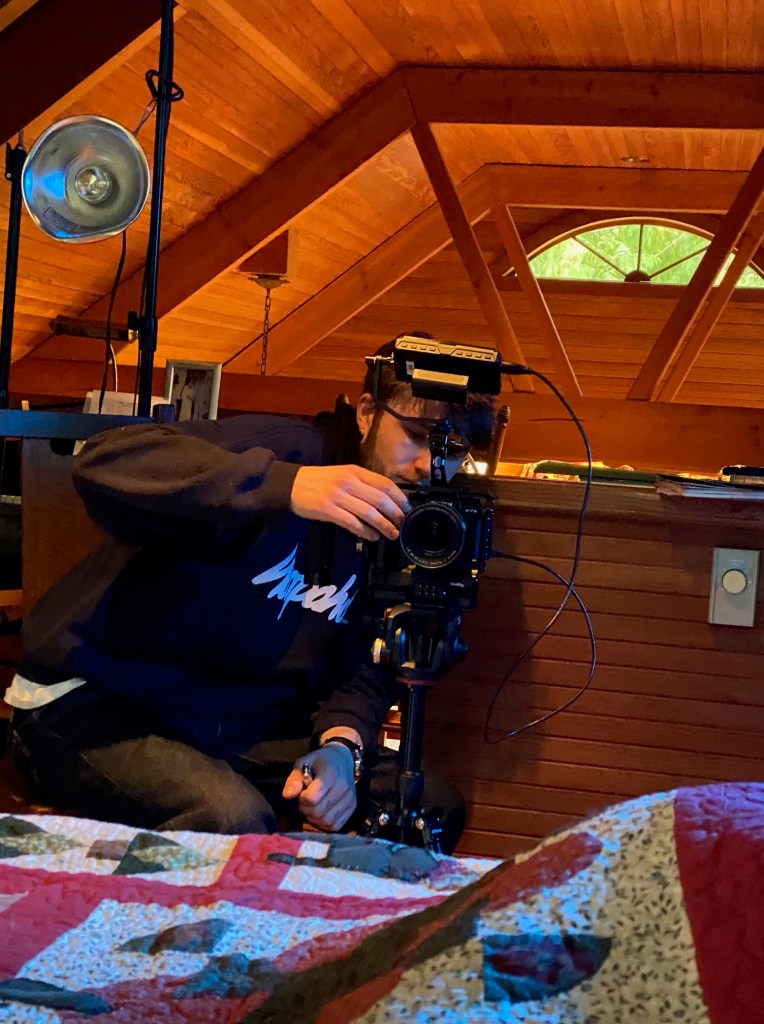
            This weekend, we are at our cottage with our twenty-two-year-old grandson who is making a short film for a class he is taking in college.  Home for spring break, he has only two days to shoot the film that he sets at our cottage with my husband and me as the two actors.  In ensuing days, he will add the sound and edit what might be a five-to-twenty-minute movie. 

            Within minutes of unpacking our weekend groceries, my grandson and my husband had fetched a ladder to ascend to the outside dormer window and drape a tarp over it to black out natural light from the loft bedroom where much of the film’s action occurs.  Chairs, tables, lamps have been moved to suggest separate rooms at distinct times of day and night.

             “Walk consciously”, I tell myself, as I maneuver around tripods holding up lighting flaps with yellow to blue bubs.  I have changed clothes (costumes) several times from nightgown to housedress depending on what scene comes next.  We have moved from walking along East Quilcene Road to throwing mashed potatoes in the compost pile.  Between shots, my grandson races between camera and laptop to judge how the shots will work for color, mood, tone etc.  I have long since given up on what or why he does what he does when turning a lens or adjusting a light.  I do not understand what he sees on the computer or how he coordinates his knowledge of filming to succeed. Around 10:00 PM, my husband and I fall asleep, but my grandson stays awake in his bedroom examining what he has shot thus far, staging in models or on paper what he intends for the next day.  It is not until morning that I check my texts to find one from him: “Nana you were awesome in the dinner scene. “

            Today, my character is acting sleeplessness as her husband character stays up for hours tuning the piano.   My grandson coaches, “It is all through the eyes, Nana.  Don’t move.  Look to my left, at the ceiling.  Yes perfect.  This is all mental rage, no acting.  It will show through your eyes.” He is seeing us through the lens of his camera.  I am watching him through the lens of my love for him since he was an infant who peed on me when I first changed his diapers. 

            I am hearing him.  He is telling me how to act.  He instructs me with all the authority of a movie director.  He is “The Younger Generation,” and about these things, he has much more knowledge than I do.

            At this moment, my husband is acting as the piano tuner in the film.  He hits the same note repeatedly.  From the loft, my grandson’s voice: “Nice job, Grandpa.  That’s sweet!”

Mid-Winter

“In the midst of winter, I found there was, within me, an invincible summer.” (Albert Camus)

If December 21st is the first day of the Winter Solstice, the exact date of Mid-Winter, this year was February 3, 2023, half-way between Winter Solstice and Spring Equinox.  Stopping to note this day is much like my childhood self, plaintively calling from the back seat of our ‘51 Buick ,“Are we there yet?’  My impatience for arrival at a desired destination could be calmed by familiar guideposts along the way.  “We just passed the city limits sign” would suffice.

 In early February, ignoring morning temperatures in the ‘30’s, I seek signs of spring’s arrival.  The trails around the woods are slippery with sodden, decomposing leaves shaken loose from big leaf maples by bitter January winds.  No leaf remains clinging to the tree; the only ones still above my head are cradled in dark cedar broughs.  Death dominates the day from gloomy dawn t0 dusk at 5:00PM.

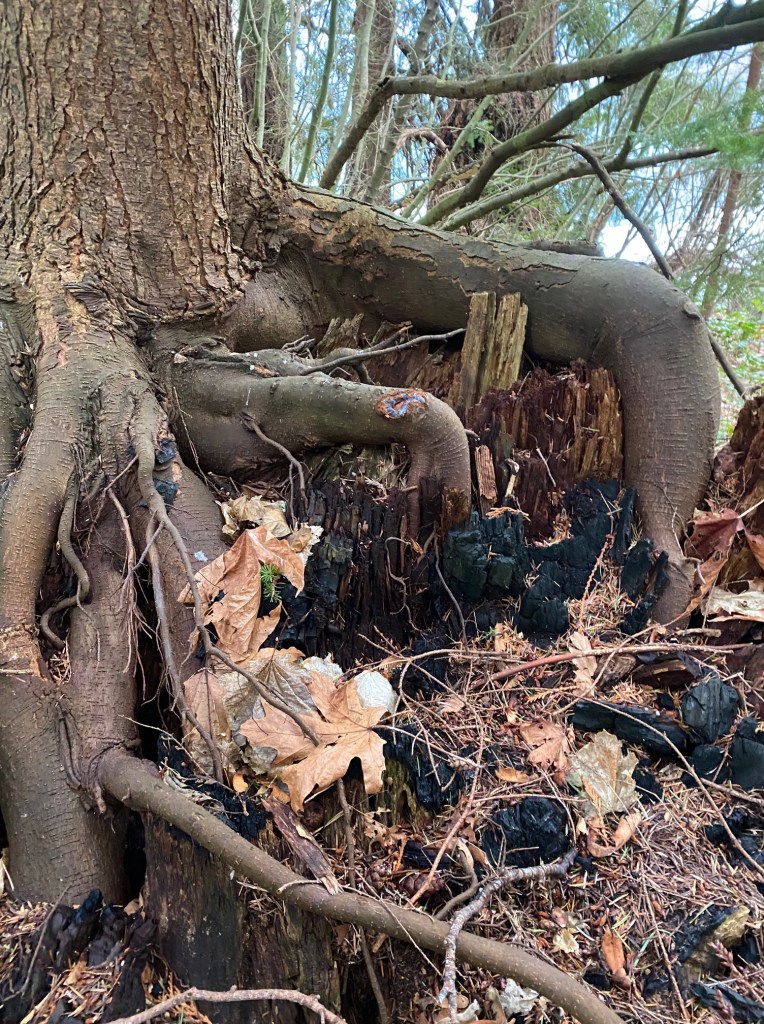
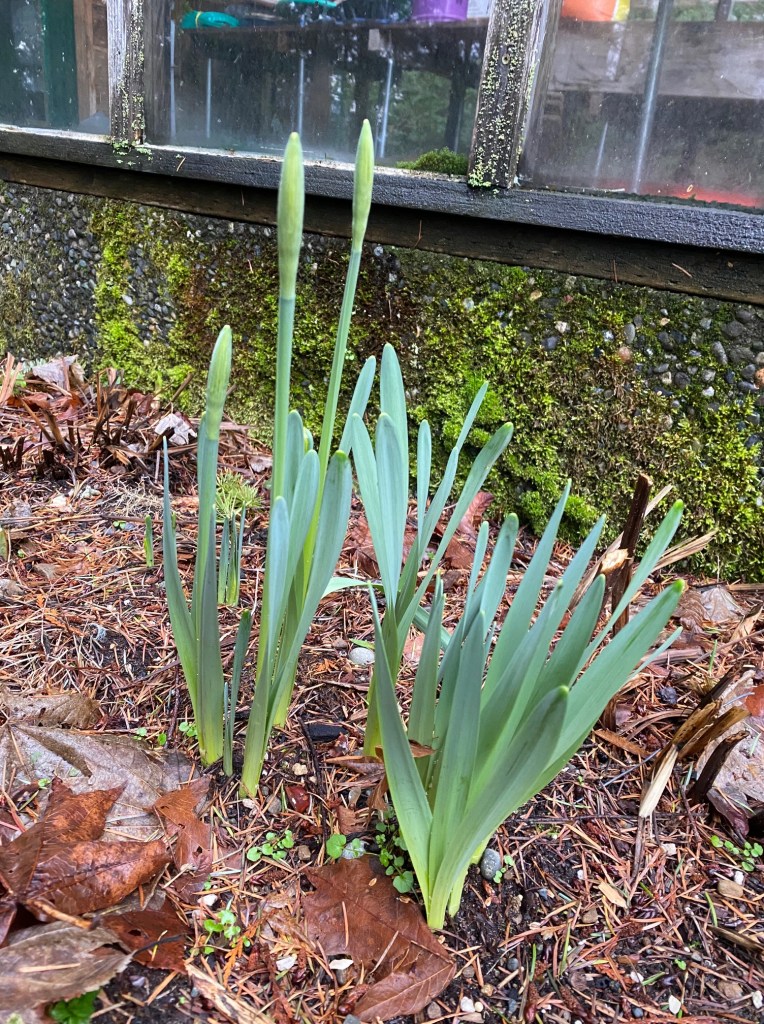
Because I want to “get there” to spring, I comfort myself with Camus’s often quoted  “In the midst of winter, I found there was, within me, an invincible summer.” I make a point of finding life within death in the natural landscape where I am walking.  Decades ago, someone logged the woods where I walk, leaving stumps to die.  But did they die? The stumps continue to decompose from which entwined, serpentine roots of a giant hemlock emerge.   So much for death! Those roots are like a Michelangelo sculpture.  Admiring it, I feel a spring in my step, all the way to the flower border by the greenhouse.  More decomposing leaves and windblown detritus from cedar and pines.  But there, as eagerly  as raised hands, emerge a row of daffodils.  “Oh my!”  I want to worry them back under the leaves, for winter isn’t over yet.  “Don’t jump the gun, young flowers. It is still mid-winter.”  Opposite that flower bed and behind a deer fence is my vegetable garden, frosty and fallow but showing off pink protruding noses of rhubarb.   Spring is undaunted and not far away. We will get there by the signs of the city limits.

And so before returning for morning coffee by the wood stove, I recite Camus’s oft-quoted lines, not only because I spotted OUTSIDE myself the inevitable return of summer in freezing February.  Rather I am engaged with Camus, the man who found WITHIN himself that invincible summer.  Surely, he too could have simply spotted signs of life in death, but he phrases his discovery as one within himself, an act of will.  And it is not just any summer he discovers, but an invincible summer, as if a skirmish had raged before finding summer surviving there on winter’s battleground.  Summer, HIS summer, was invincible.

Here I am marching off to metaphor again, and there is something about my latter years in a world of war and natural disaster when I might be forgiven for raising the white flag of surrender.   But today I find victory in the human will. 

Queen Elizabeth and the Button Box


            My mother was an Anglophile.  With only a rural high school education, she read herself through English history, starting with Sir Walter Scott through Dickens, British history (fiction and non-fiction), until she could recite with ease the lineage of English aristocracy starting with Alfred the Great on down to the reigning Queen Elizabeth.   When meeting someone new, Mother acquired an affected  British  accent.  How the practice embarrassed me until I matured to find it endearing.

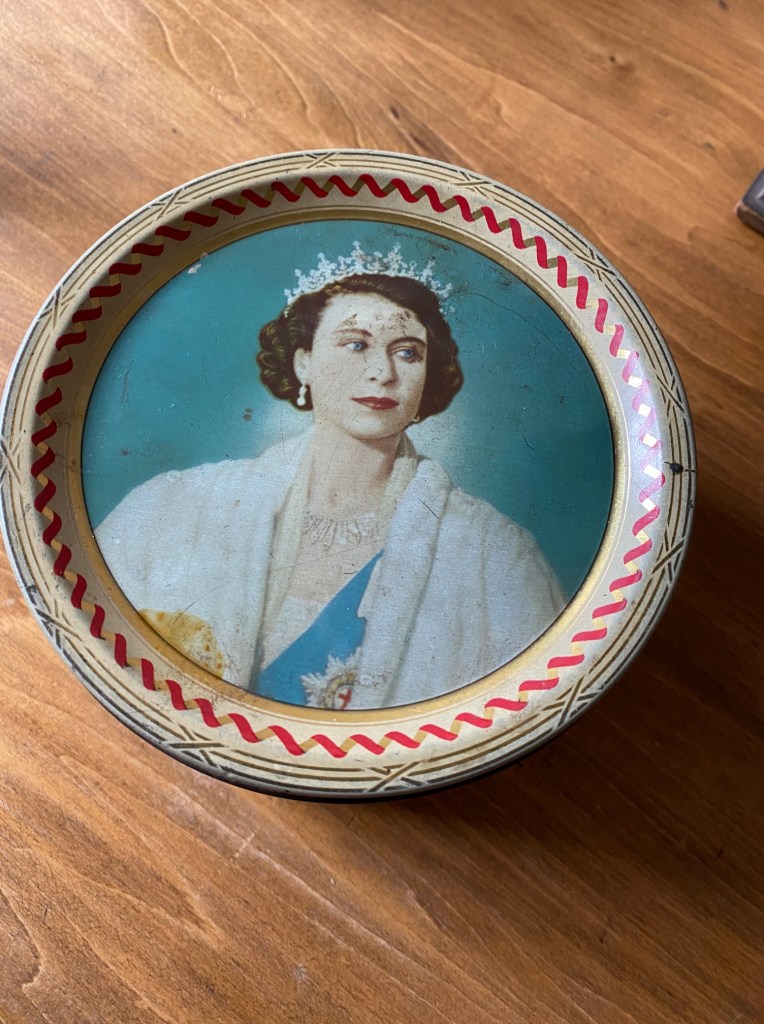
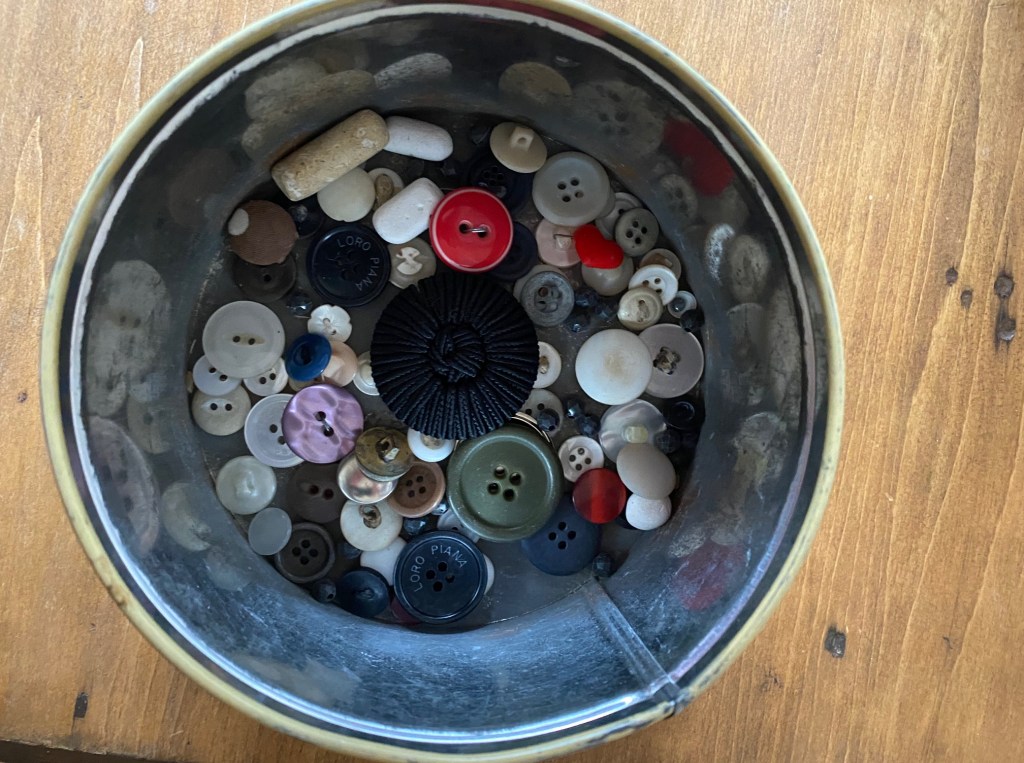
As with all idiosyncrasies of one’s upbringing, I thought her knowledge of the British monarchy was common.  I didn’t question it any more than I found unusual the numerous mugs or dessert plates emblazoned with images of King George or Queen Elizabeth.  They fit perfectly with Beatrix Potter animals lined on the sideboard or ceramic hot plates with Old Fezziwig dancing under the mistletoe. Most of these treasured keepsakes have disappeared, but today, a day after the death of Queen Elizabeth, I take out a tin button box painted with Elizabeth’s coronation picture from the 1950’s.  It had been a tin of Mackintosh toffee, always a favorite, and certainly a treasure the year of the coronation.  Long after the sweets were consumed, Mother used the tin to store errant buttons—buttons lost, buttons saved in anticipation of loss, buttons purchased because they were oh-so-lovely and may someday be of use.  I lift the button box from my sewing basket, shake it for its pleasing sound and admire the photo of the young, newly crowned queen, all the while missing my mom.

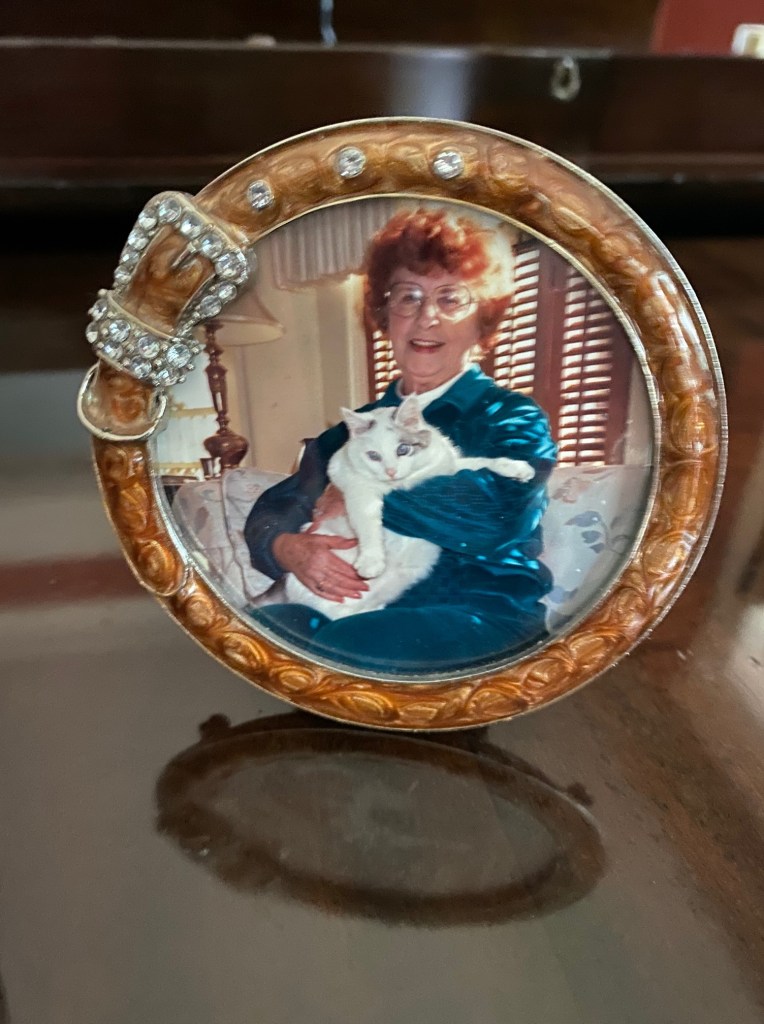
            Mother and I were glued to our small black and white television set for Elizabeth’s coronation.  Elegant and somber, the young queen accepted the heavy crown, its weight Shakespearian in significance.  Crowds swarmed London, a city still darkened in the aftermath of World War II.  Mom and I cheered along.  And years later, then on color television, my attentive daughter would sit with her grandmother, filled with celebratory joy for the wedding of Prince Charles and Diana.  Mother, newly widowed then, recently adopted a white kitten found wandering in the neighborhood whom she immediately named Prince Charles.  Charlie grew fat and affectionate for her until her death.

            “Oh Mom,” my daughter called yesterday,  “Has the queen really died?” Together, my mom, her grandmother, arose in our memories.

            And today, I reacquaint myself with my mother, seeking an explanation for her adoration of the British royalty. On the surface, they could not have been more dissimilar.  My mother grew up on a struggling farm in northern Wisconsin.  Her greatest goal was to flee the farm, which she did.  Elizabeth grew up with affluence and privilege, although any urge she might have had to flee was stifled her entire life.  My mother had little power or influence.  Elizabeth had significant influence, but constitutionally curtailed power.  And if you have watched The Crown, you will realize her boundaries were set by a corporate monarchy, right down to her pastel suits that framed her image.

            Yes, humans reach for heroes; for example, in pop culture and sports, but I don’t think it was the grandeur that Mother might have hoped would spill over into her life.  What she had in common with Elizabeth was fulfilling a promise, as unforeseen as it might have been.  At eighteen, my mother pledged herself to our father.  Although not always bad, the marriage was unstable.  My mother endured economic and emotional instability that she mopped up with the same determination she showed when cleaning the kitchen floor.  She took a secretarial job to support us, one where she worked with such perseverance that she became, and proudly to her, the executive secretary to the bank president.  Today she would have been called a vice president, or at least a loan officer; however, the glass ceiling was concrete and exactly at the height of her braided hair.  She would not leave her husband or her home for more opportunity.

            At twenty-one years old, Elizabeth publicly declared her commitment to serve the British people for her entire life.  And she did that, although many can rightly argue that her labors were not always on the side of the common good.  Yesterday I emailed my young Belarusian friend, Hanna, who is doing graduate work centered on social injustice in countries such as Belarus.  Since she is in London at university, I asked her what it was like to be there on the day the queen died.  She responded forcefully with multiple citations of the queen’s suppression of human freedoms, especially in former colonies: “You might expect what my opinion on the monarchy is. Putting a bunch of people above millions, and billions of others by birth… I find there are few systems as unfair as monarchy,” she wrote. 

            So much for my nostalgic musings of Mother and Queen Elizabeth.  Was my mother unaware of racism in Buckingham Palace?  Certainly, she recognized the long silence after Diana’s death.  What I am seeing now is a mother who wanted for her admiration a human being such as she was.  Elizabeth make mistakes, ones plastered across tabloids.  Mom made mistakes not significant enough to attract attention.  Elizabeth stuck to a pledge made when she was too young to imagine its consequences, as did my mother.  They endured.  Perhaps it makes sense that among all the royal keepsakes I kept the button box. With effort, I pry open the tin lid.  Inside there are common black and white buttons I will never use.  But there are also those worth saving and some oh-so-lovely.

Hear Me! Hear Me!

If you are of my generation, and have an ear for familiar sayings, you have read the title of my blog, and your ear remembers “Hear Ye!”  “Hear Ye!”  That was the call for emergent attention that preceded an important announcement, anything from “The British are coming” to “All those coming on board… the train leaves in five minutes. “  I can’t recall the last time I actually heard that familiar and urgent call.  Besides, who has used “Ye” in the last few decades outside of scholars of the King James Bible? Nevertheless, exclamations to be heard are as loud any time in history.

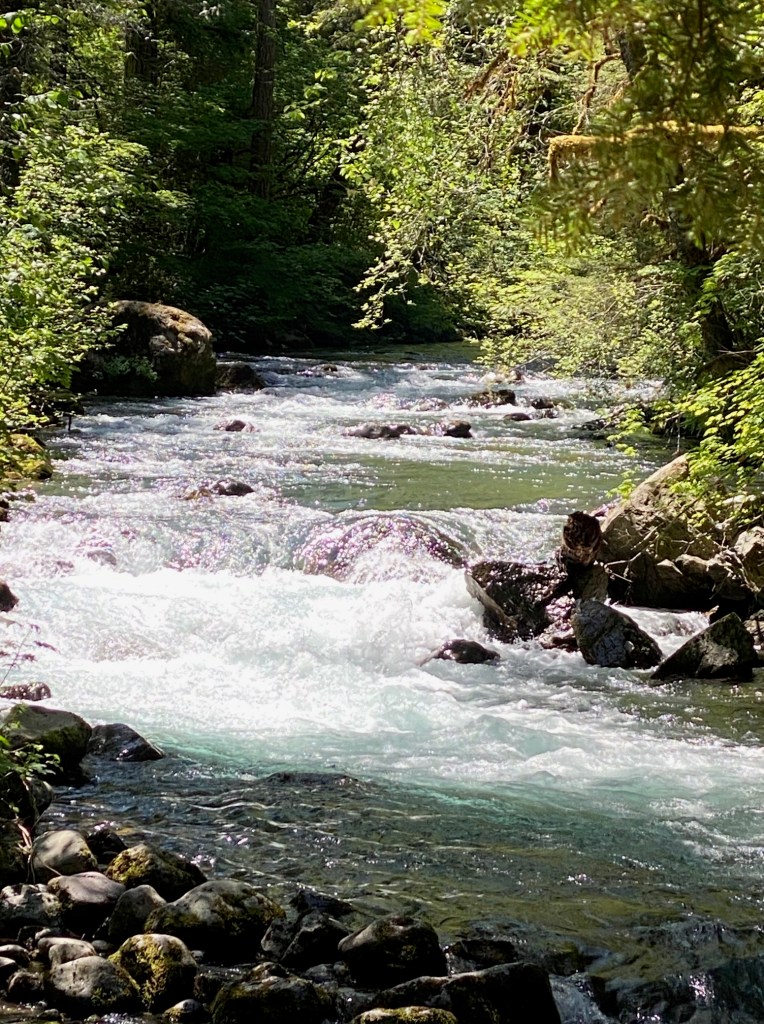
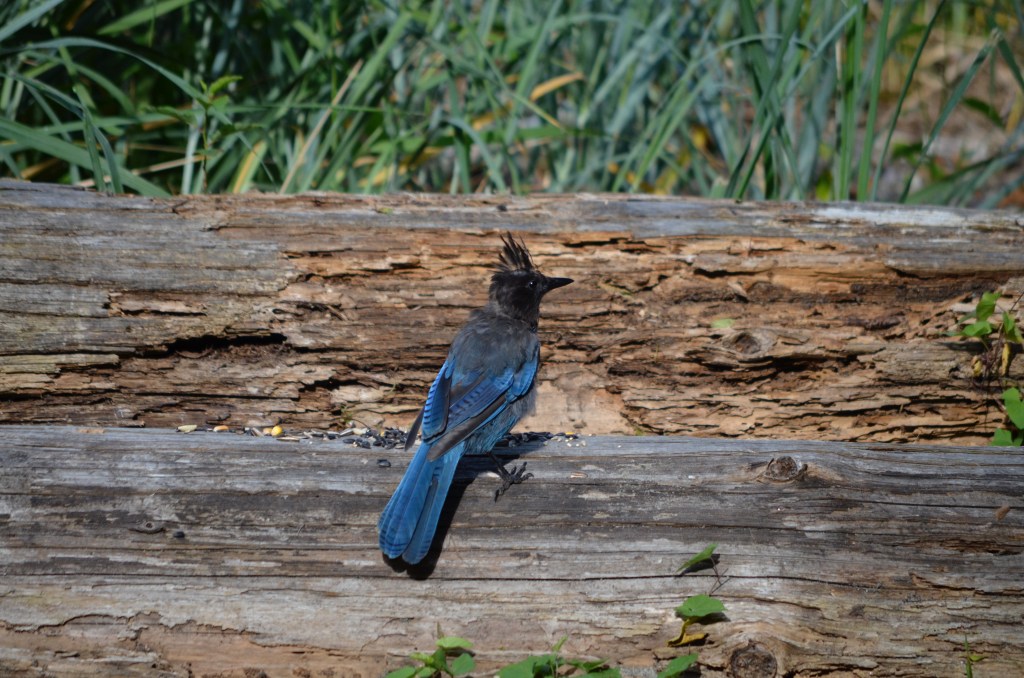
Mornings on the kitty walk around our Hood Canal property, the jay is screaming, expecting a peanut my husband has set on a log lining a trail.  The jay has a broad vocabulary, and if you are lucky enough to have their blue presence on your property, you too might distinguish a whistle for jay companionship, a scolding squawk when a squirrel gets the nut first, or an unrelenting chatter that lets you know the bird is there with breakfast expectations. Usually,  their voices are rewarded with nuts and seeds, but not always.  A loud chatter is no guarantee that food will soon rest on a convenient post.

So too our vocal cat, Winslow Homer. He meows or whines or clicks at passing birds.  At feeding time, he meows non-stop for a meal he knows by his internal clock is a few minutes late.  Or having mounted a fence and once there finding the going rough for his unwieldy weight, he lets us know by a few meows that he would rather be lifted off than jump down.  We hear him and respond.

We hear a honking flock of geese when the tides change.  We hear the ravens kaaing among themselves high in the cedar trees along the shore.  They ask nothing of us, but nonetheless we hear them. It interests me that there are calls for the sake of calling and calls with expectations of reciprocal action. 

Now to jump from our animal kingdom to our human “kin-dom.”

My father, a garrulous man who enjoyed his own humor more than any other person in our family, often egged me on to a debate, usually a political one.  Then when I expressed my deeply held views, he grunted, “Children should be seen and not heard.”  One of his favorite axioms, up there with “Spare the rod and spoil the child.” He was not a physically abusive parent, but his sayings reminded me that he undervalued my ideas.  When it comes to being heard, children are among the most marginalized populations.  A walk through any grocery story can confirm this, as an exhausted parent heading for a box of detergent ignores the pulling on her shirt from her child who has just walked by a neat stack of Hershey bars.  Yes, there are reasonable times to ignore a childish “Hear me,” that we have all experienced from our years as the pleading toddler to becoming the harangued parent.

On the opposite end of life, are the elderly, euphemistically called “senior citizens” to disguise their insignificance.  As their culture melts from all they had known as comfortably familiar, they feel as if they are not heard, or if they ARE heard, they are misinterpreted.  Consider the technological changes and social media in the past ten years alone.  Having spent fifty or sixty years dialing a phone, they are pushing letters with their swollen fingers on a gadget that “upgrades” so often they have no time to internalize the new terms included in the small print to which they must agree for service to be continued.  Having learned their English grammar and usage under strict instruction, they must recalibrate their ears to allow for a plural pronoun to represent a single person.  All for good reasons they can understand because that elderly person may not intend to insult someone who is offended by a binary pronoun.  Then there are the words for which they would have been reprimanded, such as “queer,” now embraced by the very community they did not wish to offend. 

Some seniors feel as if the most vocally rewarded populations have no interest in the stories of their lives.  What happened to the Norman Rockwell portrait of a child perched on a footstool  attentively listening at the knees of a grandparent?  Unless they are collectors of American Art, I would guess that most Americans have long forgotten Norman Rockwell, and never knew The Saturday Evening Post Magazine. Is there any interest in the grandparent’s life?

Last week I was one of those senior citizens demanding to be heard.  Swimming at the club pool between 7:00 and 8:00 AM, as was my decade’s long custom, I was instructed by the twenty-some-year-old lifeguard to give my lane to a man who paid $80/month extra to have Master Swim at that hour. The schedule change from 5:00 PM Master Swim hour to 7:00 AM occurred because that lifeguard was the coach, and the most convenient time for him was in the morning.  Before leaving the pool, I told the young man of my 40+ year membership and my history of morning swims.  He shrugged and walked off to the swim office.  My parting words: “You’ll hear from me.”   And yes, he did hear from me, after I emailed the Club Athletic Director. There will now always be a lane available for me to swim at 7:00 AM.   That is what is called economic power regardless of age, a reality of which I am not proud, but I used it. 

Whether or not someone is heard depends not only on age but on power.  Who around you is asking to be heard?  What is that person’s access to power?  One of my earliest blog posts featured the importance of remembering names.  Who does not want recognition for having spent a lifetime on Earth?  Sometimes that recognition comes during one’s life, and the name is noted.  Other times the story appears in an obituary, so persons who felt unheard during their life will never know that their voice was heard.

Voices matter.  Sometimes they are heard, and what a reward when they are, such as in Psalm 116: 1-2 “I love the Lord, for he heard my voice;/he heard my cry for mercy./Because he turned his ear to me,/ I will call on him as long as I live.”

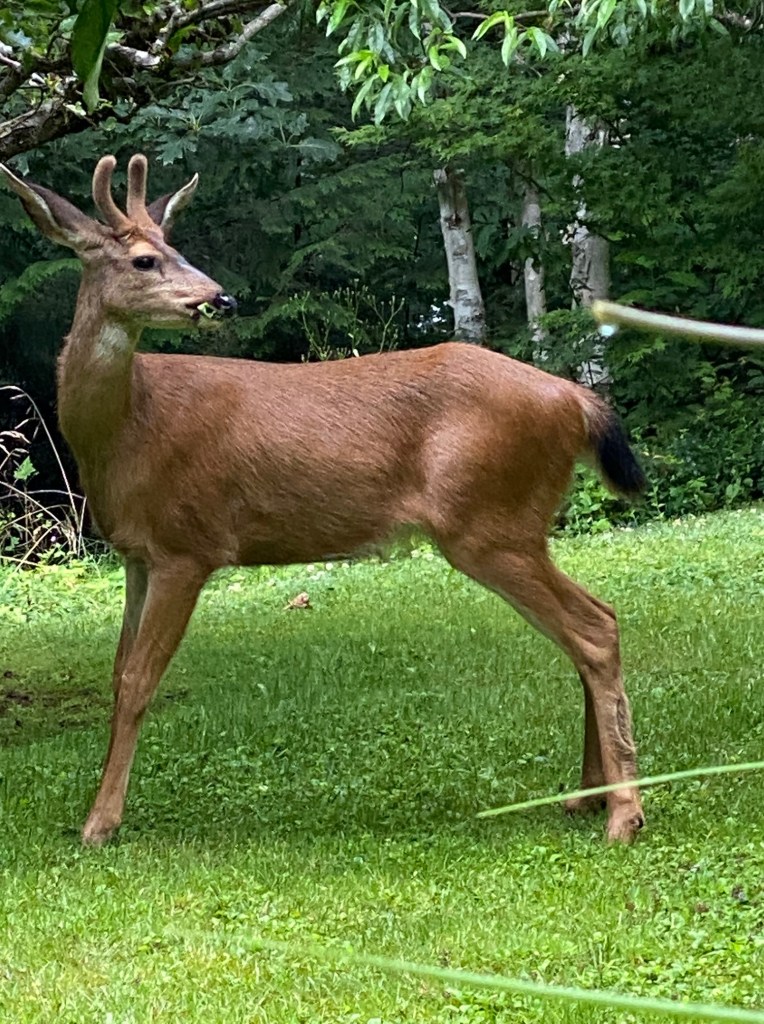
Curiously, silence may also be the tool for getting what we seek, such as this stunning young buck crossing beneath our fruit trees.  The hungry deer surprised us, and ignoring our presence, munched his way to satiated delight – all without a sound.  

Without a Name

Macbeth:
How now, you secret, black, and midnight hags.
What is't you do?
All:
A deed without a name.

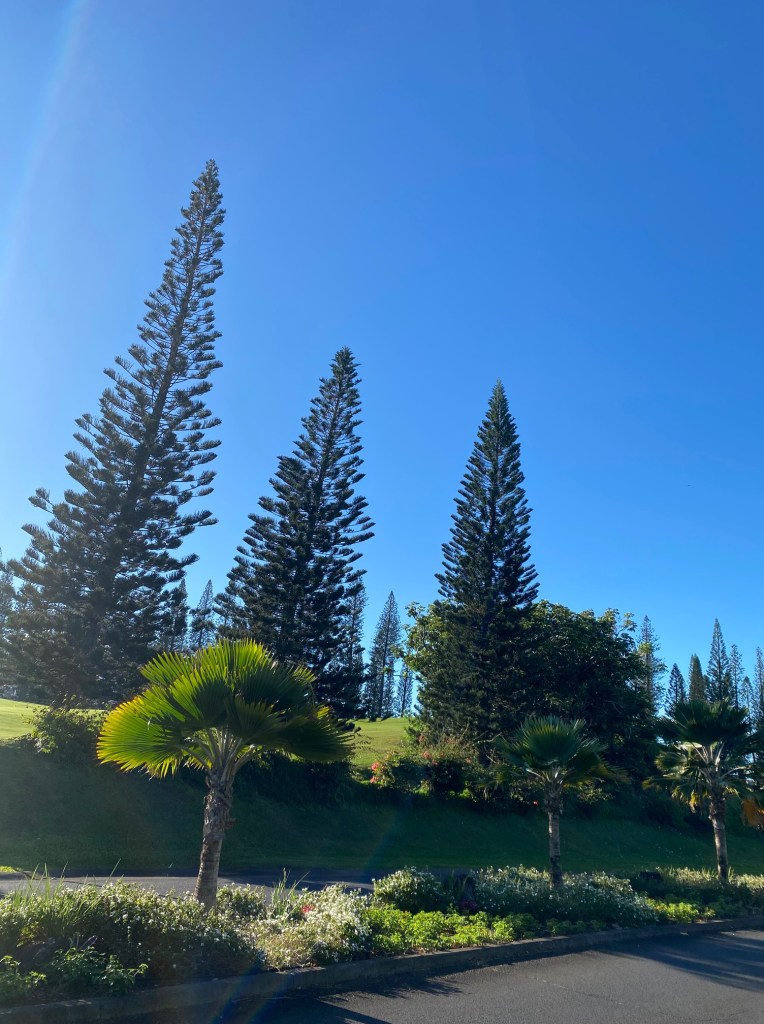
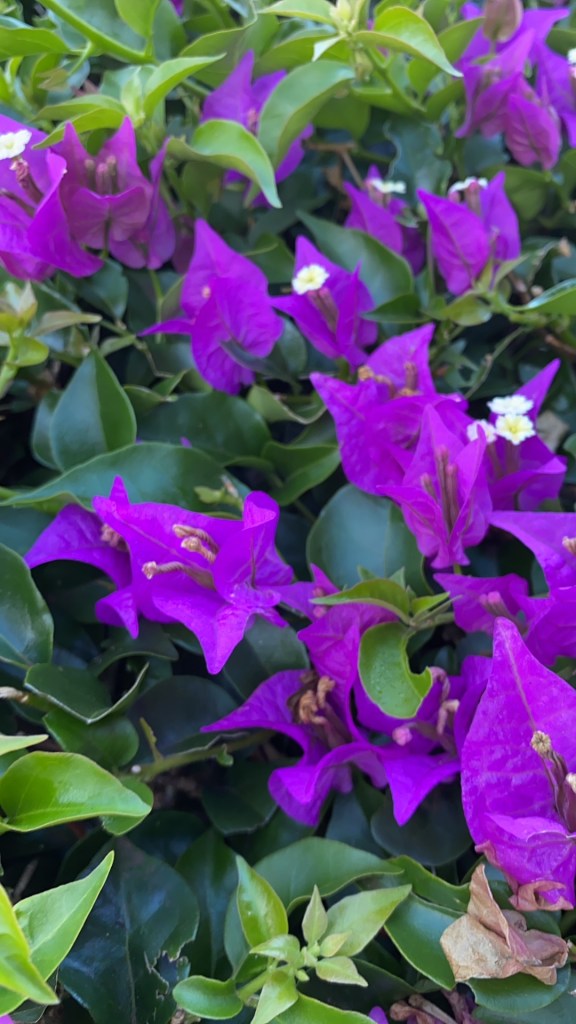
On this morning’s walk from Kahana to Kapalua, I watched the sun rise over tall evergreens lined up between golf courses.  My path followed low hedges with delicate purple flowers, their soft yellow stamens pointing out to the sun.  If I were walking along my road in Washington State, I would be spotting cedars, Douglas firs, spring daffodils, vegetation for which I have a name.  But I knew none of the names of the trees and shrubs I passed on my walk in Maui. 

Was the scene less lovely?  More intriguing because I couldn’t name what I passed?  What echoed in my mind was “without a name.”  Here Shakespeare joined my walk calling up that phrase.  Next followed a quotation from Romeo and Juliet, when the lovers realize their surnames are enemies, and Juliet challenges the feud: “What’s in a name? That which we call a rose/ By any other name would smell as sweet.”

            My fascination with language kicks in with thoughts of naming and being known. When I began my blog, Thoughts After Seventy, I hoped to contemplate that desire to be known.  I had recently attended memorial services where I listened to stories of the departed’s identity.  In the narthex before entering the sanctuary for the service, I passed opened photograph albums covering the deceased’s life from birth to death: schooling, careers, family, travels.  Some memorials included slide shows or short videos, the soundtrack composed of voices and favorite songs from previous decades.  If I didn’t completely know the person before attending the memorial, on leaving I came closer to kinship.  But what is the connection between naming and being known and remembered?

            There is value in namelessness.  The Tomb of the Unknown Soldier would not be embraced by millions of descendants of fallen soldiers if we knew who was buried there. Anonymity allows us all to identify with the pervasive sacrifice of war.  Romeo and Juliet fell intuitively in love until the name issue arose.  Fortunately, their love surpassed the significance of Montague  and Capulet.  However, what about the names Republican or Democrat, Russian, American?  As soon as those names attach themselves to someone, kinship is tempered with judgement.

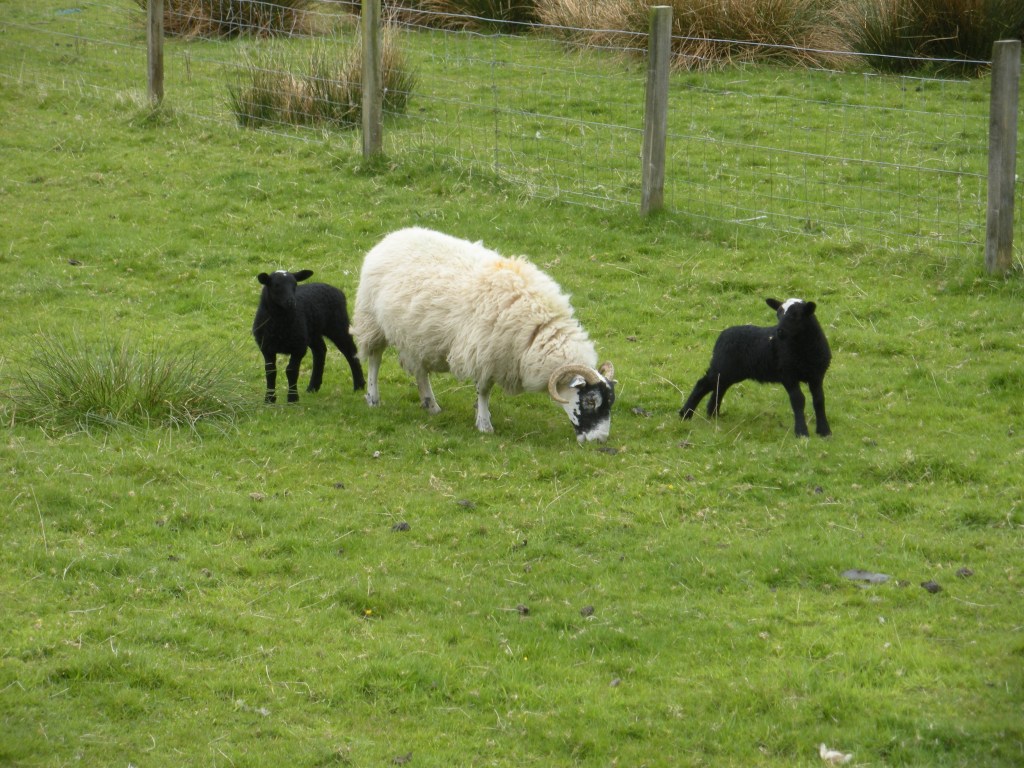
            Catherine is a shepherd whose lambs are sent for lamb chops.  On visiting her farm, and delighting in the frolicking lambs, the first thing we want to know is their names.   “I can’t name them,” she explains.  “If I named them, I couldn’t send them to slaughter.”  At best, they have numbers.  My husband tells a story from his childhood when he had a pet duck his father plucked for a Sunday dinner.  Enjoying the tender meat, Allan asked his mom what it was.  She explained it was duck.  That was tasty, until he learned it was Huey. 

            Is there any doubt why people marching for racial justice chant “Say their names!” followed by a litany of Breonna Taylor, George Floyd . . . ?  Names add sanctity to the cause; they personalize it.   George Floyd is someone we feel we know, and so by extension we can advocate for racial justice in his name.

            Back to my Maui morning walk, I feel pulled to know the names of the trees and flowers I admire as I walk along, serenaded by mynah birds and doves.  I have an app on my phone that I can use to photograph a plant, even a leaf, and learn the name and genus of vegetation.  I give in to it.  That delicate purple flowering bush: Lesser Bougainvillea.  Here the language addict in me jumps to ask,  “Why lesser?”  Is there a Greater Bougainvillea?  Without a name, would I enjoy the shrub’s beauty more or less?

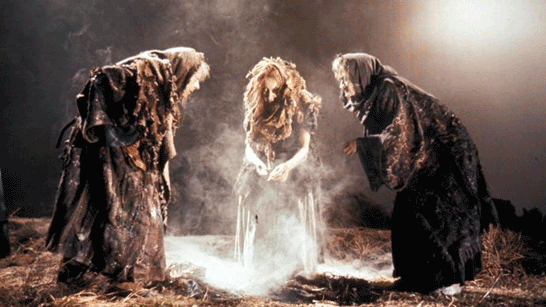
            As soon as I returned to my laptop, I searched for “without a name,” adding Shakespeare to my search because I was certain the phrase floated in my ocean of Shakespearianisms.  There I found it in Act IV, Scene 1 of Macbeth.   Macbeth has once again sought out the witches for their prophecy.  They are tossing in their cauldron newts, thumbs of drowned sailors, all sorts of spine-chilling ingredients, when they answer his question:  “A deed without a name.”  Searching further for literary analysis of the speech, I came across an interpretation that reminds us in a Catholic society, a child is sanctified at baptism when he/she is baptized with a name.  No name equaled a destiny that didn’t include heaven.  Thus, to the Elizabethan audience, the namelessness of the witches’ activities would signal their damnation.

            We will continue to embrace naming.  We name children after ancestors that might insure their belonging.  Perhaps we can continue to name with cognition and empathy with what we are naming and why, always considering the community within which the name will exist.  Naming is one of my greatest pleasures, particularly naming a cat.  I could adopt another one just for the pleasure of naming it.  Thus far, we have named two cats after artists:  Toulouse Lautrec and Winslow Homer. Our creative cats have yet to learn to paint, but we have loved them for their purring heritage with those names.


Up From a Stump


One of the stops on our morning walk is a bench at the edge of a sandy beach, facing west across Quilcene Bay.  The former owners clear-cut the property before we purchased it, carrying off magnificent Douglas firs, yet many of the stumps remain hugging the shoreline, where they witness the rise and fall of seasonal tides.  Recently the beach and the bay endured subnormal temperatures and above normal tides, what is called a King Tide, adding two feet to water already at thirteen-foot peaks in winter months.  Much of the beach is littered with detritus from the risen tide, something to rake away before spring. Smack in the middle, blocking what would be an unimpeded view of Mt. Walker is a stump from which rises a thin child of a fir.  How vulnerable it appears, as if holding its breath until spring, all seven to eight feet of it.  We recall when it was but a slight green burst, inches high erupting from the stump.  We watch it.  We let it grow, although were we to cut it down, a panoramic view of the bay and Mt. Walker would open before us.

This New Year’s month, I sit on the bench arranging my thoughts about ways to embrace another turning of the calendar.  Some people meditate on the year that passed.  I could do that, but let’s face it . . . last pandemic year was disappointing.  I could reflect on what was lost, or who died, just as I could mourn what appears to be a dead stump of a tree whose grandeur I never witnessed.  Instead, I am admiring this skinny Doug fir that chose the fractured stump for its foundation.

After that clear-cut, we left most of the acreage to restore itself without landscaping.  So many trees in various cycles of life provide a sermon of hopeful resurrection.  The loggers left one massive cedar to decay, covered with pernicious English ivy that we removed as an invasive growth, each sawed off end baring deep cuts as if made by the incisors of determined beavers.  Its rippled bark, spread with a patina of soft moss like a birthing blanket for vine maples and fir seedlings.  Thus, the name “nurse log” botanists give to downed but still nurturing trees.

    When I take time to examine most of the trees along our path, few seem to have rooted solely from soil.  The main trunk grips a gnarled fist of former life as if the decline or apparent death of the former is necessary to generate new growth.  Here my poetry memory kicks in, and I think of Shakespeare’s 73rd sonnet: “In me thou see’st the glowing of such fire /That on the ashes of his youth doth lie.” If not ashes, there were certainly gnarled branches from which I matured.

    Trees decay, they topple in windstorms, they need topping to prevent branches from falling on power lines.  If one needs to be cut, we don’t saw at its base but leave ten to fifteen feet for a natural decay. Over ensuing years, woodpeckers hammer through bark for bugs, and small birds nest in remaining cavities.  Nonetheless, even that tall stand will topple, as one cedar did last weekend, its big root pulling up in the collapse and leaving a large cavern on a bank beneath the road. The large hole might risk erosion, because that tree could have held the bank in place.  Perhaps the hole will become a winter home for squirrels or raccoons feeling the slow burning warmth of decaying cedar.   

    Time to leave my bench where I seek philosophy among the trees.  There are the day’s promises to keep as I walk uphill from 2021 toward 2022, not to escape the gnarled roots of a pandemic year but to imagine wherein resurrection grows.  A short prayer for the expanse of all time to secure understanding as we take root from a disappointing year toward a hopeful new one.  Reflection and prayer.  I recall Ralph Waldo Emerson’s definition: “Prayer is the contemplation of the facts of life from the highest point of view.”