Where The Seed Drops

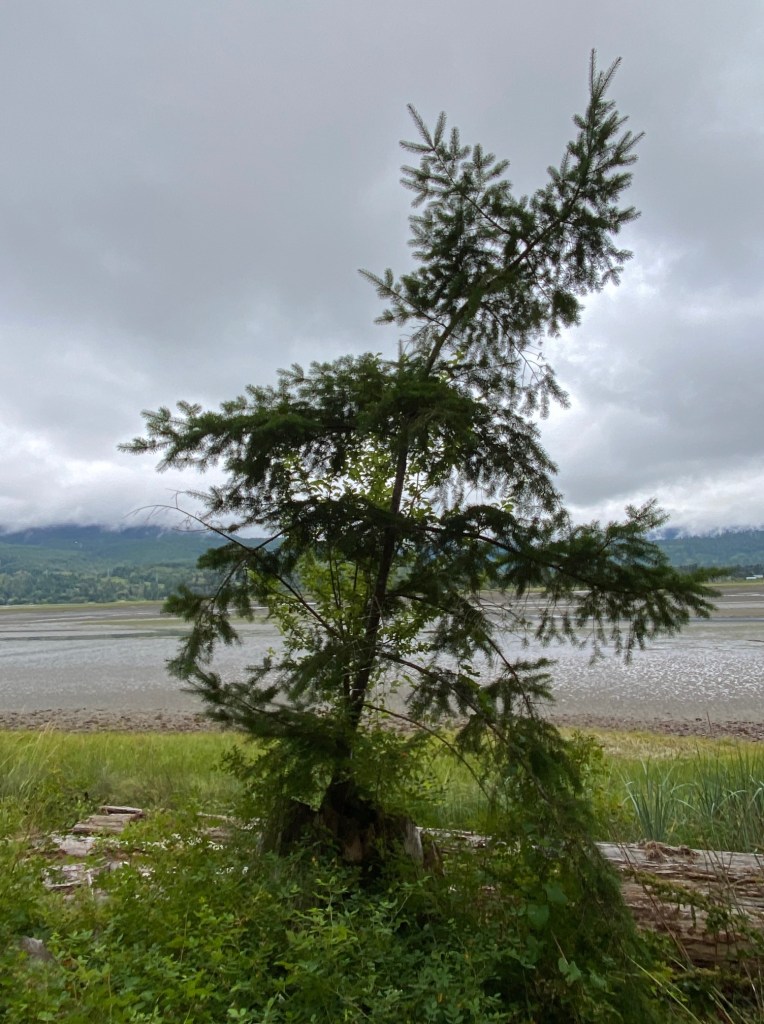
            Smack dab in the center of the south beach of our Quilcene home, a Douglas Fir is growing from a rotting stump logged before the property was ours.  A skinny thing at first, it leaned northward as the common winds come from the south.  It looked frail and pathetic, something we could have easily pulled out so it didn’t block our view of the bay at low or high tide and Mt. Walker across the water.  We didn’t remove it.  Rather, over the years, as we sit together on the south beach bench during our daily pre-breakfast stroll, we watch the fir lean and lean, no sign of a majestic fir like others up the hill behind us.

            “I wonder how it got started,” I mused. 

“That’s where the seed dropped,” my husband replied. 

            I live my life in a sea of metaphor, having poetically embodied squirrels and birds, so why not a tree struggling to grow, leaning by force of the wind? 

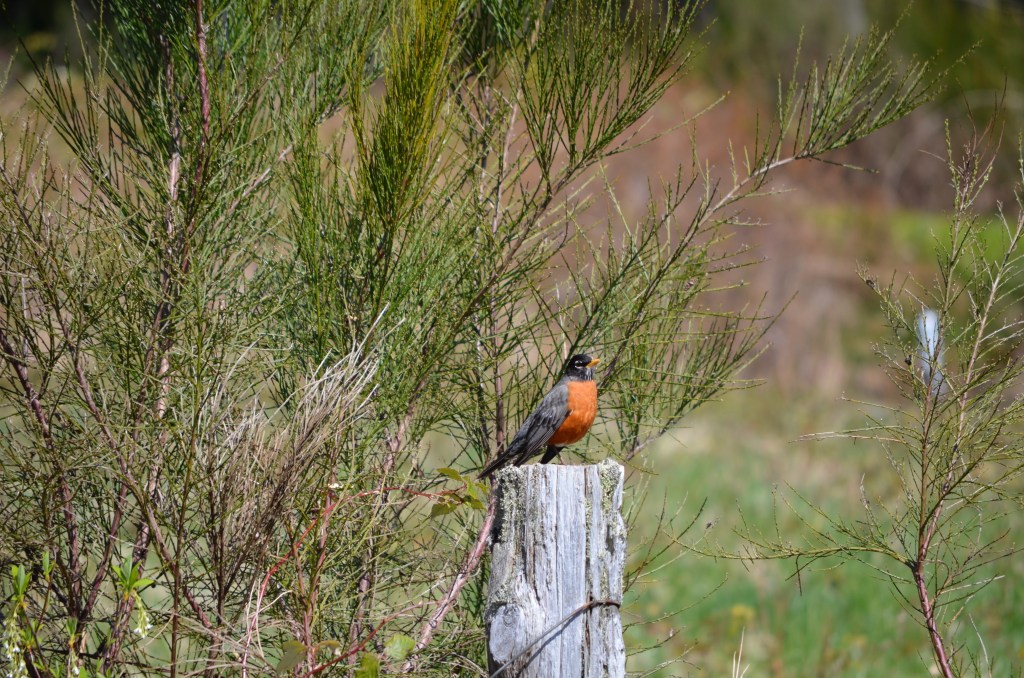
            At my age, long retired from daily employment, I find myself looking back at where my seed dropped, how I grew and what natural forces made that growth easy or challenging at different times along the way.  You see, if you look carefully at the photo on the start of this piece, you will note that the tree is no longer bending completely over.  In fact, it seems to be straightening. It is standing up against the winds

            Regardless of our age, all of us have moments to wonder how we chanced upon the Earth.  We like to think we were the long-awaited child of hopeful parents.  Some of us were.  Some of us were “accidents.”  But beyond the physiology of birth, there is something miraculous, perhaps full of chance that we were born in a particular time, place, and country. Taking a moment to recognize the coincidence of our seed dropping at a good place, can lead to empathy with those whose opportunities were less fortunate.  One of our favorite songs sung by Joan Baez is There But for Fortune Goes You and I. You can watch Joan Baez sing it on this You-Tube video (skip the advertisements that precede it): https://youtu.be/b6omDSxTCXE?si=rw1CO73kc-BnXc7j

 Each verse imagines a person whose life started out with hope but ended in despair.  The last stanza enlarges the image to nations:

Show me the country where bombs had to fall,
Show me the ruins of buildings once so tall,
And I’ll show you a young land with so many reasons why
There but for fortune, go you or go I you and I.
You and I,
There but for fortune, go you or go I you and I.

            An entire lifetime grows from a combination of nutrients, opportunity and the Grace of God.  Did our seed drop on fertile soil?  I relish one of Loyce Ong’udi’s frequent sayings about the people of her small village in Kenya.  “There is no lack of ability,” she explains.  “What is lacking is opportunity.” In a week I leave for Iona, Scotland with a group of friends from my church. Considered a pilgrimage to a source of Celtic Christianity, the group seeks spiritual awareness in a “thin space.” Travel is often thought of as a chance to reach outward. I would like to think perhaps each journey can be within ourselves to reflect on how we have endured and/or thrived from a chance seedling. 
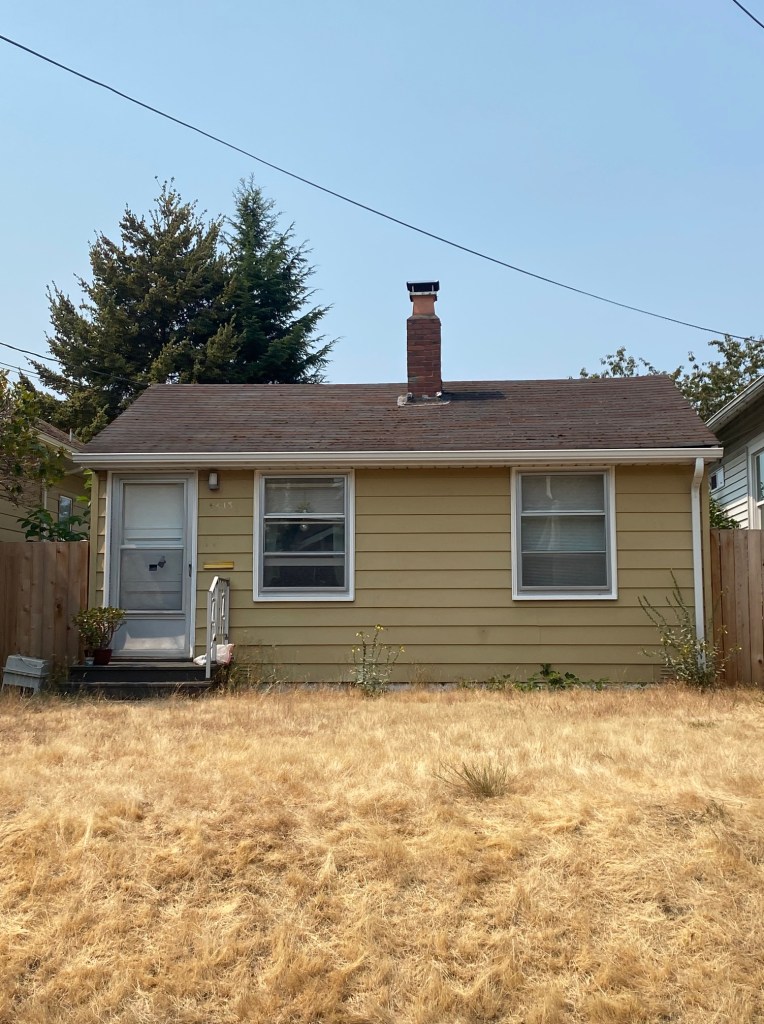
Last week an appointment directed me to the Wallingford neighborhood. While there, I decided to see if the little house remained.  It was a mother-in-law, two-room cottage owned by a couple in the neighboring bungalow. My marriage having failed, and expecting a child, I had to leave my teaching position in Wisconsin and return to Seattle to give birth, to finish my 5th year at the UW for a permanent Washington teaching certificate and to find a new job. Not wanting to overstay my time with my parents, I rented that small house.  The little place looks just the same.  It felt good to stand outside my car and think back fifty-seven years. I was twenty-six years old, strongly confident, full of hope and joyful bringing my daughter into this house, into this world. It would be several months before I secured another teaching position, a new home for me and my daughter. Nonetheless, I cannot recall every feeling helpless.

            Noting that the Doug Fir was no longer leaning so far over, but straightening and even adding a new branch, I asked my husband, “How do you account for that?” 

“Easy,” he replied.  “It is reaching for the sun.”

            Together we walked over for a closer look.  There behind the Doug Fir is a wild cherry tree sharing the same stump.  Will they make it together?  Somehow that Fir looks less lonely.
COLLECTING PHRASES

                  Speaking with my older brother last week, he offered me, “Father winds the clock.”  The phrase set him thinking, and since his sharing it with me, the phrase is following me around like a dust mote that could be brushed off my shoulder if I would take the time.  Then last weekend when my grandson was visiting from college for spring break, we got to discussing movies.  I opined that I liked mysteries, more or less, sometimes less “more” than other times depending on the plot.  He laughed at more or less, took out his cell phone and wrote down the phrase in his Notes app.  In that app are hundreds of phrases that have intrigued him and for which he may someday find use, such as in naming a film script he is writing.

                  Words and phrases invade me like the body snatchers, a rather gruesome analogy, because they aren’t all creepy.  However, they are possessive of my conscious moments. Take Father winds the clock. I suspect Jim liked that as I do because it got him to thinking of the various roles we assume in a domestic household, roles that somewhat define character.  Few people have wind-up clocks anymore, a shame, because time is a patron saint of our lives.  To have to wind a clock keeps us mindful of the days ticking by.  In the phrase my brother loves, it also defines the role of a parent in a family, in this case a rather patriarchal role.  Father gains importance because of his role in winding the clock.  The clock becomes a symbol of Father’s purpose as caregiver, keeper of time.  In my 80th year, the phrase also triggers my image of a father dying and the clock silenced lacking his precise movement of the hands.  What a profound silence such death is.  For a moment, Time Stops.

                  Even time stops is one of those haunting phrases, particularly because it is antithetical to the truth.  Time never stops, regardless of any person or device marking its movement.  Never was I more aware of time’s progression than when my own father died.  The following day, I was running the track above the basketball court at the Washington Athletic Club.  Below me, a group of young men dribbled a basketball up and down the court.  Outside the open window, I heard traffic on 6th Avenue as people commuted to morning jobs.  Both activities felt like blasphemy.  How could the world march on when my father was no longer in that world?  Ironic, for with that very thought, I was running laps on that track.  Time does not stop.

                  What phrases are tucked in your pockets?  Do they astound you, arriving when you weren’t expecting, or are they phrases that remain with you for decades?  Perhaps they are the axioms of parenting:  Think before you speak, The early bird gets the worm.  Once you have become a parent, you polish those phrases off and pass them on to your offspring. If you have a wordsmith child, you may hear back, “But I am not a bird, and I don’t eat worms.”  As to thinking before speaking, what comes first, the chicken or the egg?  Oops there goes another one.  I like hearing new parenting phrases emerge, one in particular: Use your words. I didn’t have that phrase when I was raising my daughter, so when there were angry gestures, I resorted to physical responses, sometimes almost as physical as her tantrums.   Use your words suggests that the anger may be justified, but there is a more reasonable way to express it.  That said, my daughter was quite vociferous, and her words could have the force of a kick in the shin.

                  Some phrases are place specific.  Your familiarity with a locale goes along with your familiarity of place-specific phrases.  My friend Kristin, sent me a blog by David B. Williams in which he shares the linguistic history of words and phrases particular to Seattle.*  I was eager to add my own to his research (Montlake Cut, CHOP, Pill Hill, The C.D.)  My little collection reveals the years I have lived on Capitol Hill.

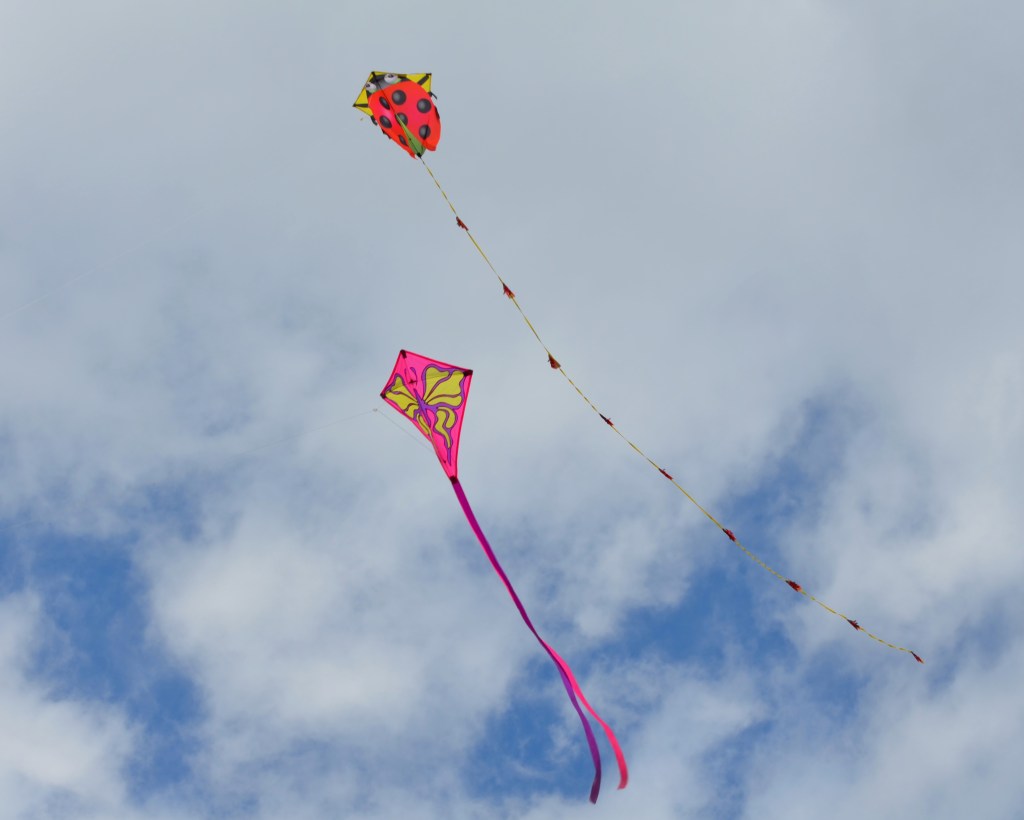
                  If you are a visual person, phrase collecting evokes many colorful images, and if you allow yourself time to visualize them, there is a chuckle for many are outrageous metaphors: sick as a dog, down in the dumps, high as a kite. Is an ill dog any more under the weather than your choking cat?  Who first imagined an intoxicated person as being high, and then up in the sky, making loops in the wind?  Down in the dumps makes perfect sense if you have ever held your nose while driving by a city landfill.

                  I look forward to the day when an imaginative linguist can find substitutes for empty phrases, especially phrases used when we really want to communicate feeling.  Our thoughts and prayers go with you is one of the most vacuous.  There is another school shooting, and the politicians bring out that phrase when grieving families want their children back.  I try to imagine those politicians on their knees that night saying their prayers and speaking the names of those lost. Yet, I also have sat with pen in hand, an open card before me, truly hoping to offer comfort when there has been a loss.  What comes to mind?  That same phrase, when I long for fresh phrases. 

_______________________________________________

AWE


                                              It is not as important to know as to feel.

                                                                            Rachel Carson

                  We enjoy an annual two weeks on the island of Maui, same time of year, same location, even familiar faces on the beach. I have given up fantasies of climbing Mt. Everest or photographing penguins at the South Pole.  Kahana Sunset, on the north shore of Maui, is my vacation destination.

                  Mornings, before the sun is too hot, I set out for a long walk along the Honoapiilani Road –north one day, south the other. Some mornings I am kept company by an audible book, and this, trip against a backdrop of crashing waves, I am listening to The Power of Wonder by Monica C. Parker.  In the book, she sites social scientists and medical experts to define Wonder and then argues how living with Wonder one’s life is not only enriched but extended. Having recently passed my 80th birthday, I can’t think of a better time of life to visit what space I have for Wonder.  Is there anything new under the sun?  Does a Taylor Swift concert make me drop my jaw in amazement?  I had a Presley, then Beetles youth – Elvis held my hand when I was thirteen.  I have “been there / done that.”  Nonetheless I too want to experience Wonder and foster the habits that might refresh Awe, if not in something brand new, then in experiences renewed. 

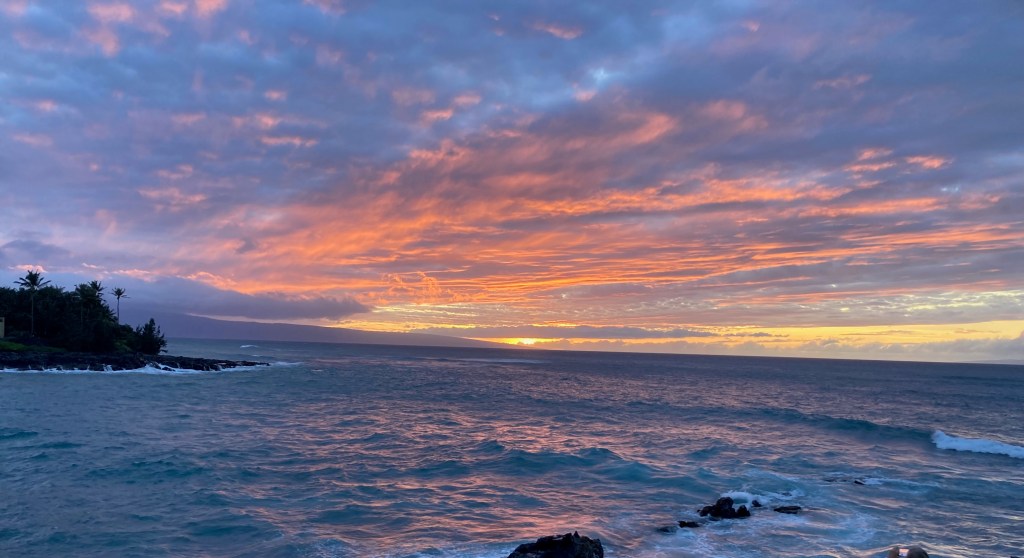
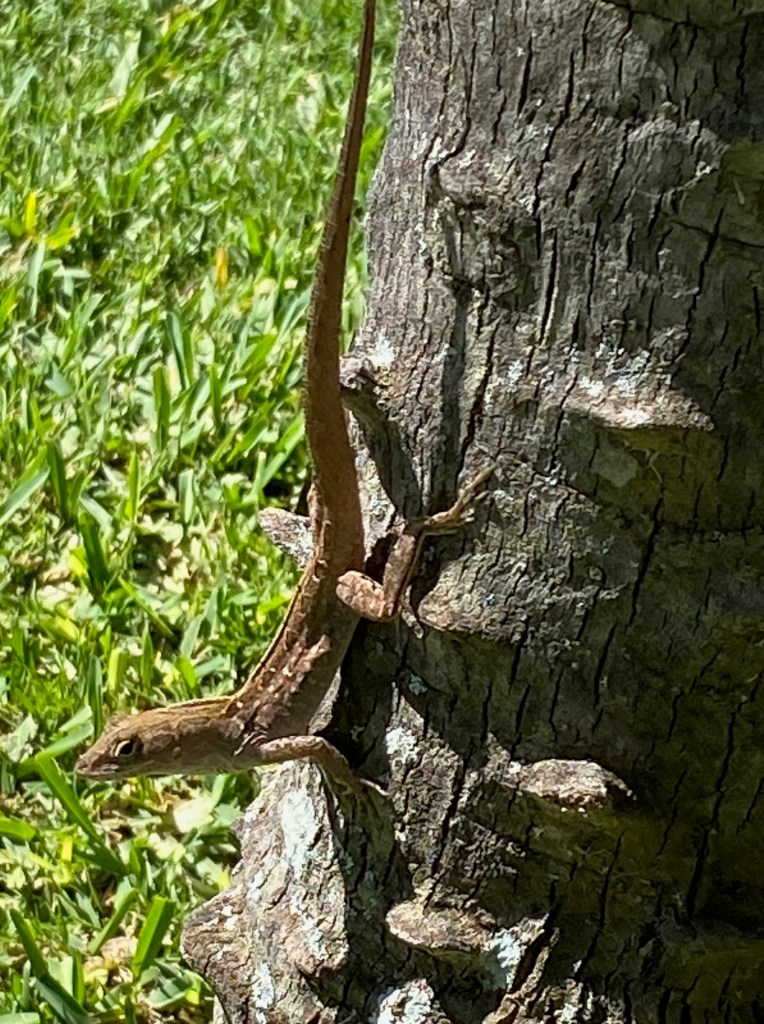
                  Wonder, awe, surprise, amazement are often used interchangeably, but what they have in common is a felt experience not expected, an experience that stops our quotidian existence to express, “Whoa. What’s That?”  It is a pause that can be minute or monumental, a comma or stanza break in our narrative. Here are my Awe-some moments of recent Maui days.  There is that beautiful sunset – every day so far. Coming from cold, rainy Seattle, how can I not Wonder at such beauty?  Looking up from my beach book this morning, I spot a companion — a slender arched gecko poised as a sculpture on the tree trunk beside me. It surprised me, and I tingled with glee as I pulled out my cell phone to capture its pose. 

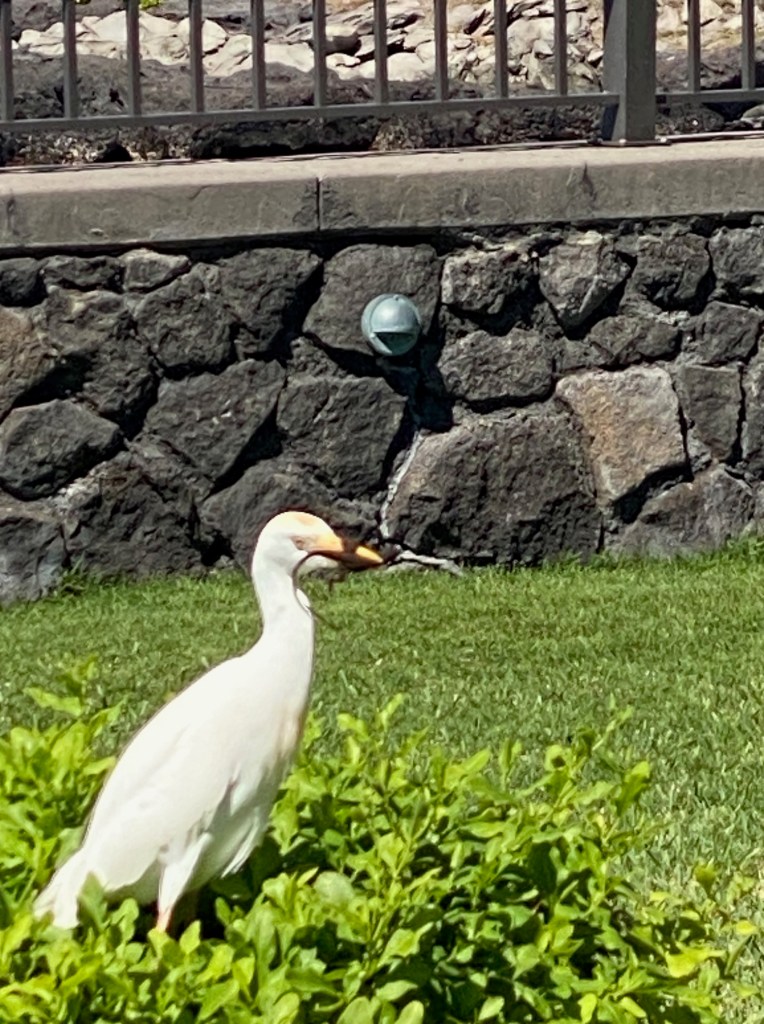
                  On my walk, white wings flew into sight – a graceful egret lit on an adjacent shrub.  it paced as gracefully as a back-home heron walks on tidal flats.  I stopped walking to examine its movement.  A wave-like thing itself, the bird seemed to flick forward then back, its body undulating in grace.  Until it stopped, a sudden arrest, its beak thrust into the hedge and returned erect again, a small gecko its flailing victim.  Yes, everything must eat.  Nonetheless, I had two awesome sightings in a day, and one ate the other!

                  I returned to questioning the values of Wonder.  Do we need new experiences to awake us to wonder, and is that the value of travel so we can see the flora and fauna of places unlike home?  Surely those summer sunsets over the snow-peaked Olympics are as beautiful.  From my Hood Canal home I have watched eagles swoop down to Quilcene Bay to fetch a flashing salmon as large as the eagle itself before bringing the meal to a stick-built nest high on top of a Douglas fir.   

                  Monica Parker argues that we must be open to Wonder, for Awe doesn’t fall on closed senses.  When we take adventures we open the doors, we expect surprise.  We pay for surprise.  I wish I could share one of my most memorable photos taken about forty years ago.  The second day of a European trip, we are in Amsterdam with our daughter, then a teenager, who did not want to go with us.  She begged to stay at home so she would not miss out on a few weeks’ summer fun with friends. In the photo, our daughter slumps on a museum bench, legs wide, elbows on knees, cheeks buried in her clenched fists.  Behind her looms the original Van Gogh Sunflowers. She had closed the wonder door.  To be fair, as an adult mom she organized yearly vacations on this continent and beyond so her children, now in their twenties, seek out the wonders of art, music, and travel.

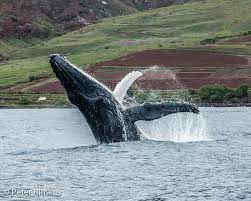
                  Even at eighty, open to learning goes on.  I am among a generation that is making popular neologisms such as Lifelong Learners, acknowledging that folks well past their school years are seeking ways to learn.  Wonder is a fundamental requirement for learning.  After being surprised into a Wow moment having watched a whale breach the waters on the horizon, I am eager to learn more about this annual migration.  I can be an autodidact (one of my favorite words),and hurry my walk back to the condo to do an internet search about whales offshore in Maui. I find many up-close photos of whales and their calves along with explanations of the entire migration, so that my next Wonder moment with these magnificent mammals will fill with educated Awe, like getting the whole cake with the frosting.

                  I will go so far to say that Wonder is contagious.  I recall my days teaching high school English.  After many years teaching required novels, it was hard to find something new in The Adventures of Huckleberry Finn, yet I wanted my students to be engrossed in this pivotal American masterpiece.  Did the fault lie in my inability to ignite my own Wonder year after year?  When I finally adopted  Toni Morrison’s Beloved and taught it to my senior English students, I had more questions than answers.  So much I admired in the book but didn’t completely understand.  The students sensed my questioning engagement.  Teaching that novel was one of the most successful of my career.  I didn’t feel as if I was teaching so much as learning in community with my students. Morrison’s book instilled me with a wonder my students joined.

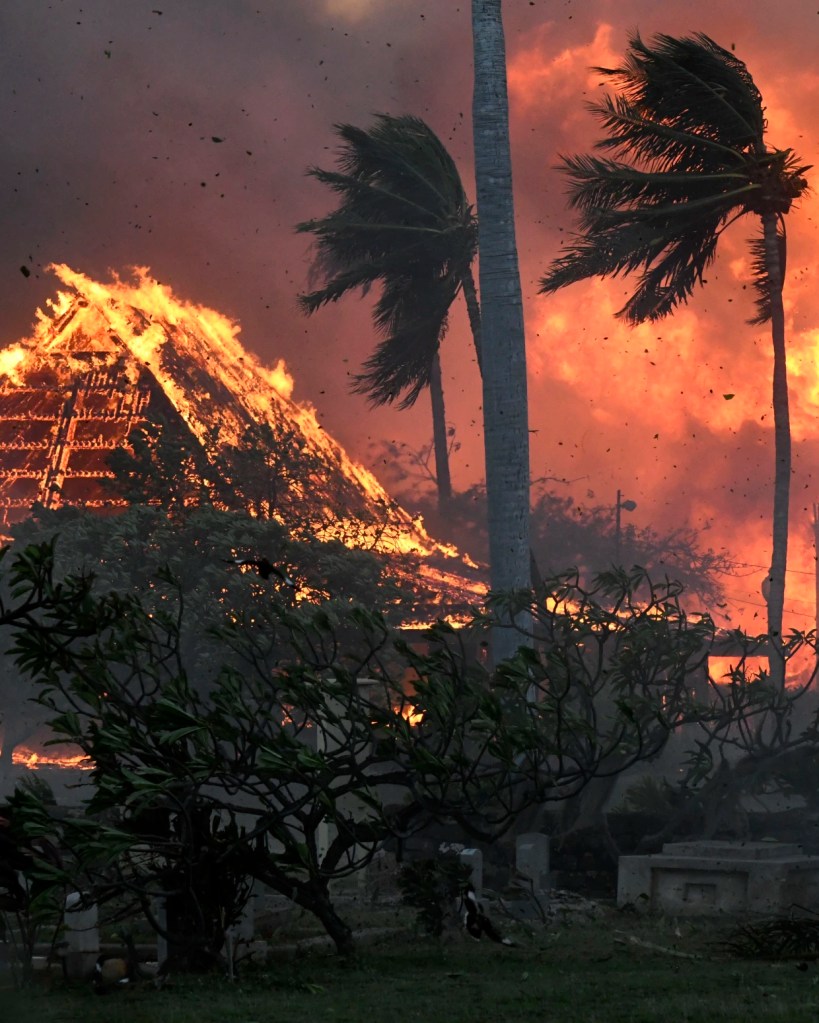
                  I am barely scratching the surface of Awe and Wonder as I share with you my photos and positive experiences of opening up to the surprising and often unknowable natural world.  Yet today I return to my piece after a conversation with a local Hawaiian who survived the recent, devastating Lahaina fire.  Her condo in a compound of condos was saved.  Her neighbor’s unit was destroyed.  The ravishing fires took lives and homes and streets of one of the most historic towns in the state.  “I never knew fire could move so fast, or snatch one place and not another,” she explained.”  For her it remains a memory of Awe and Wonder.  Just as we were finishing our conversation, the afternoon wind picked up, blowing our hair, making helicopters of dropped leaves around us.  “The wind frightens me,” she said.  “It was windy when the fires started.  I never imagined such wind.”