Christmas and Returning – not standing at an Amazon Returns Outlet with an unwrapped gift that doesn’t suit your needs or desires. Returning is also about remembrance and renewal.
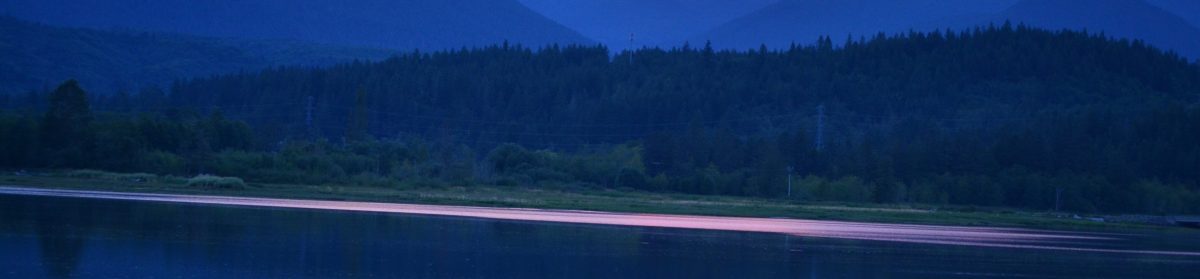
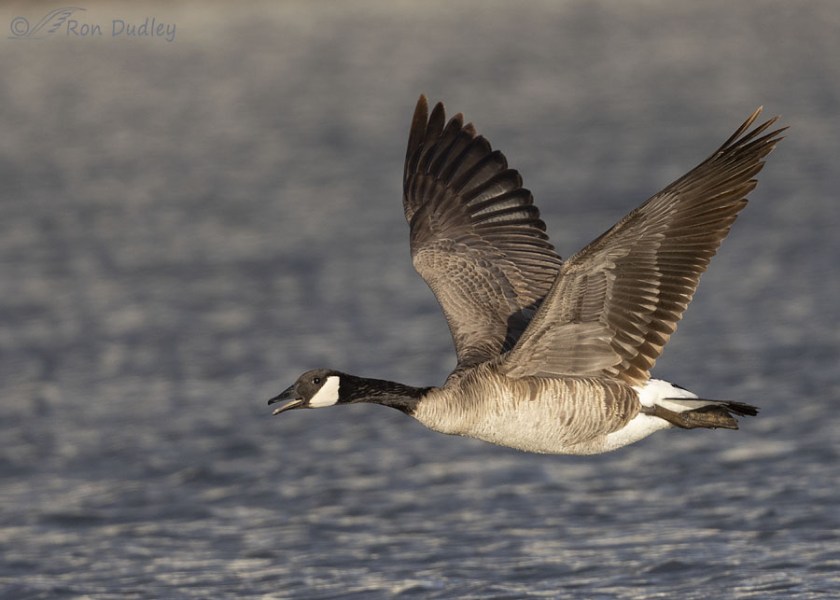
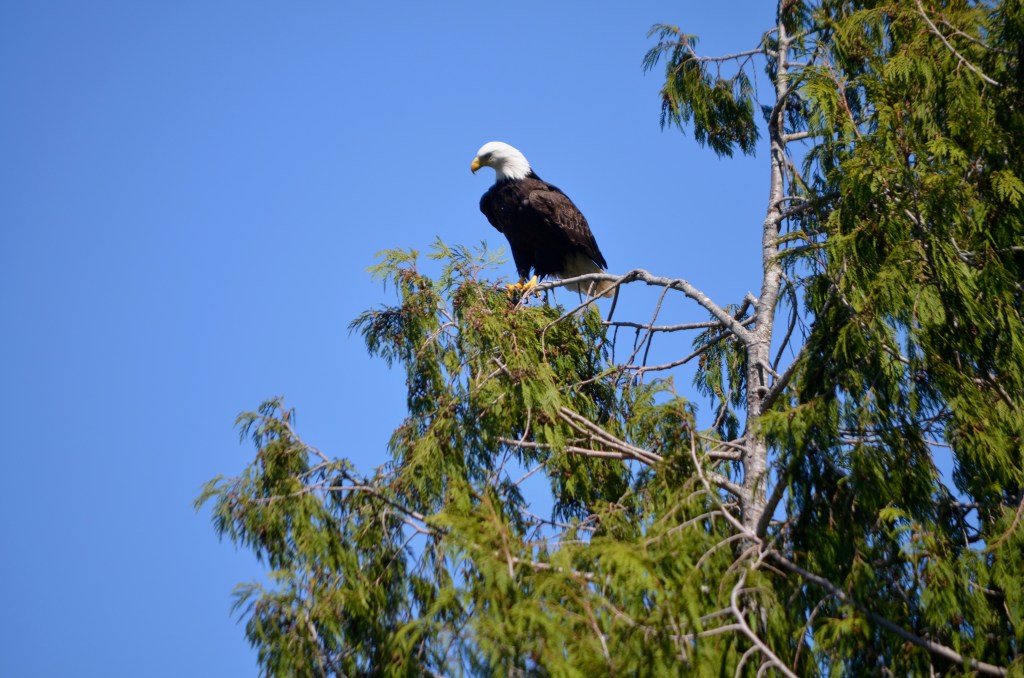
Our cottage on the tidal Quilcene Bay looks out at migrations in cinemascope. This week the scaups return, hundreds whistling down to the water’s surface. Last week there were mallards. Soon the Canadian geese migrating north will divide the horizon in a perfect V-formation that is a marvel. Which goose gets to lead the flock? How does each following goose sense the exact spacing one to the other like cadets on a drill field? While pondering these ornithological questions, I remember Huey. Years past, on the hill behind our cottage, a man found a goose egg in a nest and brought it home to see if he could hatch it and have the goose imprint upon him. It worked all too well. That goose, we called Huey, thought he was dog, and therefore chased any visitors off his owner’s property, flapping his wings and honking a battle cry as he flew low at knee level to attack the passerby. That hiker was my husband who knows waterfowl and gave Huey a toss by his neck that not only humbled the goose but attracted it to Allan’s authority Soon, Huey left the hill and settled on our waterfront lawn, there to nip at my bottom when I bent over to pick strawberries. Some days he marched around honking his ownership of our place, leaving deposits of goose poop for our grand-dog to slurp up.
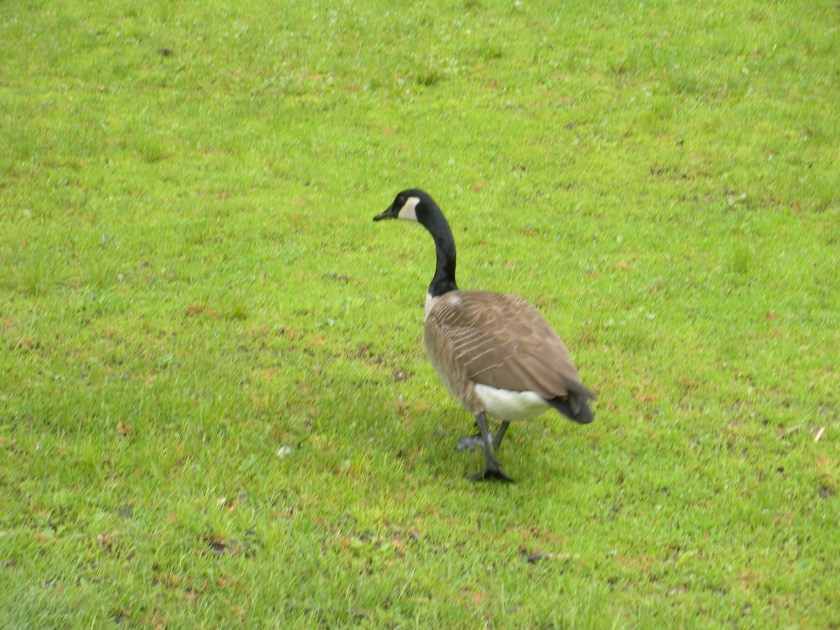
Surely ours was a love/hate relationship with Huey, but who couldn’t feel affection for a bird so clearly devoted to my husband as to follow him around just in case Allan needed a goose to lend him a wing. Inevitably, Huey looked up during the autumn goose migration and spotted an attraction to divert his attention, likely a lovely lady goose. And he was gone. We rather missed him. Then the following spring, while planting the garden, I heard the clarion honks of returning Canadian geese. Like a mother remembering the cry of her infant, I swore I could discern Huey’s distinct honking. I looked up to see one goose peeling off from the perfect V, flying toward me, then landing on our cottage roof where he waved his wide wings, singing something like “Hey guys, I’m returning home.” For two years Huey went and returned, until he didn’t. Perhaps he fell victim to the waterfowl hunters shooting from the opposite shore. Perhaps we will never know, but what we do know is that somehow Huey returns in the telling of his story.
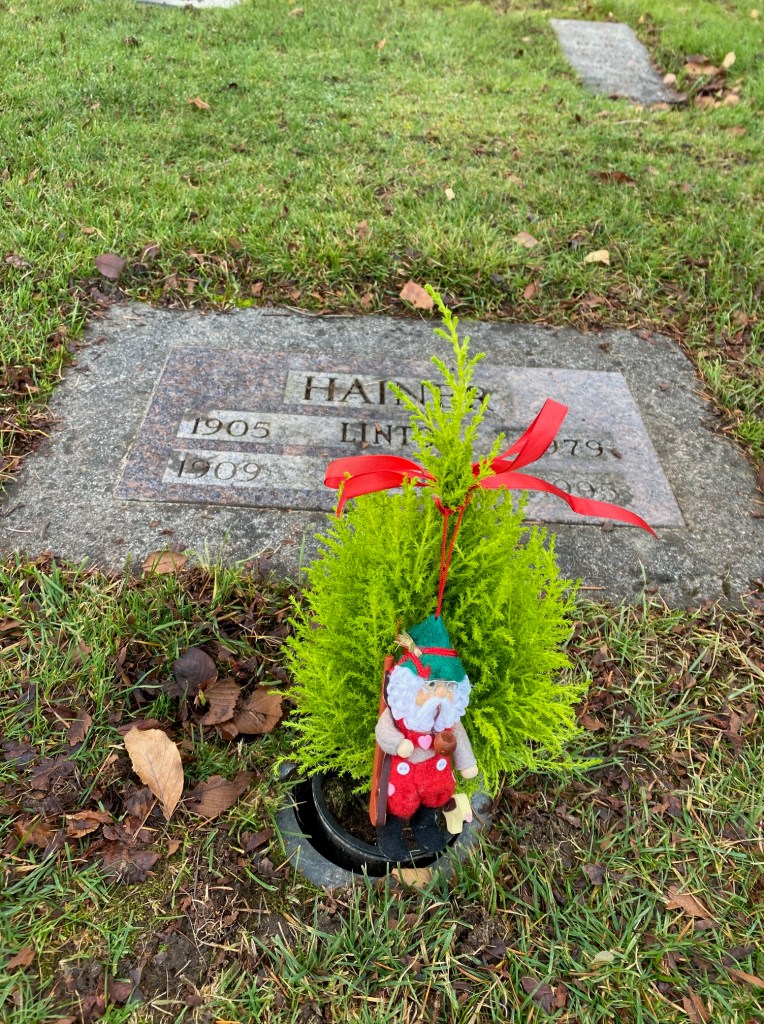
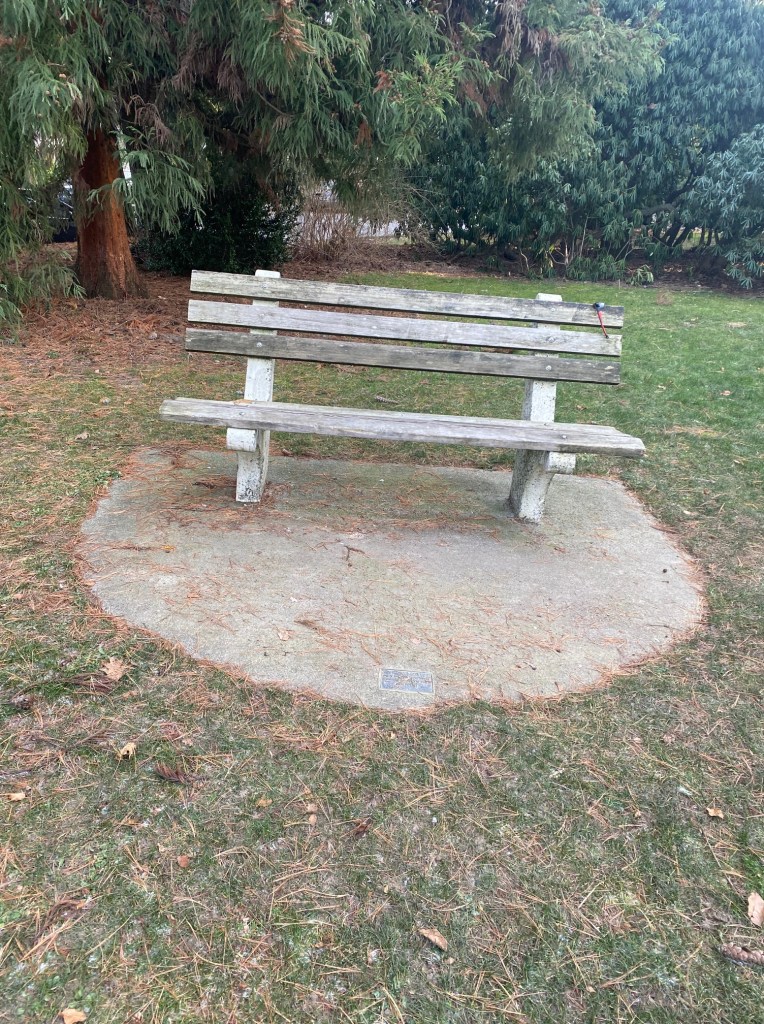
Christmas is a season for telling stories. Surely, nostalgia may invite emotions of loss and separation. But stories of those departed or times long gone live anew in God’s wonderful gift of remembrance. I am fortunate that my Seattle home is walking distance from Lakeview Cemetery where my parents are interred. Early in December, I bring a little decorated evergreen tree to the stone, placing it in an embedded vase. I clear the detritus of autumn from the carved names and wish Merry Christmas to Mom and Dad. Sometimes, I sing a favorite carol. This year I retold them the story of Dad marching down the stairs Christmas morning. He wore an off-center Santa cap and carried sleigh bells that usually hung from the mantel, all the time “Ho Ho Hoing” with a baritone Merry Christmas. As youths, my brother and I would roll our eyes wanting to get on with the presents. Now, standing in a mist at the cemetery, I retell the scene to the December air while the image of Dad’s white hair beneath the red Santa hat brings me comfort and cheer.
Each year, my husband and I send out Christmas cards that are his art accompanied by a poem written by me. This year his watercolor depicts two pair of mallards landing on a wintry shore. I dedicated my poem to Florence Cotton, a long-time member of our church, whom I visited monthly when old age and declining vision kept her from attending services. Writing the poem reminds me of those visits and how Florence’s optimistic and venerable wisdom enriched my life.
Again
For Florence Cotton who lived a hundred years
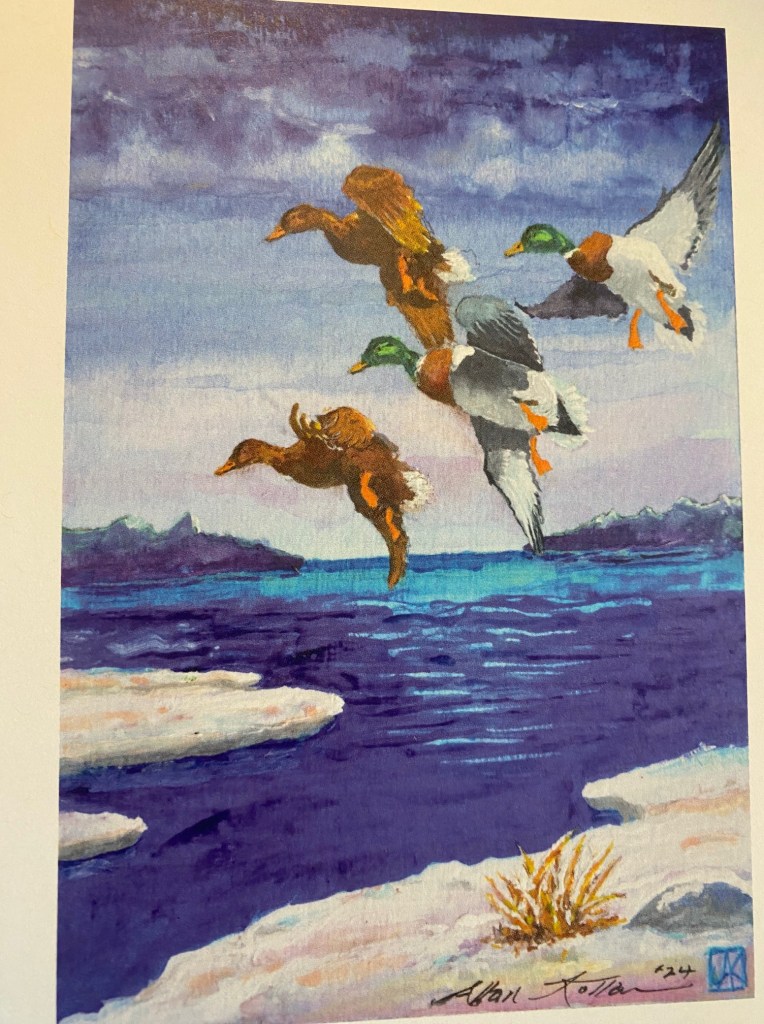
This might be the year I return
in a season when songbirds have flown
but the first snow blesses brown grass
and skaters in red scarves carve
figure eightrs on the frozen cove
before Father calls us home,
his flashlight forming a cone directing
us back to where we belong.
Seasons are like that, marking themselves
in migrations. Nature shows off like Hope
born from living through months
with expectant faith that whatever fled
will return like shallow tides to flood.
Sometimes I miss things, Florence says, events
I meant to attend before succumbing to sleep.
Yet deep in morening dreams, departed friends
return, their names and forgotten faces arrive,
bringing me what I feared had flown away.
 Mary's Room With a View