Who has seen the wind?
Neither I nor you:
But when the leaves hang trembling,
The wind is passing through.

Who has seen the wind?
Neither you nor I:
But when the trees bow down their heads,
The wind is passing by.

Christina Rossetti
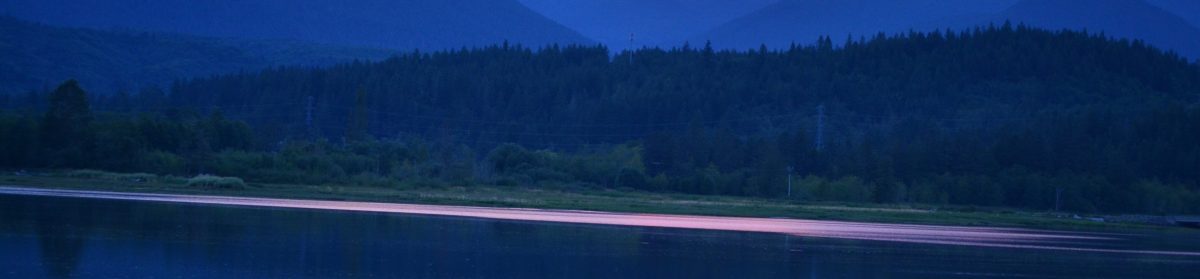
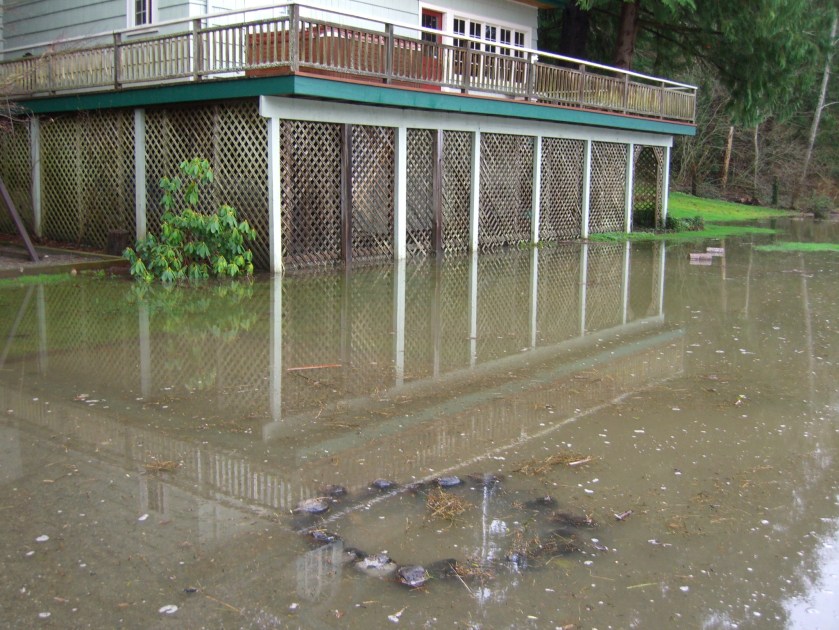
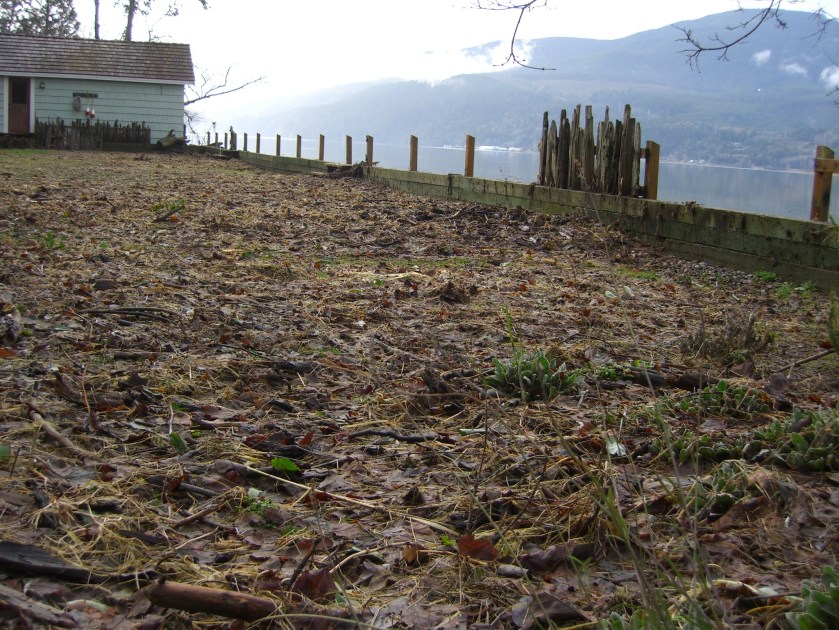
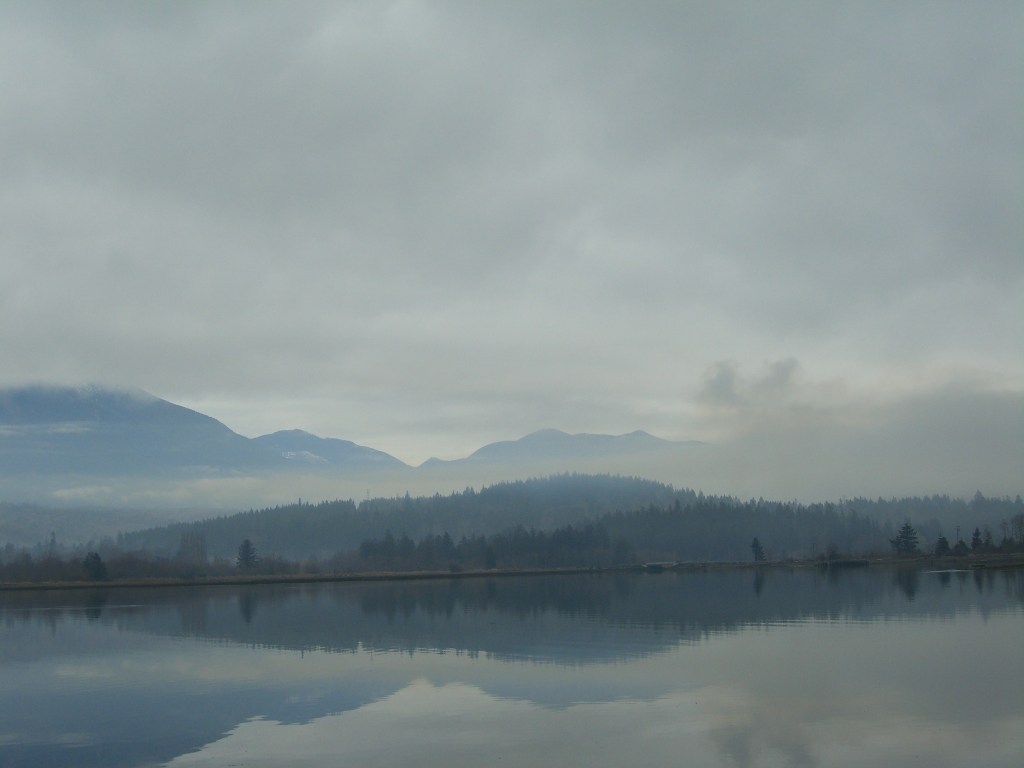
Lines my Victorian-loving father recited to me. Today, winds waft in from the Southwest forming greedy tongues on the surface of Quilcene Bay. High tide surges in as if pushed by an eager parent sending a child on a swing. Waves carry fallen logs snatched along shorelines, and those logs are cradles rocking recklessly on the incoming tide. If this January tide is high enough, logs will be battering rams to wipe out our driftwood fence, falling each picket like a domino collapsing its neighbor. Then the waters will laugh through the gaps and surge across the lawn, all the way to our front deck. In past years, we have looked over the deck’s railing at roiling salt water. We looked down and held our waiting breath for ebb tide to return.
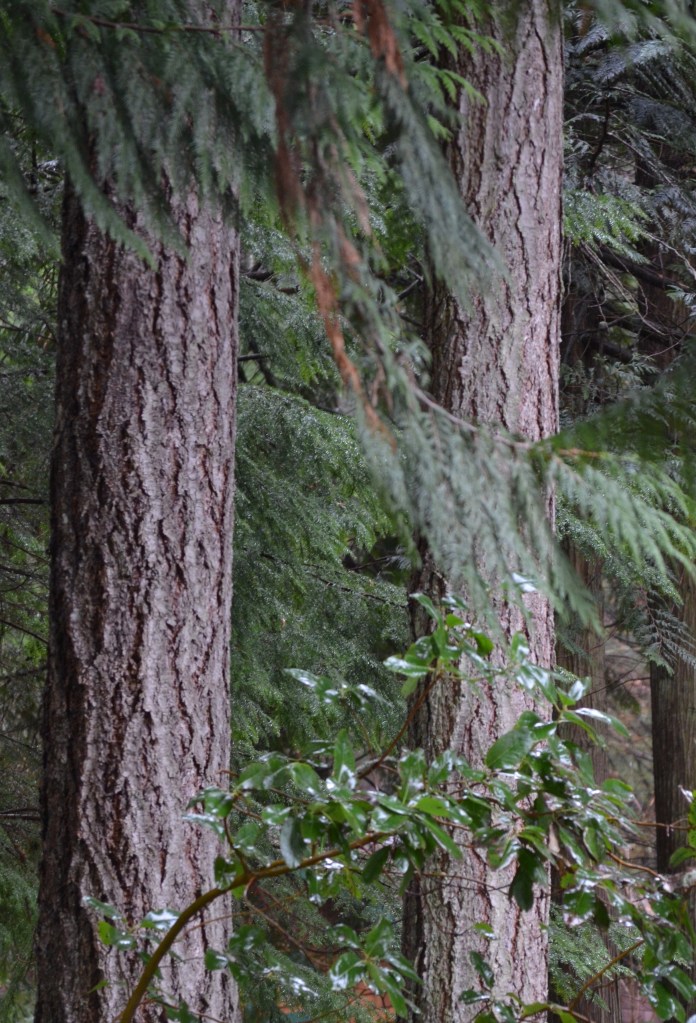
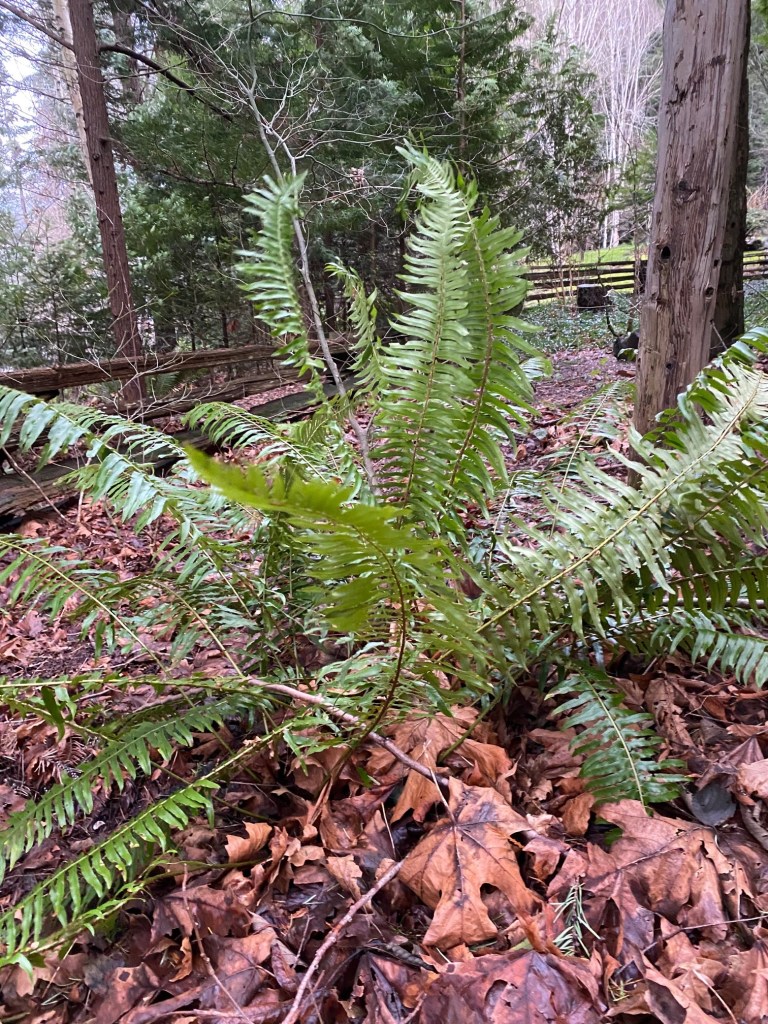
In the surrounding woods, cedars and Douglas Firs dance as if the band won’t take a break. Ferns lean over, revealing under fronds like girls who toss their hair over their heads to dry in the sun. There is no sunshine today. January 2, 2021 blows in the New Year, and I am celebrating fresh air. Barring a brittle alder limb crashing over my head as I walk the trails, and ignoring the threat the power could go out in the cabin, I am having fun.
When my daughter was between three and six-years-old, together we took Windy Day Walks, usually on October afternoons, another gusty month in the Pacific Northwest. Holding hands and skip-walking among falling leaves and plopping acorn hats, we recited Winnie the Pooh’s winter poem titled, simply, “Pooh’s Poem” in which my little girl played Piglet to my Pooh:
The more it snows, Tiddely Pom
The more it goes, Tiddely Pom
The more it goes, Tiddely Pom
On snowing.
And nobody knows, Tiddely Pom
How cold my toes, Tiddely Pom
How cold my toes, Tiddely Pom
                      Are growing.
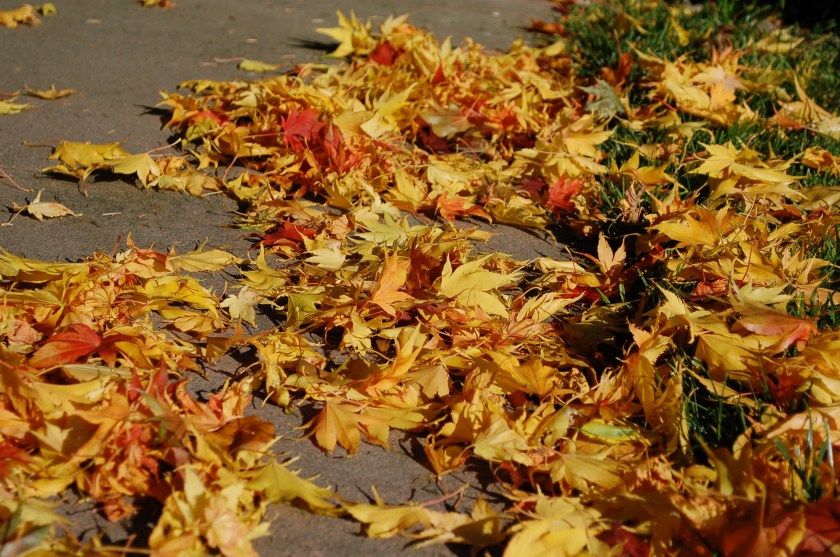
My daughter was always on cue with her tiddely poms increasing with exuberance as if we were a pas de deux. I confess that I devised the game to encourage us to get exercise on a windy day. She might have enjoyed more to stay indoors with Sesame Street. Poetry, a line and refrain, kept one skipping foot ahead of another until we were around a half dozen blocks and back home sipping tea.
“Who can see the wind / neither you nor I. ” Yes, unseen forces inspire our imagination. Today’s wind is the brushwork of the creative God, reminding me on this second day of a New Year the immensity of forces surrounding me. I am never alone in the woods or on the waters. I might as well have fun and inhale all the fresh air of a New Year.


 All are ready to eat NOW, but we can’t consume it all, and neighbors graciously accept only enough for a salad or two. As you sow, so shall you reap. Did I over-sow? With minimal reading of seed packets, I should have planted sequentially, a few seeds each subsequent week, and prepared for a staged harvest (consequences). About a dozen years ago, I bought a small one-gallon size fig tree and planted it in the middle of our little orchard where a pear tree had failed. Yesterday we drove up and down East Quilcene Road with buckets of figs for neighbors we hoped would accept some. Luckily, Scott and Susan have a food drier and accepted the load. How could I ever have imagined that little potted fig would produce so many? Neighbor Raj calls figs “the fruit of the gods.” Funny that we live at the foot of Mt. Olympus, because our fig harvest this year could supply a bacchanalia for every god from wood nymph to Zeus.
  Some consequences we should/could have foreseen. Others resulted without possible foresight.
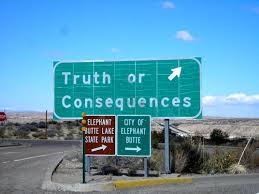
 These are the consequences of justice. Such ironic justice explains the popularity of mysteries. it is satisfying to see the criminal in irons, even more so if, as Hamlet plots revenge on Claudius, the miscreant is “hoisted by his own petard.”
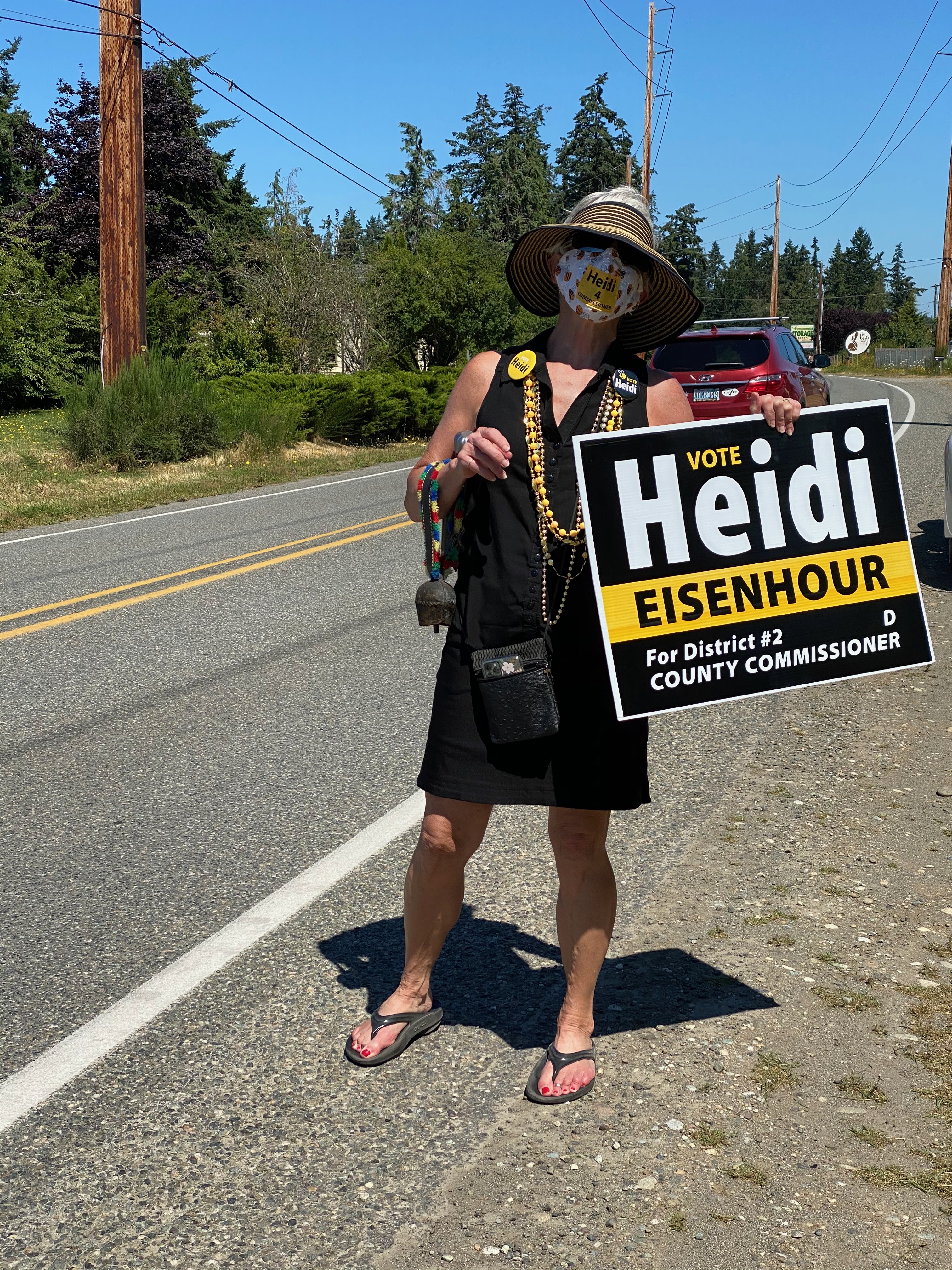
 After washing our hands at the soap pump – local, home-brewed soap –our invitation was checked off at the entrance by a friendly masked host who ushered us to our sanitized table.
 Perhaps not so, if you don’t happen to like your governor, or the governor belongs to a political party with which you don’t identify. Sad, but true, communicating emergencies connotes urgency depending on who sends out the warning. Hard to think if we get the next big earthquake and warnings come from your unpopular government official so you stay exposed to falling structures. Perhaps the shaking ground will prompt people to safety.
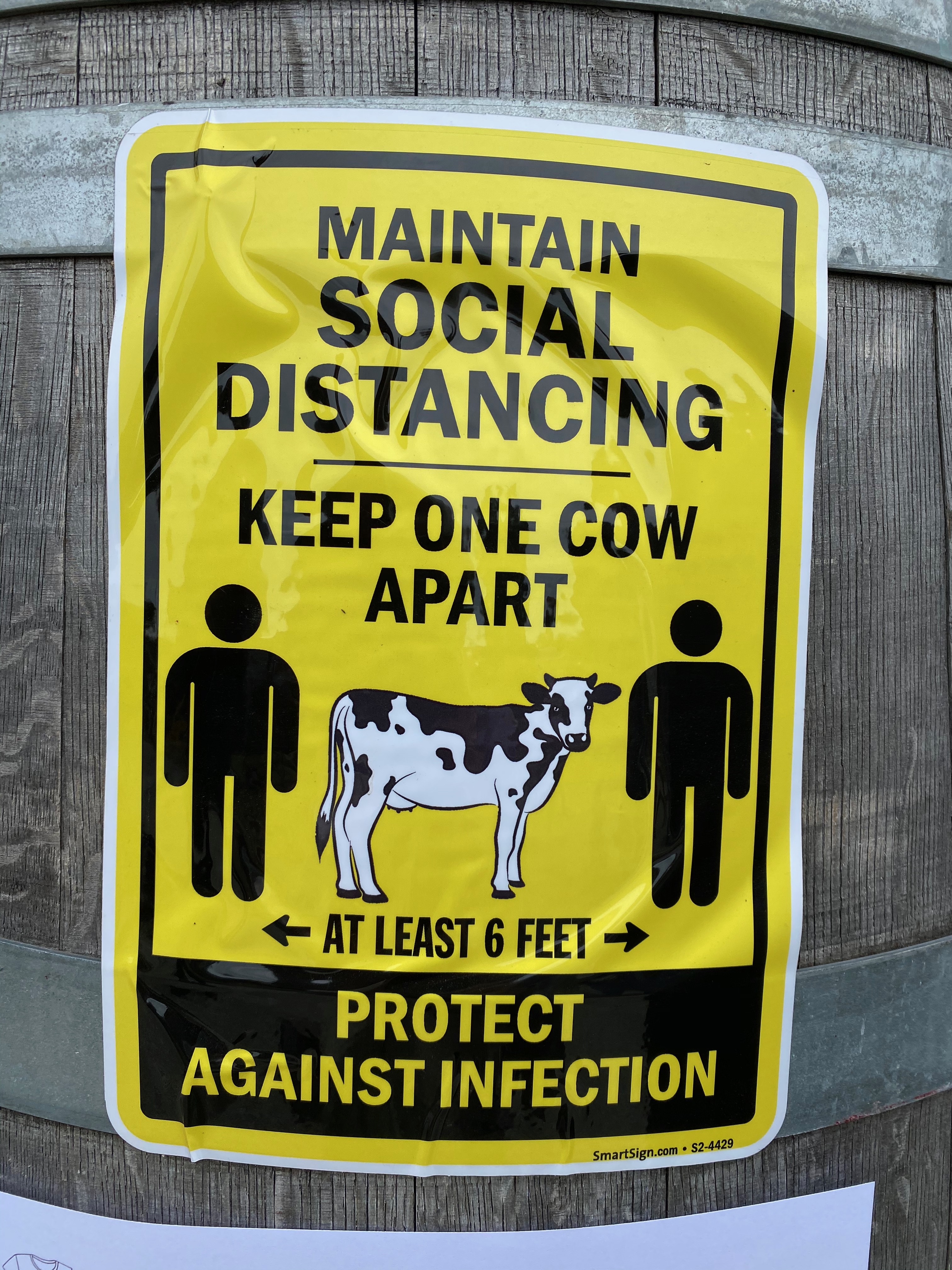
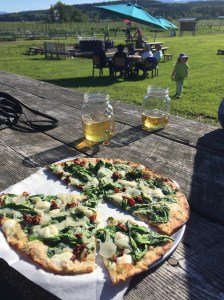 There I was enjoying my veggie pizza and Apple Oak Cider while envisioning a heifer between my friend Kathryn and me.
![IMG_0779[1]](https://thoughtsafterseventy.com/wp-content/uploads/2020/07/img_07791.jpg?w=224) My imagination is engaged. I can feel a bull’s snorting breath on my derriere. Had I been inclined to take a shortcut through the rancher’s field, I dismiss the notion with a laugh.
My imagination is engaged. I can feel a bull’s snorting breath on my derriere. Had I been inclined to take a shortcut through the rancher’s field, I dismiss the notion with a laugh.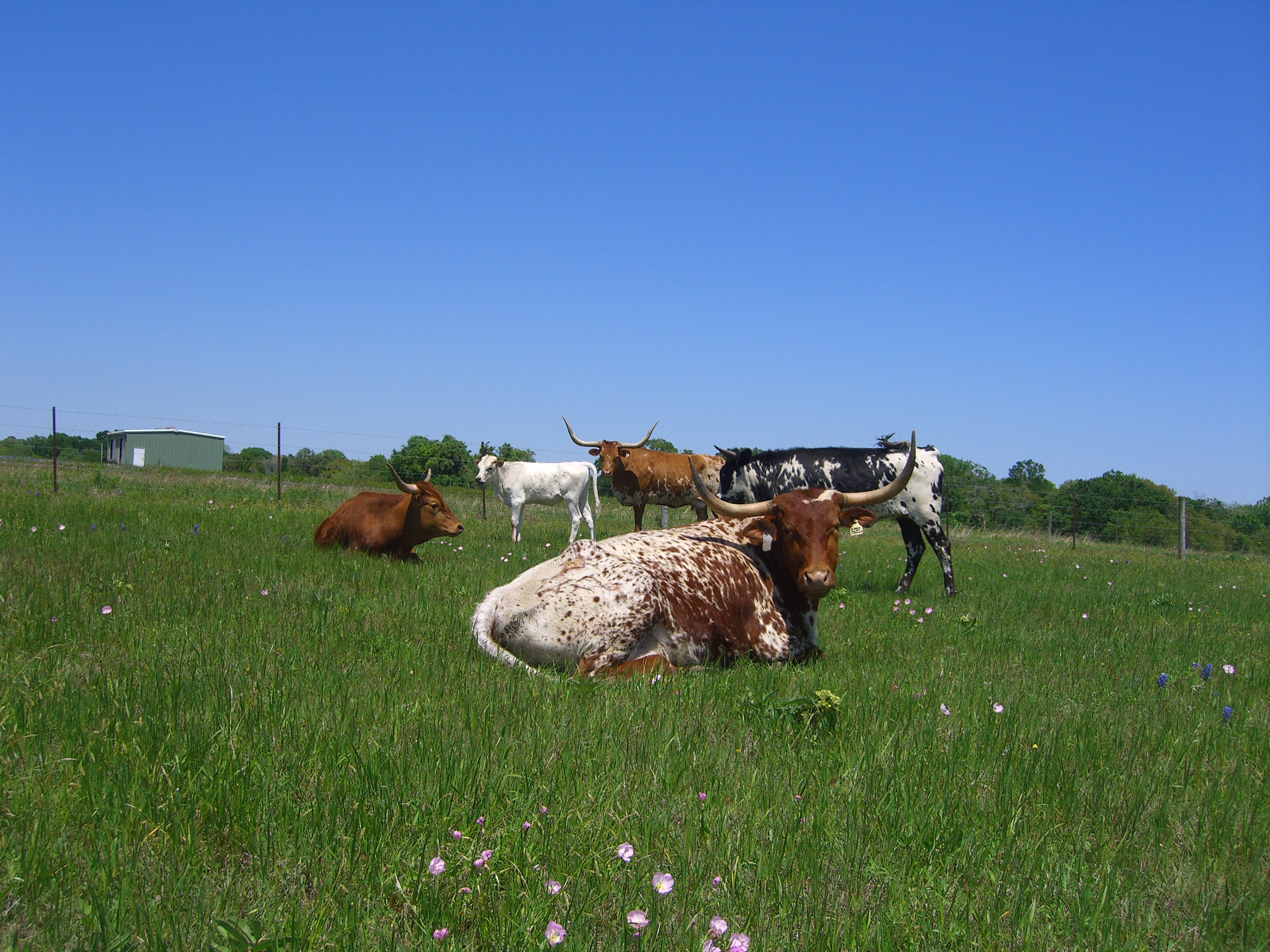

 Summer nights we drive with the guys to cranberry bogs where the boys take.22 gage rifles from the car’s trunk and aim them out toward the bogs where frogs have stilled their songs. Then the guns fire, the shooters gleefully enjoying the sight of frog parts exploding among the cranberries. Easy, fear-frozen targets for reckless teenagers.
 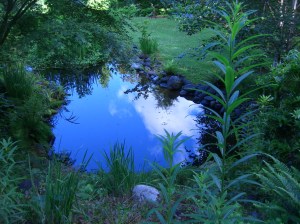 Here in the Pacific Northwest, in March, Nature’s early promise of spring comes with frog song from the pond and surrounding woods. Weeks before robins, chickadees and violet-green swallows take up their warbling sopranos, the bass line is sung by frogs caroling for potential mates from misty dawn until dusk.
 How can we value those songs we take for granted, knowing they are not our own, but somewhere around us in the vernal woods and waters that we treasure?
![IMG_0423[1]](https://thoughtsafterseventy.com/wp-content/uploads/2020/05/img_04231.jpg?w=764) Peter Pan met Wendy when he came to ask her to sew his shadow back in place, having lost it when escaping through a window that closed, separating himself from his other half.
Peter Pan met Wendy when he came to ask her to sew his shadow back in place, having lost it when escaping through a window that closed, separating himself from his other half. 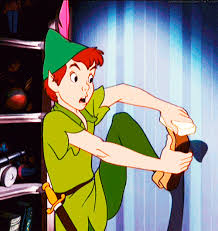 Detaching from our shadows is a fantastical fright, for what is more intimate and yet mysterious than our shadow, our companion from the first sunny days of our lives? We watch it grow with our own growth and with the rise or fall of sunlight behind us.
![IMG_0420[1]](https://thoughtsafterseventy.com/wp-content/uploads/2020/05/img_04201.jpg?w=224) Most days, unmindful of my shadow, I am surprised when I notice it lengthening before me on a spring walk. I notice my aging stance. Did my knee always turn in at a funny angle, or is this something new? Communicating with our shadows is a self-indulgent pleasure .
Most days, unmindful of my shadow, I am surprised when I notice it lengthening before me on a spring walk. I notice my aging stance. Did my knee always turn in at a funny angle, or is this something new? Communicating with our shadows is a self-indulgent pleasure . Sometimes the shadows share importance with the object, as in some paintings by Norman Lundin. His many compositional brilliances that feature shadows cast across classroom blackboards are equally as important as the object or person who cast them. Our admiring eye finds pleasure in the angles of lines across a flat surface.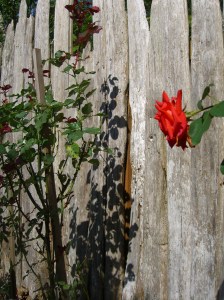
![IMG_0419[1]](https://thoughtsafterseventy.com/wp-content/uploads/2020/05/img_04191.jpg?w=224)
 No icy fingers reached to pull me inside.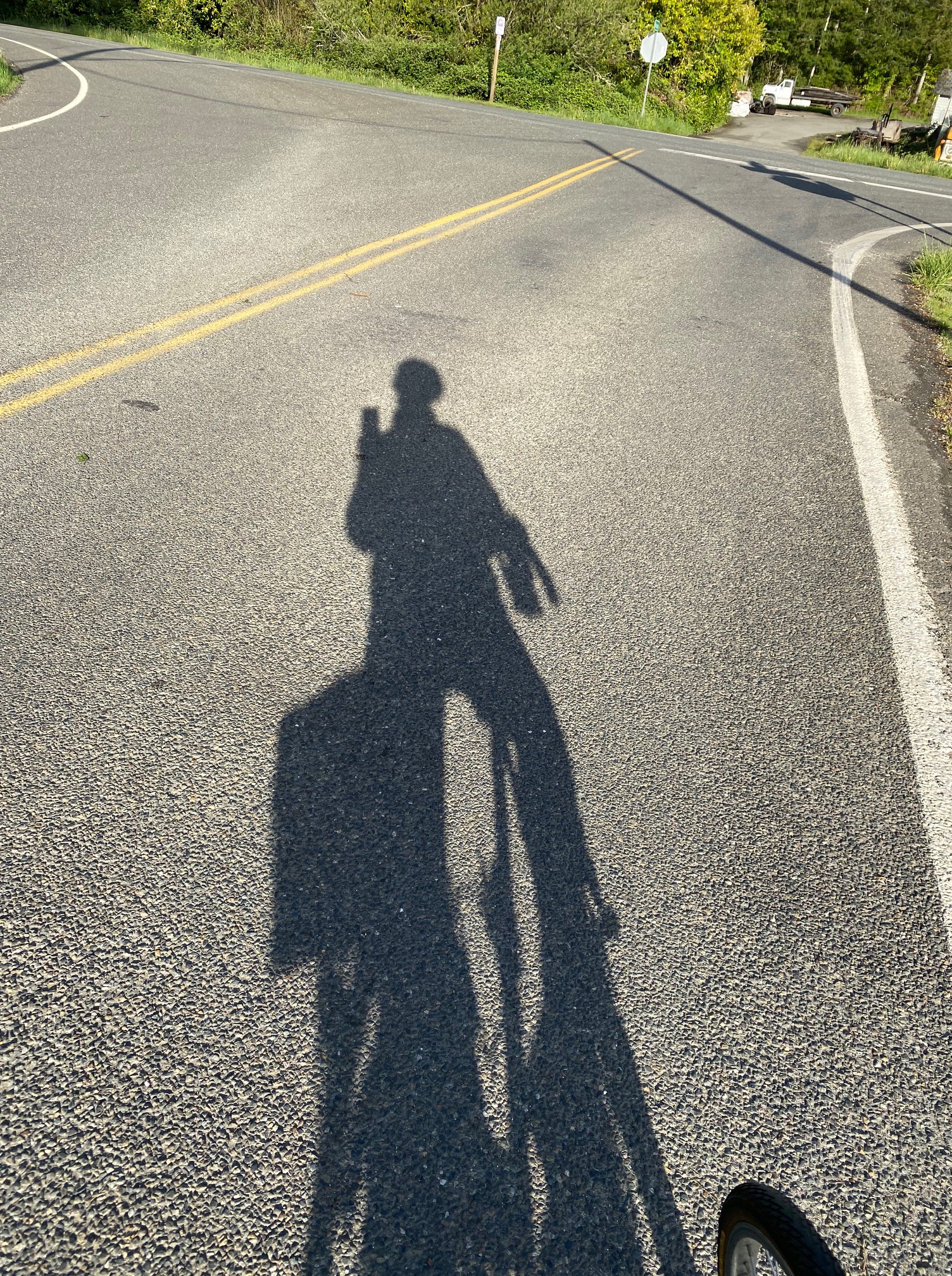
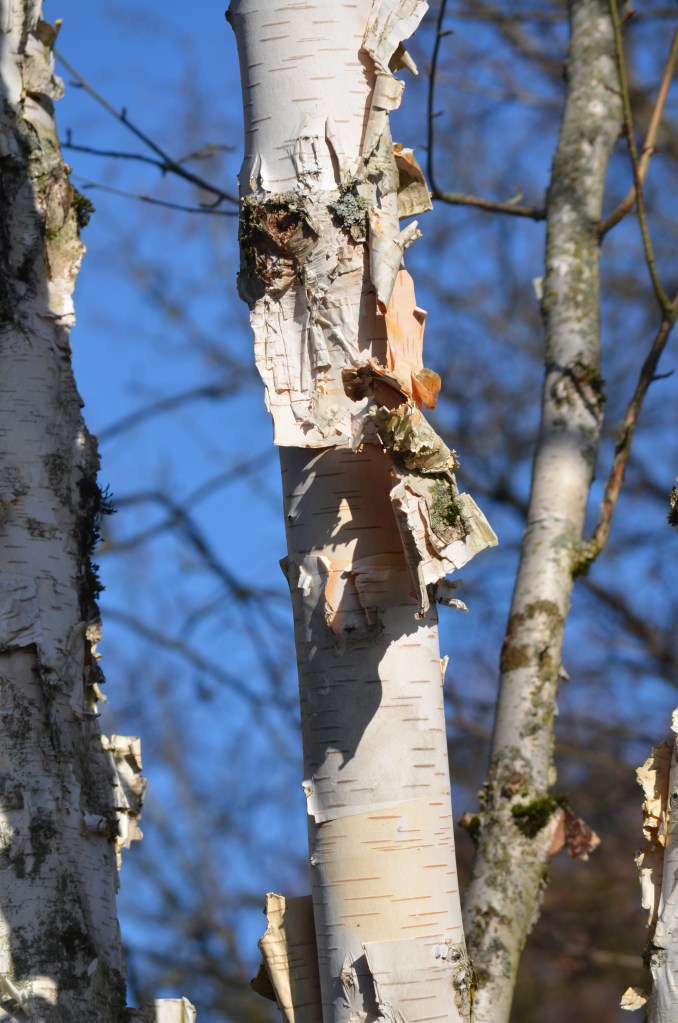

![IMG_0278[1]](https://thoughtsafterseventy.com/wp-content/uploads/2020/03/img_02781.jpg?w=224) Some trees are decaying remains of towering firs, in their slow death, still useful for persistent woodpeckers. Stellar’s jays drop from limbs above, then hop along behind us snatching peanuts in defiance of Homer who long ago gave up terrorizing the hungry birds, choosing instead to pounce between us on a bench where he nestles against the warm coffee mugs. Today, we have passed our first trillium sticking up like a green finger from the middle of our trail.
Some trees are decaying remains of towering firs, in their slow death, still useful for persistent woodpeckers. Stellar’s jays drop from limbs above, then hop along behind us snatching peanuts in defiance of Homer who long ago gave up terrorizing the hungry birds, choosing instead to pounce between us on a bench where he nestles against the warm coffee mugs. Today, we have passed our first trillium sticking up like a green finger from the middle of our trail. ![IMG_0282[1]](https://thoughtsafterseventy.com/wp-content/uploads/2020/03/img_02821.jpg?w=224) We have touched the pliant leaves of wild plums.
We have touched the pliant leaves of wild plums.![IMG_0283[1]](https://thoughtsafterseventy.com/wp-content/uploads/2020/03/img_02831.jpg?w=224)
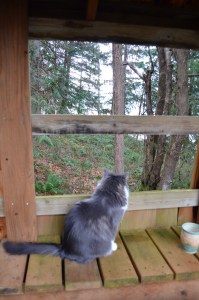 Those mugs are drained of coffee as we step down the ladder. Sometimes Homer rides Allan’s shoulder, for the cat’s weight makes a downward climb cumbersome. Then we are off down the trail to the sandy beach. This bench affords a western panorama of Olympic foothills. The sun illumines snowpack or new spring green.
  Along this lower trail, I kneel to clear off fallen leaves that cover two crosses made of stones, one with the name Celeste, the other Toulouse, grave sites of our first two felines whose companionship named our routine the Kitty Walk.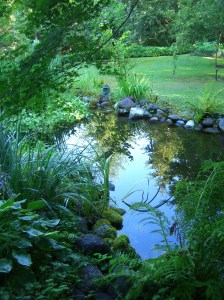
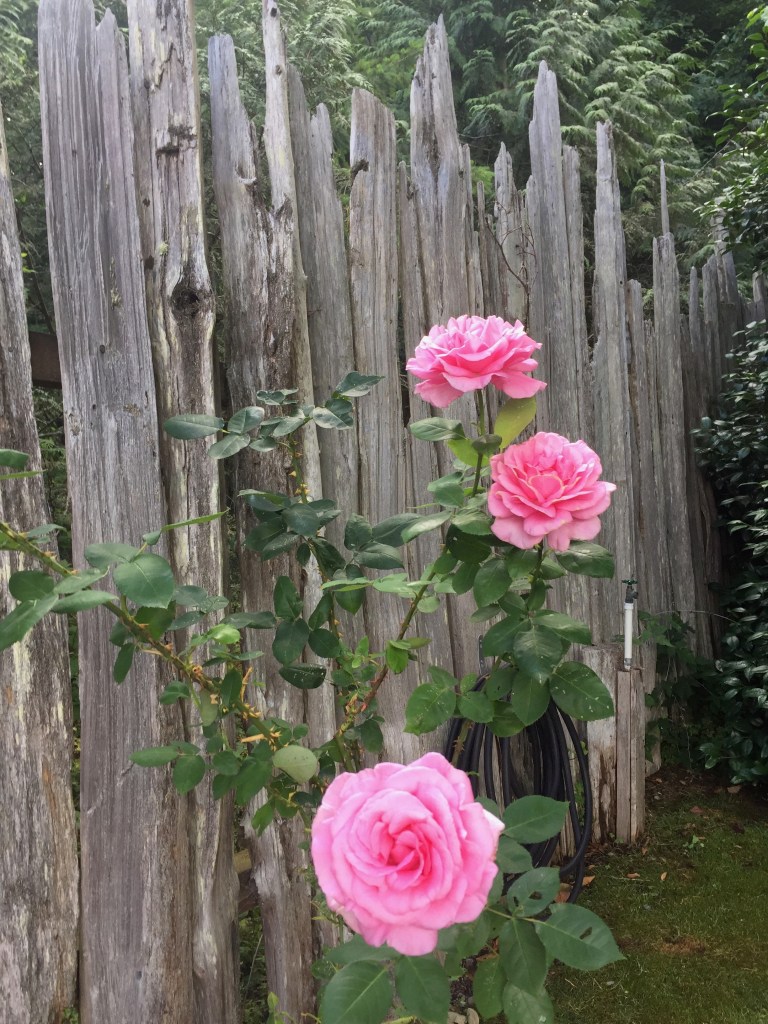
 Mary's Room With a View