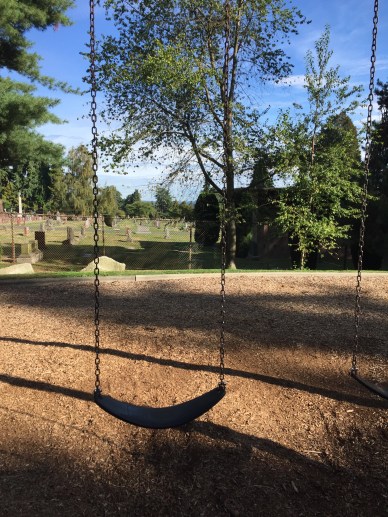
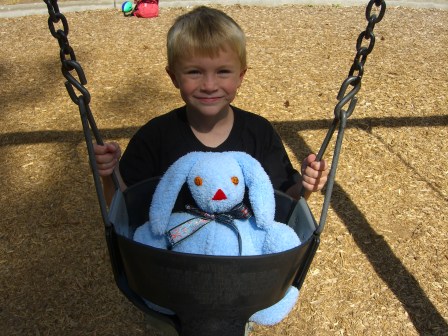
 A late September afternoon, I am walking home through Volunteer Park, past the playground, quiet as expectation now that children are back to school. Swings, slides, and sculptures for climbing stand silent midst a leaf-spotted lawn that borders Seattle’s historic Lakeview Cemetery. A chain link fence separates a high swinging child and rows of manicured tombstones, many erected in homage to the settlers who first populated our city with Gold Rush, timber-eager adventurers. Pausing before a limp swing lit with early autumn light, I am back seventeen years, lifting my toddler grandson into the swing, then swooshing the boy and swing for a high cemetery view. When both of us are ready to proceed to the slide, my grandson tells me, “I know, Nana, how all those people died.”
“How?” I ask, accustomed to his surprising perceptions.
“All those big stones fell on them.”
 Well into my grandson’s nineteenth year, I have retold that story to my grandson and the entire family, so it is a chapter in our book of family humor and nostalgia. However, this morning, the passive swing not only reminds me of the funny story. I actually feel his three-year-old self is forever in that swing. Were he to ask, “Nana, push me,” I would not be surprised.
Here in my seventh decade, many of my waking moments exist in multiple time zones. It is a multi-tasking of the mind. I am here at my computer typing away at this blog, while I am simultaneously surrounded by humming electric typewriters in my high school keyboard class, learning to use ten fingers to travel between adjacent keys. I am in that 16-year-old body.
Is living in multiple time zones common? If so, is it more common with older people? This capability to exist mentally in various places at once, is it unique to humans? Is it the same thing as memory? Of course, memory is essential. 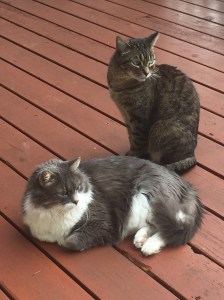 Don’t tell me animals live only in the present with no vital memories. When it is time for us to go to our cottage, and we take out the cooler from the basement, our cats disappear. They know the cooler means travel, equals kitty carriers, equals confinement. We must put them in their carrier before even thinking of fetching the cooler. Yet remembering and simultaneous existence are not the same.
The brain has many rooms to visit, and with age, I find the doors are often left open. For about five years, every month I visited Florence Cotton, a long-time member of our church whose age and infirmities prevented her from attending services. In her 100th year, she acquiesced to moving into an assisted living home. Because I asked how she liked her new residence, she told me that there were many programs there she wanted to attend; however, she often missed them for falling asleep in her chair. A woman who always sought the bright side of disappointments, Florence went on, “But it isn’t all bad. Even though I sleep many more hours now, in my sleep I visit friends and family I had forgotten I knew. They show up just the way I knew them at a certain time of my life.” She savored her time travel.
Simultaneous existence can also be painful. My friend Molly tells me about the day she got up to go to school and found no breakfast waiting, but her mother crying. Her beloved brother died in a car accident while young Molly slept. Decades later, remembering the day with another brother, she said they both began to cry, feeling again their loss as if for the first time.
For me, time has never been linear. 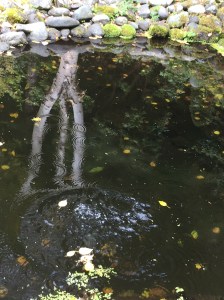 It circles around itself like a whirlpool in a pond, gathering newly dropped leaves as it turns. We are brought back around as we proceed forward. Have you heard the declaration, “I don’t want to go there?” I have. The sentence suggests a benefit to burying the past. Understood, as a way to avoid adversity, but today I am thinking that having lived through so many experiences with so many people, I am in a position to live in two or more places at once, and thus able to be more empathic with others who may be experiencing something for the first time.
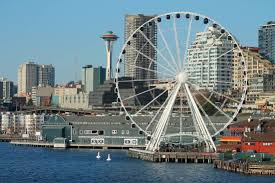
H.G. Wells, and other futuristic writers, embrace time travel. It isn’t a space ship experience where we go to the moon and beyond. Time travel is a ferris wheel circling in the amusement park of life.
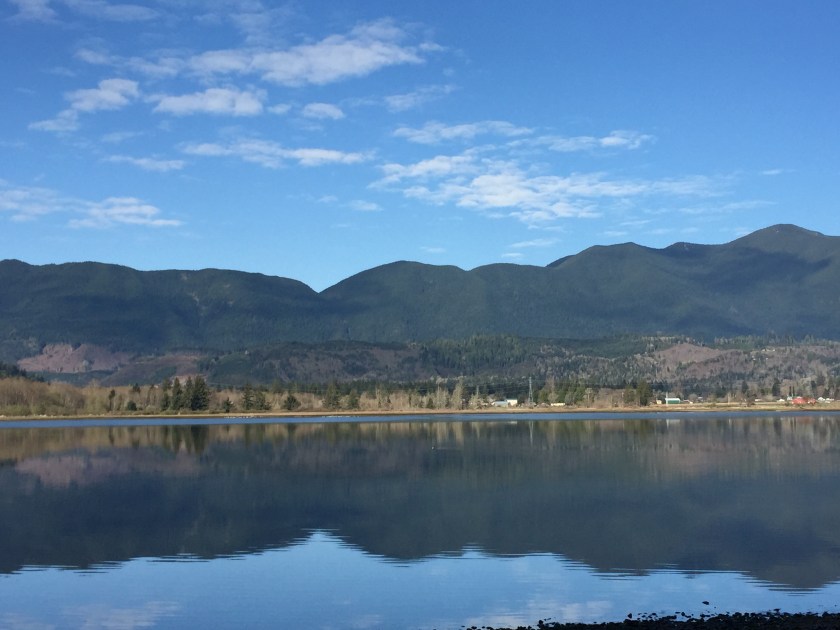
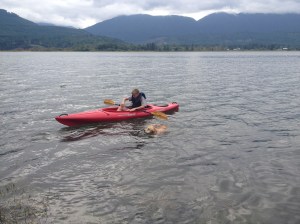 No matter what tasks we are doing, we stop to run through the open gate and plunge in for a swim, push out in a kayak. or balance on a paddle board as soon as a chart in that book registers eight feet or more. Winters, the high tides can exceed 13 feet, and when married to high winds, the sea trespasses, often knocking out the gate with a floating log, white caps swamping our lawn.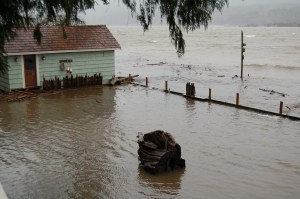
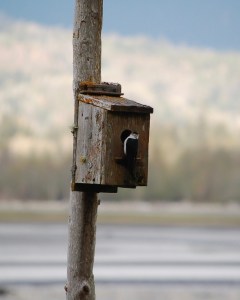 “I love the low tide, as much as the high tide,” he said, reaching for the binoculars to spot heron tiptoeing between the streams and the violet green swallows checking out the boxes he has raised on poles along the shore.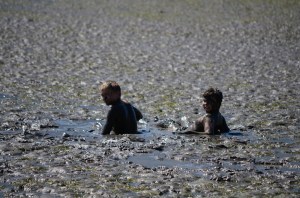
 Changing tides inspire humility, helping me to accept what gifts I didn’t know were coming. Just as high winter tides carry a battering ram of a tree trunk to wipe out our driftwood fence, so the water retreats, dumping our fence and stairs at the end of the bay. Neighbors help us retrieve what is ours, and in our scavenging, we find even better planks for restoration. Low tides uncover oysters and clams: a table-is-set ebbing of culinary fame. Even baby crabs scramble along the shore. In late August, salmon return along the streams that lace the flats. Salmon battle determinedly up those streams between lines of families fishing for a big one to take home for dinner. The tides give and take away, like the hand of a natural god.
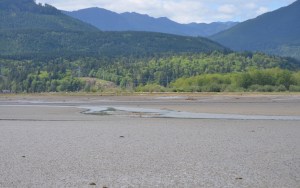 If it is a Low – Low, I may forget that there ever were welcoming waves in front of our cottage. If it is a high tide day, I know I am riding a surface on a paddle board, head-high enjoying the sunset sink behind Mt. Townsend. Most days are those Low Highs or High Lows, but nothing is stagnant. All life is movement. We know the moon will turn from crescent to full, and the bay that emptied all but bubbling craters where clams breathe, will within hours, cover meandering streams with salt and sea.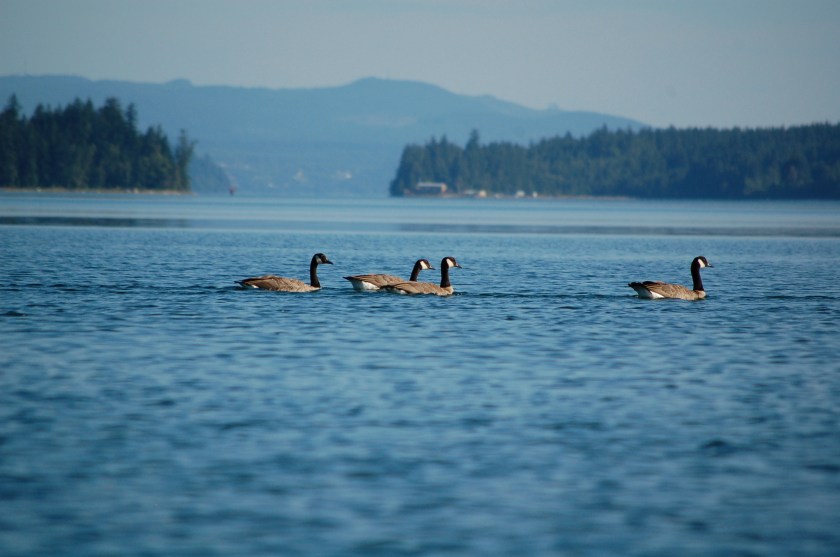
 Barack Obama based his drive to the presidency not on a slogan to “Make America Great Again”, but on hope. The Barack Obama “Hope” poster is an image of President Barak Obama. The image, designed by artist Shepard Fairey, was widely described as iconic.

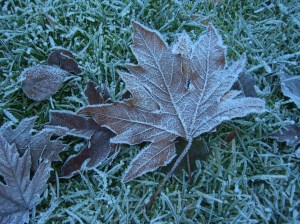 Archibald MacLeish writes in Ars Poetica, “For all the history of grief / An empty doorway and a maple leaf.” What profound absence he expresses in one metaphorical image, so that my heart hollows out with sadness as I picture that open doorway beyond which there is absence. In defining grief, a dictionary would settle for “deep, sadness, often lasting a long time.” The dictionary is accurate enough but cannot replicate the feeling of grief defined in MacLeish’s open door or the falling maple leaf.
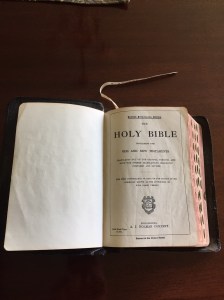 Many Americans have left religion altogether because the Bible remains the cornerstone of churches, and in an empirical age, people will not subscribe to a belief in miracles such as virginal birth. Others, in some fundamentalist churches, turn off the reality button, permitting their literalism to deny what science disproves. The Bible itself abounds in contradictions, making “the word of God” as evasive as mercury spilled from a broken thermometer. For me, literal readings can make the Bible as shallow as a puddle in which we look no deeper than the reflection of our own face. Metaphorical readings expand in lakes and oceans, often feeding channels between islands no one mapped.
 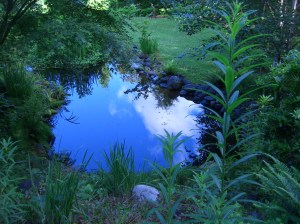 Christ does not have to resurrect in the flesh, offering his wounds to Thomas or anyone else in doubt. Christ can “come again,” among his followers who, despairing his death, realize his teachings never left them, but will endure. Christ had risen!
 These are facts about Ms. Obama’s life there, but it was her metaphorical descriptions of her life from the South Side of Chicago to 1600 Pennsylvania Avenue that helped me to feel what she felt. Metaphor opens the envelope for empathy. What a wonderful organ our brain is that we can look at the moon while Alfred Noyes describes “the moon is a ghostly galleon tossed upon cloudy seas,” and we can see a full sail sailing ship in rough seas and at the same time a real moon, flitting in a tumultuous dance among clouds.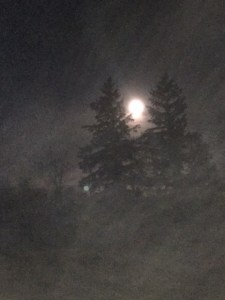
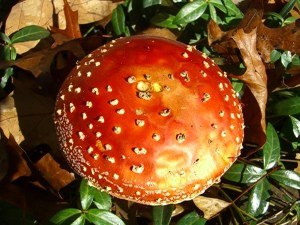 In “retirement,” I became the nanny as well as Nana, to my grandchildren, reading them books, instructing them on names of mushrooms on our walks to the park, and later pressing their chubby palms in to dough as we kneaded loaves of bread.
 Fantasies serve to get us away without getting away. Once retirement comes, we have finally escaped those parts of our jobs we didn’t enjoy. Yet clinging to those displeasures like a demanding child, are those tasks that actually fulfilled us. In teaching, fulfillment might be that very clinging child whose progress depended on our support. From serving others, our work and ourselves gain importance. I confess that upon leaving Woodinville High School, I couldn’t imagine how seniors unable to take my college prep English class would ever survive in college. (Time here for laughter)
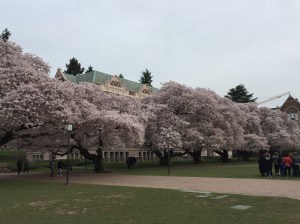 I walked to and from the University of Washington my final years teaching on campus. I walked down the hill each morning, stopping for a latte and scone on the way. At the coffee shop, Jackson, a garrulous Scottish baker, swapped stories with me as I bit into one of her jam-filled scones she pronounced as “Skhanz.” On the way home, I took the opposite bridge across Lake Washington’s ship canal and back up Capitol Hill. Seasons blessed my exercise with meditation on falling chestnuts and blooming early plums. In retirement, I missed that walk, though I could still walk down and around the university whenever I wished. But without a purpose? Years passed until I began offering to walk my daughter’s golden retriever down the hill and through campus, where the dog’s “I love people” expressions and wagging tail attract undergrads who miss their dogs left at home. Now the walk resumes with “purpose. ”
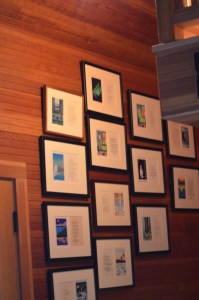
 I email the monthly poem to those not close-by to take a poem from the box. On telling those folks this is my 15th year with the poetry box, my husband’s niece wrote, “We appreciate the lessons and places you’ve taken us with your 15-year commitment to the Poetry Box. Roger and I would likely never discuss poetry without the Poetry Box so thank you for this gift!”

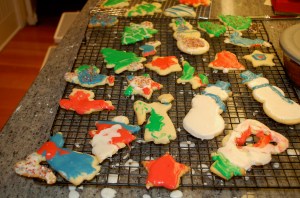 Today, some may be frosting cookies to set on a plate by the fireplace for when Santa descends. The custom may continue each year, long after the children have left for college. Many families either follow established traditions or stumble on to their own, without realizing a little habit or ritual grows like a child whose appetite wants feeding.
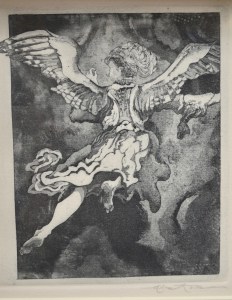 Influenced by the etchings of Rembrandt, Allan drew an elysian image of a descending angel, etched it in a metal plate, and ran twenty-five original prints for those to whom we wanted to send our Christmas greeting. We made no commitment to ourselves or to others that there would be another the following year.
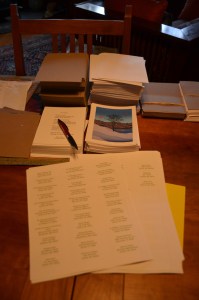
 Inevitably, we needed to trust the reproducing work to a professional with a large studio. Allan still creates the image and cuts the stencils before passing on the stencils to Tori, our third professional printmaker.
 Then there is the Washington Athletic Club group. What started as a small gathering of early-morning athletes celebrating a Holiday Season breakfast, grew to sixty strong. Gordy dresses as Santa. After handing out our cards, Allan describes the artistic process, and acknowledges the fellowship of starting each day with a workout among friends. I read the poem aloud. Each year, we wonder if maybe we should forego the task of contacting catering, renting a room, taking sign-ups in the locker rooms. But each year, club members ask, “What is the date of this year’s breakfast? We love that tradition.” Suspending a “Tradition” can feel like desertion.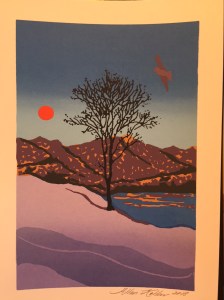
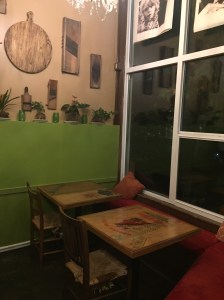
 Later in the morning I meet with a woman I have known for twenty-five years. She asks to meet with me to discuss a sadness in her life for which she believes I might have a shared experience. We have family and friends in common, and they are the subject of her grief. First, we catch up on little things we do to fill our days. Then, testing a shared comfort, she begins to tell her personal story of a loss she experienced years before we met. She pauses. Because I know the Girl Talk script, I sense she is waiting for me to tell of my own loss years before we met. From our stories, there might not arise exact similarities, but there will be a kind of universality of experience that brings understanding to a sad occurrence. People seek reasons for their pain, but will settle for parallels, if reasons can’t be found.
 Gossiping is inherently judgmental, and I regret that it is more often associated with women. But men gossip too. They tell about a business rival who cheats on his income tax. Men’s Sports Gossip (sometimes referred to as “Locker Room Talk”) can be as rough as the sports they discuss.
 The stand-up comedian, Hannah Gadsby from Tasmania, based her humor on the awkward lives of lesbian women. A lesbian herself, she told about her own experiences suffering criticism and misunderstanding. As the show continued, what was at first humorous, became tragic. Annoyance grew to righteous indignation. What she said was no longer funny. The show was, however, profound. My husband didn’t enjoy the show, because of Hannah’s expressed anger, even though he sympathized with her many grievances. If she had spoken softly and slowly, her voice not pitched in indignation, I wonder if he would have more readily accepted the truths she offered.
 . And there you are — all stories are love stories, because through them we bond as we walk along the tangled paths of our human condition.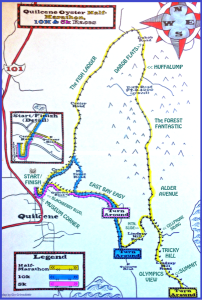
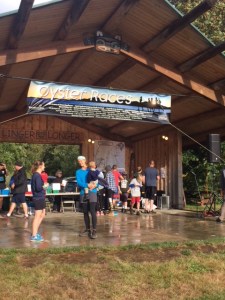 I don’t think I have run more than 6 miles in 2-mile increments, since 2016, when I ran the half marathon (another last minute decision) . This Sunday, I turn on I-Tunes on my phone at the start of the 10K. It will take only two complete replays of Pink Martini’s “Get Happy” album to keep me company until the finish line.
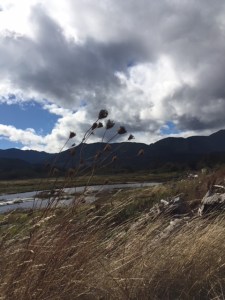 Its force reminds me that I am a slender woman who with a big gust could be blown off the road to topple on to the grassy fields. I pass ancient apple trees, their trunks bent in testament to the wind, fallen apples fragrant with fermentation.
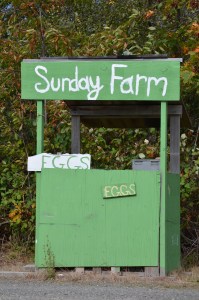 I begin the slow ascent south that will take me by the field where Racer the horse used to run to greet me for a fistful of grass. Gone now, his spirit keeps me running. Soon I approach the water stand outside our own drift-wood fence where my husband sets out paper cups of orange and lime Gatorade on a small table. I grab, gulp and go on. I know the hill rises steeply for another eighth of a mile, the open view from the top, showing the bay is at high tide, the longer autumn shadows splitting the sun on the water’s surface. Blackberries thrive on that hill top, berries now dried and fragrant as old wine. Turn-around for the 10K comes in a dip in the road, darkened on both sides by Palmers’ woods, old as the peninsula itself in giant Doug Firs and Big Leaf Maple trees. If I were not mid-race, their deep woods would invite me in. But here is turn-around, monitored by Linda and Stan Herzog. Linda calls my name. Stan snaps a photo.
 This is an oyster run, celebrating Quilcene’s famous oysters, so the aroma of wood coals and garlic bread already permeates the air. Depending on where you stand, it is fried food or local ale to keep a mind motivated for returning to this spot after the race. Everyone is happy. Those who know me, cheer me on. They seem more confident than I that I will make it the whole way. I will make new friends as the race begins, when I discover whose pace falls in with mine. That is how I meet Michele and Meg. We don’t talk much during the run. All of us are tuned in to whatever music lifts one foot in front of the other, but there are moments of encouragement among us. Good going. Feel free to pass. Yes, the hills are tough for me too. I pass a woman with her arm around her young son, a stalky boy who clearly has some cognitive impairment. He smiles widely at me.
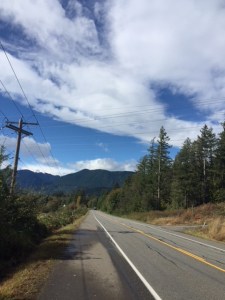 And finally, the physical part. I want to remember when the endorphins kick in after the 2nd kilometer. I am running downhill by the green apple tree where yesterday I stole enough for a pie. I look up to Mt. Walker ahead and my chest fills with autumn-washed air. Breath is wonderful. Deep, deep breath is exhilarating. I could run forever on this feeling. I could spread my arms and mimic the gulls and ravens swooping over the bay. I start to write this essay in my head so no feeling will fail to remain.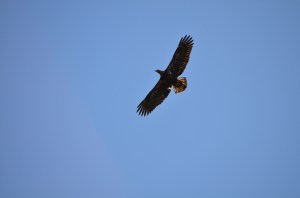
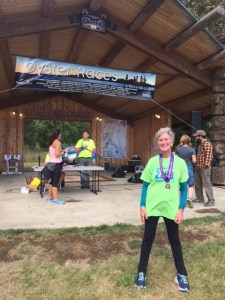 Only after one takes my picture, do I realize my face is raspberry red. I sit by another runner on the grass while our bodies cool. The sun is full out, but I am beginning to chill. My newly acquainted runner drives me back to my cottage where I peel off my running pants and shirt. My tongue tastes salt. My skin feels like salt. I realize I have excreted a good amount of salt water. As soon as I persuade myself to leave the hot tub jets, I will drink a tall glass of water. Every part of my body has been used: my feet, my legs, even my shoulders and neck. I should feel beat up, but I don’t. I feel twenty years younger. Maybe I will get back into this running thing.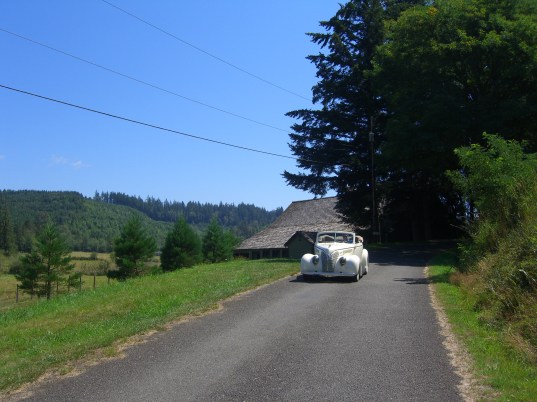
 And none too soon. Driving back to Seattle later that morning, we spot a sleek, futuristic car speeding past us on I-5. Its silver lines are like a heron in flight. Sharp and angular, the chassis is mostly sculpted metal for aerodynamics, with only a small bubble for driver and passenger. As it speeds by our 1997 Toyota, I note a New York State license plate.
 We keep both automobiles at our Hood Canal cottage, driving them only on sunny days, a rarity except for summer months. He also pauses the T.V. remote on the car auction sites when channel surfing for a program we might both enjoy. As for fast women, I can’t say. I snagged him pretty early on, and he was a shy guy who found me interesting enough to ask me to a movie.
 Marsha, for example, had that same silky black hair that cascaded in a rakish wave over her left eye. She rolled her shoulder length hair in wide curlers that she slept on all night. I did the same, waking in the morning, my cheeks branded with curler rounds, having slept fitfully on the plastic rings that were held in place by stiff internal brushes. I also learned how to smoke, tapping out a Pall Mall Thins from Marsha’s pack that she kept in her plastic purse. Those were the sacrifices needed to be a fast woman. I could only dream that the good-looking guys would look at me the way they looked at Marsha.
 Besides, the night before, we stayed up late to watch an old Paul Newman movie, The Young Philadelphians. I can never get enough of Paul Newman with his shirt off. It has been years since I relinquished any fantasy that Paul would leave Joanne Woodward for me. Today I cherish my husband’s stride with a noticeable limp from his basketball years, while I still remember the muscles in his thighs when he leapt for his famous hook shot.
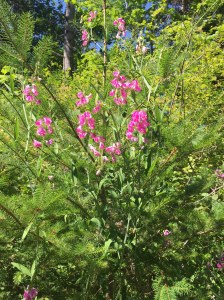 A flowering vine blooms along East Quilcene Road. Its lavender blossoms are bubbles, like sweet peas, so I have called them wild sweet peas, until my neighbor recently shocked me, identifying the vine as vetch. Walking up the road Sunday afternoon, I saw a long, flowering vetch vine winding itself like a garland around a young pine tree. The vine used the tree as a support for its growth, an attractive decoration.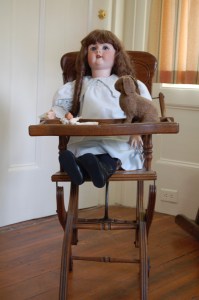
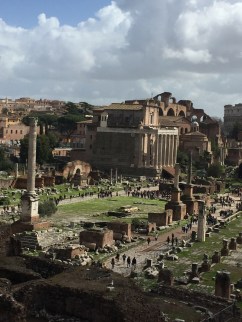 Greta and I had our own cozy VRBO apartment and had just settled in for our first night to adjust to jet lag, when I realized my necklace was no longer around my neck. We both scoured the apartment to no avail. I did not want to dampen the holiday by laying my grief on my granddaughter. I made light of it all until she had fallen asleep. Then I texted my husband back in Seattle, wailing in cyberspace about the loss, how I had loved that necklace he had given me for an anniversary gift. I may even have asked his forgiveness for being so careless in fixing the clasp. His response? “Is that all, Mary? Look now, you still have Greta.” There he was again, my support in an unimagined way.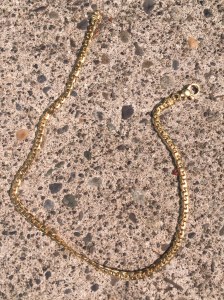
 Mary's Room With a View