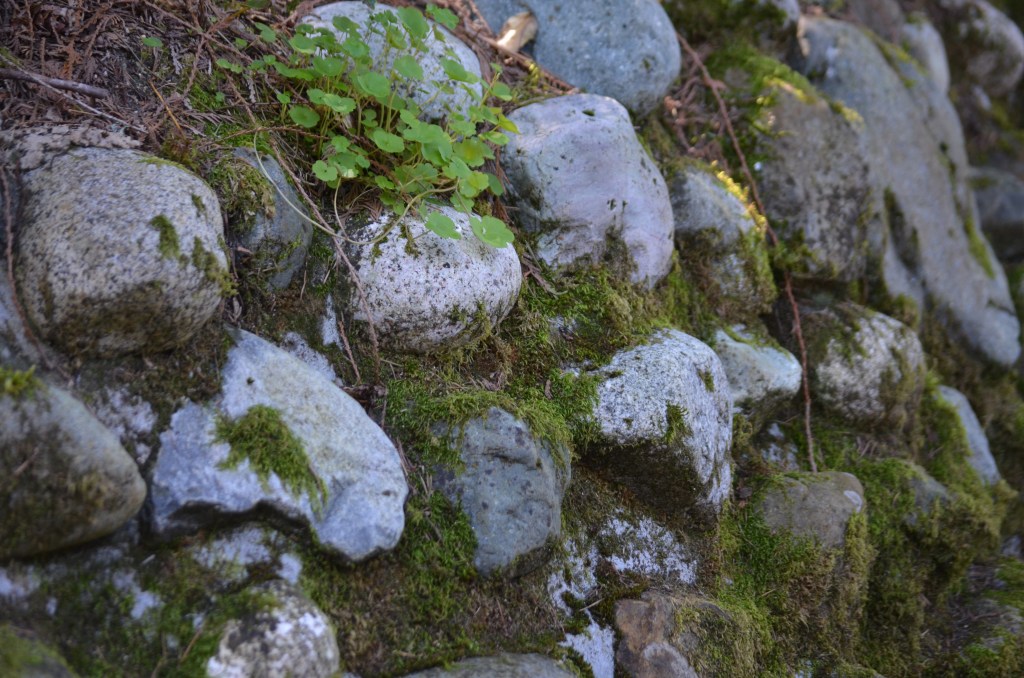
In Robert Frost’s iconic poem “Mending Wall,” it is spring when he meets a neighbor, each on his own side of a crumbing stone wall, to put it aright after winter’s ice tumbled the stones. The neighbor contends, “Good fences make good neighbors.” The wall serves no purpose, so the poet flirts with nudging his neighbor away from maintaining the barrier, acknowledging its uselessness. “Flirts,” because he doesn’t want to scold his neighbor into adopting his point of view, but rather to plant a seed to grow the man’s questioning of the wall’s value. Frost writes, “Spring is the mischief in me, and I wonder / if I could put a notion in his head: / ‘Why do they make good neighbors?’”
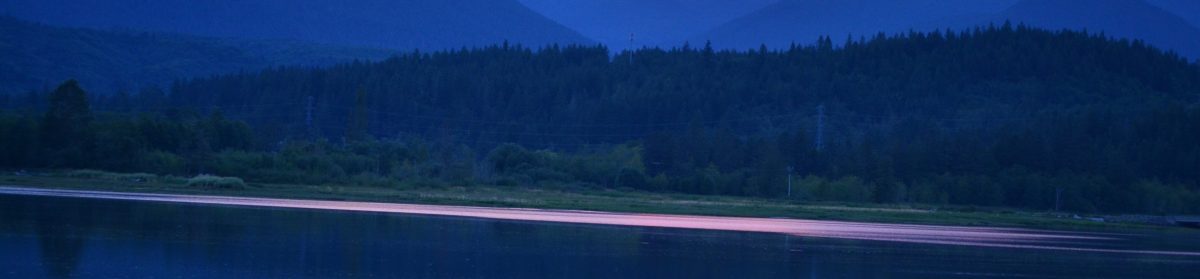
“Spring is the mischief” slipped into my thoughts this morning where I sat with my steaming coffee mug on a bench above the pond, and overlooked my ploughed vegetable garden, last week’s seeded rows lined beneath floating row covers, as if soft clouds were down comforters over vegetables planted in a one-day gift of March sunshine. Yesterday, when I peeked underneath the white cloth, spring pleased me with tiny green shoots of arugula and radish. Tomorrow a heavy frost is forecast before April opens up a week of sun and warmth. Will I lose my early green vegetables? If it is not mischievous, spring is certainly fickle.
All nature is human nature. Frost’s poem remains iconic, season upon season, because among images of walls, cows and apple trees, the poet places a conversation about persuasion. How do we coach another person to rethink a firmly held position? Such positions often have the easily quotable “evidence” of bumper stickers or scripture. What a memorable adage: “Good Fences Make Good Neighbors.” it is hard to dispute it. At best we “try to put a notion in his head,/ Why do they make good neighbors? Isn’t it / Where there are cows? But here there are no cows.” In the long run, Frost concludes what he could say, but would “rather have [his neighbor]say it for himself.”
In the last polarizing year, I have struggled to understand people who think differently than I do. My husband once joked to friends, “I married Mary for her opinions.” As a career teacher, I had thirty years standing in front of twenty to thirty young people, hoping to convince them to embrace Shakespeare, parallel sentence structure, and poetry. Having so many years of “telling,” now outside of the classroom, I am learning better how to listen, and, with luck, to nudge a person’s attitudes, rather than dictate and follow up with a final exam.
For example, should I care that approximately 40% of certain populations refuse to get Covid vaccines? Is it my job to meet my neighbor at the wall of their refusal and try to nudge them into understanding that getting vaccinated may be a gift to our community? My neighbor is, in many ways, a community supporter, the first to arrange a fundraising Christmas auction to pay for gifts for underserved families. He greets me on the road along the bay where I walk afternoons and where he drives his red pick-up polished to perfection.
“Miss seeing you guys,” he shouts.
“ Got your vaccination yet?” I call back.
“No,” he replies. “Sarah (his wife) got hers.”
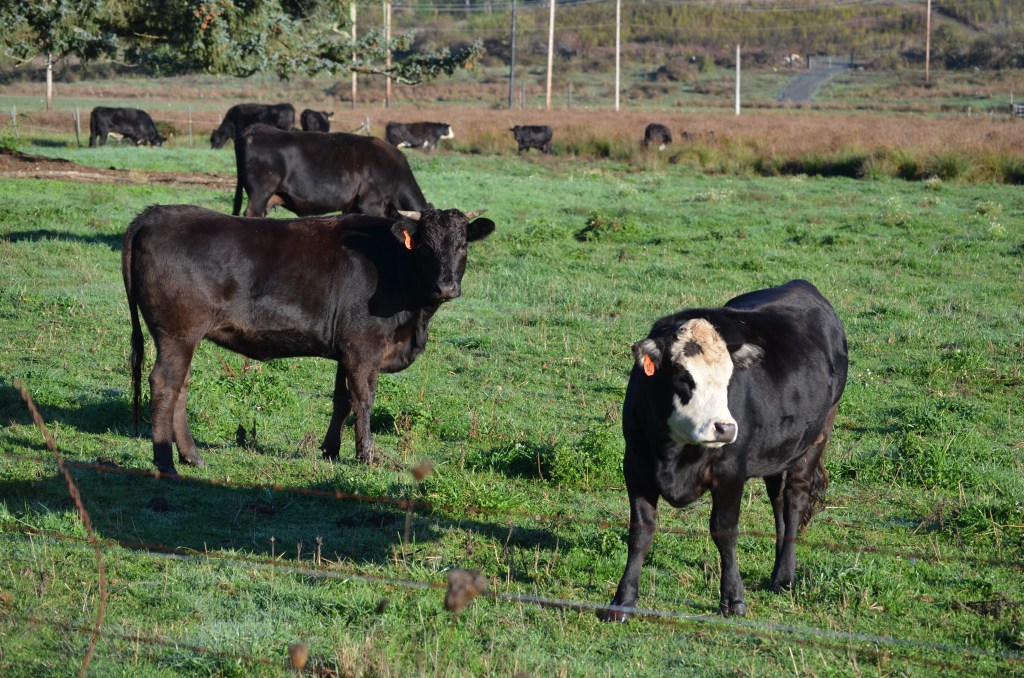
I am familiar with his political persuasions. I infer that he will not get a vaccination. Standing by the fence that surrounds Joe Packer’s steers, I say nothing.
Perhaps spring is the best educator. Every year it returns with the equinox, drags us out of bed earlier and keeps us outside planting seeds long after the usual dinner hour. We unconsciously follow her diurnal temptations, one step forward into cultivation, one step back to replant after cruel frosts. This spring my venturing out to plant seeds of understanding in a sodden soil, I have felt the sting of frost-bitten fingers. But there are more seeds in the packet, and if next week the temperature really does reach sixty-five degrees, I will spade a new row in welcoming earth, measure distance between seeds, and pat the earth with my own warm hands.

I

 Mary's Room With a View
Such a beaut Mary.
LikeLike
Thanks Kathryn. I miss seeing you
LikeLike
Hi Mary,
I like the way you drew the connection of Frost’s ideas regarding persuasion to the issue of vaccine hesitancy. Stephen Colbert interviewed one of his young staff writers regarding hesitancy related to the J&J vaccine, and she came up with a clever approach to convincing people that their worries should be put in perspective. See this link, starting at 3:03: https://www.youtube.com/watch?v=XrJ28KgLndY . I doubt that she was inspired by Frost when creating her arguments, but to me they are an example.
Applying Frost’s model to negative situations, the whole advertising business relies on effective persuasion to sell products and services in an effort to give companies and organizations a competitive edge. And propaganda is a more insidious version of persuasion, with its users (such as our former president) relying on big lies and glittering generalities to convince their audiences. Again, a far cry from Frost, but his “good fences” prototype lends itself to situations where cooperation is challenging.
My favorite line from the poem is “My apple trees will never get across / And eat the cones under his pines.” Yet I plan to keep the fences around my front and back yards and plead guilty to being as irrational as Frost’s neighbor.
Enjoy Spring!
Sylvia
LikeLike