Common sayings fascinate, not only for their surface wisdom, but also for their substratum implications. What fun to excavate, especially when an adage is spoken as a dictum. Who of us was not advised by our parents, hoping to steer us from troublemakers, “You are known by the company you keep?” In my adolescence, the dictum rarely worked for me, as oftentimes the “troublemakers” displayed exciting lifestyles. My parents hoped to direct me to their notion of “us,” in other words, teenagers at our Congregational Church who gathered Sunday evenings for Pilgrim Youth Fellowship or students enrolled in the college bound curriculum at Newton High. Diversity widened there, but essentially kids on paths our family wanted for “us.” By spending my growing up days with them, my parents assumed those kids’ virtues might control my wanton wandering to the valley of troublemakers whose futures were destined for the state penitentiary or greasy spoon diners.

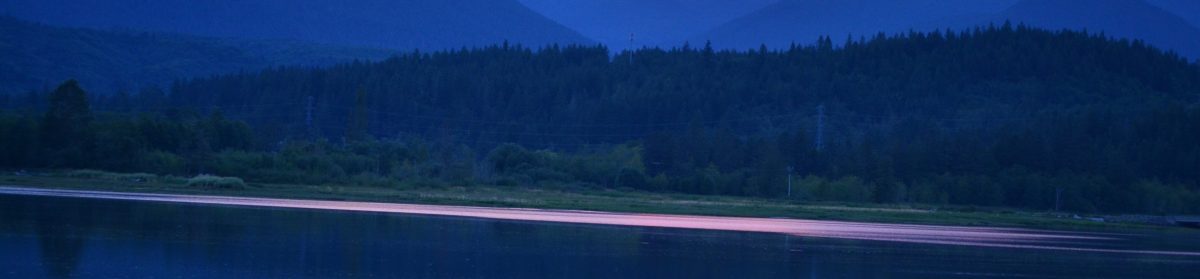
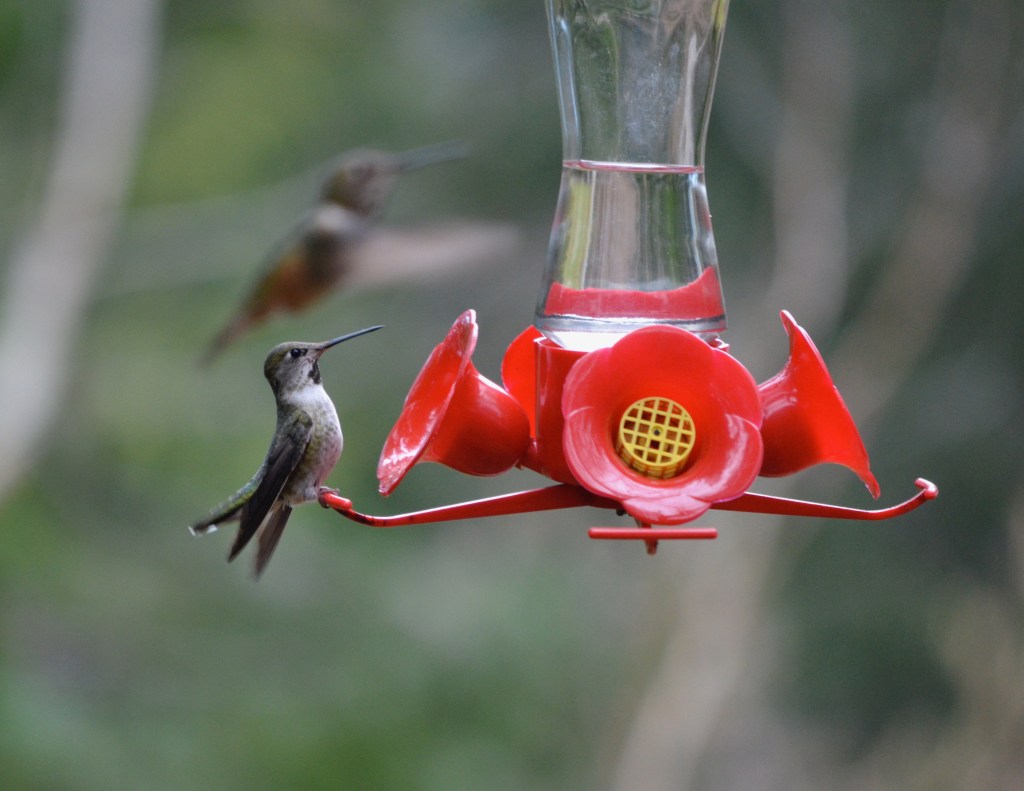
The “Company You Keep” dictum allies with another maxim: “Birds of a feather flock together.” You can learn a lot from birds. One of the blessings of forced isolation this past year is time taken to look outside, if only to your suet cage, to appreciate lives of the birds. The hummingbird hangs out at our red, sugar-water disc, just a pair or two over the winter. Come June we can count over twenty hovering, diving, pushing one aside to get a substantial sip of nectar. All are hummingbirds, but not the most congenial flock, rather a Me First aggression that defies their common species. Geese and ducks float by our Quilcene Bay cottage in rafts of sameness: Canadian geese, a raft of pintail, another raft of widgeon, each with a distinct quack or whistle.
Yet many birds migrate and roost as mixed species. Why? For protection and for sustenance. It has been shown experimentally that chickadees and titmice are used as sentinels by downy woodpeckers foraging in mixed-species flocks. Smaller birds often fly in great flocks of larger birds for protection from raptors that could easily spot and pick them off in single flight.
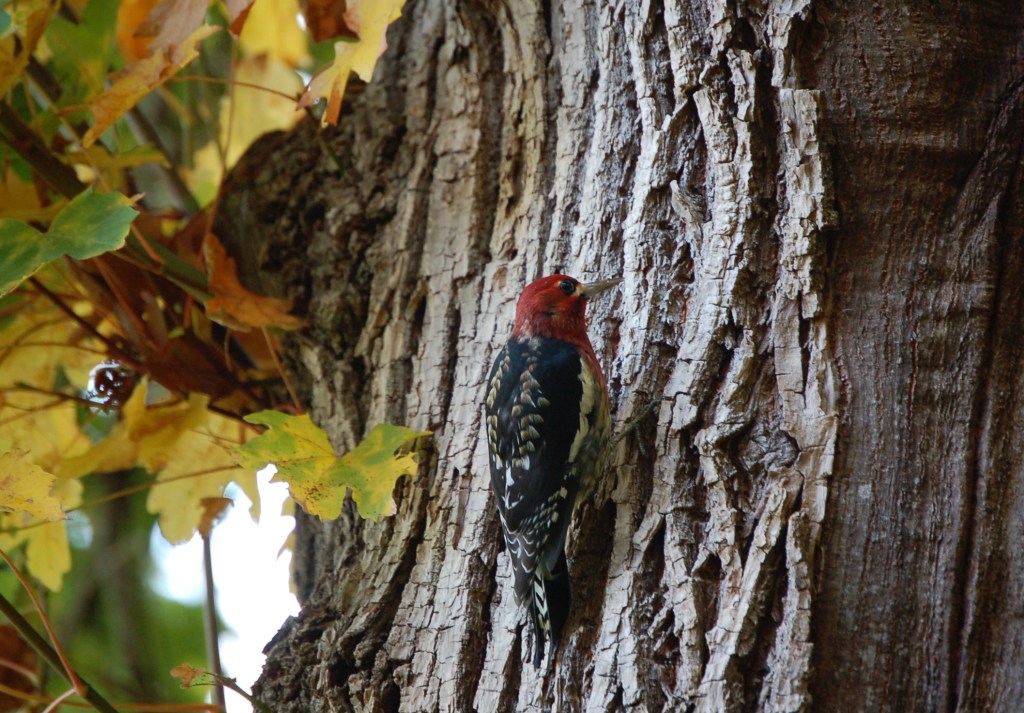
Foraging for food also pays off in mixed species with an increase in feeding efficiency. Migrating groups are able to feed in areas from which single individuals would be ejected by the “owner” of the territory. Having more individuals searching for food increases the likelihood that a rich feeding patch will be located. By moving together in a mixed-species flock, birds with the same sorts of diets can avoid areas that have already been searched for food. Individuals in mixed flocks learn about new food sources from other species; tits have been observed to visit the site where a woodpecker was pecking at bark and to begin pecking in the same place. Associating with birds of different species that have somewhat different food preferences and foraging techniques, each individual faces less competition than it would in a same species flock.
I can’t let my ornithology lessons go without getting back to parents selecting friends or searching for sameness. Having followed their encouragement, I did gather mostly with my WASPish community. In 1958, moving up to Newton High School, a school of 3,000 students, my buddy group didn’t diversify. That, in spite of Newton High’s proud advertisement that it was 1/3 Protestant, 1/3 Catholic, 1/3 Jewish. Looks good on paper, but does not reveal that each third rarely socialized in “mixed species” with the other two. In the college-prep Curriculum One I sat beside Jewish students who didn’t invite me to parties or to join their clubs. The Catholic kids might invite me to follow them to Mass, but were prohibited from attending my Pilgrim Fellowship. Competition for grades and college entrance, led to reinforcing stereotypes feeding anti-Semitism, as several Jewish kids surpassed my academic ability.
And speaking of friendships disallowed, when the Trump followers stormed our national Capitol, I responded in a stupid way, flying away from the flock. Searching to find a reason for such insurrection, hoping reason would explain why anyone would vote for Trump or deny the legitimacy of the election, I emailed two women who have been friends for 60 years. They were the first two girls at Lincoln High to welcome me when my folks moved us from Newton to Seattle in 1960. Ardent Republicans, they likely voted for Trump and may have denied election results, so I concluded that without an explanation I could accept — something to make them more like me — I could no longer communicate with them. Later, maybe too-late, I apologized. I am ashamed.
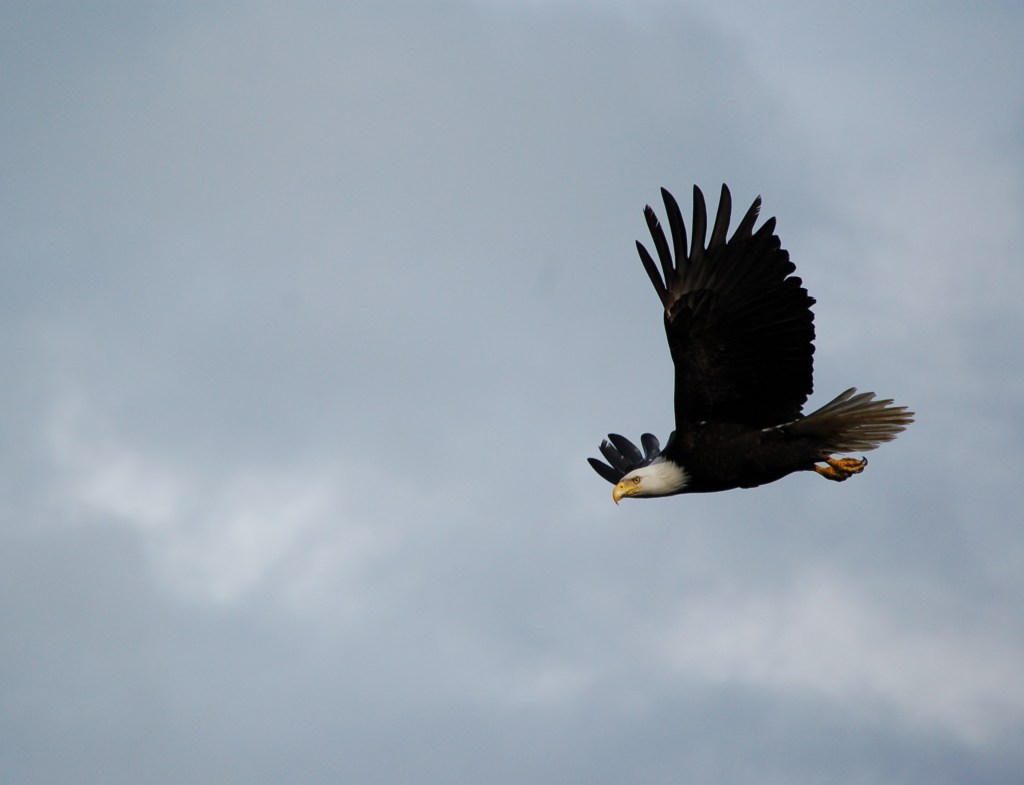
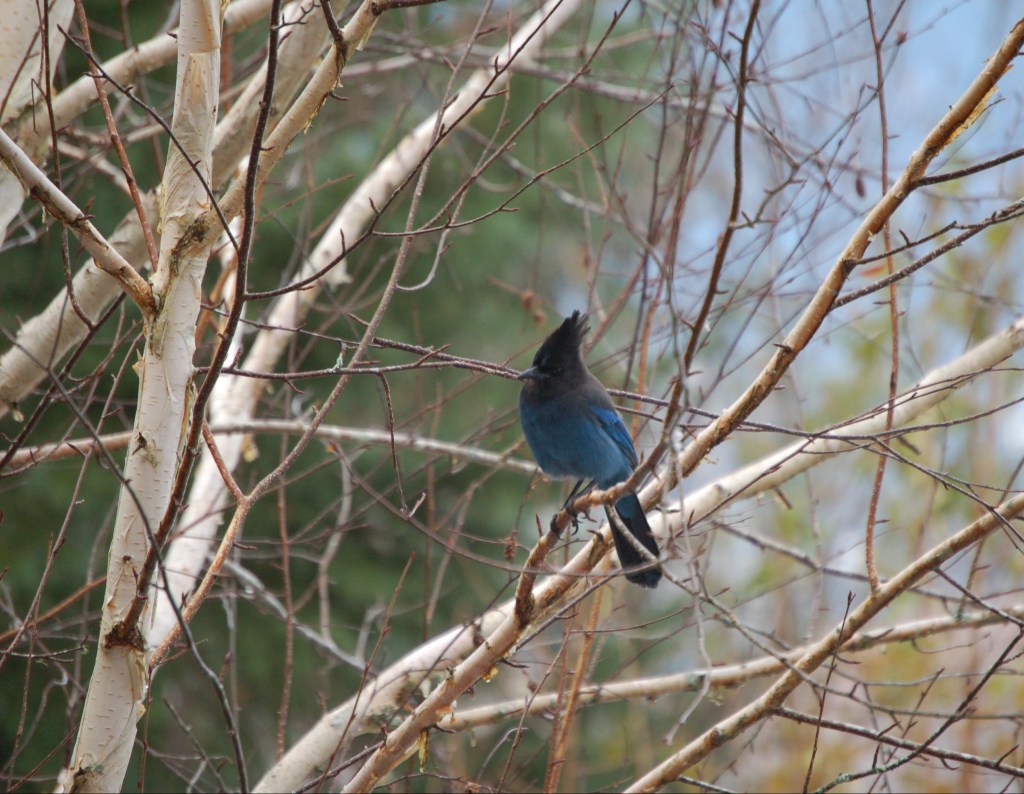
This week President-Elect Joe Biden ascended the stairs of a recently ravaged Capitol to call for the nation to unify – fly as one flock that includes multiple species. Looking up beyond our flying flag, he did not see only eagles. Perhaps he spotted a Steller’s Jay on a cherry tree below. Some people would rid the woods of those jays that are known to steal eggs, whose multi-lingual calls shatter backyard peace. But oh ! That ebony crown, those royal blue feathers, the brilliant brain of the bird!

 Mary's Room With a View
Hi Mary,
Your blog fed into my avocation of the moment: Studying what others have discovered on the topic of whether cooperation is as much needed for evolution as competition. Your information on how birds of a different feather cooperate for survival added to my knowledge.
Cooperation between Trump loyalists and everyone else seems more challenging. You do not mention what your Republican friends think about Trump, but there are some Republicans who did not vote for him and many others who did, a few of whom decry his role in inciting the insurrection at the Capitol. Hopefully they can condemn his actions and come together with Democrats and Independents to cooperate on what needs to be done to hold him accountable and prevent future challenges to the survival of our country. If there is no accountability, cooperation (“unity”) seems doomed, at least in the short term. In the long term, we would need to find ways to demonstrate the advantages of working together and incentivize it in the name of individual and national survival. Just as the birds have shown us!
Sylvia
LikeLike
Sylvia, you have added thoughtfully to my observations. The unity topic is tender these days, but by writing about it, I thought I might reach more understanding.
LikeLike