

“Mrs. Kollar!” a student returning from her freshman year in college greets me, as she confidently bounds into what was our last year’s senior English class. “I have learned so much in my English 101 class at the UW. I found out that ‘between you and I,’ isn’t grammatically correct, because between is a preposition and it needs an objective pronoun.”
These weren’t her exact words, but she and other college returnees excitedly share some “newly discovered” wisdom that I had taught the year they sat in the front row of my senior College Prep English class. They may have recently “learned” that Emily Dickinson was a recluse or Walt Whitman sold verses of Leaves of Grass on street corners in New York.  How excited they are to fill me in on what I failed to teach the year they were in my class. Here I could groan in 3-D cynicism, not to mention disappointment. Instead, I share their joy that their minds are still engaged learning about their English language and literature.
I had not failed in the way I taught any of this knowledge they think they have now heard for the first time. When I taught prepositions or the poems of Dickinson and Whitman, they weren’t ready to take it all in. In college they are ready.
If I taught only one literary work, it would be Shakespeare’s Hamlet. In that play there is more truth and psychology than Freud could later explicate (as if for the first time).  In the final act, Hamlet is about to have a duel with Laertes, a fight that he will likely lose. Hamlet’s friend, Horatio, tries to deter him from the match, because Laertes is by far the better and more practiced swordsman. Hamlet won’t be dissuaded, saying, There’s special providence in the fall of a sparrow. If it be now, ‘tis not to come; if it be not to come, it will be now; if it be not now, yet it will come. The readiness is all. ( Hamlet, V, ii, 230-233). Hamlet knows he will likely die, so when he dies is not his concern. What is important is his readiness to die. He is ready. How lucky for Act 5 and for preparing the audience to accept the inevitability.
Well into my retirement, Hamlet’s accepting wisdom echoes. The readiness is all! Am I ready to retire, to slow down my life, to give up running, to see my friends leave the world, to die myself? And how do I make myself ready for what is coming next? This is a big question having to do with acceptance and a volume of self-knowledge. We humans are not quitters. We flail to keep going long after our muscles fail. Young Dylan Thomas exhorts his dying father, “Rage, rage, against the dying of the light / Do not go gentle into this good night.” I wonder if his father was simply ready to go. The readiness was more with the old man than with the son.
There is power in readiness. Children who are not “ready to clean up their room,” or the haughty person who is never dressed and ready when the car has pulled up the drive.  On the opposite side, there is humility in readiness. These are the agreements we make with each other to step out of our comfort zone, to try something new. One-two-three- ready . . . set . . . go! and I am leaping off a small ledge to cold waters when my brother encourages me to swim downstream.
So far, I am seeing readiness as positive, something akin to preparedness for everything from earthquakes to college entrance. This week, reading for a UW class I am auditing, I see readiness may also lay the groundwork for evil. It is a Comparative Literature class: The Literature of the Holocaust.  Reading about the German environment prior to Hitler’s rise – the accepted antisemitism, distrust of immigrants (Roma), excessive nationalism, putting The Fatherland first – it is clear that enough of the German populace was ready for Hitler. He was duly elected in a “democratic” republic.
Perhaps readiness may be a power we can wave like a flag against Authority. I guess it depends on who is the Authority. I am ready to plant my sugar snap peas with the first south western breeze in February. The soil turns easily beneath my spade. Earthworms rise to the soil’s surface as if to welcome the peas to join them. I imagine myself crunching on sugar snap peas in April, weeks before my patient neighbor who plants when she hears the spring robins. Inevitably, a freezing March wind, sometimes even a foot of snow, laughs at my readiness. 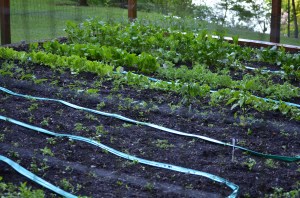 I hear myself reciting from another sacred text: For everything there is a season, and a time for every matter under heaven: . .. God has made everything beautiful in its time. (Ecclesiastes 3, 1 & 11). Yes, a time to plant and a time to sow . . .. Every year I jump the gun when my readiness does not match Mother Nature’s.
Readiness calls in voices other than my own. Perhaps this year I will be ready to listen. There must be a few other teachers out there to prepare me for what I might learn in 2020, even if the subject has been sitting on my lap for the last seventy-six years.


 Mary's Room With a View
Thoughtful and a pleasure to read.
LikeLike
The concept that power and humility co-exist in readiness really resonates with me. So many examples rush through my mind. Mary, your critical thinking skills and poetic artistry never cease to amaze me.
LikeLike