

When I retired from the classroom, my heart felt as if had been tossed on the beach at low tide for the seagulls to pick at what remained of me. Although I knew better, I wondered how next year’s class of Senior English students could be adequately prepared for college by another teacher. These feelings demonstrate either humungous hubris or festering fear. What I have since acknowledged is that I need to be needed. Being needed justifies taking up air and soil from a planet with a paucity of resources.
Only recently have I explored how and by whom these needs are defined. I suspect that many are defined by a patriarchal tradition: making dinner for my husband, doing laundry etc. – all necessities for myself as well. 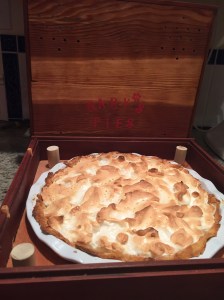 When I look outside of my own experience to other women’s lives, I see similar patterns of fulfilling needs for others, mostly domestic needs, that make others’ lives comfortable. Does the fulfilling of those needs enrich the “needed” woman? Would she have chosen the tasks without societal expectation?
I reflect on my mother’s life in trying to understand my own. My mother began her typical day setting out sack lunches for her children (if we were still in school), and then making breakfast for all. Soon after, she set off to work as a bank secretary, eventually an “executive secretary” to the manager. Not only did she type his correspondence, she approved loans and managed certain business accounts, jobs that would today earn a title of loan officer, or even vice president, but executive secretary sealed her salary and her prestige. During her lunch hour, she walked across the street to the supermarket to buy groceries for preparing dinner when she got home. After dinner and with dishes put away, she made her “creative time,” either haltingly playing the piano, a treat she afforded herself with biweekly lessons,  or she sat before the television watching Murder She Wrote with Angela Lansberry, who had a startling resemblance to Mother. As my mother did her vicarious sleuthing, she did needlework, usually a square of a quilt painstakingly appliqued or cross stitched. She played piano for no one’s pleasure but her own. Her needlework may have ended in a gift or a practical blanket for a bed, but ultimately, she stitched for the beauty of the thing. At the end of her workday, she fulfilled a call to be needed by herself. Did it also fulfill her to know that her family needed her food, her cleanliness, her salary?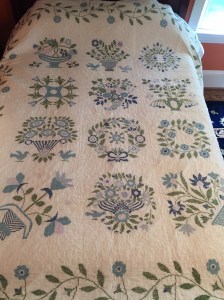
Our family chuckled at my mother’s devotion to Murder She Wrote. Having recently read Deborah Levy’s The Cost of Living, I can revisit my mother through Levy’s words: “Did I mock the dreamer in my mother and then insult her for having no dreams?”
I considered calling this piece, After the Chores are Done, for that is when Mother’s needs were addressed. That is also when my needs are addressed. If there are domestic duties ahead of me, no writing happens. My piano stands silently accusing me of skipping another day to practice Chopin, although a lesson looms the next day. I ignore creative pleasures I hesitate to elevate to “need” status, because there are tasks ahead that improve the lives of others. 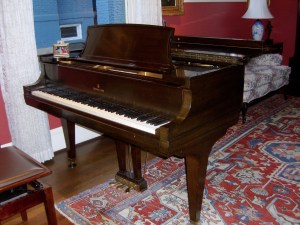 Top on the siren call would be perceived needs from my grandchildren and daughter. My granddaughter, a college senior, emails me a draft of her senior English thesis for editing. Her request leapfrogs to the top of my to-do list, real or imagined. I am flattered to be needed, especially to be needed for something that acknowledges I have a brain, not only a scrub brush.
Her thesis has a reference to Mrs. Ramsey in Virginia Woolf’s To a Lighthouse. Married, and shrouded with the needs of her family, any creative vision Mrs. Ramsey might have is detoured through fulfilling family concerns. She knits socks, never quite finishing them. Juxtaposing Mrs. Ramsey is the unmarried Lily Briscoe who paints and completes a painting, Mrs. Ramsey’s domestic subservience to the needs of others shows a creative vision is impossible. Darning socks short circuits her visionary potential. I am considering that perhaps to be freely creative, a woman must be unshackled from family. On the other hand, an unmarried woman can be satisfied with fulfilling her own needs.
Would my mother’s life have been more creative had she not committed to a family? There is no way to know, but I am hoping she, like me, found enrichment in the creative imagination of thought, even in the sewing of quilts. For me, it would be ironing or kneading bread. For Mrs. Ramsey, as she knit, the narrative voice suggests a certain intelligence, a vision, so to speak. The reader has a sense of her visionary voice, however unfilled it might have been were she to complete a painting or write a novel.
The need to be needed may have hindered my creative life, or motivated it in inspiring me to be the most imaginative teacher I could be. Teaching itself is a creative act. With a filing cabinet stuffed with last year’s lesson plans, I recreated them each year. Although I may have been doing so to fulfill my students’ needs, I equally fulfilled my desire for change — delight in doing something different with certain literature I had taught several times.
For many women, the struggle continues in deciding whether we can live freely within a family structure. Perhaps the face-off of domestic duties and the poet within us creates an energized art that would not exist without the struggle. Deborah Levy quotes Audre Lorde in feeling that tension: “I am a reflection of my mother’s secret poetry as well as of her hidden angers”. (Audre Lorde)



Mary, thanks for this post. I can so identify with everything you say. Yes, it’s nice to be needed, to be acknowledged for a skill or wisdom one possesses. It also has to having meaning for me. Making dinner not so much. Helping someone write an essay much more. Thanks again for articulating what I’ve felt so strongly for so long.
LikeLike
This really touched me, Mary. It brought back memories of my mother. I, too, have a need to be needed.
LikeLike
Mary, this brought back thoughts of my Mother and Grandmother. First I remember the care they gave me , then of the ways they used their artistic talents. They both created welcoming festive meals, invited non family members to join on a regular basis and Grandmother quilted, Mother painted. And Mother, a Nurse cared for children who were quarantined with polio when their families were in need. All these are creative tasks. I learned from them and I struggle with how to do life with more choices. I wonder how my Granddaughters will do their lives. Thank you for putting your thoughts on paper and sharing.
LikeLike
Dear Mary,
Your creativity shines through in you post questioning whether or not fulfilling others’ needs might compromise one’s creativity. Clearly your creativity has not been compromised as it co-exists with your thoughtful attention to the needs of your family. When my children were young and I was a single mother, I had no problem with being needed as I watched them grow and develop, and, at the same time, my job satisfied my need to be creative. Now in my old age with a husband who needs my care, I do not like to be needed because it means he is disabled. At the same time, my husband and I are benefiting greatly from the help my now adult children provide to both of us. Fortunately, they feel that we need them and cheerfully respond. I am happy to report that their creative juices are also flowing in many ways, such as supporting families of preemies; setting up solar power in remote areas; enjoying theatrical performances; and mastering complicated board games.
Love,
Sylvia
LikeLike