
 A flowering vine blooms along East Quilcene Road. Its lavender blossoms are bubbles, like sweet peas, so I have called them wild sweet peas, until my neighbor recently shocked me, identifying the vine as vetch. Walking up the road Sunday afternoon, I saw a long, flowering vetch vine winding itself like a garland around a young pine tree. The vine used the tree as a support for its growth, an attractive decoration.
I had been thinking on my solitary walk, about a recent email from a friend in Connecticut. She wrote how she is supporting a friend who recently lost her husband. Her friend’s loss made her fear how she herself would continue on, were her lover of over forty years to die. Because they have never lived together, she might not know he had died, only that he would no longer call. Where would she find support to proceed with her life without him?
As I continued up the hill that hugs the shoreline of Quilcene Bay, I practiced what I would say to her. It occurred to me that her imagination and her email to me were like rehearsals for inevitable loss. I could reply, “Live in the present.” But no one completely lives in the fleeting moment. We prepare for our futures from the time we realize there will be a tomorrow. After seventy, the tomorrow holds loss. When the Seattle Times Obituary column starts to look like our high school annual, the future looms, and it is not one where we are preparing for college.
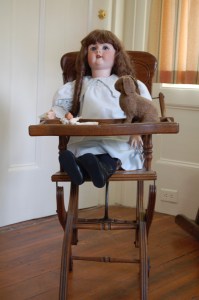
Here is how we prepare. We call our lawyers and make wills. As we walk through our homes, we look with critical eyes at the stuff we have collected over the years: paintings and pottery, furniture willed from our own parents – settees and rockers we have not used in recent memory. Thinking kindly of the ones who will have to deal with it all someday, we may begin to give things away. My own mother taped our names on the bottoms of silver tea services. Somehow this disposition of accumulated stuff is not the most important loss for which we must prepare. The most frightening for some of us may be to lose a life-partner, a likely reality. In my mind, I imagine living alone. “ I lived as a single woman the first thirty years of my life — I can do it again,” I console myself, knowing that I will not be the same young single woman. With this practice in mind, envisioning my single self, I walk on to the crest of the hill and watch the easy, returning tide on the bay.

What we do not rehearse are the out-of-order losses, such as the death of a child. Last week, a friend whose daughter died of cancer this year, shared with our church group some experiences she found comforting. People have been coming to her to tell her things about her daughter she had not known. They tell her stories about her daughter’s teaching, and how it had made a difference in the life of their own child. Another had a funny story in which her daughter played a humorous role. Instead of maintaining what they might assume would be respectful silence about the lost one, these people comforted the mother by bringing her lost daughter to life in a new way. It is almost as if the stories rejuvenated both mother and daughter. As her daughter succumbed to cancer, my friend may have struggled to imagine how her own life would continue without her daughter’s presence, a very short time to practice loss. Now that she walks through the loss, she accepts surprising and unimagined support from others.
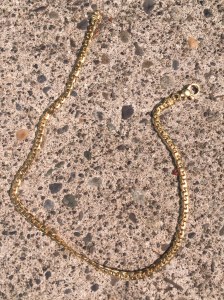
Will the loss of material things help prepare us for the loss of life? Recently I lost a gold chain necklace somewhere on the cobblestones of Rome. It was my favorite jewelry that I wore almost daily and perhaps had not secured properly. I was in Rome with my granddaughter. 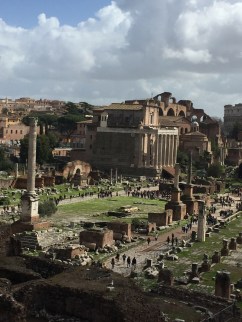 Greta and I had our own cozy VRBO apartment and had just settled in for our first night to adjust to jet lag, when I realized my necklace was no longer around my neck. We both scoured the apartment to no avail. I did not want to dampen the holiday by laying my grief on my granddaughter. I made light of it all until she had fallen asleep. Then I texted my husband back in Seattle, wailing in cyberspace about the loss, how I had loved that necklace he had given me for an anniversary gift. I may even have asked his forgiveness for being so careless in fixing the clasp. His response? “Is that all, Mary? Look now, you still have Greta.” There he was again, my support in an unimagined way.
Just as the lavender vetch intuited the supporting tree, so we too may find a way to continue growth through the grieving season. A life teaching and writing poetry supports me, for there is rarely an experience that does not call up a poem that holds me. Here is a villanelle by Elizabeth Bishop.
One Art
The art of losing isn’t hard to master;
so many things seem filled with the intent
to be lost that their loss is no disaster.
Lose something every day. Accept the fluster
of lost door keys, the hour badly spent.
The art of losing isn’t hard to master.
Then practice losing farther, losing faster:
places, and names, and where it was you meant
to travel. None of these will bring disaster.
I lost my mother’s watch. And look! my last, or
next-to-last, of three loved houses went.
The art of losing isn’t hard to master.
I lost two cities, lovely ones. And, vaster,
some realms I owned, two rivers, a continent.
I miss them, but it wasn’t a disaster.
—Even losing you (the joking voice, a gesture
I love) I shan’t have lied. It’s evident
the art of losing’s not too hard to master
though it may look like (Write it!) like disaster.
Elizabeth Bishop
From Elizabeth Bishop The Complete Poems (1926-1979). Copyright 1979, 1983 by Alice Helen Methfessel. (Farrar, Straus and Giroux, 1983)

 Mary's Room With a View
Once again, I find myself in tears while reading “Rehearsing Loss”. It resonates with me in so many ways…and then the poem. You really pull my strings, dear Mary.
LikeLike
Hi Mary, Another insightful essay! And a refreshing way to look at the phenomenon of loss from other than the usual “Five Stages of Grief” perspective offered in social work manuals (shock/denial, depression, anger, bargaining and acceptance).
And I learned a new word: villanelle. After looking it up and learning that the meaning is, “a nineteen-line poem with two rhymes throughout, consisting of five tercets and a quatrain, with the first and third lines of the opening tercet recurring alternately at the end of the other tercets and with both repeated at the close of the concluding quatrain,” I doubt that I will ever be able to write one.
Thanks as always for sharing your thoughts and experiences.
Sylvia.
LikeLiked by 1 person
Dear Mary,
I enjoyed your heartfelt post and lovely photos. As Elizabeth Bishop said in the poem “so many things seem filled with the intent to be lost.” Perhaps your necklace was intent to be a gift for Rome. Who knows? It is difficult to avoid mourning loss especially when we’re talking about the death of a loved one. I took a class (http://www.mossdreams.com/2015%20design/2_Calendar/1710%20romania%20death%20ally.htm) a few years ago from a scholarly man, an ancient history professor, who asserts (through Jung’s research and others, and drawing on his own near-death experience) that a thin veil separates the living from the departed, and it’s possible to explore the “other side” through dreams and shamanic journeying. I know it sounds a bit out-there but my experience in his class changed my mind about the finality of death. Death is a new phase of life whether it’s our own death or the death of a loved one. It makes sense to study death so we are prepared for this new phase of life. Brava for your willingness to open the subject. I attended one of his workshops in Seattle last summer which are always uplifting but I’d rather travel to Romania or some other exotic location where he offers classes!
LikeLiked by 1 person
Mary, such wonderful writing. I love your photos too! Rehearsing loss daily is good practice. Nevertheless, I’m sorry about your necklace. Thanks again for such a thoughtful post.
LikeLiked by 1 person