
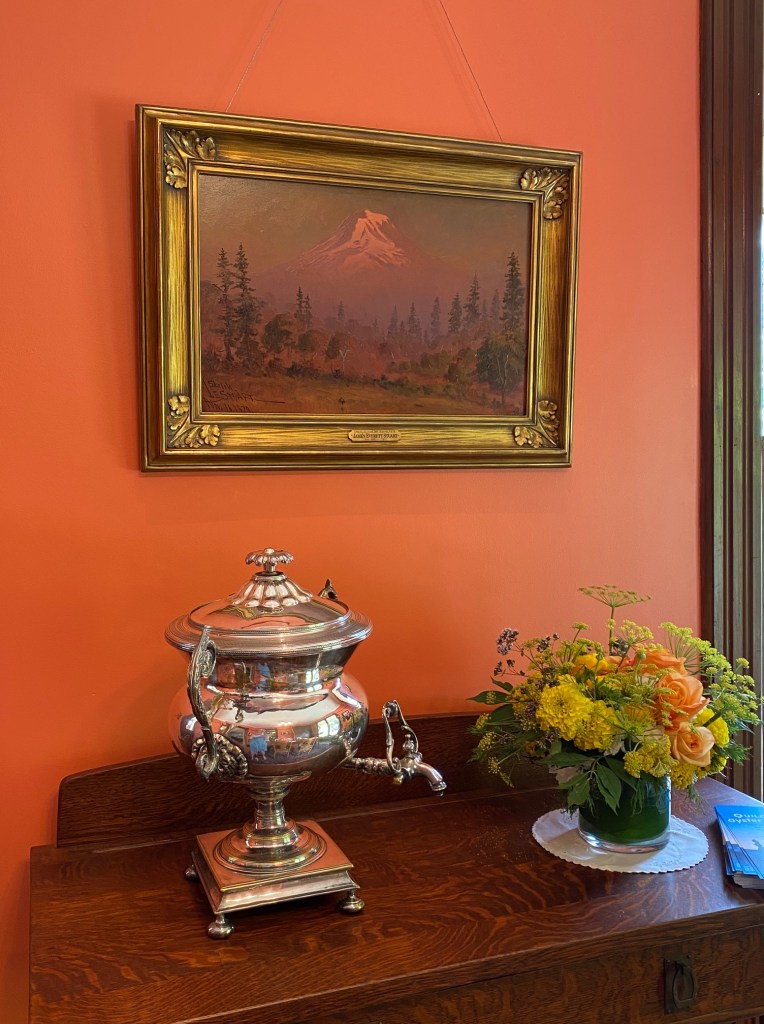
Heirloom: A valuable object that has belonged to a family for several generations
Among common practices of those over seventy is the dispossession of material objects, some decorating our environment for decades, treasures having arrived in our homes from parents and grandparents who also arrived at their “uncluttering” years. I have reached the age my mother was when she began taping names of her heirs to the backs or bottoms of almost every painting or vase in her home. I am now suffocating under collections of teacups, floral Wedgewood china, figurines –Beatrix Potter bunnies brought out for Easter, snowmen at Christmas. Seven decades offer ample time to collect and to graciously receive heirlooms passed down in a family for generations. Even the root of Heirloom suggests inheritance, promising spiritual longevity beyond the grave. What an honor to receive them. What a duty to preserve them. Merriam Webster suggests the objects are valuable. But how do we determine value?

Here is Mother’s blue hen I place on a runner atop the dining table. As long as I can recall, this hen was an heirloom, never intended for my table. How did I know? Mother told me so. The blue hen was bequeathed to her by her cantankerous mother-in-law who gave nothing but criticism to my mother during Grandma Linton’s lifetime. Then she died. The cobalt blue hen that sat on her kitchen table had mother’s name taped to the bottom. Mother told us almost every holiday dinner we ate in her home, that the blue hen would someday be passed on to her first-born son, John. However, she also promised it to her second born, Jim (from whose house I borrowed it),
When my son-in-law spotted the blue hen on my dining table, he said, “I remember that your mom had that on her table. You know, she told me that when she died, she would like me to have it.” Oops! Was Mother deceptive? Will the real heir of the blue hen please stand up? I like to think that the hen was less an object of monetary value and more a metaphor for Mom to say, “You are important to me. Here is my hen.” As to the value, I Googled antique glass blue hen and found several for sale, prices ranging from $3.85 to $ 250, with most averaging $25. Valuable? Not worth taking to Antiques Road Show. But valuable yes, because I cannot lift the hen from its glass nest without thinking of my mother, without seeing pastel dyed eggs she placed there on Easter.
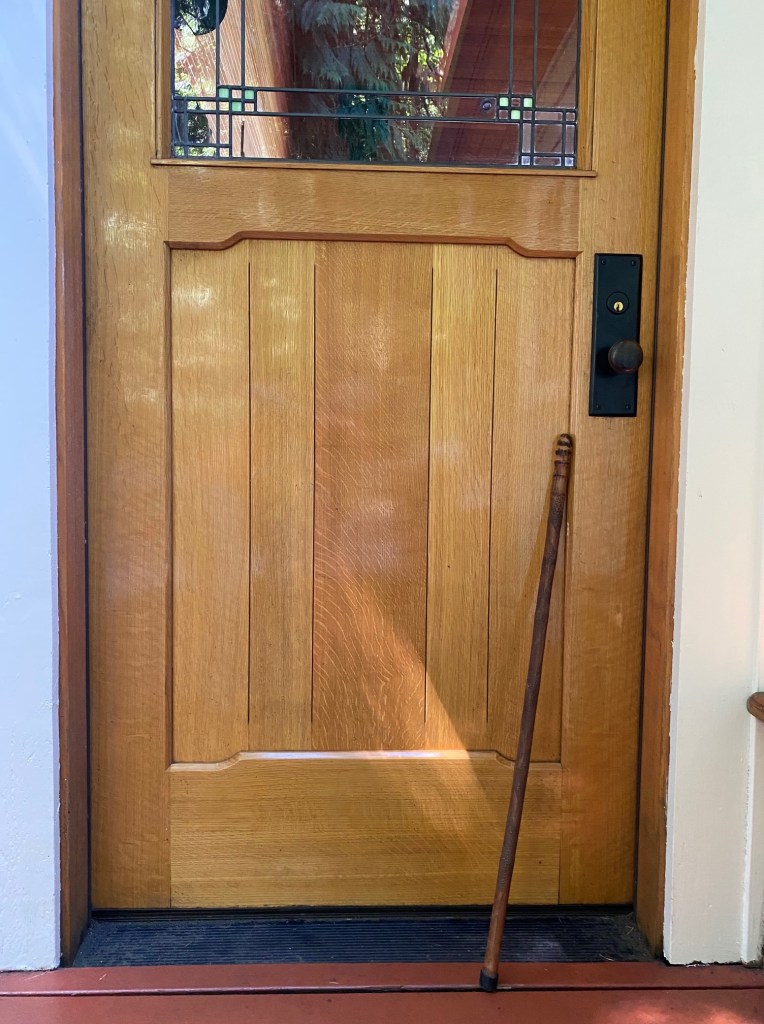
Memory is tangible and mutable. Perhaps that is why we are so reluctant to take the second set of china to the church superfluity sale, our father’s walking stick to a neighbor who could use one. If I never see that cane again, I will not forget the image of Father rapping it with importance on the top stair as he pushed open the front door on his return from a walk. I could safely let it go, but I don’t.
It is common knowledge and common sense that people are more important than objects. We embrace maxims such as “You can’t take it with you.” In one tornado, entire homes are flattened, the surviving families shown on the news rifling through the wreckage, not for a television or a computer but for an heirloom, a wedding ring, a photo album. “Link me to my former life, now that my present dissolves to dust around me.”
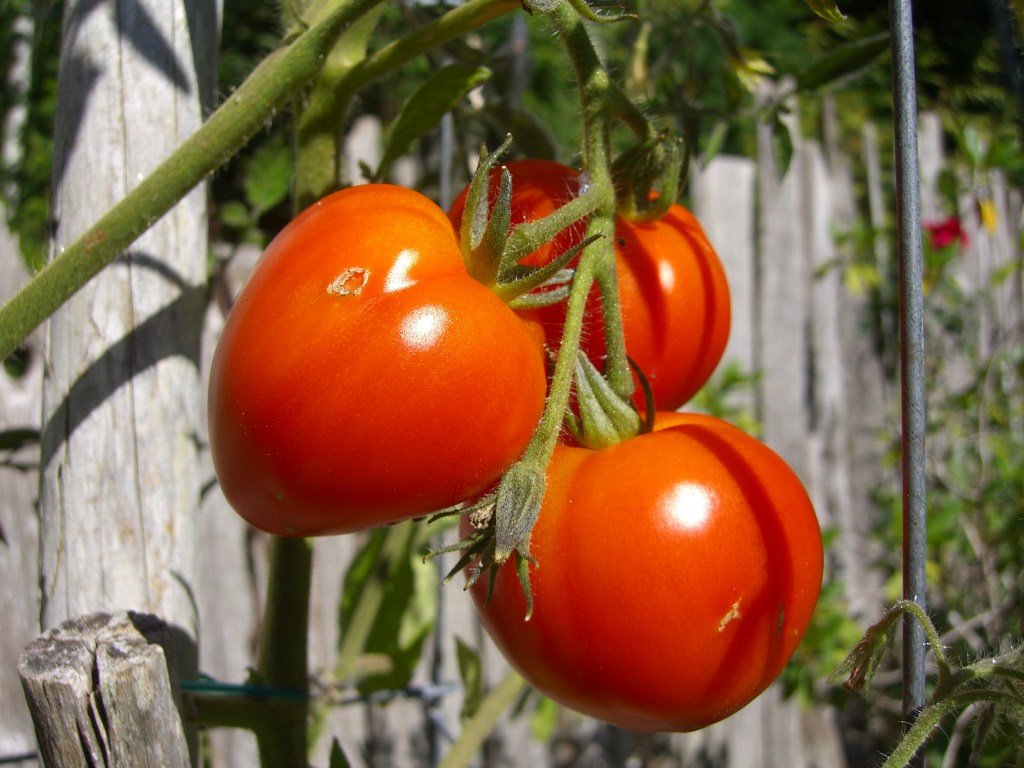
Lasting through time seems important for a thing to be called an heirloom. Thus, even a plant can be called heirloom, such as tomatoes carefully cultivated over years and boasting a prized inheritance. Years before you could buy such a fruit at Whole Foods, our family was vacationing in the tiny village of Issa, Italy. Our last day, we reluctantly left the villagers who had welcomed us, displaying special affection for our toddler granddaughter. An aged man in a worn army shirt, a faded ribbon over the pocket, reached out to us a handful of the most gnarly red tomatoes I had ever seen.
“Oh, Allan,” I said, “He wants to sell us his tomatoes, but we won’t be here until dinner time. Let’s buy them anyway.” My husband reached in his pocket and offered what he thought would be a fair price.
“No, no,” the man insisted, still thrusting his produce toward us. With his vacant hand, he pointed to that faded ribbon and said “Resistance” his Italian dialect strong on the last syllable. The tomatoes were a gift honoring American allies remembered from his war years. We accepted his gift and carried them back to our rented villa, There, among suitcases packed for leaving, we sliced three large tomatoes and ate. The juice ran down own chins in streams of gratitude. Our first taste of “heirloom” tomatoes. Valuable? yes. Memorable? yes.
Inasmuch as we treasure heirlooms in an effort to preserve memories, heirlooms are the most mutable of things, for the value rests in the tie between the giver and the recipient of the heirloom. Perhaps when Mom put that blue hen on her table, she thought of her mother-in-law and the struggle to persuade her that my farm-born mom was worthy of her city-bred son. On my table, the crystal blue morning light shines through the hen, lighting my way to a childhood lived in five distant states where the blue hen set a new family table, a symbol of stability in change.
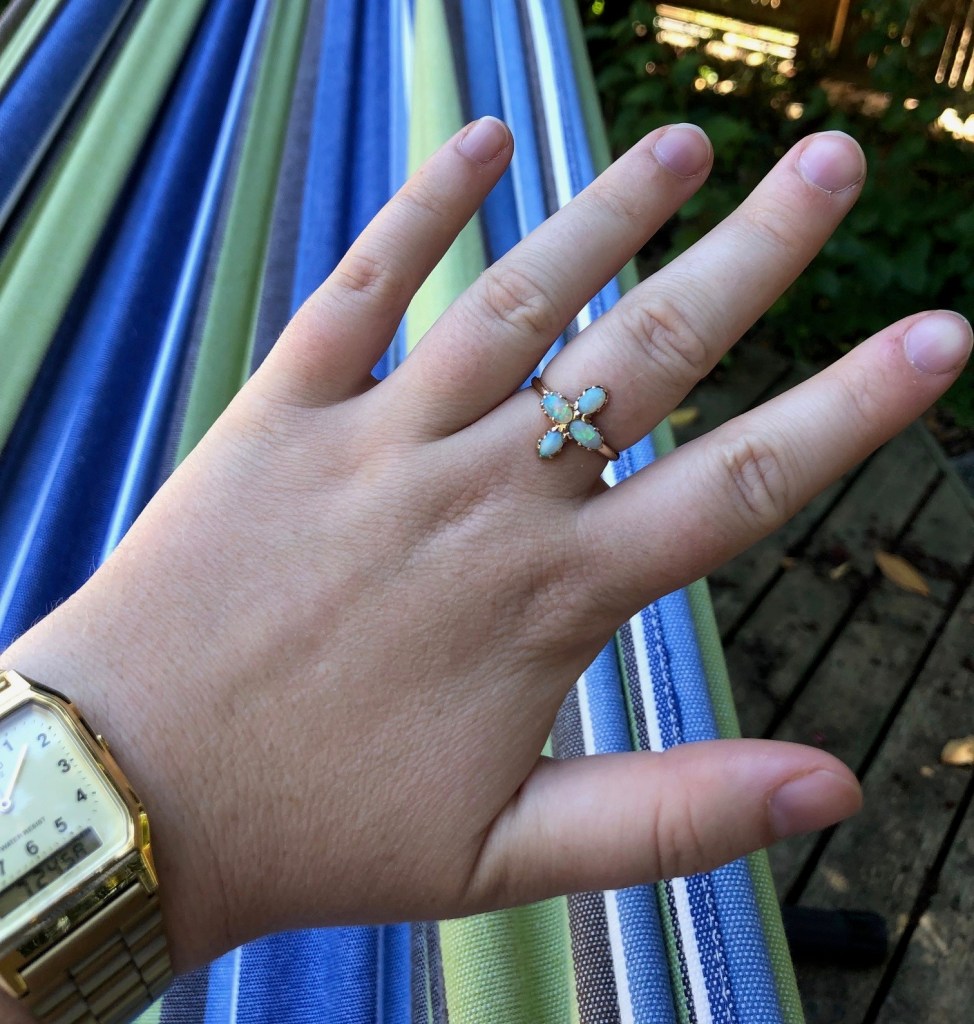
For her graduation, I gave my granddaughter an opal ring, first made as one of a pair of earrings my father brought my mother from India where he served in WW II. My mother lost one, and, after her death, I found the other in her small jewelry box. I saw in the soft blue stones exotic India and my absent father. I made a ring of the opals. My granddaughter will not see in the stones New Delhi nor my father. Now, in a ring on my granddaughter’s hand she will find me.


















 Mary's Room With a View