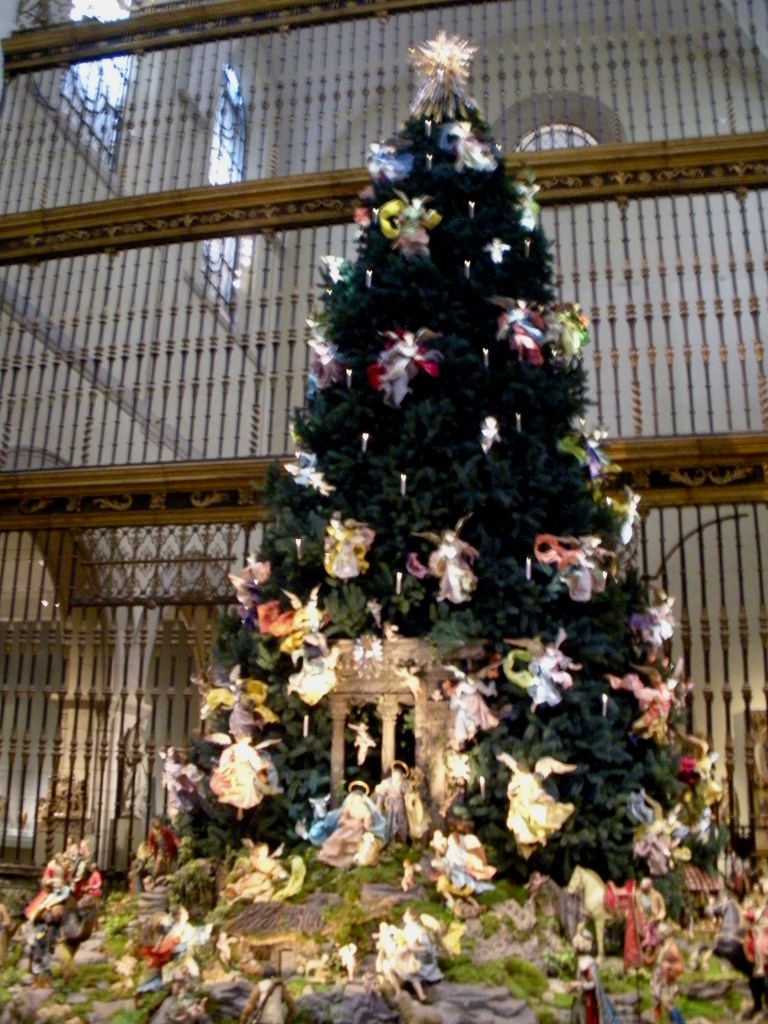
WHAT DO I NEED FOR CHRISTMAS?

Metropolitan Museum of Art NYC

Growing up listening to Sunday sermons, not a year passed without the sermon whose message was, “It is more blessed to give than receive.”  I got it.  Be generous.  There are so many people less fortunate than you. God will smile upon your giving with grace.

Then one Sunday, Dr Dale Turner’s sermon was “It is As Blessed to Receive as to Give.”  His sermon opened a window to the welcome light of being a gracious receiver.  He reframed that common phrase: “Oh really you shouldn’t have!” when someone brings us a gift. To say someone should not have given a gift diminishes the one making the gift.  Why?  Because in making a gift, the giver has invested thought, perhaps even love.  Expressing joy, gratitude, or surprise in receiving that gift, you are returning a spiritual gift-in-kind. “Your gift matters, and you also matter.”
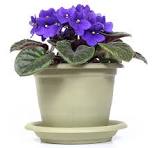
I am going back here many decades, when living in an apartment house with a central courtyard. One Mother’s Day the young moms were sharing social time in that courtyard when five-year-old Kimmie handed her mother a small African violet.  “Oh darn,” her mom said, “one more plant I need to water.”  I still vividly see Kimmie’s injured look.  Likely with no bad intentions, her mom was being witty for the other moms present but disrespecting her child’s gift.

Christmas morning, we gather around the living room, tree lit, fireplace aglow while our three grandchildren distribute gifts they have purchased or made for us.  When Max brings me his present wrapped creatively in newsprint or finger-painted paper, he seems to hold his breath while I remove abundant cellophane tape and open the package.  After my joyful hug of appreciation, he exhales as if he were swimming underwater until he could experience my reaction.
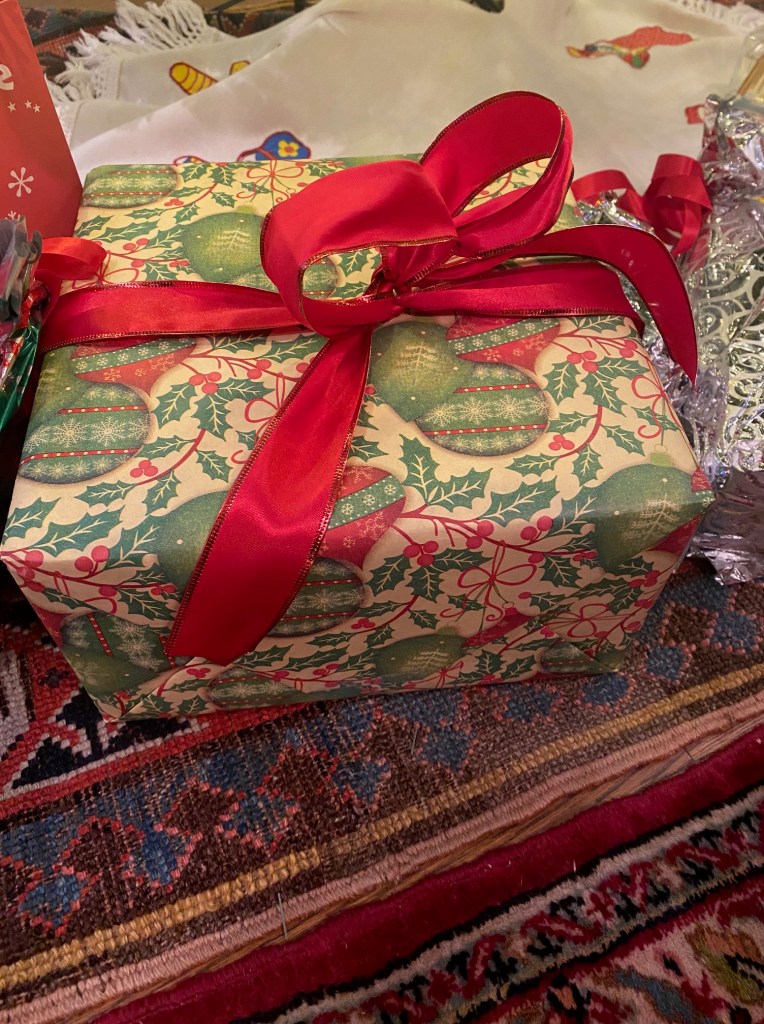
Each fall, when relatives ask what we would like for Christmas, we say, “We don’t need a thing,” and that is true.  I imagine one more kitchen device I have no room to store, and I beg off with “Let’s just send consumables this year.”  I make raspberry jam to send and await my sister-in-law’s Ukrainian cookies.  One step from there is “Let’s just do cards this year.”  Both sides agree.  Then a week before Christmas, a beautifully wrapped box arrives from my brother and sister-in-law with a card that reads. “a gift for the cook.”

I feel bad, because I had sent only jars of homemade strawberry jam.  What happened to our agreement for only consumables? To relieve my feelings of remorse, I head for the computer, go online and order something in return, hoping it will arrive before Christmas. I look for something I think my sister-in-law will enjoy and may not already own.  I am happy when I think I found a good gift. It doesn’t take a degree in psychology to conclude that my actions may be less about a gift for my sister-in-law than a way to relieve the guilt I feel for sending only jam.  Surely it was her opportunity to give that matters– a pleasure for her that I might receive with gratitude.
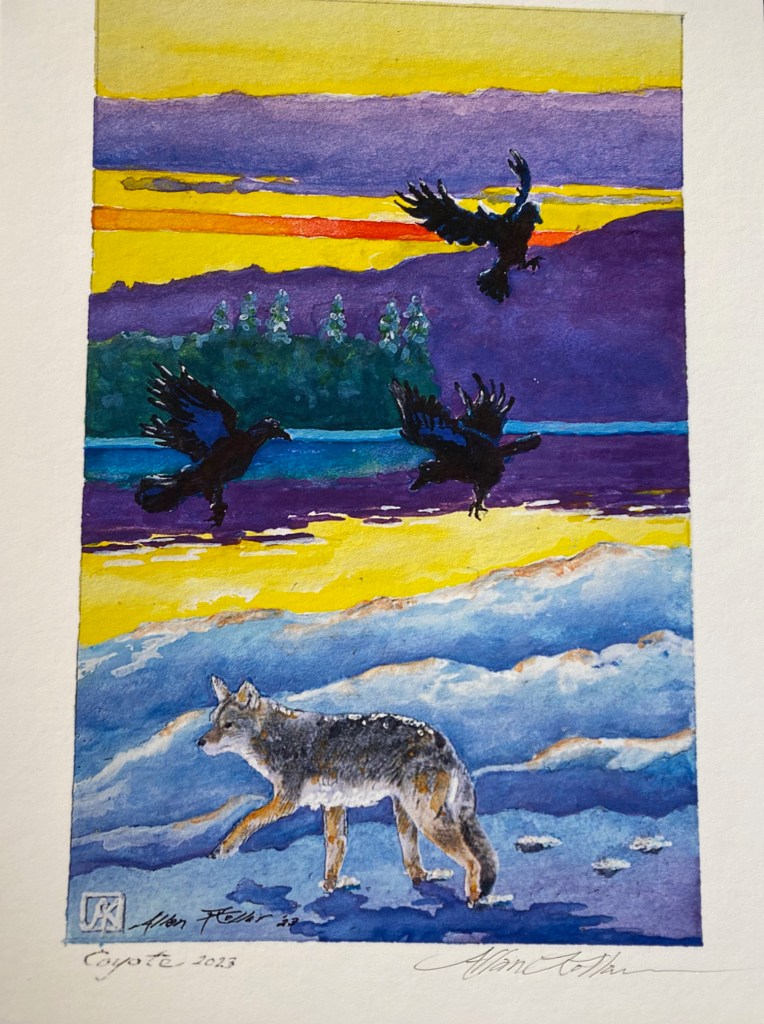
After all, what is a gift but a way to connect?  Each year, my husband makes a beautiful art card, a watercolor scene.  I pair it with a poem.  We have lived so long that our card list is quite long.  I joke that the only way one can get off our mailing list is to die.  Now at eighty-years-old, I feel the ironic twist.  The list is shrinking. Many of those to whom we send the cards do not mail holiday cards.  Surely we enjoy the cards we receive, but our receiving cards does not affect our sending the cards out.  We devote a whole day to the mailing, and as each name emerges, we have a minute to think about those people, bringing back memories that might not have emerged had we not sat there sending out our little gift.  Who is giving this present?  Who is receiving the gift?
TOOLS

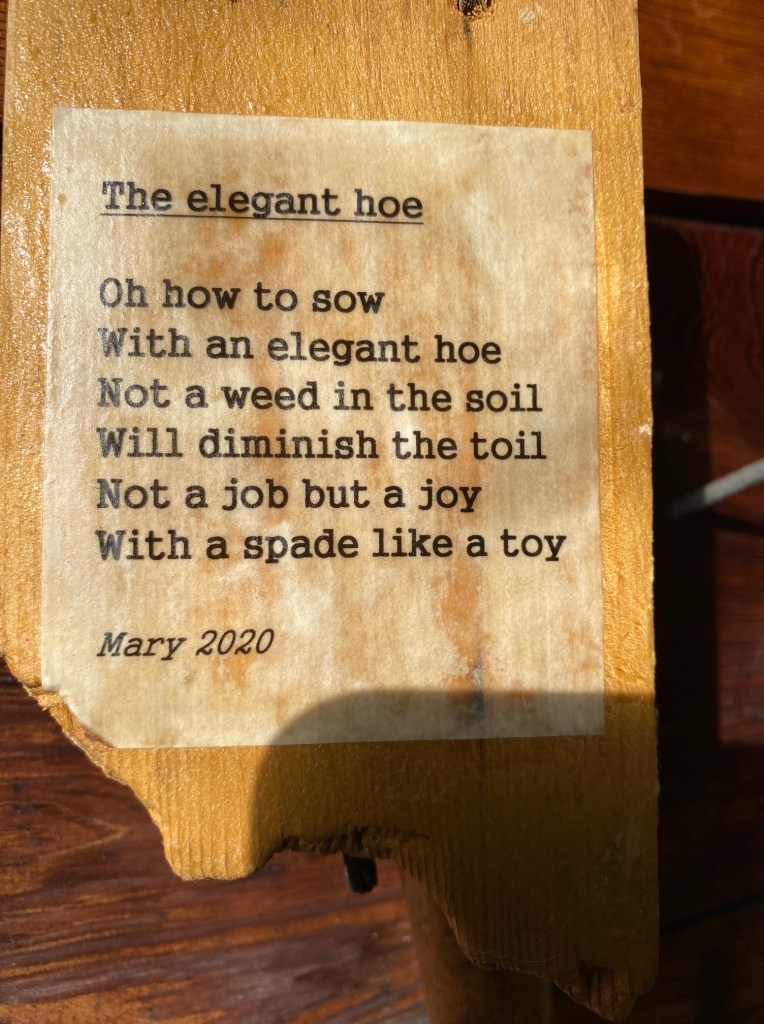
            Hanging on a leather strip from a nail on the greenhouse wall is a hand spade, its handle wood, its blade a fierce copper designed to uproot the most determined weed. Rewarding my passion for gardening, my brother gave it to me for my birthday.  The spade is a more sophisticated tool than I would have purchased for myself, and so I wrote him a thank-you poem, which he, in turn fashioned on a wood slab to hang alongside his gift. How often tools bring us together.

             In a tidily organized drawer in the garage, my husband stores his father’s tools: a skill hand drill, several wood planes and specialty hand saws.  His father was a finished carpenter whose tools have long since been improved on by technology.  Nevertheless, my husband stores those tools with the same reverence he has for any memento of his father’s life.

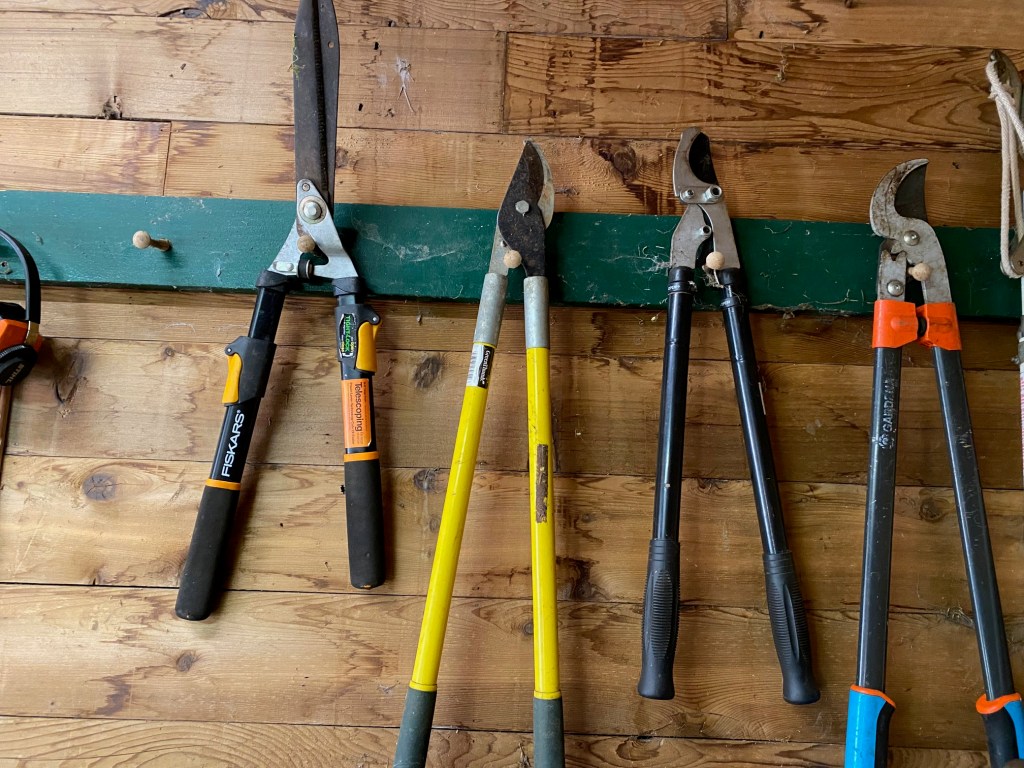
His dad’s lessons endure in the storage shed adjacent to the greenhouse where my husband has affixed wooden pegs in measured spaces one from the other to line up all sorts of gardening implements: hedge clippers, shovels, rakes, each in its place.  When my sister-in-law visited and spied what her brother had organized, she laughed out loud at the reincarnation of their father’s devotion to his tools.  Like father, like son, you might conclude, but surely no different than my daily use of a small cutting board once belonging to my mom.  Why have I not replaced it with a larger one?  You know why.

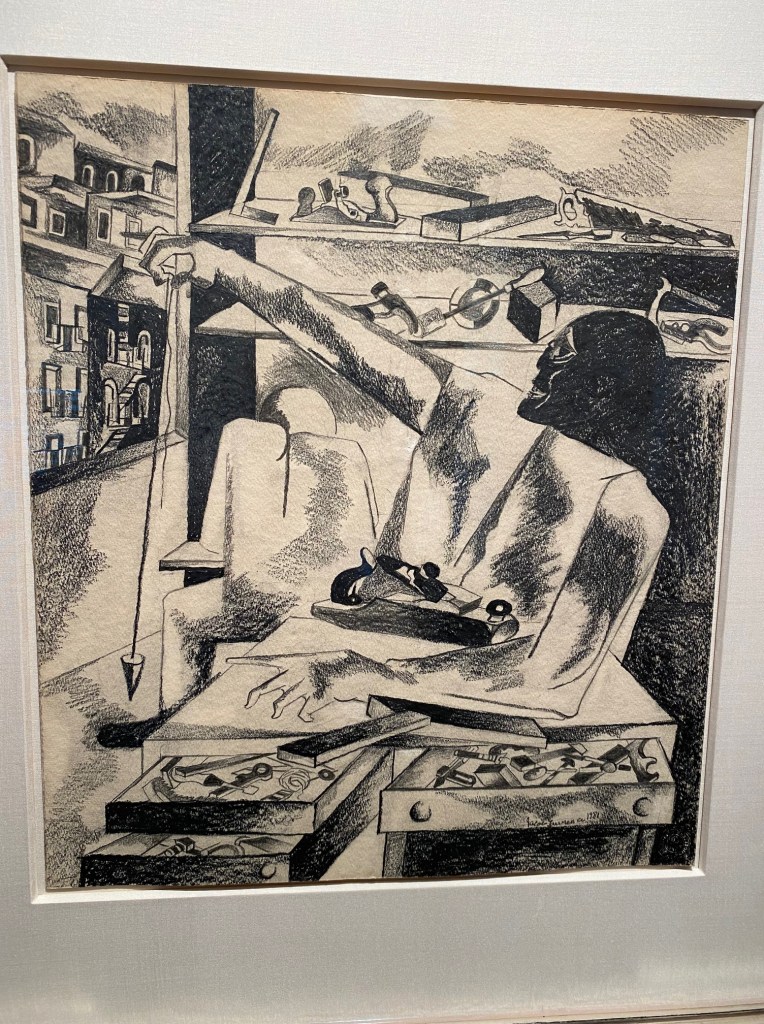
            Tools are extensions of ourselves – the paintbrush to Monet, the baton to Leonard Bernstein.  Tools can be the measurement of our lives.  The artist, Jacob Lawrence, was not a builder, but his paintings and prints are full of tools — tools, hanging, tools overflowing in drawers.  We are fortunate to own a self-portrait Lawrence drew of himself in the later years of his life.  In the portrait, he sits before an open window in his Seattle studio surrounded by tools.  In his hand he holds a plumb line up to the window while looking over his shoulder at Harlem from which he came.  A plumb line is an essential tool for a builder because it works with gravity to assure things are aligned.  Is Jacob Lawrence reflecting on the journey of his life, looking back to see if his course has been true?  As a symbol of measurement, the plumb line occurs more than once in the Bible.  In the book of Amos, the Lord explains his judgement to Amos: “I am setting a plumb line among my people Israel: I will spare them no longer.” (Amos 7: 7-8)

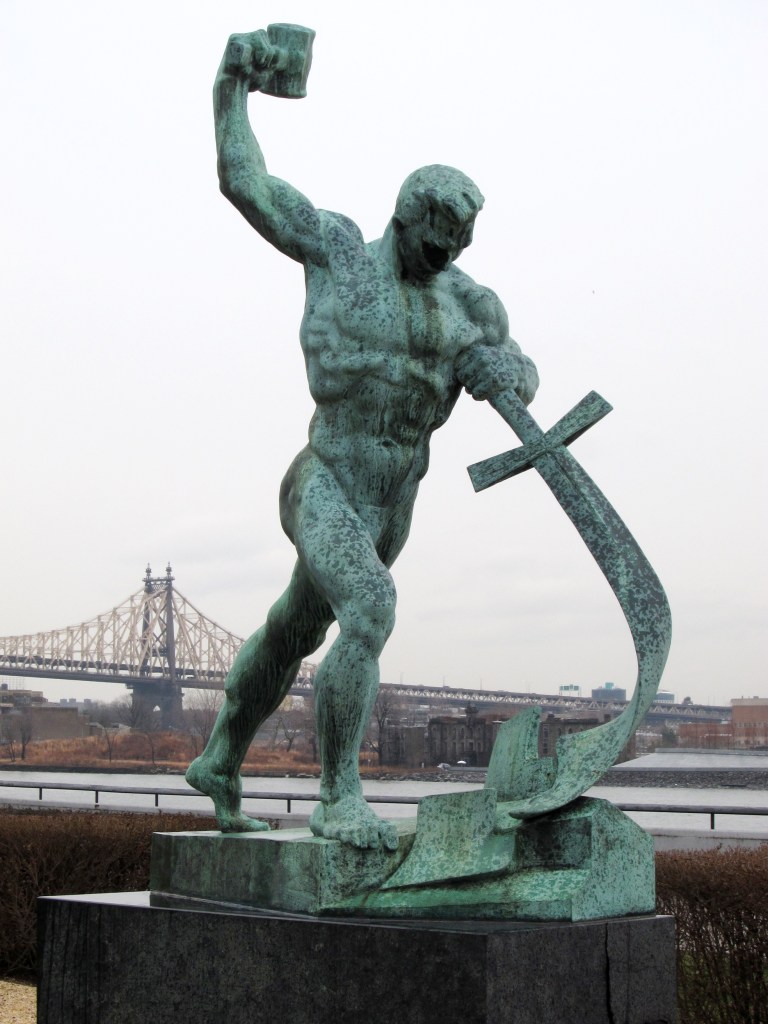
            Although we most often think of tools as creative instruments, the Smithsonian Institute has an exhibition of Civil War weapons it calls The Tools of War.   The Bible has much to say about those tools as well.  In Micah 4:3, it is written, “He shall judge between many peoples, and shall arbitrate between strong nations far away; they shall beat their swords into plowshares, and their spears into pruning hooks; nation shall not lift up sword against nation, neither shall they learn war any more.”  Even as I copy this quotation, my mind moves to the Middle East and to Ukraine.  What more can I say that is not already in our hearts?  Here is a photo of a sculpture in the garden of the United Nations, a work of art by Yevgeny Vuchetich, a 1959 gift of the Soviet Union to the United Nations.  The title is: Let Us Beat Swords Into Ploughshares. Surely ironic today.

            The poet, Robert Frost, was always ready to see cruel ironies:

Objection to Being Stepped on:

At the end of the row 
I stepped on the toe 
Of an unemployed hoe. 

It rose in offense 
And struck me a blow 
In the seat of my sense. 
It wasn’t to blame 
But I called it a name. 
And I must say it dealt 
Me a blow that I felt 
Like a malice prepense. 
You may call me a fool, 
But was there a rule 
The weapon should be 
Turned into a tool? 
And what do we see? 
The first tool I step on 
Turned into a weapon.

Mid-Winter

“In the midst of winter, I found there was, within me, an invincible summer.” (Albert Camus)

If December 21st is the first day of the Winter Solstice, the exact date of Mid-Winter, this year was February 3, 2023, half-way between Winter Solstice and Spring Equinox.  Stopping to note this day is much like my childhood self, plaintively calling from the back seat of our ‘51 Buick ,“Are we there yet?’  My impatience for arrival at a desired destination could be calmed by familiar guideposts along the way.  “We just passed the city limits sign” would suffice.

 In early February, ignoring morning temperatures in the ‘30’s, I seek signs of spring’s arrival.  The trails around the woods are slippery with sodden, decomposing leaves shaken loose from big leaf maples by bitter January winds.  No leaf remains clinging to the tree; the only ones still above my head are cradled in dark cedar broughs.  Death dominates the day from gloomy dawn t0 dusk at 5:00PM.

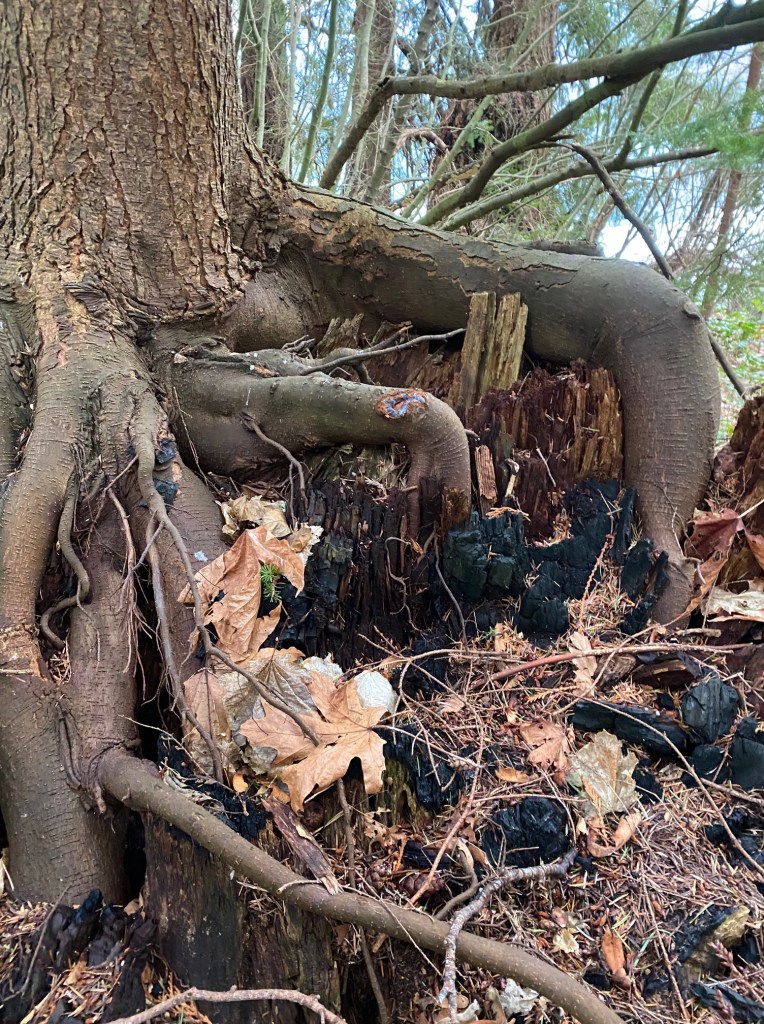
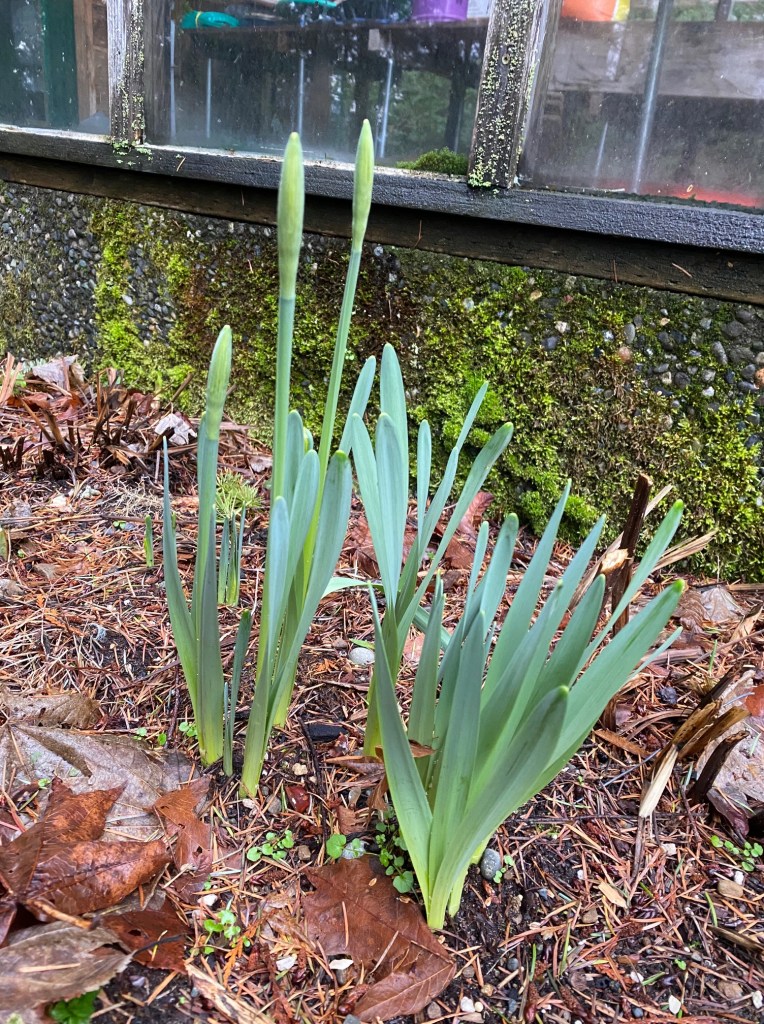
Because I want to “get there” to spring, I comfort myself with Camus’s often quoted  “In the midst of winter, I found there was, within me, an invincible summer.” I make a point of finding life within death in the natural landscape where I am walking.  Decades ago, someone logged the woods where I walk, leaving stumps to die.  But did they die? The stumps continue to decompose from which entwined, serpentine roots of a giant hemlock emerge.   So much for death! Those roots are like a Michelangelo sculpture.  Admiring it, I feel a spring in my step, all the way to the flower border by the greenhouse.  More decomposing leaves and windblown detritus from cedar and pines.  But there, as eagerly  as raised hands, emerge a row of daffodils.  “Oh my!”  I want to worry them back under the leaves, for winter isn’t over yet.  “Don’t jump the gun, young flowers. It is still mid-winter.”  Opposite that flower bed and behind a deer fence is my vegetable garden, frosty and fallow but showing off pink protruding noses of rhubarb.   Spring is undaunted and not far away. We will get there by the signs of the city limits.

And so before returning for morning coffee by the wood stove, I recite Camus’s oft-quoted lines, not only because I spotted OUTSIDE myself the inevitable return of summer in freezing February.  Rather I am engaged with Camus, the man who found WITHIN himself that invincible summer.  Surely, he too could have simply spotted signs of life in death, but he phrases his discovery as one within himself, an act of will.  And it is not just any summer he discovers, but an invincible summer, as if a skirmish had raged before finding summer surviving there on winter’s battleground.  Summer, HIS summer, was invincible.

Here I am marching off to metaphor again, and there is something about my latter years in a world of war and natural disaster when I might be forgiven for raising the white flag of surrender.   But today I find victory in the human will. 

Queen Elizabeth and the Button Box


            My mother was an Anglophile.  With only a rural high school education, she read herself through English history, starting with Sir Walter Scott through Dickens, British history (fiction and non-fiction), until she could recite with ease the lineage of English aristocracy starting with Alfred the Great on down to the reigning Queen Elizabeth.   When meeting someone new, Mother acquired an affected  British  accent.  How the practice embarrassed me until I matured to find it endearing.

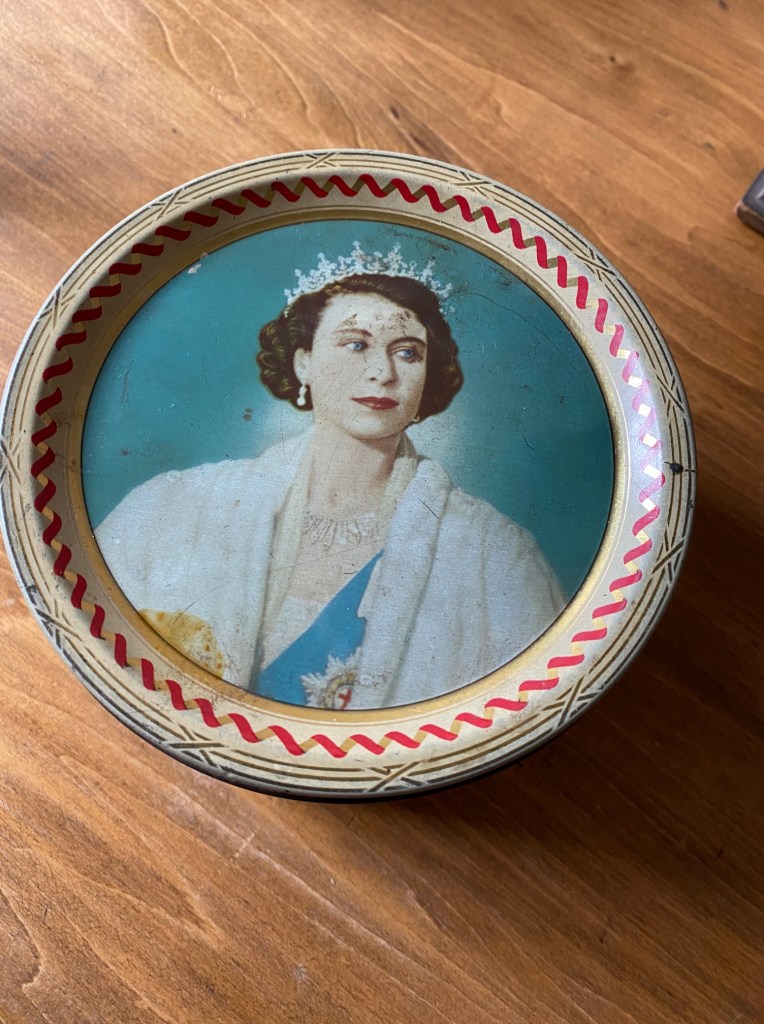
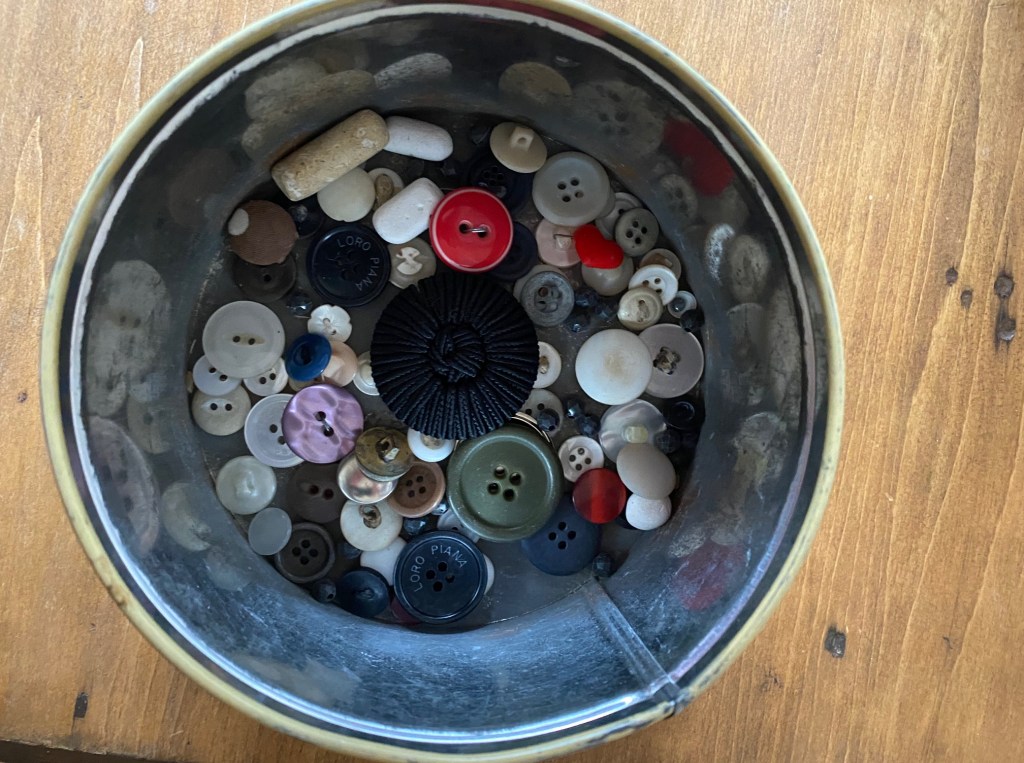
As with all idiosyncrasies of one’s upbringing, I thought her knowledge of the British monarchy was common.  I didn’t question it any more than I found unusual the numerous mugs or dessert plates emblazoned with images of King George or Queen Elizabeth.  They fit perfectly with Beatrix Potter animals lined on the sideboard or ceramic hot plates with Old Fezziwig dancing under the mistletoe. Most of these treasured keepsakes have disappeared, but today, a day after the death of Queen Elizabeth, I take out a tin button box painted with Elizabeth’s coronation picture from the 1950’s.  It had been a tin of Mackintosh toffee, always a favorite, and certainly a treasure the year of the coronation.  Long after the sweets were consumed, Mother used the tin to store errant buttons—buttons lost, buttons saved in anticipation of loss, buttons purchased because they were oh-so-lovely and may someday be of use.  I lift the button box from my sewing basket, shake it for its pleasing sound and admire the photo of the young, newly crowned queen, all the while missing my mom.

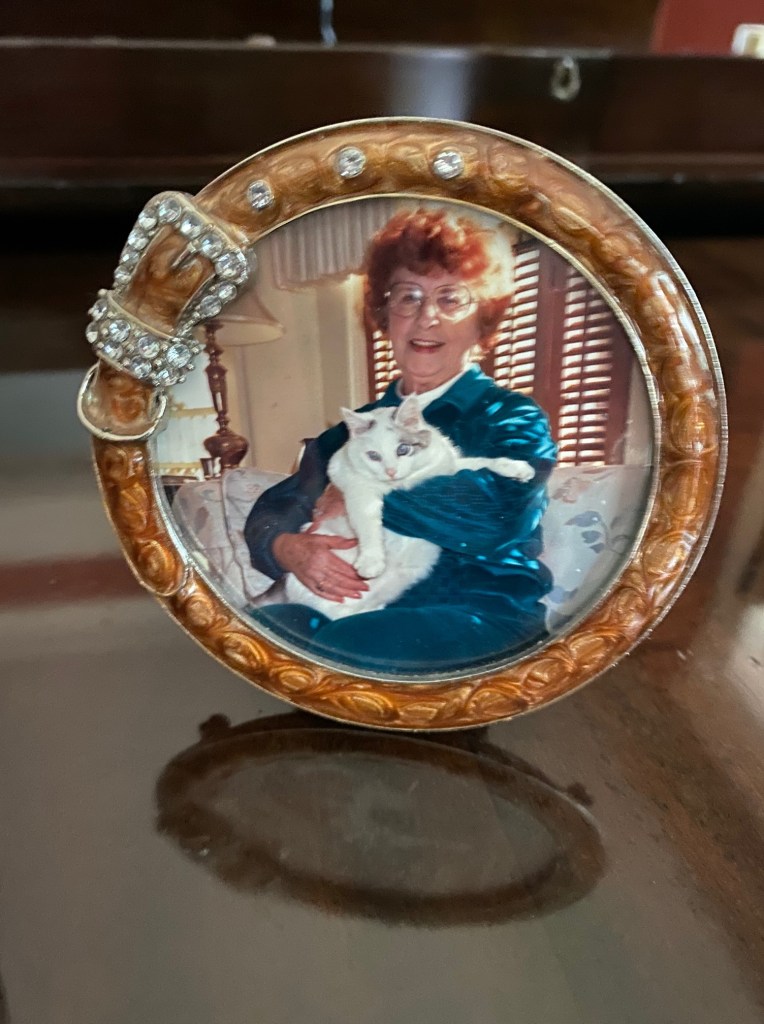
            Mother and I were glued to our small black and white television set for Elizabeth’s coronation.  Elegant and somber, the young queen accepted the heavy crown, its weight Shakespearian in significance.  Crowds swarmed London, a city still darkened in the aftermath of World War II.  Mom and I cheered along.  And years later, then on color television, my attentive daughter would sit with her grandmother, filled with celebratory joy for the wedding of Prince Charles and Diana.  Mother, newly widowed then, recently adopted a white kitten found wandering in the neighborhood whom she immediately named Prince Charles.  Charlie grew fat and affectionate for her until her death.

            “Oh Mom,” my daughter called yesterday,  “Has the queen really died?” Together, my mom, her grandmother, arose in our memories.

            And today, I reacquaint myself with my mother, seeking an explanation for her adoration of the British royalty. On the surface, they could not have been more dissimilar.  My mother grew up on a struggling farm in northern Wisconsin.  Her greatest goal was to flee the farm, which she did.  Elizabeth grew up with affluence and privilege, although any urge she might have had to flee was stifled her entire life.  My mother had little power or influence.  Elizabeth had significant influence, but constitutionally curtailed power.  And if you have watched The Crown, you will realize her boundaries were set by a corporate monarchy, right down to her pastel suits that framed her image.

            Yes, humans reach for heroes; for example, in pop culture and sports, but I don’t think it was the grandeur that Mother might have hoped would spill over into her life.  What she had in common with Elizabeth was fulfilling a promise, as unforeseen as it might have been.  At eighteen, my mother pledged herself to our father.  Although not always bad, the marriage was unstable.  My mother endured economic and emotional instability that she mopped up with the same determination she showed when cleaning the kitchen floor.  She took a secretarial job to support us, one where she worked with such perseverance that she became, and proudly to her, the executive secretary to the bank president.  Today she would have been called a vice president, or at least a loan officer; however, the glass ceiling was concrete and exactly at the height of her braided hair.  She would not leave her husband or her home for more opportunity.

            At twenty-one years old, Elizabeth publicly declared her commitment to serve the British people for her entire life.  And she did that, although many can rightly argue that her labors were not always on the side of the common good.  Yesterday I emailed my young Belarusian friend, Hanna, who is doing graduate work centered on social injustice in countries such as Belarus.  Since she is in London at university, I asked her what it was like to be there on the day the queen died.  She responded forcefully with multiple citations of the queen’s suppression of human freedoms, especially in former colonies: “You might expect what my opinion on the monarchy is. Putting a bunch of people above millions, and billions of others by birth… I find there are few systems as unfair as monarchy,” she wrote. 

            So much for my nostalgic musings of Mother and Queen Elizabeth.  Was my mother unaware of racism in Buckingham Palace?  Certainly, she recognized the long silence after Diana’s death.  What I am seeing now is a mother who wanted for her admiration a human being such as she was.  Elizabeth make mistakes, ones plastered across tabloids.  Mom made mistakes not significant enough to attract attention.  Elizabeth stuck to a pledge made when she was too young to imagine its consequences, as did my mother.  They endured.  Perhaps it makes sense that among all the royal keepsakes I kept the button box. With effort, I pry open the tin lid.  Inside there are common black and white buttons I will never use.  But there are also those worth saving and some oh-so-lovely.

LAWN DAISIES

When I am feeling low, to lift my spirits I head for the garden – any garden — my vegetable garden, or this weekend, the square of earth surrounding a dogwood tree that might bloom pink any day now.  Around that tree, wild grasses, forget-me-nots, dandelions and escaped strawberry plants elbow for space around lavender and rosemary, even a large hydrangea we surrounded with seasonal bulbs for daffodils and tulips.  That square is a melting pot of chosen and undesired intruders that all stake their claim on an eight-by-eight-foot square that suffers intrusive saltwater damage in winter when high tides seep over our driftwood fence.

Last weekend, I carried a big orange bucket holding spades and clippers, plopped it alongside the wooden boards that separate the garden from our lawn and dropped to my knees to begin weeding.  My knees sunk into the soil, a rather soft landing that came to meet me in my sorrow.  I had taken with me feelings of despair following recent weeks of gun violence.  Despair would not let go its grip on my helpless heart.  Perhaps, unconsciously, I expected that spading and pulling out those weeds would lift me into hopefulness, the kind of hope that springs from an illusion of control.

How did my mother deal with sorrow? It was always clear when my mother was troubled.  I would find her on her hands and knees scrubbing the kitchen floor.  When she aged and housekeeping challenged her arthritic limbs, I offered to pay for a housekeeper to do that hard scrubbing.  She dismissed the housekeeper after one cleaning, because the woman used a mop at the end of a stick, refusing to get down on hands and knees.  I should have known, however, that the task was never about cleanliness.  It was keening, the kind of rhythmic movement made by Irish women when a death has occurred.   That back and forth, the reaching into corners with sore fingers, the scraping with fingernails a stubborn gooey blob under the kitchen table.  When my parents were not getting along, our kitchen floor was an advertisement for Aero Wax. 

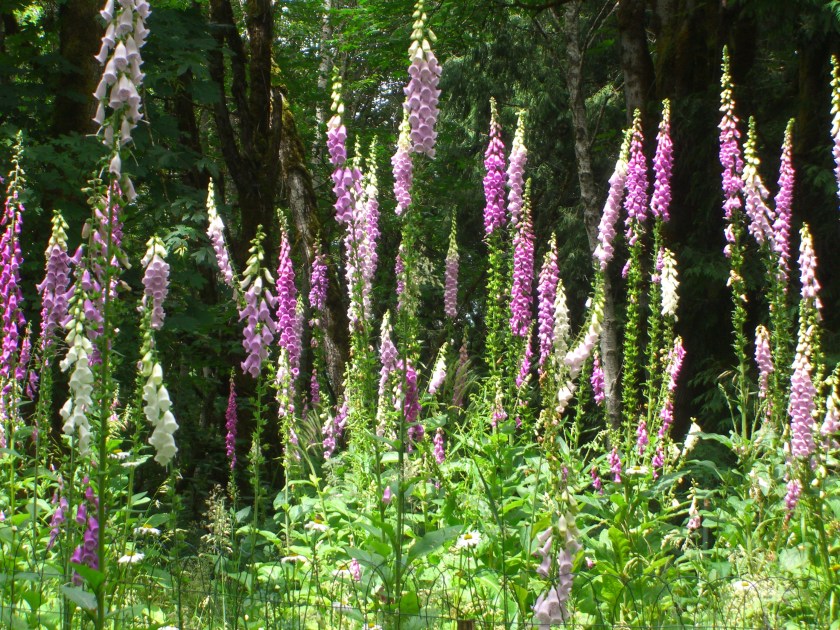
What kind of humility, what kind of praying is the down-on-knees pulling of weeds?  I was not there to rescue the children.  I too was a teacher back when school shooting was so unheard of it would never reach my imagination.  I get down on my knees where I try to discern the weeds from the wildflowers, what to pull out, what to save, because even though self-seeded, the poppies are joyful orange and yellow, the foxglove a vibrant pink, and when clustered, they wave a snappy salute across the lawn. 

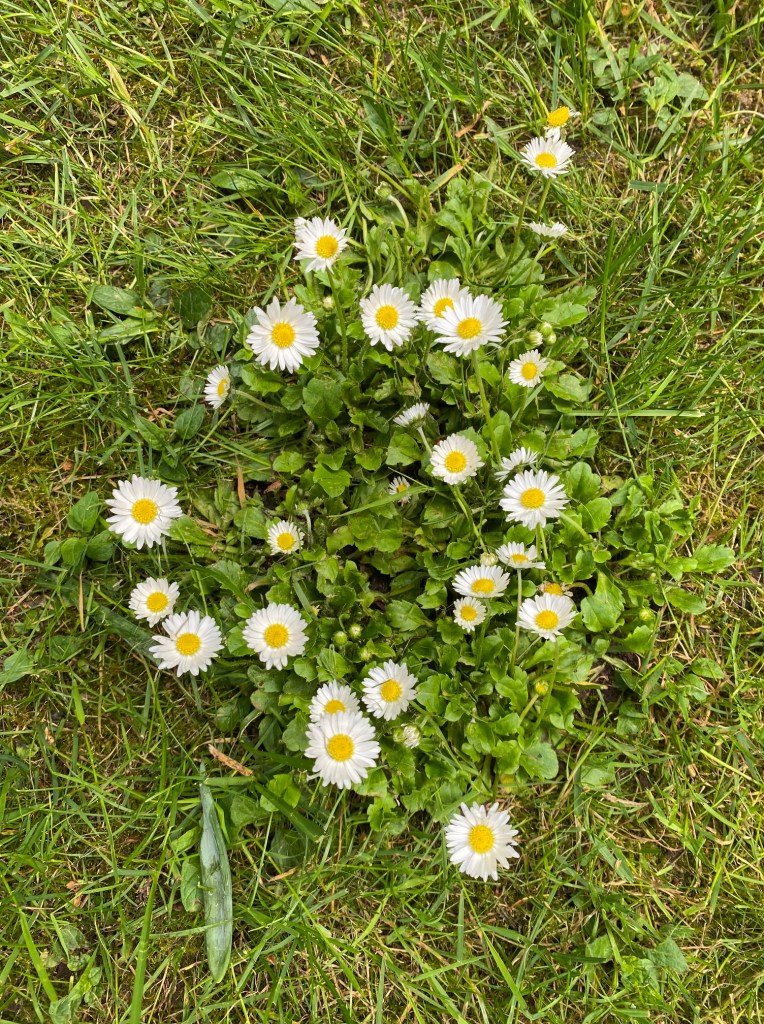
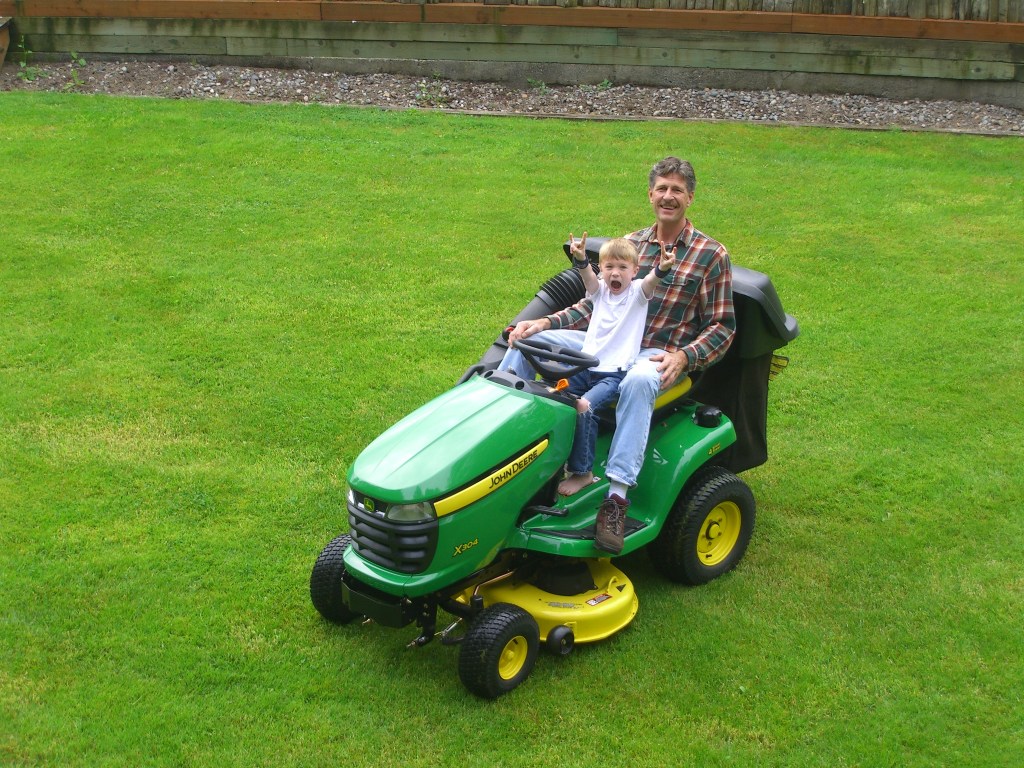
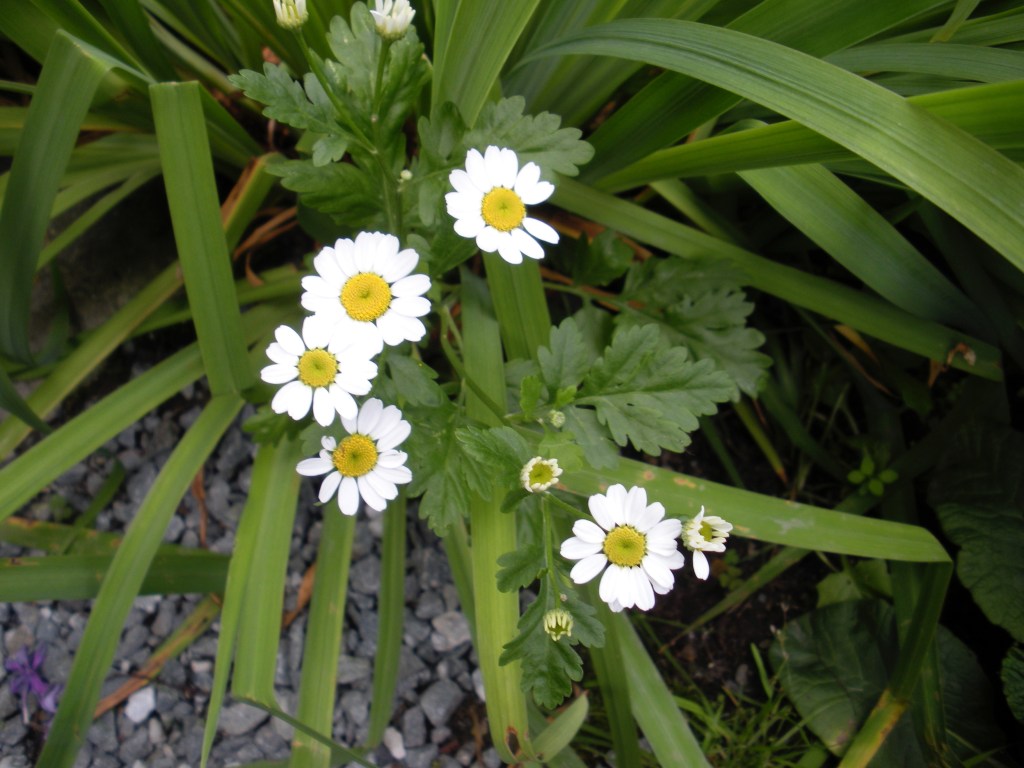
Today, while I am purging my grief with what are becoming sore fingers, I hear the familiar hum of the John Deere lawn mower.  Allan, perched like a prince on a dais, is riding around the yard cutting the rapidly growing grass.  I stop to watch him speeding around in circles or diagonals, clearly enjoying himself, little filaments of green flinging from under his machine.  He is headed toward a patch of small white daisies clustered mid-lawn.  “Lawn daisies,” I called them when I took my grandchildren to the park, and we found them salted across the park lawn.  So many, surely our picking a handful would not diminish their plenty.  We picked and we laced them together, making bracelets for small wrists.  Or we took one separately and plucked away –one white petal at a time, chanting “She/he loves me . . she/he loves me not” until we felt loved or rejected for one moment on a spring day.

Allan and grandson Oscar years ago

I yell at Allan to stop, but he is wearing ear protectors.  I jump up from my weeding and race to the confident green mower just as it bore down on the circle of daisies. 

“Please,” I shout, circling the daisies in a protective dance.  He cannot see me, but understands he is to leave the flowers.  Perhaps they were his weeds in the lawn.  He stops, and the daisies live on now, white and fragile as remembrance.

Raking Leaves in the Wind

IMG_2671

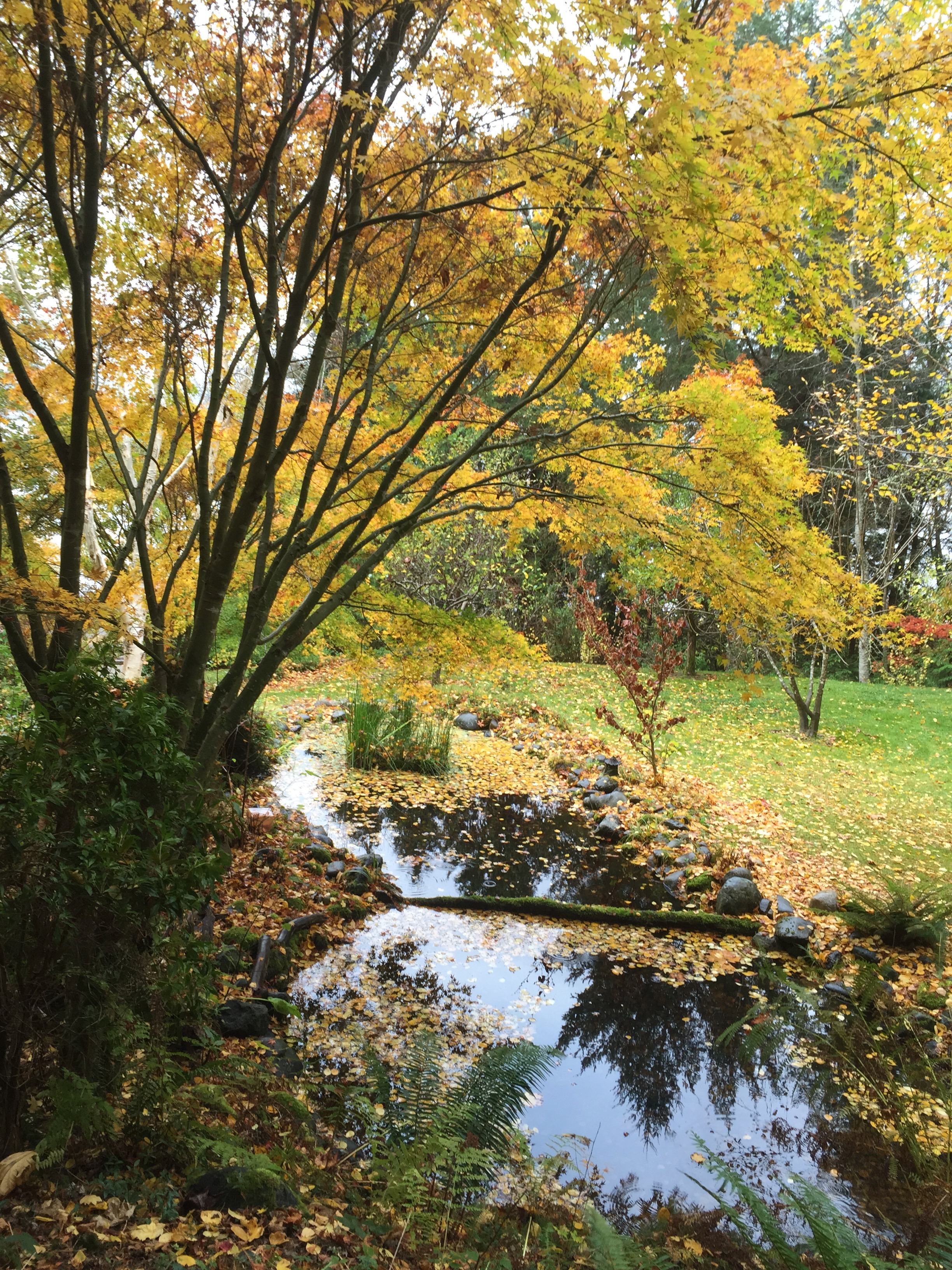
What is more ludicrous than raking leaves on a windy day? Yet when you feel like testing your power against the world, it is a perfect activity, therapeutic, in fact, especially for those of us who mistakenly think they should be in control of life.  This morning, our usual pre-breakfast walk around the property takes us to a bench above the pond.  There we sit to look down on the pond’s surface, last week covered with the slimy vestiges of duck weed that I skimmed off,  but today littered with a confetti of yellow birch leaves as if all of the trees were celebrating the Biden victory and decided to shake themselves silly with joy.  The pond accepts it all, summer or fall, duck weed or autumn leaves.  I have a difficult time looking at Nature without seeing a metaphor in the whole experience.  Could scooping duck weed or raking leaves around the pond teach me how better to live my life? 

Today the wind has been bellowing down from the north, but the sky and bay are so crystal blue, no self-respecting Northwesterner would stay inside.  After all, any day now the rain will return.  So up the hill to the greenhouse I go in my rubber boots to fetch a metal rake and the wheelbarrow.  I wedge the rusty wheelbarrow the best I can through the barn door while the wind slaps the door back in my face as if it knows two hours of raking leaves around the pond will be futile.   

Do we ever do anything from pure reason?  Every act has its collateral experiences.  Raking leaves against a spirited wind allows me to feel my muscles, the pull on my left elbow, the stretch around my ribs as I bend to scoop up piles of crisp yellow and brown leaves.  I will not have to go inside for physical therapy today.  The cold wind fills my lungs with the freshest air.  Leaning on my rake for a moment of gratitude, I realize that only a month back, standing on this same place, I choked on smoke from wildfires in Oregon.  I will never take for granted the pure, cedar-laced air of the Pacific Northwest.  And so,  I draw a swath of leaves to me, turn to the right and repeat until I am circled with leafy dikes that shed their top leaves with each new gust of wind.  Pull, pile, pause, and watch the top few flee as if back to the birches from which they came.  

Acceptance is another virtue that needs restoring.  See the leaves rise from my pile, lift into the air, settle down back in the middle of the pond where my rake will not reach them.  Acceptance is much like resignation, unless you play with it.  I pause to admire how lovely the one or two yellow leaves float in a little whirlpool in the middle of the pond. If keeping the pond clear was what motivated my raking,  I lost on that leaf pile, but how easy to turn a loss into a win for aesthetics’ sake. 

All the senses surround leaf raking.  The sound of the soft scratching the rake makes across the mossy grass.   Gratitude again.  I could have asked my husband to bring out his heavy gas-powered leaf blower and roar clean all around the pond, even releasing those stubborn leaves strangled by heather plants.  I didn’t ask him.  I hate the arrogance of leaf blowers, the angriest of tools.  That soft scratching of rake on yard, even on sidewalk, although a bit like nails on a chalkboard, evokes memories.  

I have lived long enough to recall TBLF, Time Before Leaf Blowers, when you could judge the distance of your neighbor on a Saturday afternoon by how within earshot the soft scratch of rakes, a scratch that must feel good on the grass, for it perks up to an erect green until the next tree sheds.  There is an airy, fluffy sound when the person raking swoops up a pile, one armful atop another.  

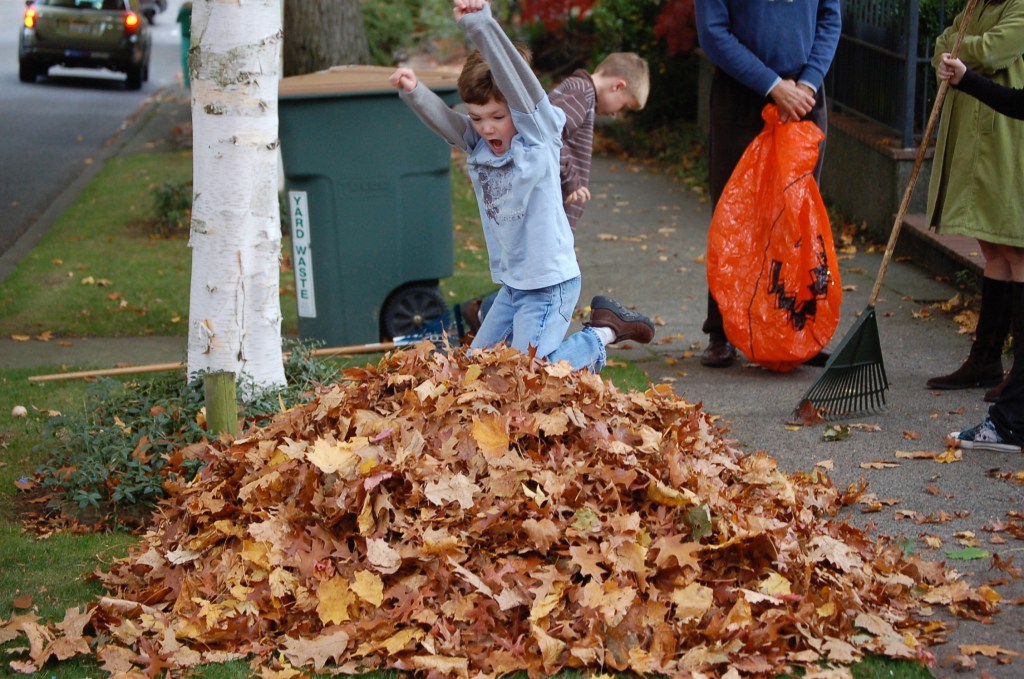
When I was a child, I waited at the end of the drive until my father had a handsome edifice of leaves.  

Then in the most self-sacrificing parental affection, he would let me take a hardy run down the driveway until I leapt full-body into the pile, scattering what must have been an hour’s work for him.  No wind can destroy a pile of leaves as does an autumn-loving child.  When we had completed raking and jumping enough times to exhaust me, I returned to the house, leafmeal sticking to my corduroys, the fragrance of leaf dust in my nose.  Then Dad would take the well-used pile to the corner of the drive where it met the street, would stoop down with his cigar lighter and ignite the whole pile until it diminished to ash.  The smell of burning leaves was intoxicating generations before I associated its kinship to the aroma of someone smoking marijuana. Yes, in the ‘40’s and 50’s composting succumbed to air pollution.

Today, four excursions of a full-brimmed wheelbarrowing to the compost pile left me ready to return to the cottage and the wood stove.   Once inside, my wind-blushed face felt taut and young.  I let Metaphor speak to me and here it is. As the presidential election approached, the weeks became increasingly tense.  No, that is not true. Not the weeks, but I had been increasingly tense.  Before this election, I felt as helpless as dry leaves tossed in the wind.  I had done what I could, working on encouraging other Americans to vote and voting myself.  Was I raking leaves against a wind?  Many of us feel as if we have been doing so for many years.  Perhaps that is why it feels so good literally to rake those leaves, relieving anxiety I have felt for myself, my family and for our nation.  I accept the metaphor of the task.  I accept the reality that I will never clear away all the fallen leaves from the pond’s perimeter.   

OWNING

Raven pulls the sun down

after tribal boats 

churn away from the shore

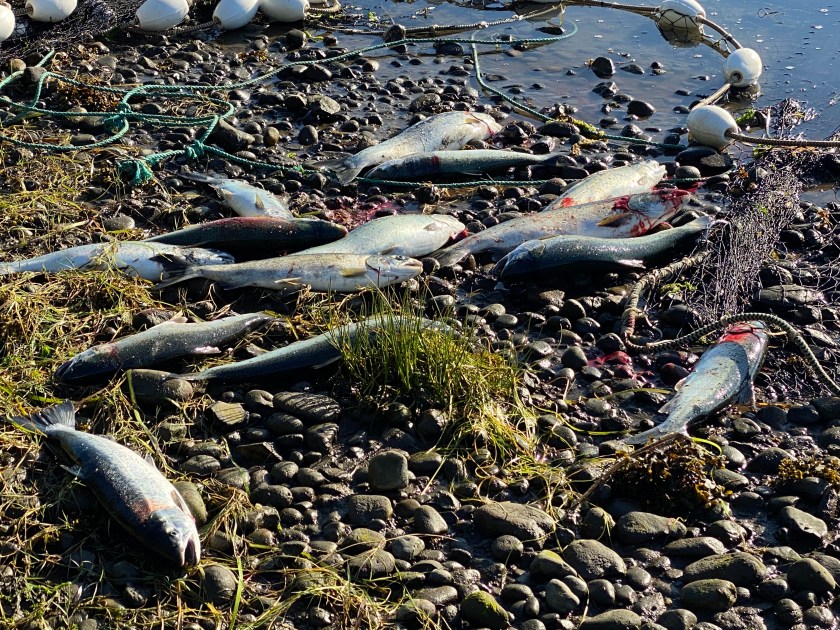
Nets descend with frantic fish

shivering in their interrupted search

for rivers from which they came

So close a destination

felt in fins and swim bladders

for remembered homes

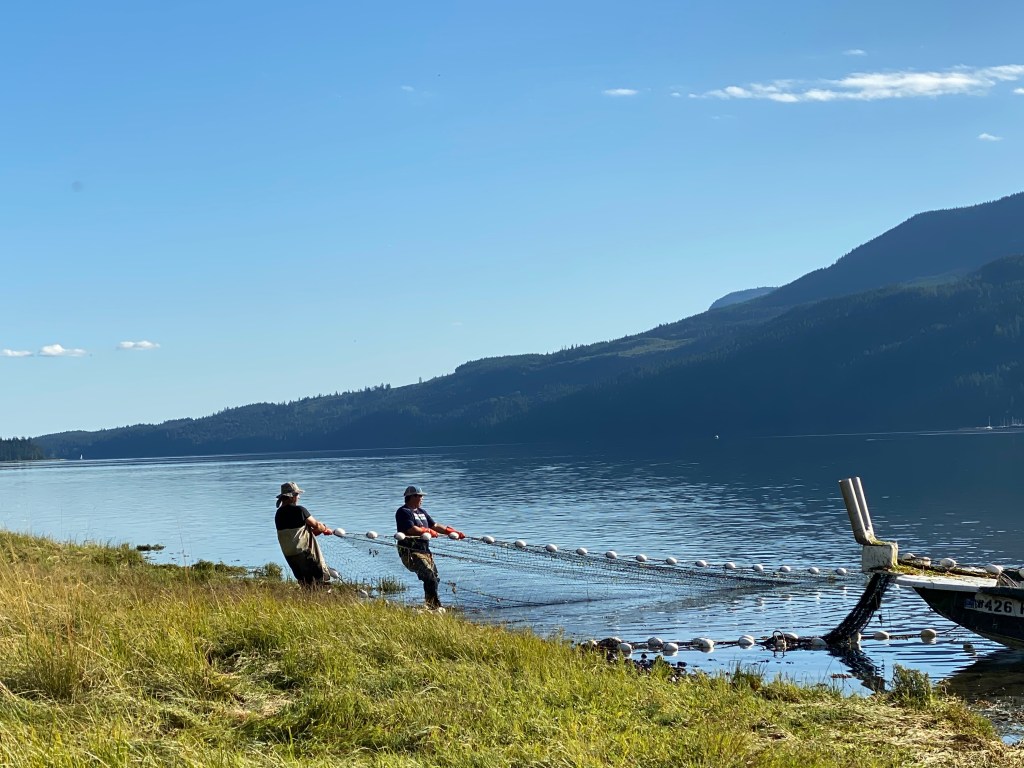
Fishermen, father and son 

from the Suquamish,

arch forward with heavy nets

Then fall back in strained pulling

upon shorelines feathered with eel 

grass we chose not to mow.

When this property could not be owned,

any more than possessing the sun,

was this shore their home?

Raven repeats a shared song

lends its image to rattles

shaking in dances with drums

Gulls shriek tossing ragged wings

even after a white sun slips

behind purple hills

Everything here wants 

its share of the salmon 

like relics sacred as bones.

Mary Kollar

2020

The Truth of Consequence


Unknown-1

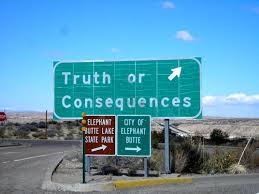
          Truth or Consequences is not only a desert location in New Mexico, it was also  a popular game show that bridged radio to television years from 1940 to the early 1980’s.  The object of the game was to discern which guests told the truth about some life experience.  Guess right and the consequences were a win.  Guess wrong and you were a loser.  Seems right in line with our polarized either/or world; however, I want to depart from those extremes and think about the truth OF consequences.

            Here I am at our Quilcene cottage in late August harvest time .  The romaine in my garden lines up like a green battalion of soldiers.  In parallel lines — arugula, carrots and beets. IMG_0880 All are ready to eat NOW, but we can’t consume it all, and neighbors graciously accept  only enough for a salad or two.  As you sow, so shall you reap.  Did I over-sow?  With minimal reading of seed packets, I should have planted sequentially, a few seeds each subsequent week,  and prepared for a staged harvest (consequences).  About a dozen years ago, I bought a small one-gallon size fig tree and planted it in the middle of our little orchard where a pear tree had failed.  Yesterday we drove up and down East Quilcene Road with buckets of figs for neighbors we hoped would accept some.  Luckily, Scott and Susan have a food drier and accepted the load.  How could I ever have imagined that little potted fig would produce so many?  Neighbor Raj calls figs “the fruit of the gods.”  Funny that we live at the foot of Mt. Olympus, because our fig harvest this year could supply a bacchanalia for every god from wood nymph to Zeus.  IMG_0883Some consequences we should/could have foreseen.  Others resulted without possible foresight.
            Similarly, What goes around comes around.  That expression is a first cousin to the sowing  maxim.  It connotes consequences like just deserts. Parents admonish children that their actions, if ill considered, could ricochet, causing them harm. Punch the neighbor child, and that kid may grow up taller and stronger and seek revenge. We relish such consequences when we root for an underdog.  There is always a dog in there somewhere, and it may grow up to bite back. IMG_0809 These are the consequences of justice.  Such ironic justice explains the popularity of mysteries.  it is satisfying to see the criminal in irons, even more so if, as Hamlet plots revenge on Claudius, the miscreant is “hoisted by his own petard.”  
            Although not always anticipated, consequences can be as pleasant and circumstantial as tying a child’s shoe prevents stumbling.  May I assume that you too want the consequences of your choices to be favorable?  Last week I stood in line to check out groceries at the local Safeway. I chose the shortest line, only one customer ahead of me.  You can see what comes next.  Murphy’s Law: the adjacent check-out line with four customers moved faster than mine.  Ahead of me was a man of my age (elderly) in a large, motorized wheelchair.  His shopping cart brimmed with purchases he handed, as best he could, one-by-one to the clerk.  As he sought his food coupons to pay for his purchases, I watched as one-by-one some of his items were set aside to be returned to shelves.  My heart hurt.  He could not afford to buy the chicken, the slices of ham, primarily the more expensive groceries.  I could buy these for him, but I also didn’t want to insult the man with an offer that might look like charity.  Nonetheless, I knew the consequences for me if I failed to speak.  “Excuse me, sir.  I see you don’t have enough money with you today to cover everything.  Would you please let me pay?”

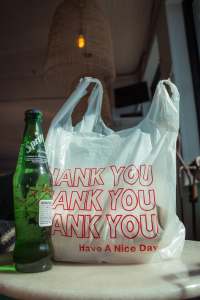
            He smiled and accepted: “Thank you,” he said. “Thank you for paying it forward.”photo-1563694732713-2309ade7a54e

I hadn’t heard that phrase in a while, but his gracious acceptance drew me into community with him.

            “I try to pay it forward too,” he continued.  “I served in the military, and that was me paying it forward.” As I walked home laden with my own groceries, they felt lighter, the way happiness diminishes weight.

            This past week the Democrats held their national convention.  This coming week the Republicans will nominate their choices.  There isn’t a voter in this country who should fail to think of the consequences of voting.  Whether in local or national elections there will be consequences, and that is the TRUTH with which we will live.

IMG_0803

Social Distance

IMG_0772

All crises add to our common lexicon, and soon we use novel phrases with a shared understanding, even when those idioms are seemingly contradictory.   Example?  Social Distance.  The very nature of sociability is closeness.  In my years between the 1940’s and 1980’s, meeting a friend involved a warm handshake and smile.  That evolved to hugging, polite kisses (as the French do), even between people I barely know.  Attend a museum opening of a new exhibition and prepare to be kissed by men who probably no longer enjoy kissing me any more than I welcome their whiskered greeting.  Being social demands intimacy

In this year of Coronavirus, the social thing to do is to stay away — one from another –and preferably six-feet apart while wearing a mask.  This past Friday evening we made a reservation at Finnriver Cidery where we met friends to make up a fewer-that-five table.  IMG_1096After washing our hands at the soap pump – local, home-brewed soap –our invitation was checked off at the entrance by a friendly masked host who ushered us to our sanitized table.

“Who was that masked man?”  If you are my age, your mind recalls The Lone Ranger on his white stallion riding off into the sunset after rescuing some oppressed homesteader.  Now that question is common as we try to recognize people by their squinting eyes peering over a face mask that hides any smile of familiarity.  Our friends laugh their muffled chuckles in agreement about efforts to use our eyes more expressively.  A wide-eyed greeting, through glasses and above the mask, or a squinty smirk of disapproval for a negative message? Hand dances may come back into fashion.

I agree that the six-foot and masked decrees are the best social expression after all.  If we are social, we care about others.  We seek what is common among us, and today that is a desire for a healthy community.  Let’s forget that the phrase is an oxymoron,  and instead value what it means to have a community embrace without touching.

The medium is the message. If the message comes from the governor’s office to mask up and stay apart that is an authoritative and respected message.IMG_0350Perhaps not so, if you don’t happen to like your governor, or the governor belongs to a political party with which you don’t identify.  Sad, but true, communicating emergencies connotes urgency depending on who sends out the warning.  Hard to think if we get the next big earthquake and warnings come from your unpopular government official so you stay exposed to falling structures.  Perhaps the shaking ground will prompt people to safety.
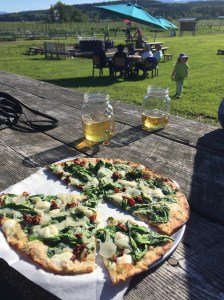
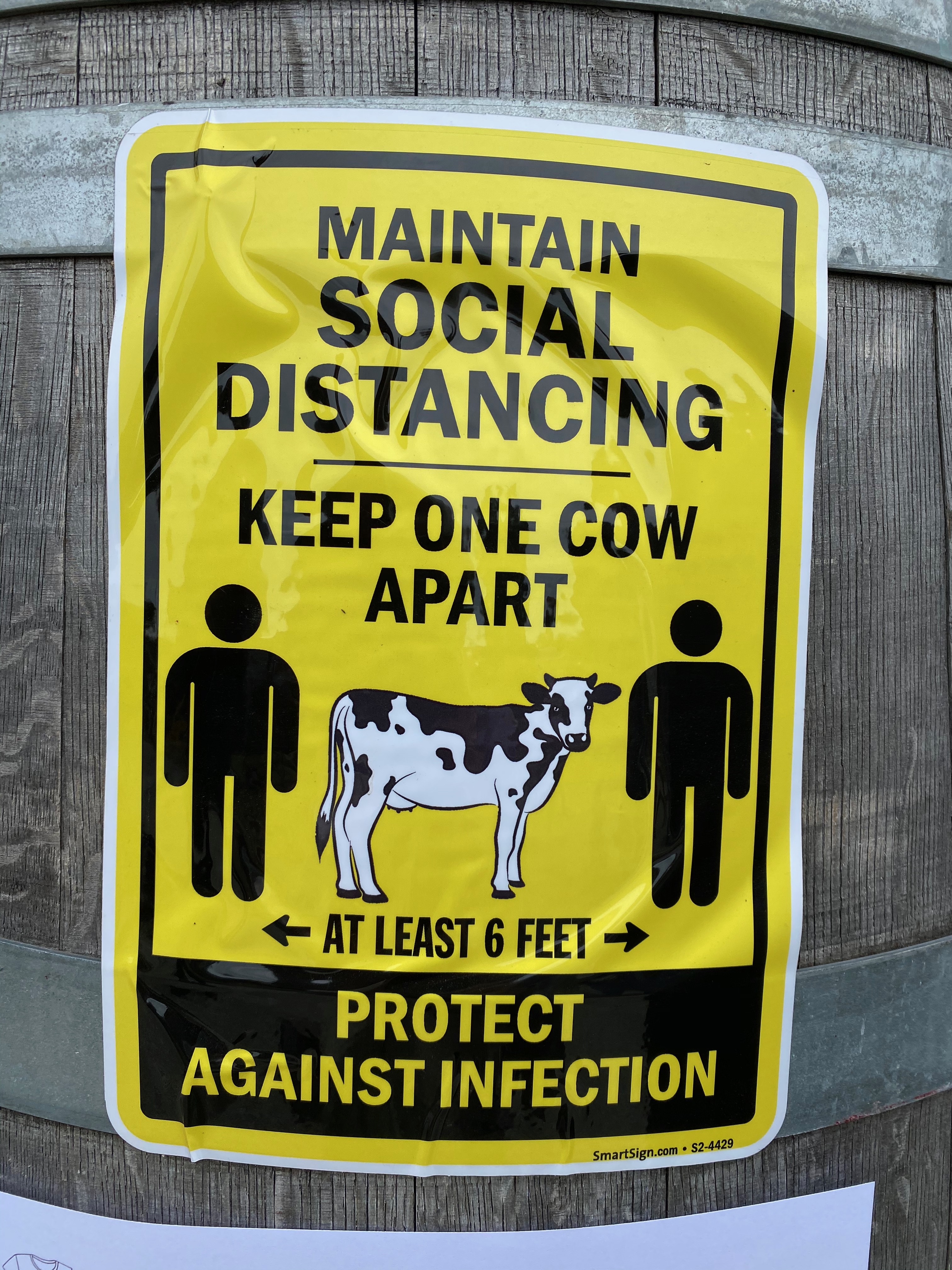
Marketing is everything.  The very humor of Finnriver’s sign exhorting us to stay a cow’s distance apart invites compliance.  IMG_5825There I was enjoying my veggie pizza and Apple Oak Cider while envisioning a heifer between my friend Kathryn and me.

Humorous signage reminds me of a No Trespassing sign on the barbed wire fence that surrounds a nearby cow pasture in Quilcene:  Warning: Don’t cross our Pasture  Unless You Can Do it in 6.8 Seconds  Our Bull Can Do it in Seven.  IMG_0779[1]My imagination is engaged.  I can feel a bull’s snorting breath on my derriere.  Had I been inclined to take a shortcut through the rancher’s field, I dismiss the notion with a laugh.
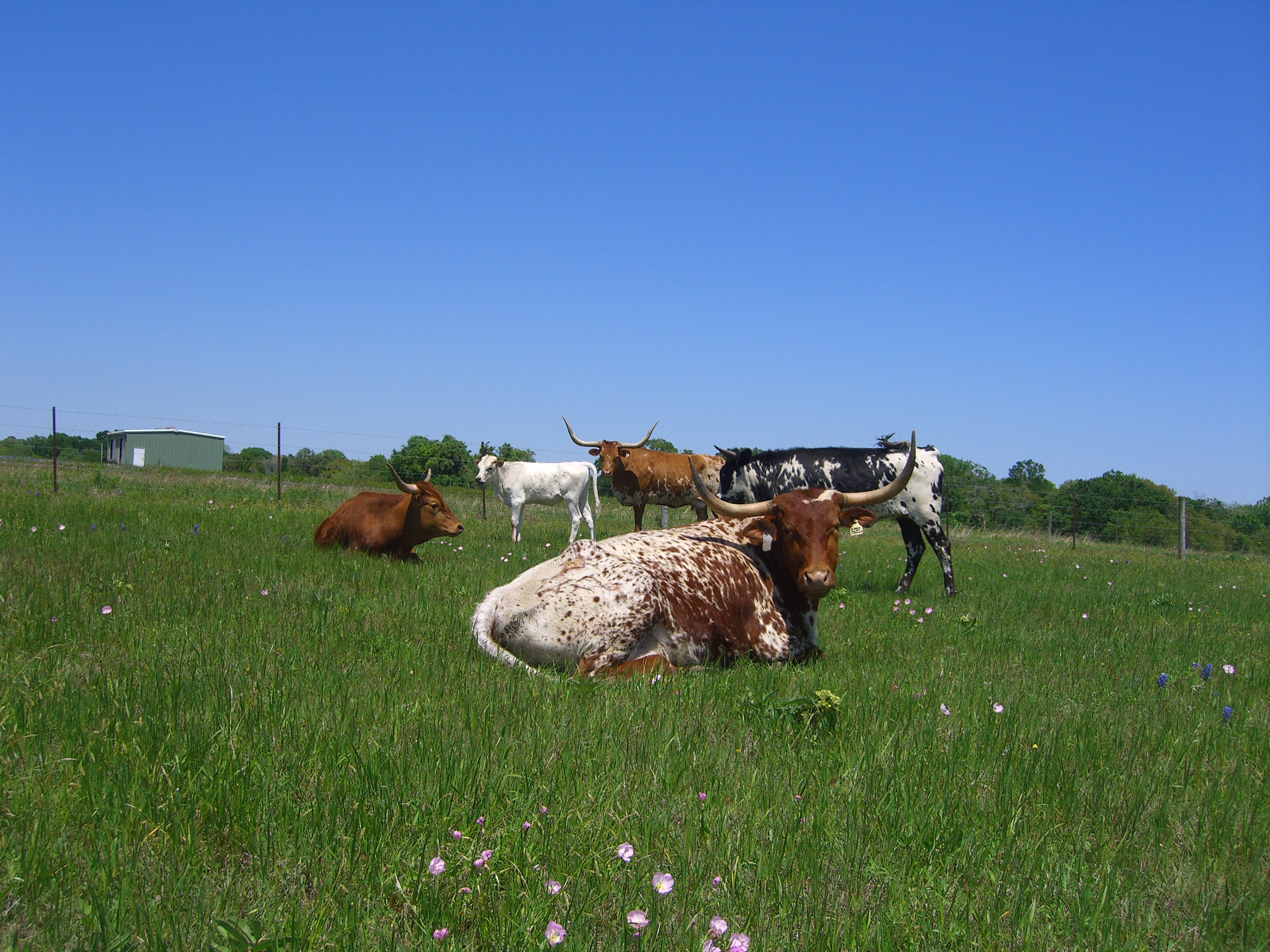
Here’s another neologism:  The New Normal.  Perhaps you have used this one too.  It suggests our acceptance of practices molded by the pandemic.  It too is contradictory, as what we once considered “normal” is now abnormal.  Someone threw in the word “normal” instead of the new “behavior,” because we are all longing for “normality,” a state of being to which we can’t return.  With  a resigned sigh, we embrace “the new normal,” indicating acceptance.  Perhaps “embrace” is the wrong word here.  Since March, the only embrace I have allowed myself is for my husband and my cat.  I embraced my husband in March and four days later he showed Covid-19 symptoms, because I was unaware I had been exposed.  Yep, we needed a cow between us.

CIMG4113


Kitty Walk

Now  when the world shouts, “Stop!”  we are slowing to notice life at a measured, appreciative pace.  May all of your senses awaken your day with observation and gratitude.

CIMG4661

Weekend mornings here at our Quilcene cottage, we begin with the Kitty Walk.  Allan makes us each a steaming latte in tall covered mugs.  From underneath the cottage, he fetches a red plastic bucket he has filled with bird seed, stuffs a couple of dried ears of corn in his breast pocket and returns to the front door where he whistles for me and our two cats to follow.  A dozen years ago, the cats would skitter after him almost tripping him up in their eager escape.  Today, Willow doesn’t budge from her bed by the wood stove.  Homer reluctantly lumbers along to the whistle, with a  heavily furred sigh, “Ok, if we really have to do this again.”

Up the trails softened by aromatic cedar chips, we walk the circumference of our three wooded acres, stopping at each of six benches my brother built for us as scenic rests.  Allan reaches for a vine maple limb with a chain to which he screws on a cob of corn.  Walking on, he scatters seeds on fallen logs that line the trail, tucking more seeds and peanuts in the cavities of trees. IMG_0278[1]Some trees are decaying remains of towering firs, in their slow death, still useful for persistent woodpeckers.  Stellar’s jays drop from limbs above, then hop along behind us snatching peanuts in defiance of Homer who long ago gave up terrorizing the hungry birds, choosing instead to pounce between us on a bench where he nestles against the warm coffee mugs.   Today, we have passed our first trillium sticking up like a green finger from the middle of our trail.  IMG_0282[1]We have touched the pliant  leaves of wild plums.

The first bench is by the stream that tumbles like a toccata into the pond below.  We reminisce about the creation of our arboretum, a restoration of once-forested land devastated by previous owners who clear-cut the site for building, then sold off the property for being too hot, lacking shade.  Sitting on this first bench, we reimagine how we transplanted 20 – 40-foot Douglas Firs from across the road, built a stream and pond, planted vegetation and fruit trees, made room for a sun-lit vegetable garden.

IMG_0283[1]

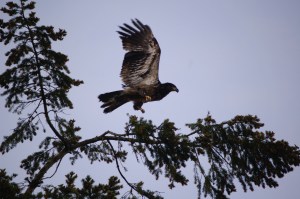
The coffee is cooling as we climb the ladder to a treehouse, our next stop.  Only a three-foot shake covering suggests a “house,”  Although we billed the project as a treehouse for our grandchildren, all along my husband envisioned an elevated station for hanging bird feeders, a panorama for spotting flickers hammering on the birches.  About thirty feet above the treehouse,  a nest of eagles is new, but the tall fir was long a roosting point for them to oversee the bay below — the migrating ducks, the salmon run spring and fall.  We hug Homer closely when we hear the eagle’s piercing cry mid-swoop to fetch whatever the eagle feels like fetching. _DSC0586.JPG

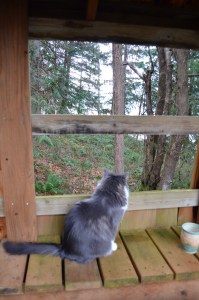
Our treehouse pause lasts a good while.  Allan fills the feeders and teases the jays to come closer as he lines peanuts precariously on the railings.  Homer makes that twitching sound cats make when birds are nearby.  The hummingbird thrills around the red disk.  The only other sounds may be high cedar wind wisps or the distant gurgling of the creek.  I take my journal from my jacket and write.  Today I begin this blog.

DSC_0828.JPGThose mugs are drained of coffee as we step down the ladder.  Sometimes Homer rides Allan’s shoulder, for the cat’s weight makes a downward climb cumbersome.  Then we are off down the trail to the sandy beach.  This bench affords a western panorama of Olympic foothills. The sun illumines snowpack or new spring green. IMG_0241 Along this lower trail, I kneel to clear off fallen leaves that cover two crosses made of stones, one with the name Celeste, the other Toulouse, grave sites of our first two felines whose companionship named our routine the Kitty Walk.
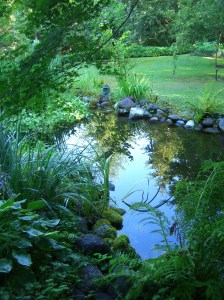
Circling back up the hill, purpled with periwinkle, we return to where the creek has emptied into our pond.  A bench above the pond allows a wide-open view of lily pads in summer, but this March morning a few drops from hovering trees shed last night’s rain.  The drips entertain me with their concentric circles interrupting a blue, reflected sky. Homer takes his sweet time to leap between us, then impatiently hops down toward the vegetable garden.CIMG1975.JPG

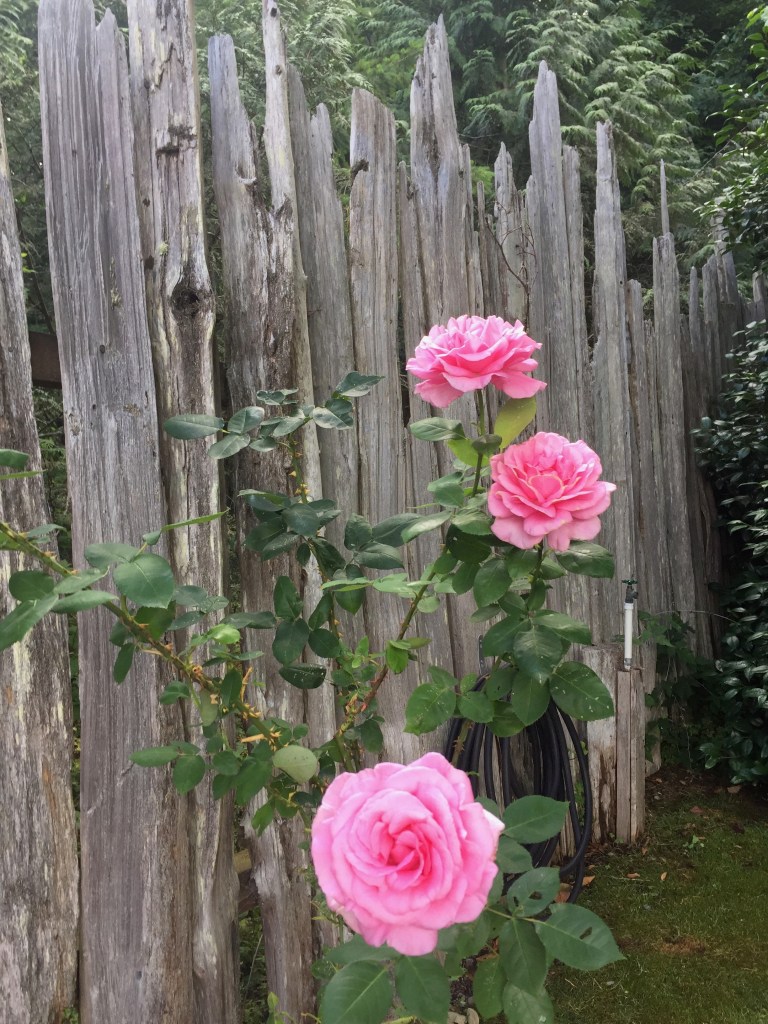
We cross the driveway through the woods above the cottage, on our last trail through a wooded plot we acquired years ago — a steep, heavily treed site whose massive trunks remind us of our smallness in the woods.  More chipped trail, some narrow stairs built into the bank, then on to shoreline again before pushing open a driftwood gate that returns us to the front of our cottage.    Homer does not follow us through the gate, but pushes himself between a capacious gap between two of the driftwood planks behind a line of rose bushes.  He has caught up.  He meows to let us know it is time for Allan to hang up the red bucket and climb the stairs back to the cottage kitchen for breakfast. Both man and cat have been anticipating the aroma of bacon.

IMG_6316
Looking forward to summer