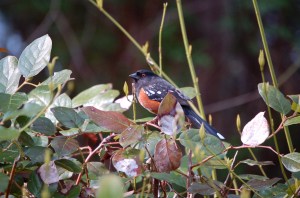
“Hope” is the thing with feathers –
That perches in the soul –
And sings the tune without the words –
And never stops – at all
And sweetest – in the Gale – is heard –
And sore must be the storm –
That could abash the little Bird
That kept so many warm –
I’ve heard it in the chillest land –
And on the strangest Sea –
Yet – never – in Extremity,
It asked a crumb – of me.
Emily Dickinson
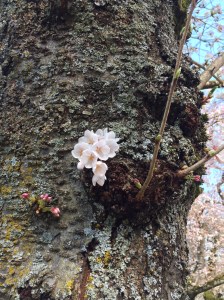
Hope is the first green-gold bud of spring on winter’s leafless limbs. To have a word for hope is a miraculous thing, for how else could we express the force that inspires us to move forward in times of despair? Some linguists argue that without a word for an emotion, you can’t express, maybe not even feel the emotion. I disagree, but I understand the clarity that comes with being able to say, “I hope…”
Hope is not expectation, the latter assuming some planning and reasonable certainty. For example, we wait to plant lettuces until the last frost has passed so we may, according to the seed package, expectabundant produce in 58 days. Hope ,on the other hand, takes over as a word of the imagination, so we plant in April’s cool earth, regardless of knowing there could be more frosts, even snow or ice. Nevertheless, I press the seeds, little flecks, into the cool, damp soil while I imagine June’s salad.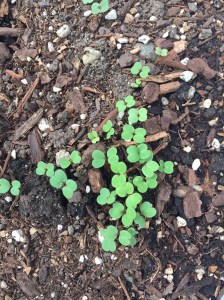
Because it is a word of the imagination, hope reaches for the poet’s tools – simile and metaphor. Emily Dickinson writes “Hope is a thing with feathers that perches in the soul.” We see, in our mind’s eye, not an amorphous soul, but a small, fragile bird chirping in anticipation of attracting a mate, a bird so fragile it would be easy prey for my cat. Emily’s hope is one pounce away from extinction. Nonetheless, her poem moves to gratitude that hope comforts without expecting anything from her. True, it has none of the planning and preparation of expectation, but hope is not fragile. It holds us in our own sturdy hands above the grave.
When does Dickinson hear the hopeful bird song? She hears it in the gale or on the chillest land or the strangest sea. We are most aware of hope when our lives face challenge. It faces off against another strong emotion, despair. Hope was the flag that preceded the march of youth from Marjory Douglas Stoneman High School to the steps of their nation’s capital. Students did not march to scream their despair, like King Lear howling to the heavens. They marched to speak their young hope for a violence-free nation, and it is that hope that sings in the gale. Hope looks forward, not backward. 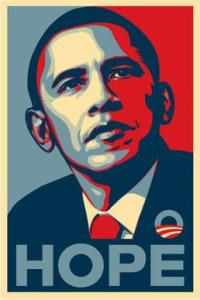 Barack Obama based his drive to the presidency not on a slogan to “Make America Great Again”, but on hope. The Barack Obama “Hope” poster is an image of President Barak Obama. The image, designed by artist Shepard Fairey, was widely described as iconic.
It is President Obama’s version of hopethat connects with me in my seventy-fifth year. Words shift meanings when you enter the last couple decades of your life. My hopes are no longer so personal, though I may hope I don’t die of some long-drawn-out disease. I do know I will die, a knowledge I could shove aside in those years when my mirror didn’t offer me wrinkled skin and thinning hair. My hopes now are less personal and more universal. Having 75 years to look backwards, I have the courage to imagine 75 years forward in my absence. At a recent Seattle Arts and Lectures event, the host asked guest author Barbara Kingsolver where she found hope in today’s divided world. She replied that hope is a kind of energy she chooses to renew each day. To abandon hope, she would be abandoning her children, her grandchildren and the children of the world. Each day, as readily as pulling on her socks, she renews the energy of hope. I too renew hope in the storm for my grandchildren, for my planet. I may no longer imagine the June salad on my own dinner plate, but I can hope for food on the tables of a world where climate change has been acknowledged and ameliorated, where peoples around the world share the bounty of what each contributes.
April is almost here. I drive through the Suquamish Reservation to Hood Canal. The highway dips between stands of evergreens spaced by deciduous trees now wearing a yellow green hue, those fist buds on spare limbs, limbs that last week were winter stripped. The windshield wipers click rhythmically to clear steady rain. Like a chant, I hear the punctuated consonance of hope, hope, hope.
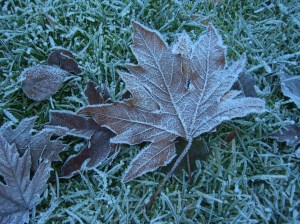 Archibald MacLeish writes in Ars Poetica, “For all the history of grief / An empty doorway and a maple leaf.” What profound absence he expresses in one metaphorical image, so that my heart hollows out with sadness as I picture that open doorway beyond which there is absence. In defining grief, a dictionary would settle for “deep, sadness, often lasting a long time.” The dictionary is accurate enough but cannot replicate the feeling of grief defined in MacLeish’s open door or the falling maple leaf.
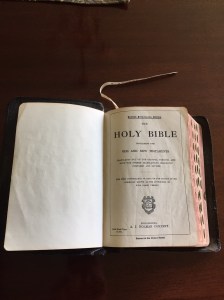 Many Americans have left religion altogether because the Bible remains the cornerstone of churches, and in an empirical age, people will not subscribe to a belief in miracles such as virginal birth. Others, in some fundamentalist churches, turn off the reality button, permitting their literalism to deny what science disproves. The Bible itself abounds in contradictions, making “the word of God” as evasive as mercury spilled from a broken thermometer. For me, literal readings can make the Bible as shallow as a puddle in which we look no deeper than the reflection of our own face. Metaphorical readings expand in lakes and oceans, often feeding channels between islands no one mapped.
 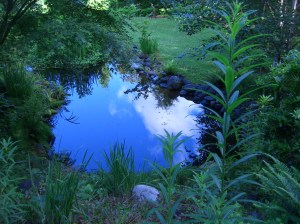 Christ does not have to resurrect in the flesh, offering his wounds to Thomas or anyone else in doubt. Christ can “come again,” among his followers who, despairing his death, realize his teachings never left them, but will endure. Christ had risen!
 These are facts about Ms. Obama’s life there, but it was her metaphorical descriptions of her life from the South Side of Chicago to 1600 Pennsylvania Avenue that helped me to feel what she felt. Metaphor opens the envelope for empathy. What a wonderful organ our brain is that we can look at the moon while Alfred Noyes describes “the moon is a ghostly galleon tossed upon cloudy seas,” and we can see a full sail sailing ship in rough seas and at the same time a real moon, flitting in a tumultuous dance among clouds.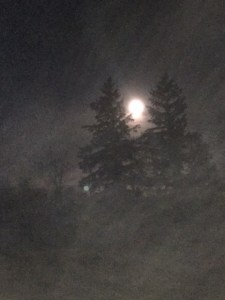
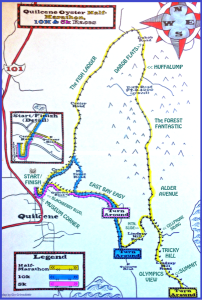
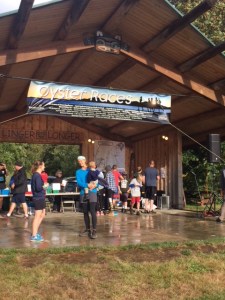 I don’t think I have run more than 6 miles in 2-mile increments, since 2016, when I ran the half marathon (another last minute decision) . This Sunday, I turn on I-Tunes on my phone at the start of the 10K. It will take only two complete replays of Pink Martini’s “Get Happy” album to keep me company until the finish line.
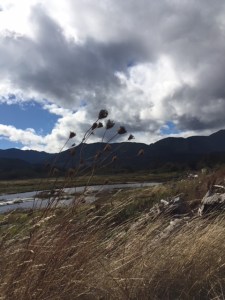 Its force reminds me that I am a slender woman who with a big gust could be blown off the road to topple on to the grassy fields. I pass ancient apple trees, their trunks bent in testament to the wind, fallen apples fragrant with fermentation.
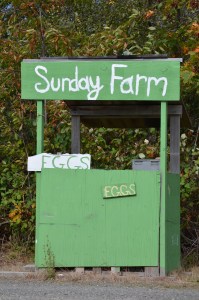 I begin the slow ascent south that will take me by the field where Racer the horse used to run to greet me for a fistful of grass. Gone now, his spirit keeps me running. Soon I approach the water stand outside our own drift-wood fence where my husband sets out paper cups of orange and lime Gatorade on a small table. I grab, gulp and go on. I know the hill rises steeply for another eighth of a mile, the open view from the top, showing the bay is at high tide, the longer autumn shadows splitting the sun on the water’s surface. Blackberries thrive on that hill top, berries now dried and fragrant as old wine. Turn-around for the 10K comes in a dip in the road, darkened on both sides by Palmers’ woods, old as the peninsula itself in giant Doug Firs and Big Leaf Maple trees. If I were not mid-race, their deep woods would invite me in. But here is turn-around, monitored by Linda and Stan Herzog. Linda calls my name. Stan snaps a photo.
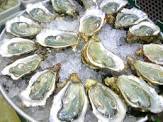 This is an oyster run, celebrating Quilcene’s famous oysters, so the aroma of wood coals and garlic bread already permeates the air. Depending on where you stand, it is fried food or local ale to keep a mind motivated for returning to this spot after the race. Everyone is happy. Those who know me, cheer me on. They seem more confident than I that I will make it the whole way. I will make new friends as the race begins, when I discover whose pace falls in with mine. That is how I meet Michele and Meg. We don’t talk much during the run. All of us are tuned in to whatever music lifts one foot in front of the other, but there are moments of encouragement among us. Good going. Feel free to pass. Yes, the hills are tough for me too. I pass a woman with her arm around her young son, a stalky boy who clearly has some cognitive impairment. He smiles widely at me.
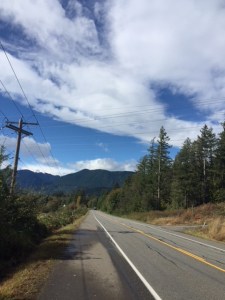 And finally, the physical part. I want to remember when the endorphins kick in after the 2nd kilometer. I am running downhill by the green apple tree where yesterday I stole enough for a pie. I look up to Mt. Walker ahead and my chest fills with autumn-washed air. Breath is wonderful. Deep, deep breath is exhilarating. I could run forever on this feeling. I could spread my arms and mimic the gulls and ravens swooping over the bay. I start to write this essay in my head so no feeling will fail to remain.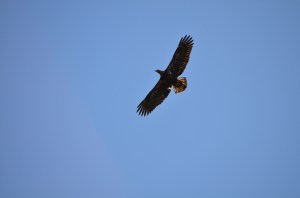
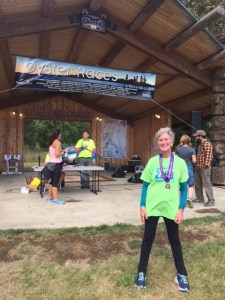 Only after one takes my picture, do I realize my face is raspberry red. I sit by another runner on the grass while our bodies cool. The sun is full out, but I am beginning to chill. My newly acquainted runner drives me back to my cottage where I peel off my running pants and shirt. My tongue tastes salt. My skin feels like salt. I realize I have excreted a good amount of salt water. As soon as I persuade myself to leave the hot tub jets, I will drink a tall glass of water. Every part of my body has been used: my feet, my legs, even my shoulders and neck. I should feel beat up, but I don’t. I feel twenty years younger. Maybe I will get back into this running thing.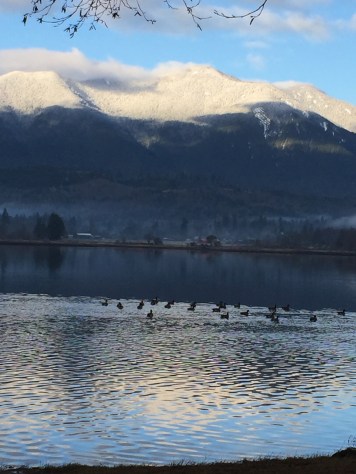
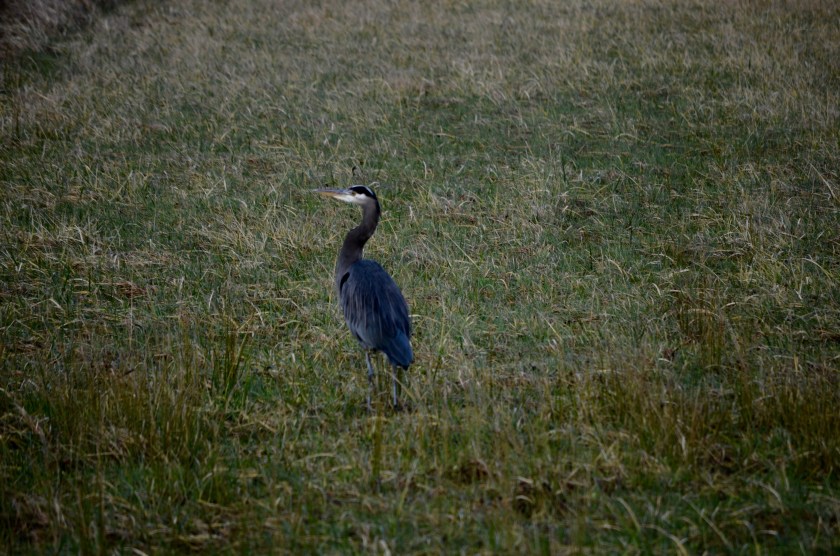
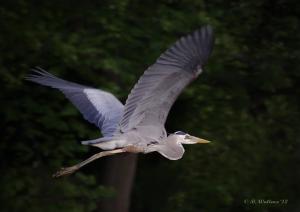
 But they do. Are they that foolish, or are they aware the odds are on their side as they are hundreds strong against a handful of hunters, hovering before dawn in a chilled swampland?
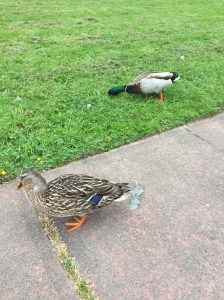 And what comes to mind, is not the under-fire ordeal they may have experienced over a duck hunting winter, but how vulnerable they are when mating.
 wedding invitations for the month of June. We buy a gift, attend the wedding and listen to one more couple swear “’till death do us part.” Having known divorce from life-experience, I wonder, sitting there in the church pew, “Does the covenant refer to death of the individuals, or death of the marriage?” Either way, commitment leads to grief. I bought an anniversary card for my husband last week. Pictured on the front was a rustic couple in comical attire. Above the picture: “Marriage requires commitment. But so does insanity.” Inside, on a cheerier note: “Still crazy about you after all these years.”
 Recently I saw the film Call Me By Your Name that depicted the infatuation of a teenage boy with a man about six years his senior. How much more vulnerable could the boy be than to fall deeply in love with a person of his own gender, a man who would only be with him in the same Italian estate for a summer’s duration? “Where is this going?” one partner often asks as they couple. Here was a passionate love that showed no hope of continuing to a life of companionship. Still, I (and probably lots of others) applauded as the romance intensified, sensuous and consensual. Does love need a promise of security from heartbreak? I doubt the young boy could muffle his desire, even if he saw the truck rumbling down the road. Both partners could have chosen not to act on their love, though I doubt that too. Passion becomes its own reason for being. And even though the summer ended, and the older man married, there lingers a celebration as if the boy had an experience like climbing Mt. Everest, something the rest of us can only experience vicariously, looking on with envy.
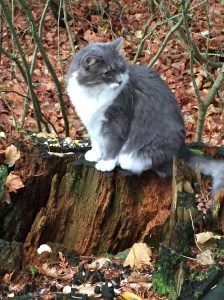 a pet. My friend who bonded with her cat for twelve fulfilling years, will not get another, now that beloved Chubby Toes is gone. “I could never endure the loss again,” she explains, as I try to drop a soft kitten on her front porch. My friend lives alone. Surely another cat would offer companionship, but a pet also offers loss, death by vulnerability.
 ![IMG_6141[1]](https://thoughtsafterseventy.com/wp-content/uploads/2018/06/img_61411.jpg?w=441&h=331)
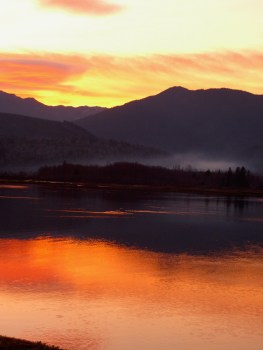
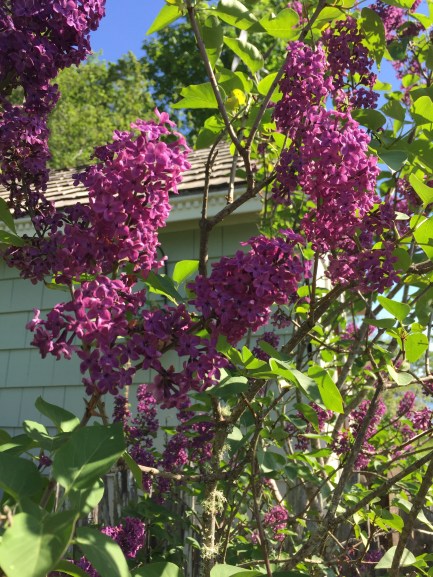 The lilac blooms in April, its intoxicating fragrance mourns with the hopefulness of spring. Mary Pearlman’s 31-year-old son, Mark, was gunned down in a hotel in El Salvador, killed under the Duarte regime that could never conclusively bring any killers to justice. Not a year passes without my thinking of all of this loss and all of the generosity, as the deep purple flowers bloom again.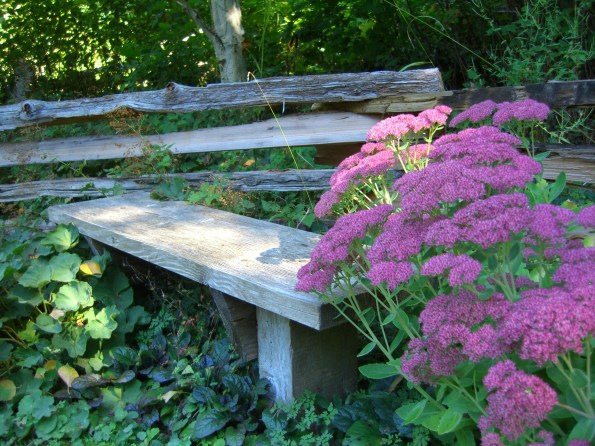
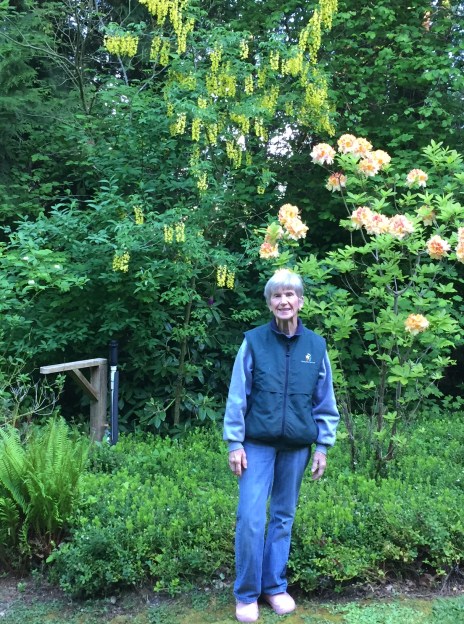
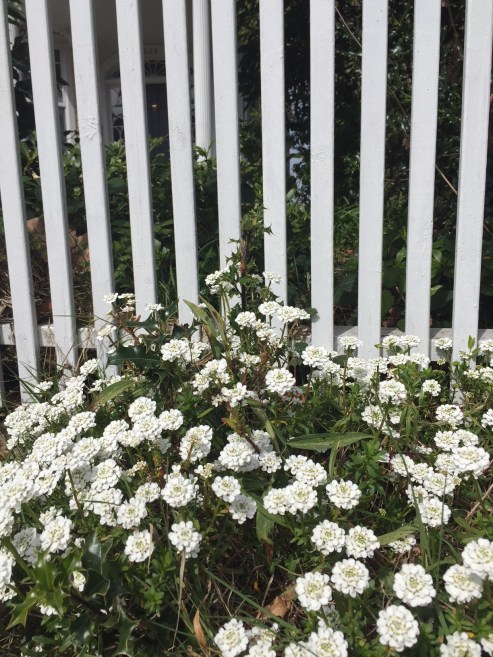
 Mary's Room With a View