![IMG_0423[1]](https://thoughtsafterseventy.com/wp-content/uploads/2020/05/img_04231.jpg?w=421&h=564) Peter Pan met Wendy when he came to ask her to sew his shadow back in place, having lost it when escaping through a window that closed, separating himself from his other half.
Peter Pan met Wendy when he came to ask her to sew his shadow back in place, having lost it when escaping through a window that closed, separating himself from his other half. 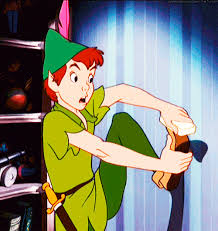 Detaching from our shadows is a fantastical fright, for what is more intimate and yet mysterious than our shadow, our companion from the first sunny days of our lives? We watch it grow with our own growth and with the rise or fall of sunlight behind us.
The lyrics of Me and My Shadow conclude, “Just me and my shadow / Strolling down the avenue /All alone and feeling blue.” It is a sad song, but Peter Pan and I know that shadows keep us from loneliness. What better friend than one who sticks with you all of your days, who goes with you where you want to grow and can be manipulated in a small gesture, simply by turning with the light?
As a child, did you play with your shadow? Chase it? Try hopelessly to escape it? My father taught me to play with shadows, casting bunny ears with his hands on the walls of our playroom. My brother and I competed, trying to stomp on the other’s shadow. ![IMG_0420[1]](https://thoughtsafterseventy.com/wp-content/uploads/2020/05/img_04201.jpg?w=224&h=300) Most days, unmindful of my shadow, I am surprised when I notice it lengthening before me on a spring walk. I notice my aging stance. Did my knee always turn in at a funny angle, or is this something new? Communicating with our shadows is a self-indulgent pleasure .
Most days, unmindful of my shadow, I am surprised when I notice it lengthening before me on a spring walk. I notice my aging stance. Did my knee always turn in at a funny angle, or is this something new? Communicating with our shadows is a self-indulgent pleasure .
Some sunny days, I look beyond my own shadow to those cast by what exists around me. Any artist values shadows for how they define the artist’s subject, providing depth and definition. 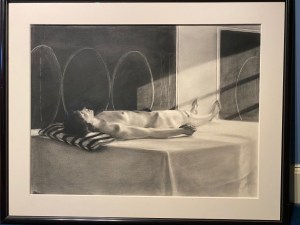 Sometimes the shadows share importance with the object, as in some paintings by Norman Lundin. His many compositional brilliances that feature shadows cast across classroom blackboards are equally as important as the object or person who cast them. Our admiring eye finds pleasure in the angles of lines across a flat surface.
Similarly, going to snip a rose to bring inside, I found the shadow of the rose, the pattern of leaves flattened against the driftwood fence behind the roses, as appealing as the bright red rose itself. Not a chance of clipping the shadow for a vase on the dining table.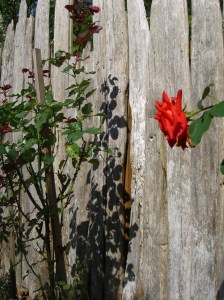
Spring and fall are tops for shadow appeal, especially mornings or late afternoons. Sun is not yet on top of us. Its angle splashes across streets, magnificent shadows of trees in their early leafing. You could be tempted to run out in the road and try to climb them.![IMG_0419[1]](https://thoughtsafterseventy.com/wp-content/uploads/2020/05/img_04191.jpg?w=224&h=300)
My good friend Jan, who has a scientific understanding, teases me that often I am going off poetically about natural things that have a rational raison d’être. I agree, and would be amiss if I ended without personifying shadows. “Only the Shadow knows what evil lurks in the hearts of men” were Introductory words to the broadcast radio episodes of The Shadow (1930’s and ‘40s). The Shadow was the hero of a whodunit that drips with ominous associations. So too the superstition around not standing in the shadow cast by a gravestone. I gave some thought to that on a recent walk through Lakeview Cemetery. How tantalizing to stand in the shadow of a massive monument to Seattle’s forefathers, to test whether my body temperature dropped in that shade. 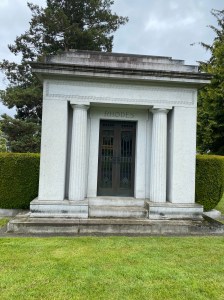 No icy fingers reached to pull me inside.
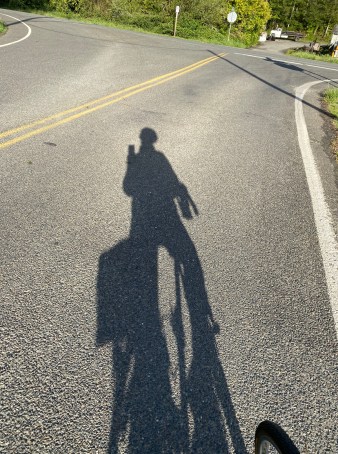
Meanwhile, taking my I-Phone from my pocket, I photograph myself leading with a shadow when riding my bicycle along the end of the bay on a Sunday morning. Can I photograph myself and the bike with our morning shadow preceding us? Who is that cyclist riding the bike? Only the Shadow knows.

 In any season we hear advice to slow down, pause, notice life unfolding. But like a stern mother whose advice wasn’t heeded, Mother Nature and the Coronavirus have forced us to narrow the circumference of our activity, making time for noticing. In these weeks, the media has elevated poetry to the popularity of rock music. Poets are known to take notice. Forced to touch each other only through cyberspace, we email to our friends, poems, words of wisdom, images of sunrises and blossoms.
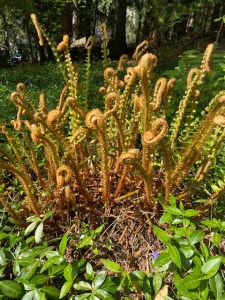 For weeks I have passed tight-fisted knuckles in their hearts, for in late winter I had pruned last year’s large, browning fronds. Regardless of my watching, they uncurl in their own time; but I also have last April’s memory of supple green ferns spreading across the hill. Almost May 1st, I am comforted, looking forward to where their funny, twisting dance is going.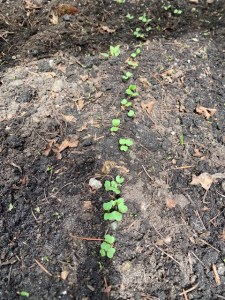
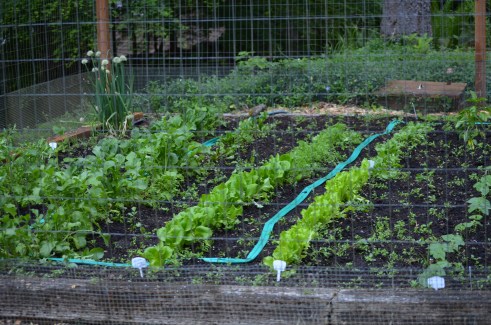
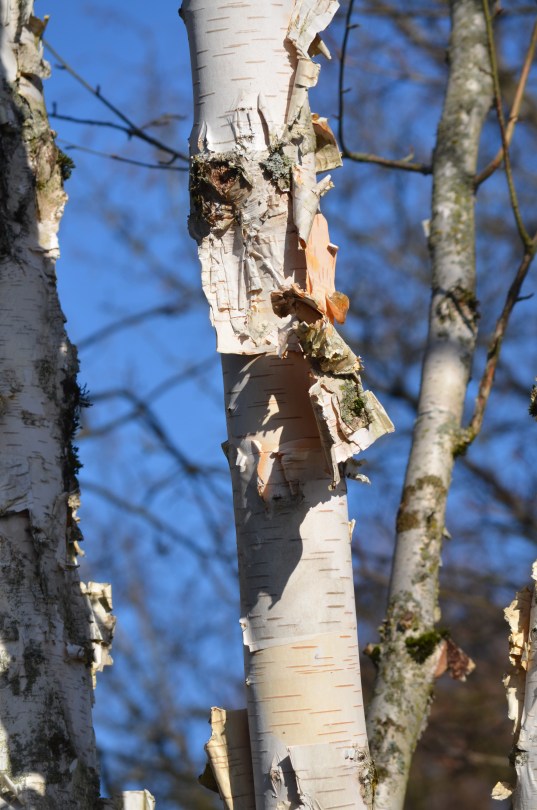
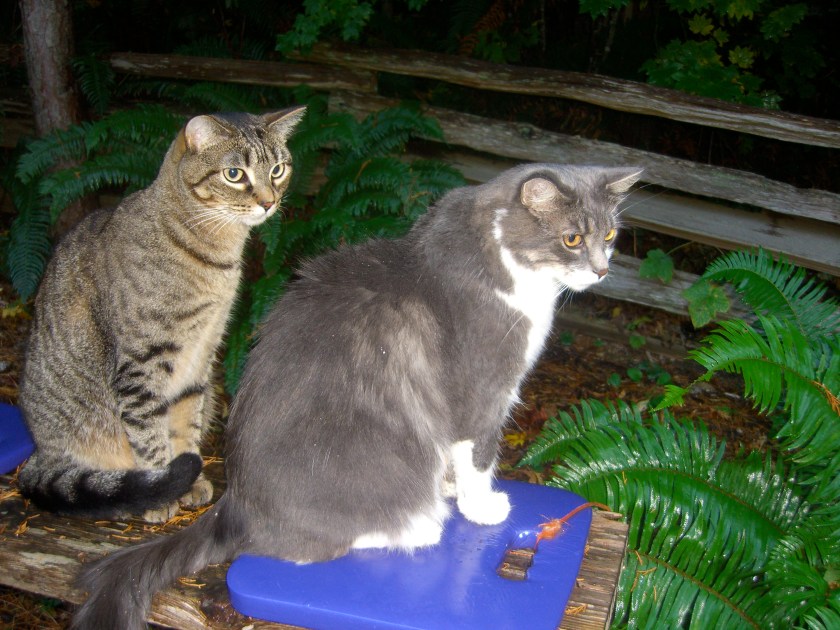
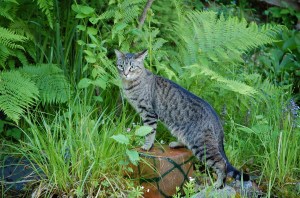
![IMG_0278[1]](https://thoughtsafterseventy.com/wp-content/uploads/2020/03/img_02781.jpg?w=224&h=300) Some trees are decaying remains of towering firs, in their slow death, still useful for persistent woodpeckers. Stellar’s jays drop from limbs above, then hop along behind us snatching peanuts in defiance of Homer who long ago gave up terrorizing the hungry birds, choosing instead to pounce between us on a bench where he nestles against the warm coffee mugs. Today, we have passed our first trillium sticking up like a green finger from the middle of our trail.
Some trees are decaying remains of towering firs, in their slow death, still useful for persistent woodpeckers. Stellar’s jays drop from limbs above, then hop along behind us snatching peanuts in defiance of Homer who long ago gave up terrorizing the hungry birds, choosing instead to pounce between us on a bench where he nestles against the warm coffee mugs. Today, we have passed our first trillium sticking up like a green finger from the middle of our trail. ![IMG_0282[1]](https://thoughtsafterseventy.com/wp-content/uploads/2020/03/img_02821.jpg?w=224&h=300) We have touched the pliant leaves of wild plums.
We have touched the pliant leaves of wild plums.![IMG_0283[1]](https://thoughtsafterseventy.com/wp-content/uploads/2020/03/img_02831.jpg?w=224&h=300)

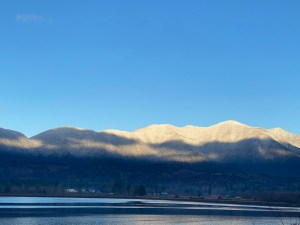
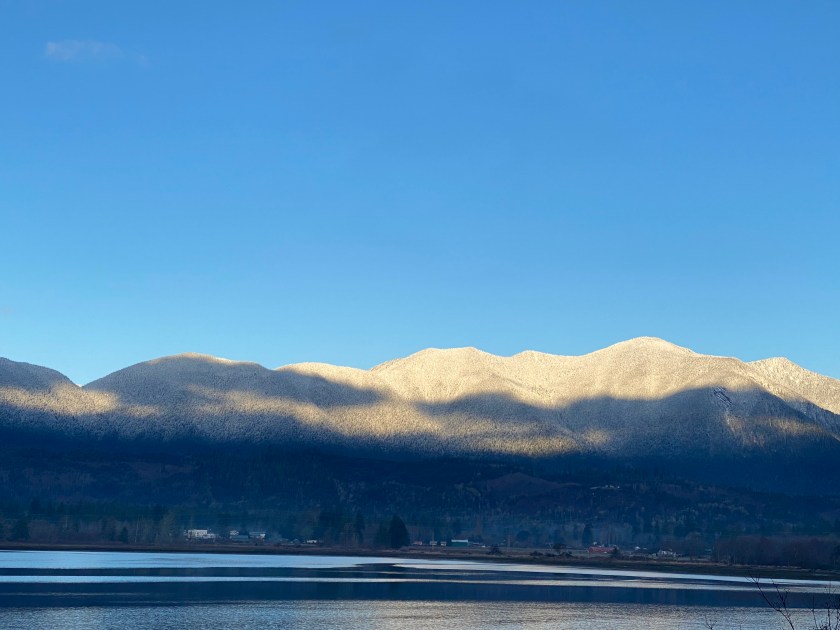
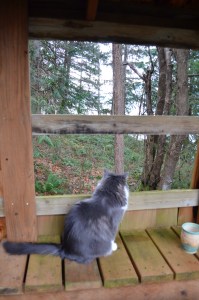 Those mugs are drained of coffee as we step down the ladder. Sometimes Homer rides Allan’s shoulder, for the cat’s weight makes a downward climb cumbersome. Then we are off down the trail to the sandy beach. This bench affords a western panorama of Olympic foothills. The sun illumines snowpack or new spring green.
  Along this lower trail, I kneel to clear off fallen leaves that cover two crosses made of stones, one with the name Celeste, the other Toulouse, grave sites of our first two felines whose companionship named our routine the Kitty Walk.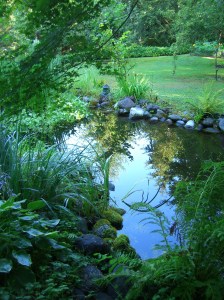


 In a city that is as Blue as any city can be, this primary looms as an important destination. Voting early left people struggling to discern, among six contenders, which best fit the ideal liberal candidate to beat Donald Trump in November. Those who suspected on March 7th there might be fewer candidates from which to select, held their ballots close to the chest until the race fell to two: Joe Biden and Bernie Sanders. These voters are basking in the wisdom of their patience. The early voters feel the disappointment of wasting their vote, like eating dessert too soon, while still being passionate about the entree.
 The University of Washington has suspended live classes for the next few weeks, and called home all students from their studies abroad. So too have other schools, public and private, are closing for at least two weeks. From our cottage two hours west of my Seattle church, I attended first-time online church services this morning. Prayer is necessary now, but not in a common location where many church members are over sixty-years-old, the population vulnerable to the Corona Virus.
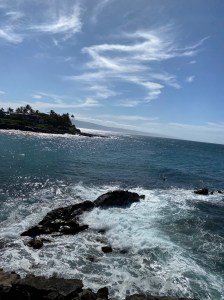
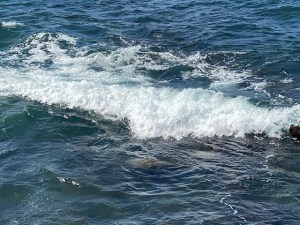 Sea turtles feed on the greenery on rocks along the shore, so succumbing to slamming against the boulders is like an encouraging push forward to feasting. Huge shells, some the size of a dinner table, ride just below the water’s surface. Whether the flippers help the turtle to navigate at this point is unclear. Rather they seem to give in to the waves’ force, all decision-making left to momentum. There must be a lesson for us there, something about trusting what carries us ahead.
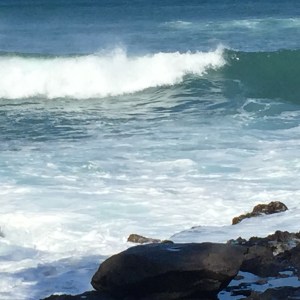 Those are five sequential questions for which I have no definitive answer. So much for Oceanography 101. No mind. Poetic connections to the waves complement what science offers. The string of curling waves evokes images of peppermint ribbon candy. When the wave hits the rocky coastline, it splashes high and frothy as thrilling fireworks, then recedes leaving a damp memory on the stones.
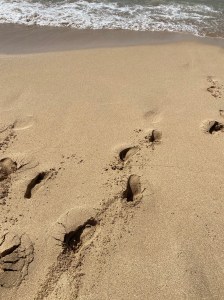 I take cautious steps forward, letting the wavelets tease me, toes-first. Step, sink a little, step again. As the waves surge to my knees I look out, guessing where the next large wave will rise. Will it break on top of me, sucking me helplessly under, grinding my face to the sand? Or do I wait until the breaking point and dive within its incoming belly, emerging only when the wave has receded for the next roller behind it. I dive. How successful I feel emerging up through the wave that took me, then I swim in a parallel line to the beach, far enough out to spot the fish, but close enough to see the shore where I want to return.
 On each visit, we note how the waves have chewed up more of the beach and/or the retaining wall that keeps the condos high and dry. The beach was once long enough for an invigorating walk at low tide toward a cave in the far rocks, a place I led my small grandchildren where we imagined pirates storing chests of gold doubloons, then hurried back before an incoming tide flooded the crevices in the rock. No tide is low enough to allow that walk today. Nearby, huge tractors work to restore a wall that had shored up the property of a wealthy landowner, his estate now several feet closer to sinking into the sea. Once long, the beach now is but a patch of sand. From half a world away and in eighty-degree heat, melting ice caps deliver messages in the rising seas.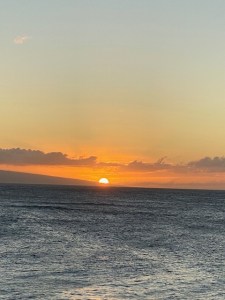
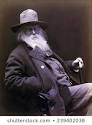 How excited they are to fill me in on what I failed to teach the year they were in my class. Here I could groan in 3-D cynicism, not to mention disappointment. Instead, I share their joy that their minds are still engaged learning about their English language and literature.
 In the final act, Hamlet is about to have a duel with Laertes, a fight that he will likely lose. Hamlet’s friend, Horatio, tries to deter him from the match, because Laertes is by far the better and more practiced swordsman. Hamlet won’t be dissuaded, saying, There’s special providence in the fall of a sparrow. If it be now, ‘tis not to come; if it be not to come, it will be now; if it be not now, yet it will come. The readiness is all. ( Hamlet, V, ii, 230-233). Hamlet knows he will likely die, so when he dies is not his concern. What is important is his readiness to die. He is ready. How lucky for Act 5 and for preparing the audience to accept the inevitability.
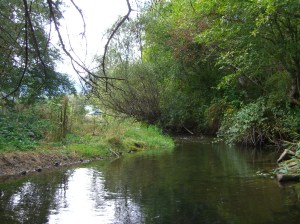 On the opposite side, there is humility in readiness. These are the agreements we make with each other to step out of our comfort zone, to try something new. One-two-three- ready . . . set . . . go! and I am leaping off a small ledge to cold waters when my brother encourages me to swim downstream.
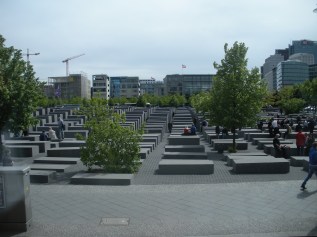 Reading about the German environment prior to Hitler’s rise – the accepted antisemitism, distrust of immigrants (Roma), excessive nationalism, putting The Fatherland first – it is clear that enough of the German populace was ready for Hitler. He was duly elected in a “democratic” republic.
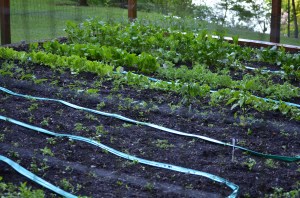 I hear myself reciting from another sacred text: For everything there is a season, and a time for every matter under heaven: . .. God has made everything beautiful in its time. (Ecclesiastes 3, 1 & 11). Yes, a time to plant and a time to sow . . .. Every year I jump the gun when my readiness does not match Mother Nature’s.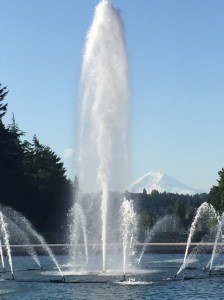
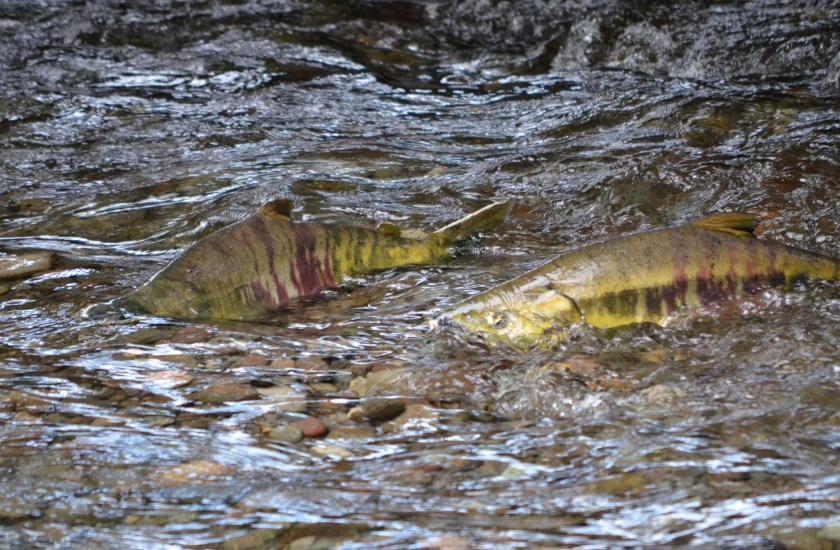
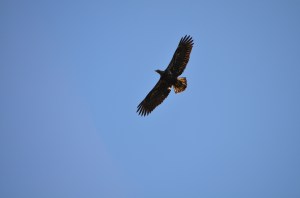
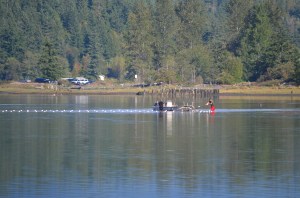 spread nets – as well as dodging ravenous seals a hundred pounds greater than the fish’s silvery weight, and the penetrating eyes of eagle and osprey from great heights.
  I lean precariously over the Little Quilcene Bridge and hold my camera steady, my back against the glare of early autumnal light, to capture the thrilling swish of a spawning pair. The shallows swirl around them in mock frenzy, river water splashing upwards like reverse rain.
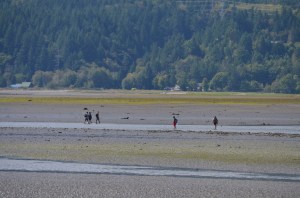 They have parked their trucks along the road at the end of the bay and sloshed through the flats with fishing gear to snag the stragglers in the shallows. Determined to spawn, the fish have lost interest in feeding, ignoring any dangling bait, and thus victims only to snagging. Some sport.
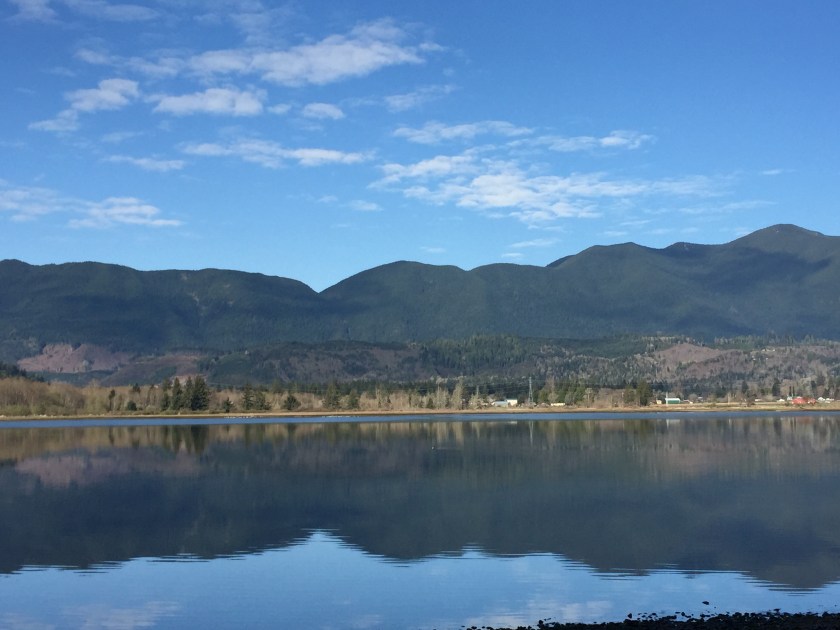
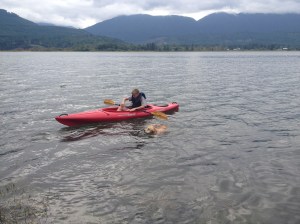 No matter what tasks we are doing, we stop to run through the open gate and plunge in for a swim, push out in a kayak. or balance on a paddle board as soon as a chart in that book registers eight feet or more. Winters, the high tides can exceed 13 feet, and when married to high winds, the sea trespasses, often knocking out the gate with a floating log, white caps swamping our lawn.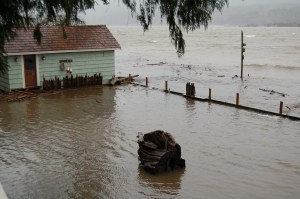
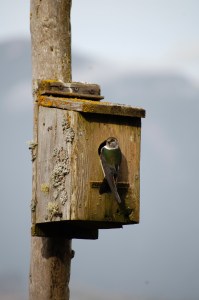
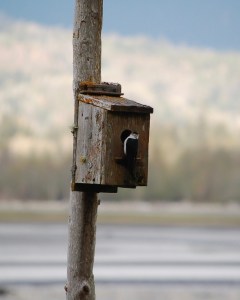 “I love the low tide, as much as the high tide,” he said, reaching for the binoculars to spot heron tiptoeing between the streams and the violet green swallows checking out the boxes he has raised on poles along the shore.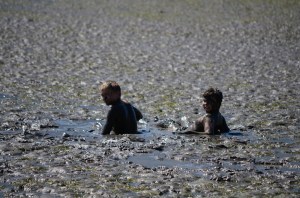
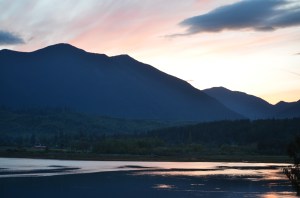 Changing tides inspire humility, helping me to accept what gifts I didn’t know were coming. Just as high winter tides carry a battering ram of a tree trunk to wipe out our driftwood fence, so the water retreats, dumping our fence and stairs at the end of the bay. Neighbors help us retrieve what is ours, and in our scavenging, we find even better planks for restoration. Low tides uncover oysters and clams: a table-is-set ebbing of culinary fame. Even baby crabs scramble along the shore. In late August, salmon return along the streams that lace the flats. Salmon battle determinedly up those streams between lines of families fishing for a big one to take home for dinner. The tides give and take away, like the hand of a natural god.
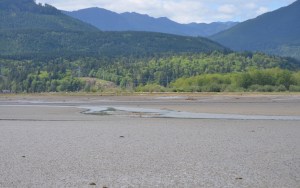 If it is a Low – Low, I may forget that there ever were welcoming waves in front of our cottage. If it is a high tide day, I know I am riding a surface on a paddle board, head-high enjoying the sunset sink behind Mt. Townsend. Most days are those Low Highs or High Lows, but nothing is stagnant. All life is movement. We know the moon will turn from crescent to full, and the bay that emptied all but bubbling craters where clams breathe, will within hours, cover meandering streams with salt and sea.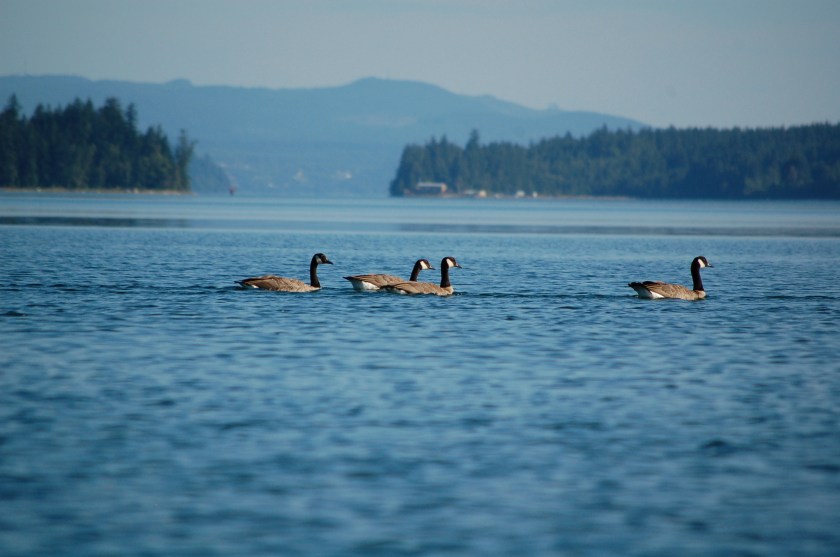
 Mary's Room With a View