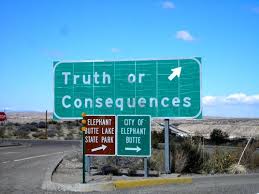
Truth or Consequences is not only a desert location in New Mexico, it was also a popular game show that bridged radio to television years from 1940 to the early 1980’s. The object of the game was to discern which guests told the truth about some life experience. Guess right and the consequences were a win. Guess wrong and you were a loser. Seems right in line with our polarized either/or world; however, I want to depart from those extremes and think about the truth OF consequences.
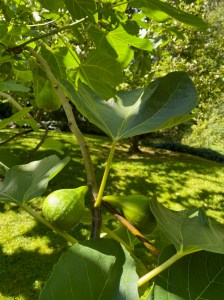
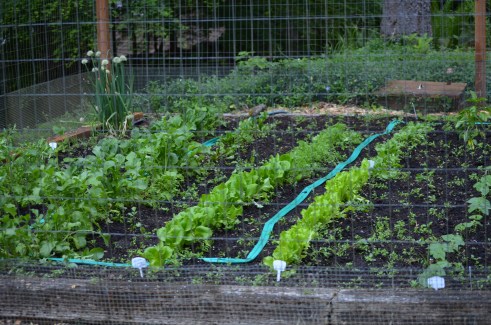
Here I am at our Quilcene cottage in late August harvest time . The romaine in my garden lines up like a green battalion of soldiers. In parallel lines — arugula, carrots and beets. 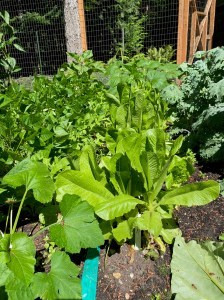 All are ready to eat NOW, but we can’t consume it all, and neighbors graciously accept only enough for a salad or two. As you sow, so shall you reap. Did I over-sow? With minimal reading of seed packets, I should have planted sequentially, a few seeds each subsequent week, and prepared for a staged harvest (consequences). About a dozen years ago, I bought a small one-gallon size fig tree and planted it in the middle of our little orchard where a pear tree had failed. Yesterday we drove up and down East Quilcene Road with buckets of figs for neighbors we hoped would accept some. Luckily, Scott and Susan have a food drier and accepted the load. How could I ever have imagined that little potted fig would produce so many? Neighbor Raj calls figs “the fruit of the gods.” Funny that we live at the foot of Mt. Olympus, because our fig harvest this year could supply a bacchanalia for every god from wood nymph to Zeus.
  Some consequences we should/could have foreseen. Others resulted without possible foresight.
Similarly, What goes around comes around. That expression is a first cousin to the sowing maxim. It connotes consequences like just deserts. Parents admonish children that their actions, if ill considered, could ricochet, causing them harm. Punch the neighbor child, and that kid may grow up taller and stronger and seek revenge. We relish such consequences when we root for an underdog. There is always a dog in there somewhere, and it may grow up to bite back. 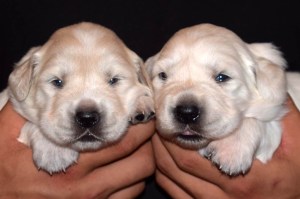 These are the consequences of justice. Such ironic justice explains the popularity of mysteries. it is satisfying to see the criminal in irons, even more so if, as Hamlet plots revenge on Claudius, the miscreant is “hoisted by his own petard.”
Although not always anticipated, consequences can be as pleasant and circumstantial as tying a child’s shoe prevents stumbling. May I assume that you too want the consequences of your choices to be favorable? Last week I stood in line to check out groceries at the local Safeway. I chose the shortest line, only one customer ahead of me. You can see what comes next. Murphy’s Law: the adjacent check-out line with four customers moved faster than mine. Ahead of me was a man of my age (elderly) in a large, motorized wheelchair. His shopping cart brimmed with purchases he handed, as best he could, one-by-one to the clerk. As he sought his food coupons to pay for his purchases, I watched as one-by-one some of his items were set aside to be returned to shelves. My heart hurt. He could not afford to buy the chicken, the slices of ham, primarily the more expensive groceries. I could buy these for him, but I also didn’t want to insult the man with an offer that might look like charity. Nonetheless, I knew the consequences for me if I failed to speak. “Excuse me, sir. I see you don’t have enough money with you today to cover everything. Would you please let me pay?”
He smiled and accepted: “Thank you,” he said. “Thank you for paying it forward.”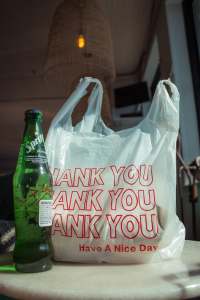
I hadn’t heard that phrase in a while, but his gracious acceptance drew me into community with him.
“I try to pay it forward too,” he continued. “I served in the military, and that was me paying it forward.” As I walked home laden with my own groceries, they felt lighter, the way happiness diminishes weight.
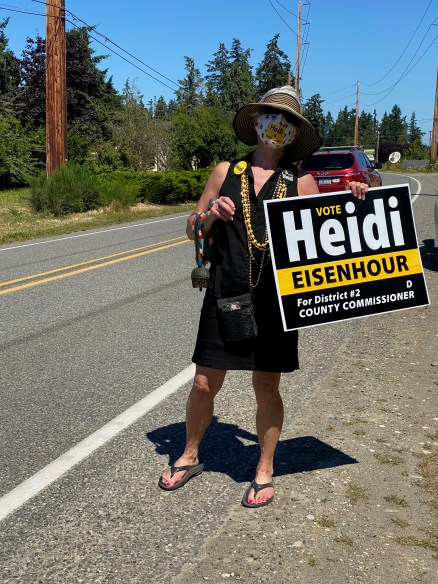
This past week the Democrats held their national convention. This coming week the Republicans will nominate their choices. There isn’t a voter in this country who should fail to think of the consequences of voting. Whether in local or national elections there will be consequences, and that is the TRUTH with which we will live.
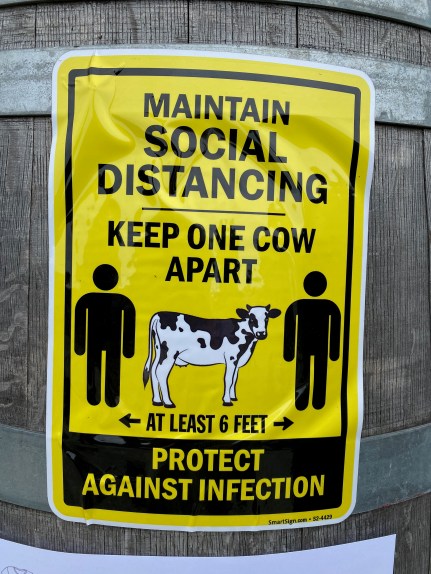
 After washing our hands at the soap pump – local, home-brewed soap –our invitation was checked off at the entrance by a friendly masked host who ushered us to our sanitized table.
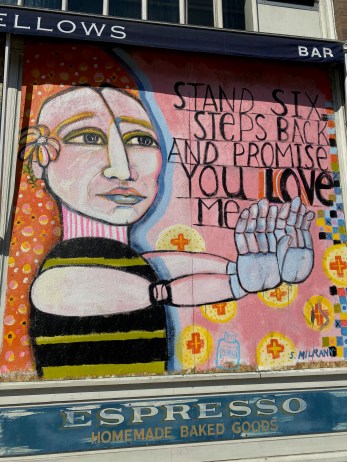 Perhaps not so, if you don’t happen to like your governor, or the governor belongs to a political party with which you don’t identify. Sad, but true, communicating emergencies connotes urgency depending on who sends out the warning. Hard to think if we get the next big earthquake and warnings come from your unpopular government official so you stay exposed to falling structures. Perhaps the shaking ground will prompt people to safety.
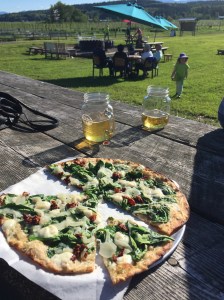 There I was enjoying my veggie pizza and Apple Oak Cider while envisioning a heifer between my friend Kathryn and me.
![IMG_0779[1]](https://thoughtsafterseventy.com/wp-content/uploads/2020/07/img_07791.jpg?w=263&h=352) My imagination is engaged. I can feel a bull’s snorting breath on my derriere. Had I been inclined to take a shortcut through the rancher’s field, I dismiss the notion with a laugh.
My imagination is engaged. I can feel a bull’s snorting breath on my derriere. Had I been inclined to take a shortcut through the rancher’s field, I dismiss the notion with a laugh.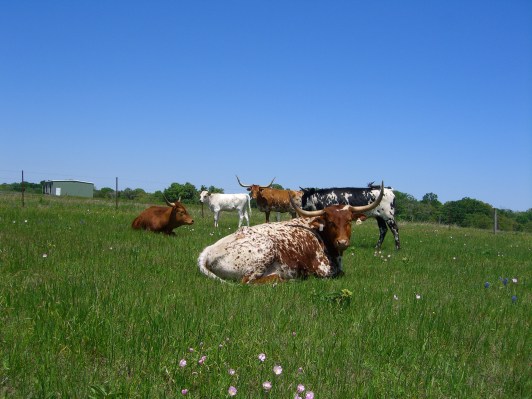
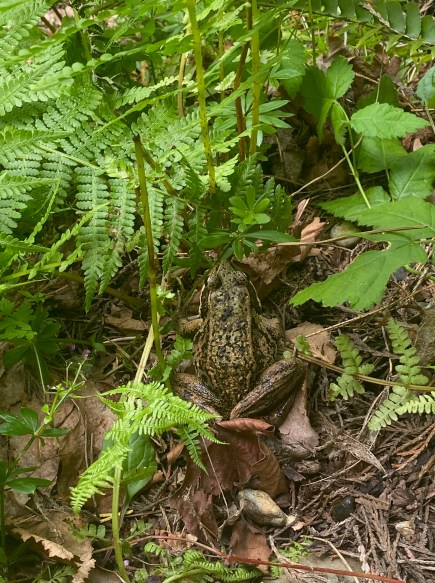
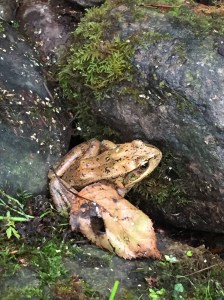
 Summer nights we drive with the guys to cranberry bogs where the boys take.22 gage rifles from the car’s trunk and aim them out toward the bogs where frogs have stilled their songs. Then the guns fire, the shooters gleefully enjoying the sight of frog parts exploding among the cranberries. Easy, fear-frozen targets for reckless teenagers.
 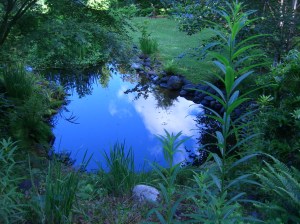 Here in the Pacific Northwest, in March, Nature’s early promise of spring comes with frog song from the pond and surrounding woods. Weeks before robins, chickadees and violet-green swallows take up their warbling sopranos, the bass line is sung by frogs caroling for potential mates from misty dawn until dusk.
 How can we value those songs we take for granted, knowing they are not our own, but somewhere around us in the vernal woods and waters that we treasure?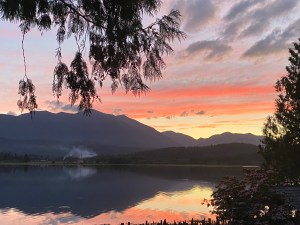
![IMG_0423[1]](https://thoughtsafterseventy.com/wp-content/uploads/2020/05/img_04231.jpg?w=421&h=564) Peter Pan met Wendy when he came to ask her to sew his shadow back in place, having lost it when escaping through a window that closed, separating himself from his other half.
Peter Pan met Wendy when he came to ask her to sew his shadow back in place, having lost it when escaping through a window that closed, separating himself from his other half. 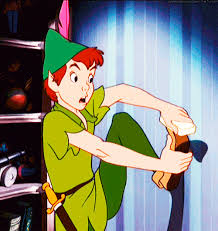 Detaching from our shadows is a fantastical fright, for what is more intimate and yet mysterious than our shadow, our companion from the first sunny days of our lives? We watch it grow with our own growth and with the rise or fall of sunlight behind us.
![IMG_0420[1]](https://thoughtsafterseventy.com/wp-content/uploads/2020/05/img_04201.jpg?w=224&h=300) Most days, unmindful of my shadow, I am surprised when I notice it lengthening before me on a spring walk. I notice my aging stance. Did my knee always turn in at a funny angle, or is this something new? Communicating with our shadows is a self-indulgent pleasure .
Most days, unmindful of my shadow, I am surprised when I notice it lengthening before me on a spring walk. I notice my aging stance. Did my knee always turn in at a funny angle, or is this something new? Communicating with our shadows is a self-indulgent pleasure .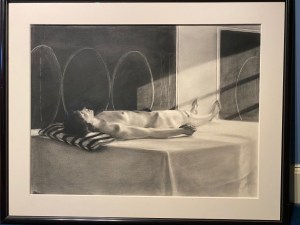 Sometimes the shadows share importance with the object, as in some paintings by Norman Lundin. His many compositional brilliances that feature shadows cast across classroom blackboards are equally as important as the object or person who cast them. Our admiring eye finds pleasure in the angles of lines across a flat surface.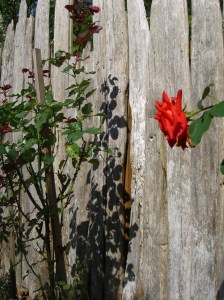
![IMG_0419[1]](https://thoughtsafterseventy.com/wp-content/uploads/2020/05/img_04191.jpg?w=224&h=300)
 No icy fingers reached to pull me inside.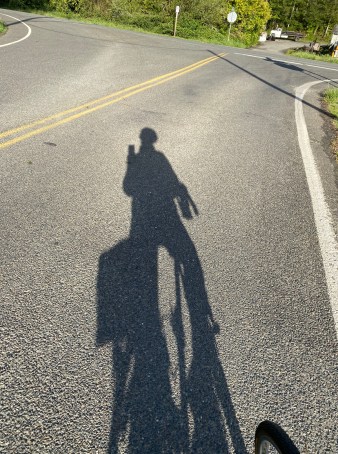
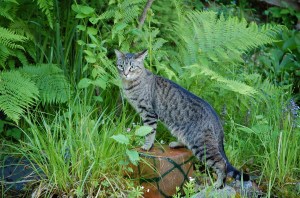

 In any season we hear advice to slow down, pause, notice life unfolding. But like a stern mother whose advice wasn’t heeded, Mother Nature and the Coronavirus have forced us to narrow the circumference of our activity, making time for noticing. In these weeks, the media has elevated poetry to the popularity of rock music. Poets are known to take notice. Forced to touch each other only through cyberspace, we email to our friends, poems, words of wisdom, images of sunrises and blossoms.
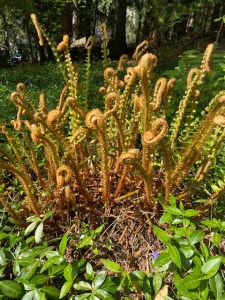 For weeks I have passed tight-fisted knuckles in their hearts, for in late winter I had pruned last year’s large, browning fronds. Regardless of my watching, they uncurl in their own time; but I also have last April’s memory of supple green ferns spreading across the hill. Almost May 1st, I am comforted, looking forward to where their funny, twisting dance is going.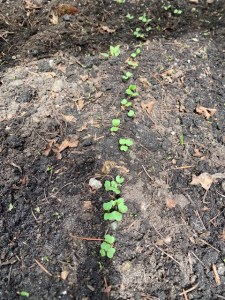
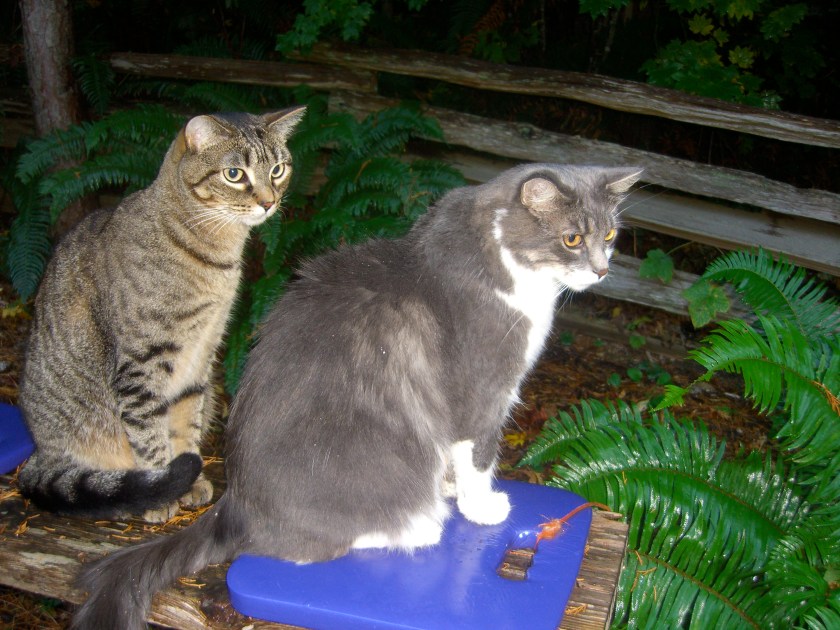
![IMG_0278[1]](https://thoughtsafterseventy.com/wp-content/uploads/2020/03/img_02781.jpg?w=224&h=300) Some trees are decaying remains of towering firs, in their slow death, still useful for persistent woodpeckers. Stellar’s jays drop from limbs above, then hop along behind us snatching peanuts in defiance of Homer who long ago gave up terrorizing the hungry birds, choosing instead to pounce between us on a bench where he nestles against the warm coffee mugs. Today, we have passed our first trillium sticking up like a green finger from the middle of our trail.
Some trees are decaying remains of towering firs, in their slow death, still useful for persistent woodpeckers. Stellar’s jays drop from limbs above, then hop along behind us snatching peanuts in defiance of Homer who long ago gave up terrorizing the hungry birds, choosing instead to pounce between us on a bench where he nestles against the warm coffee mugs. Today, we have passed our first trillium sticking up like a green finger from the middle of our trail. ![IMG_0282[1]](https://thoughtsafterseventy.com/wp-content/uploads/2020/03/img_02821.jpg?w=224&h=300) We have touched the pliant leaves of wild plums.
We have touched the pliant leaves of wild plums.![IMG_0283[1]](https://thoughtsafterseventy.com/wp-content/uploads/2020/03/img_02831.jpg?w=224&h=300)

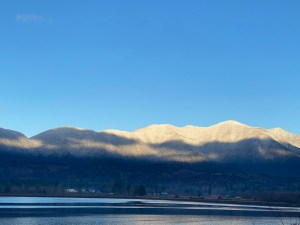
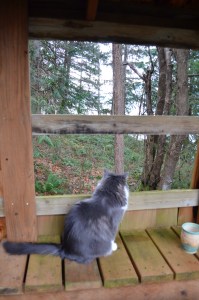 Those mugs are drained of coffee as we step down the ladder. Sometimes Homer rides Allan’s shoulder, for the cat’s weight makes a downward climb cumbersome. Then we are off down the trail to the sandy beach. This bench affords a western panorama of Olympic foothills. The sun illumines snowpack or new spring green.
  Along this lower trail, I kneel to clear off fallen leaves that cover two crosses made of stones, one with the name Celeste, the other Toulouse, grave sites of our first two felines whose companionship named our routine the Kitty Walk.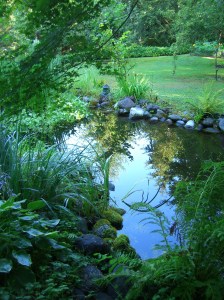


 In a city that is as Blue as any city can be, this primary looms as an important destination. Voting early left people struggling to discern, among six contenders, which best fit the ideal liberal candidate to beat Donald Trump in November. Those who suspected on March 7th there might be fewer candidates from which to select, held their ballots close to the chest until the race fell to two: Joe Biden and Bernie Sanders. These voters are basking in the wisdom of their patience. The early voters feel the disappointment of wasting their vote, like eating dessert too soon, while still being passionate about the entree.
 The University of Washington has suspended live classes for the next few weeks, and called home all students from their studies abroad. So too have other schools, public and private, are closing for at least two weeks. From our cottage two hours west of my Seattle church, I attended first-time online church services this morning. Prayer is necessary now, but not in a common location where many church members are over sixty-years-old, the population vulnerable to the Corona Virus.
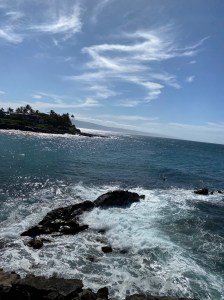
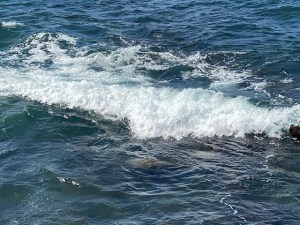 Sea turtles feed on the greenery on rocks along the shore, so succumbing to slamming against the boulders is like an encouraging push forward to feasting. Huge shells, some the size of a dinner table, ride just below the water’s surface. Whether the flippers help the turtle to navigate at this point is unclear. Rather they seem to give in to the waves’ force, all decision-making left to momentum. There must be a lesson for us there, something about trusting what carries us ahead.
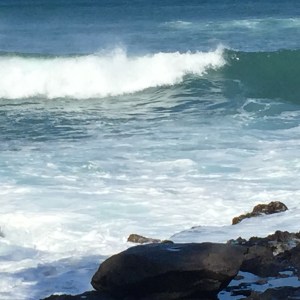 Those are five sequential questions for which I have no definitive answer. So much for Oceanography 101. No mind. Poetic connections to the waves complement what science offers. The string of curling waves evokes images of peppermint ribbon candy. When the wave hits the rocky coastline, it splashes high and frothy as thrilling fireworks, then recedes leaving a damp memory on the stones.
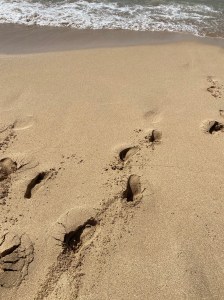 I take cautious steps forward, letting the wavelets tease me, toes-first. Step, sink a little, step again. As the waves surge to my knees I look out, guessing where the next large wave will rise. Will it break on top of me, sucking me helplessly under, grinding my face to the sand? Or do I wait until the breaking point and dive within its incoming belly, emerging only when the wave has receded for the next roller behind it. I dive. How successful I feel emerging up through the wave that took me, then I swim in a parallel line to the beach, far enough out to spot the fish, but close enough to see the shore where I want to return.
 On each visit, we note how the waves have chewed up more of the beach and/or the retaining wall that keeps the condos high and dry. The beach was once long enough for an invigorating walk at low tide toward a cave in the far rocks, a place I led my small grandchildren where we imagined pirates storing chests of gold doubloons, then hurried back before an incoming tide flooded the crevices in the rock. No tide is low enough to allow that walk today. Nearby, huge tractors work to restore a wall that had shored up the property of a wealthy landowner, his estate now several feet closer to sinking into the sea. Once long, the beach now is but a patch of sand. From half a world away and in eighty-degree heat, melting ice caps deliver messages in the rising seas.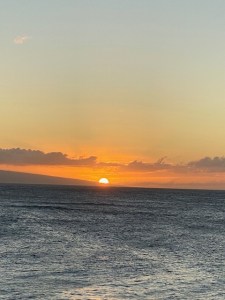
 How excited they are to fill me in on what I failed to teach the year they were in my class. Here I could groan in 3-D cynicism, not to mention disappointment. Instead, I share their joy that their minds are still engaged learning about their English language and literature.
 In the final act, Hamlet is about to have a duel with Laertes, a fight that he will likely lose. Hamlet’s friend, Horatio, tries to deter him from the match, because Laertes is by far the better and more practiced swordsman. Hamlet won’t be dissuaded, saying, There’s special providence in the fall of a sparrow. If it be now, ‘tis not to come; if it be not to come, it will be now; if it be not now, yet it will come. The readiness is all. ( Hamlet, V, ii, 230-233). Hamlet knows he will likely die, so when he dies is not his concern. What is important is his readiness to die. He is ready. How lucky for Act 5 and for preparing the audience to accept the inevitability.
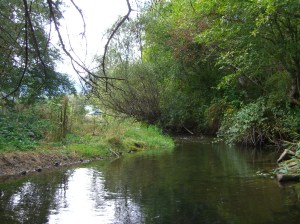 On the opposite side, there is humility in readiness. These are the agreements we make with each other to step out of our comfort zone, to try something new. One-two-three- ready . . . set . . . go! and I am leaping off a small ledge to cold waters when my brother encourages me to swim downstream.
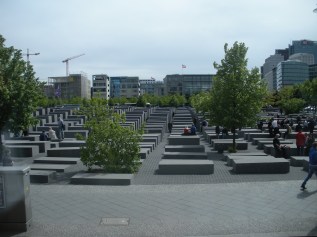 Reading about the German environment prior to Hitler’s rise – the accepted antisemitism, distrust of immigrants (Roma), excessive nationalism, putting The Fatherland first – it is clear that enough of the German populace was ready for Hitler. He was duly elected in a “democratic” republic.
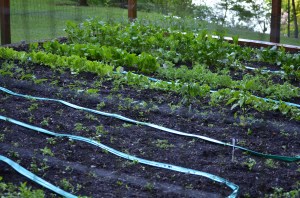 I hear myself reciting from another sacred text: For everything there is a season, and a time for every matter under heaven: . .. God has made everything beautiful in its time. (Ecclesiastes 3, 1 & 11). Yes, a time to plant and a time to sow . . .. Every year I jump the gun when my readiness does not match Mother Nature’s.

 When I look outside of my own experience to other women’s lives, I see similar patterns of fulfilling needs for others, mostly domestic needs, that make others’ lives comfortable. Does the fulfilling of those needs enrich the “needed” woman? Would she have chosen the tasks without societal expectation?
 or she sat before the television watching Murder She Wrote with Angela Lansberry,
 Top on the siren call would be perceived needs from my grandchildren and daughter. My granddaughter, a college senior, emails me a draft of her senior English thesis for editing. Her request leapfrogs to the top of my to-do list, real or imagined. I am flattered to be needed, especially to be needed for something that acknowledges I have a brain, not only a scrub brush.
 Mary's Room With a View