WHAT DO I NEED FOR CHRISTMAS?

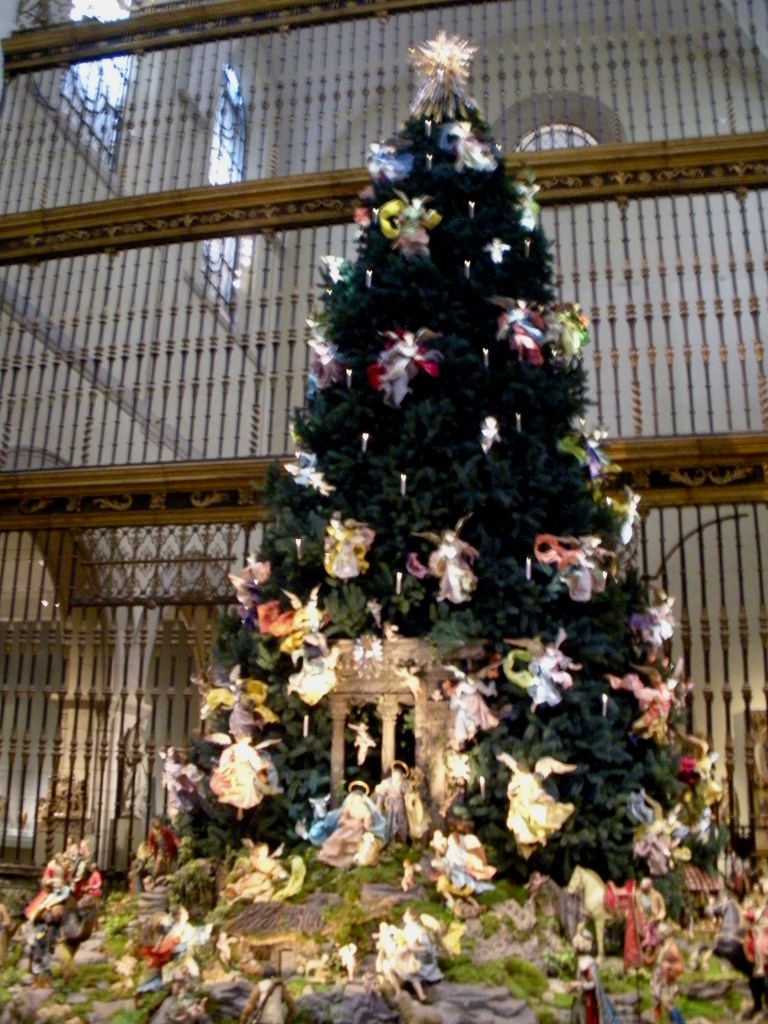
Metropolitan Museum of Art NYC

Growing up listening to Sunday sermons, not a year passed without the sermon whose message was, “It is more blessed to give than receive.”  I got it.  Be generous.  There are so many people less fortunate than you. God will smile upon your giving with grace.

Then one Sunday, Dr Dale Turner’s sermon was “It is As Blessed to Receive as to Give.”  His sermon opened a window to the welcome light of being a gracious receiver.  He reframed that common phrase: “Oh really you shouldn’t have!” when someone brings us a gift. To say someone should not have given a gift diminishes the one making the gift.  Why?  Because in making a gift, the giver has invested thought, perhaps even love.  Expressing joy, gratitude, or surprise in receiving that gift, you are returning a spiritual gift-in-kind. “Your gift matters, and you also matter.”
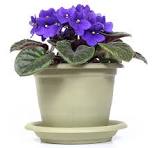
I am going back here many decades, when living in an apartment house with a central courtyard. One Mother’s Day the young moms were sharing social time in that courtyard when five-year-old Kimmie handed her mother a small African violet.  “Oh darn,” her mom said, “one more plant I need to water.”  I still vividly see Kimmie’s injured look.  Likely with no bad intentions, her mom was being witty for the other moms present but disrespecting her child’s gift.

Christmas morning, we gather around the living room, tree lit, fireplace aglow while our three grandchildren distribute gifts they have purchased or made for us.  When Max brings me his present wrapped creatively in newsprint or finger-painted paper, he seems to hold his breath while I remove abundant cellophane tape and open the package.  After my joyful hug of appreciation, he exhales as if he were swimming underwater until he could experience my reaction.
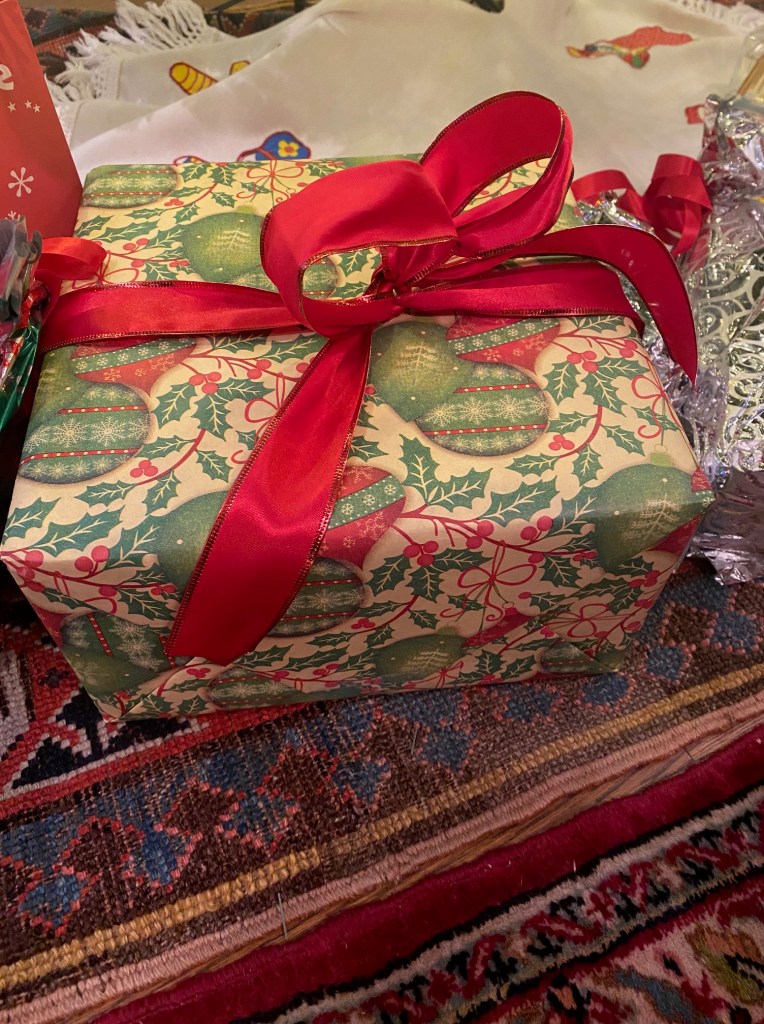
Each fall, when relatives ask what we would like for Christmas, we say, “We don’t need a thing,” and that is true.  I imagine one more kitchen device I have no room to store, and I beg off with “Let’s just send consumables this year.”  I make raspberry jam to send and await my sister-in-law’s Ukrainian cookies.  One step from there is “Let’s just do cards this year.”  Both sides agree.  Then a week before Christmas, a beautifully wrapped box arrives from my brother and sister-in-law with a card that reads. “a gift for the cook.”

I feel bad, because I had sent only jars of homemade strawberry jam.  What happened to our agreement for only consumables? To relieve my feelings of remorse, I head for the computer, go online and order something in return, hoping it will arrive before Christmas. I look for something I think my sister-in-law will enjoy and may not already own.  I am happy when I think I found a good gift. It doesn’t take a degree in psychology to conclude that my actions may be less about a gift for my sister-in-law than a way to relieve the guilt I feel for sending only jam.  Surely it was her opportunity to give that matters– a pleasure for her that I might receive with gratitude.
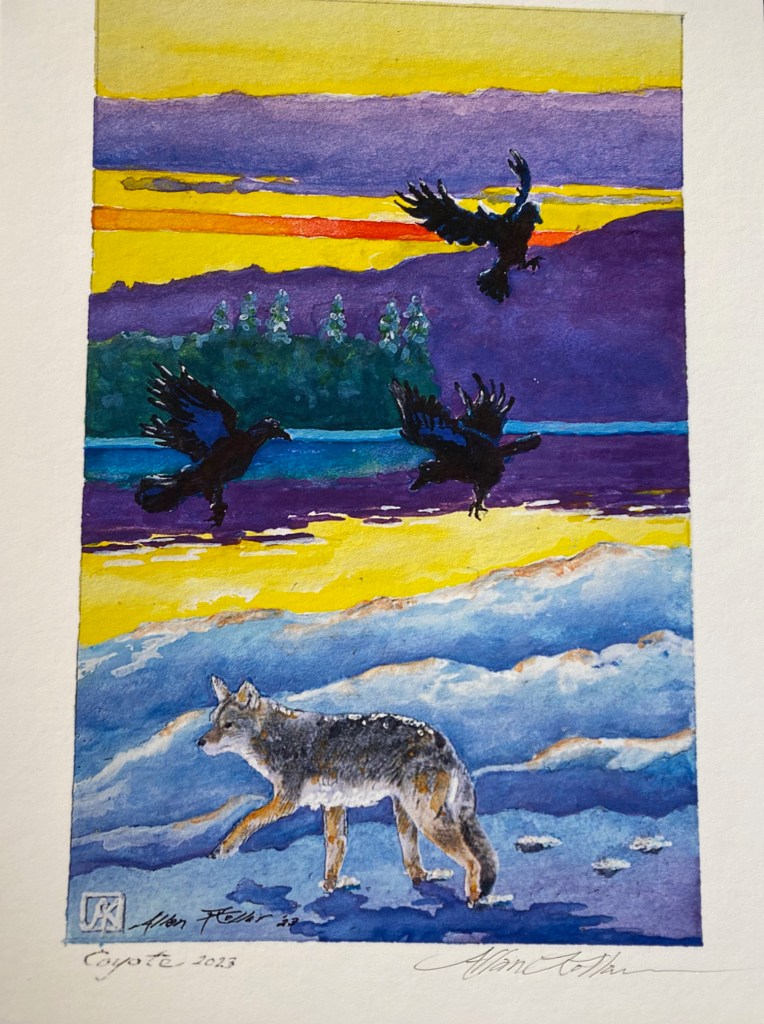
After all, what is a gift but a way to connect?  Each year, my husband makes a beautiful art card, a watercolor scene.  I pair it with a poem.  We have lived so long that our card list is quite long.  I joke that the only way one can get off our mailing list is to die.  Now at eighty-years-old, I feel the ironic twist.  The list is shrinking. Many of those to whom we send the cards do not mail holiday cards.  Surely we enjoy the cards we receive, but our receiving cards does not affect our sending the cards out.  We devote a whole day to the mailing, and as each name emerges, we have a minute to think about those people, bringing back memories that might not have emerged had we not sat there sending out our little gift.  Who is giving this present?  Who is receiving the gift?
TOOLS

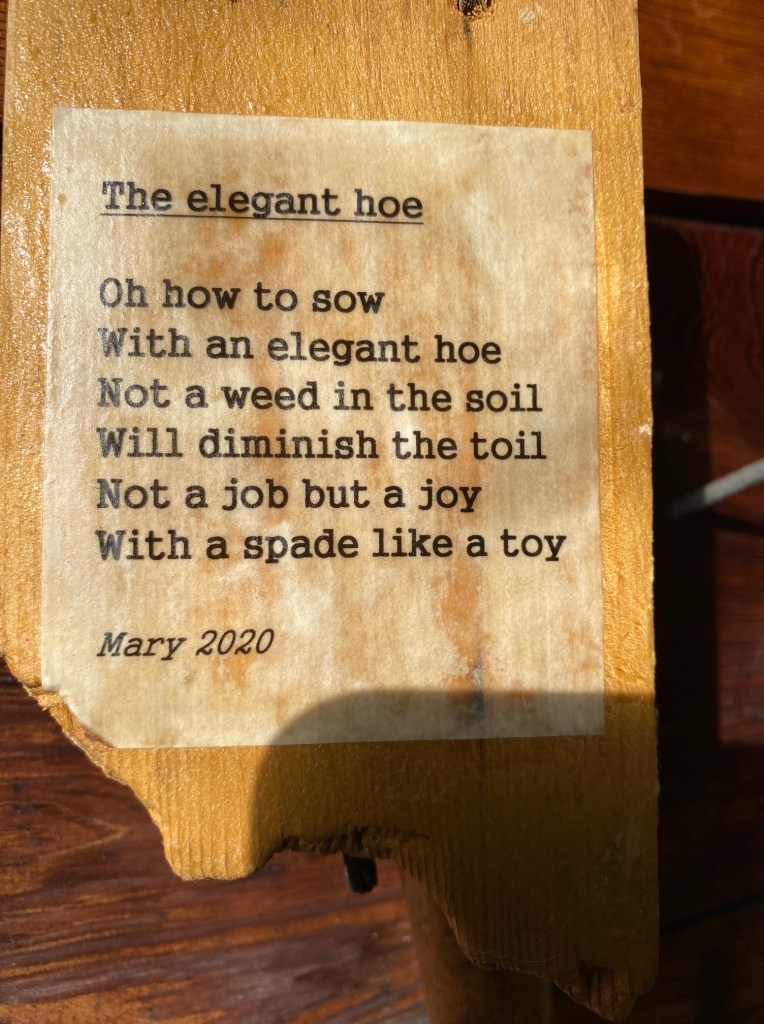
            Hanging on a leather strip from a nail on the greenhouse wall is a hand spade, its handle wood, its blade a fierce copper designed to uproot the most determined weed. Rewarding my passion for gardening, my brother gave it to me for my birthday.  The spade is a more sophisticated tool than I would have purchased for myself, and so I wrote him a thank-you poem, which he, in turn fashioned on a wood slab to hang alongside his gift. How often tools bring us together.

             In a tidily organized drawer in the garage, my husband stores his father’s tools: a skill hand drill, several wood planes and specialty hand saws.  His father was a finished carpenter whose tools have long since been improved on by technology.  Nevertheless, my husband stores those tools with the same reverence he has for any memento of his father’s life.

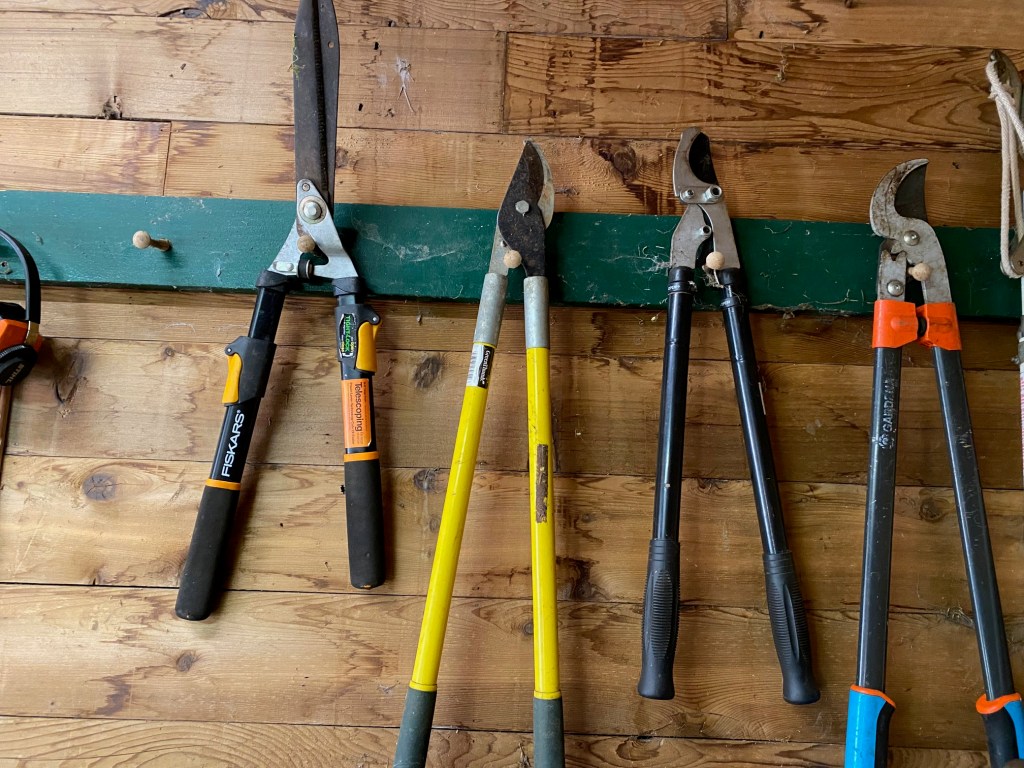
His dad’s lessons endure in the storage shed adjacent to the greenhouse where my husband has affixed wooden pegs in measured spaces one from the other to line up all sorts of gardening implements: hedge clippers, shovels, rakes, each in its place.  When my sister-in-law visited and spied what her brother had organized, she laughed out loud at the reincarnation of their father’s devotion to his tools.  Like father, like son, you might conclude, but surely no different than my daily use of a small cutting board once belonging to my mom.  Why have I not replaced it with a larger one?  You know why.
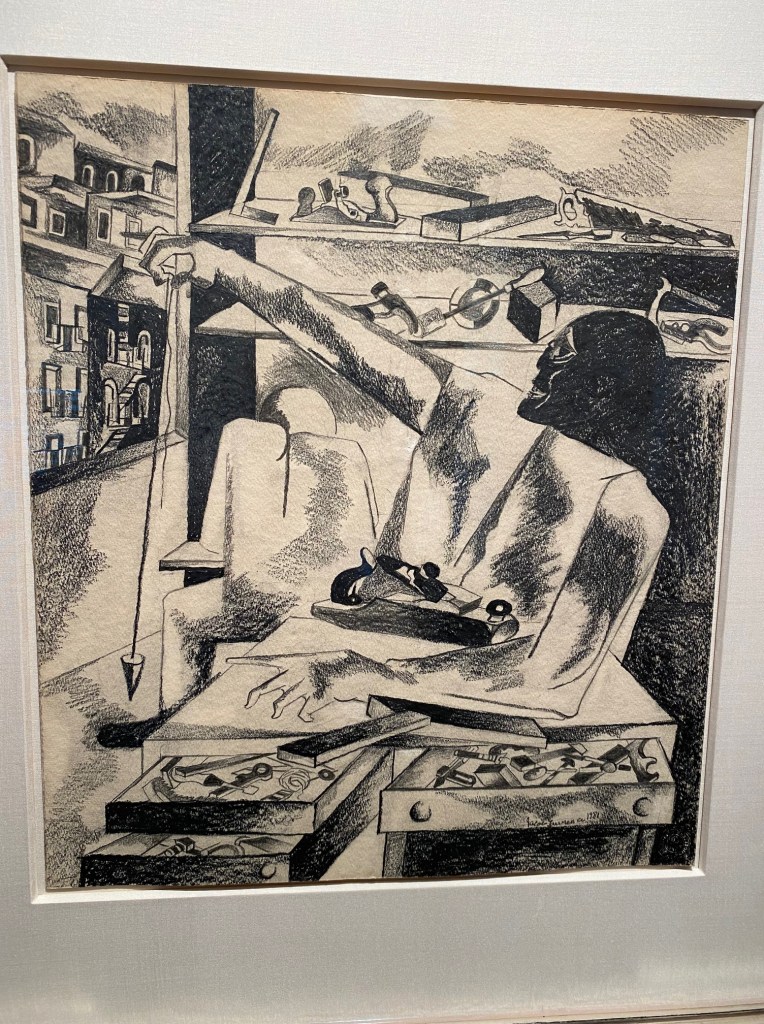
            Tools are extensions of ourselves – the paintbrush to Monet, the baton to Leonard Bernstein.  Tools can be the measurement of our lives.  The artist, Jacob Lawrence, was not a builder, but his paintings and prints are full of tools — tools, hanging, tools overflowing in drawers.  We are fortunate to own a self-portrait Lawrence drew of himself in the later years of his life.  In the portrait, he sits before an open window in his Seattle studio surrounded by tools.  In his hand he holds a plumb line up to the window while looking over his shoulder at Harlem from which he came.  A plumb line is an essential tool for a builder because it works with gravity to assure things are aligned.  Is Jacob Lawrence reflecting on the journey of his life, looking back to see if his course has been true?  As a symbol of measurement, the plumb line occurs more than once in the Bible.  In the book of Amos, the Lord explains his judgement to Amos: “I am setting a plumb line among my people Israel: I will spare them no longer.” (Amos 7: 7-8)

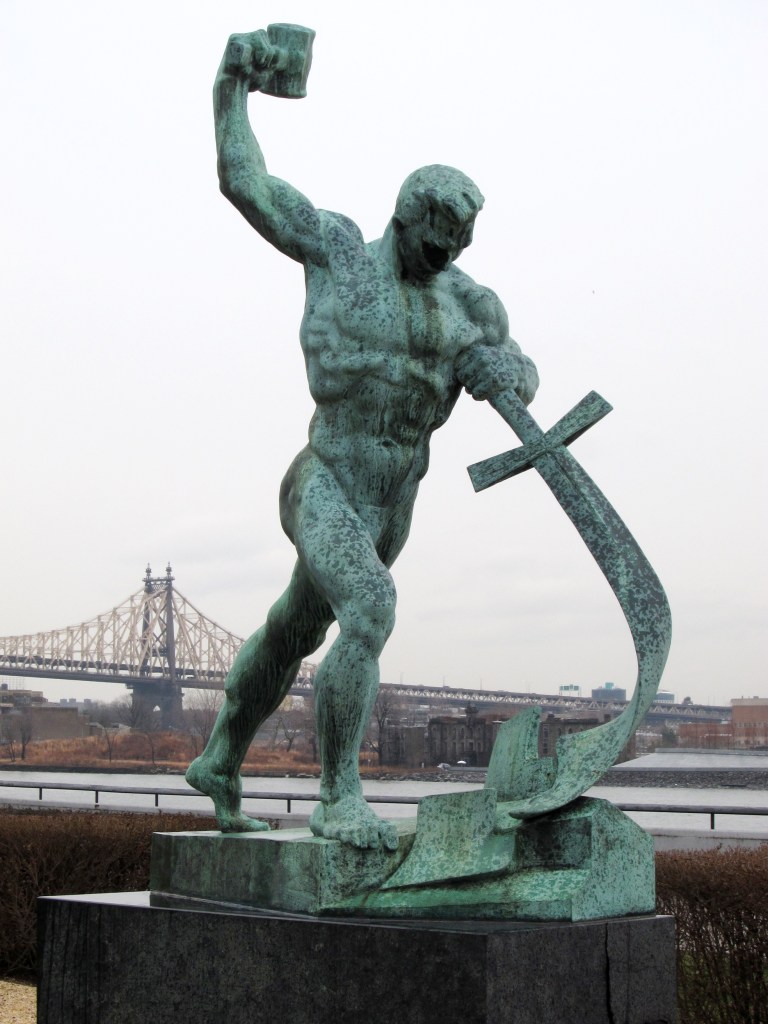
            Although we most often think of tools as creative instruments, the Smithsonian Institute has an exhibition of Civil War weapons it calls The Tools of War.   The Bible has much to say about those tools as well.  In Micah 4:3, it is written, “He shall judge between many peoples, and shall arbitrate between strong nations far away; they shall beat their swords into plowshares, and their spears into pruning hooks; nation shall not lift up sword against nation, neither shall they learn war any more.”  Even as I copy this quotation, my mind moves to the Middle East and to Ukraine.  What more can I say that is not already in our hearts?  Here is a photo of a sculpture in the garden of the United Nations, a work of art by Yevgeny Vuchetich, a 1959 gift of the Soviet Union to the United Nations.  The title is: Let Us Beat Swords Into Ploughshares. Surely ironic today.

            The poet, Robert Frost, was always ready to see cruel ironies:

Objection to Being Stepped on:

At the end of the row 
I stepped on the toe 
Of an unemployed hoe. 

It rose in offense 
And struck me a blow 
In the seat of my sense. 
It wasn’t to blame 
But I called it a name. 
And I must say it dealt 
Me a blow that I felt 
Like a malice prepense. 
You may call me a fool, 
But was there a rule 
The weapon should be 
Turned into a tool? 
And what do we see? 
The first tool I step on 
Turned into a weapon.

COOKIE CONNECTION

My friend, Shemaiah Gonzalez writes a Substack blog Undaunted Joy wherein she writes about the many blessings of life.  Recently she wrote about the pleasures of food, especially the way that food brings people together in community.  Inviting her readers to reflect on how food connects them with others, I thought of a food memory that transcends a hundred years.

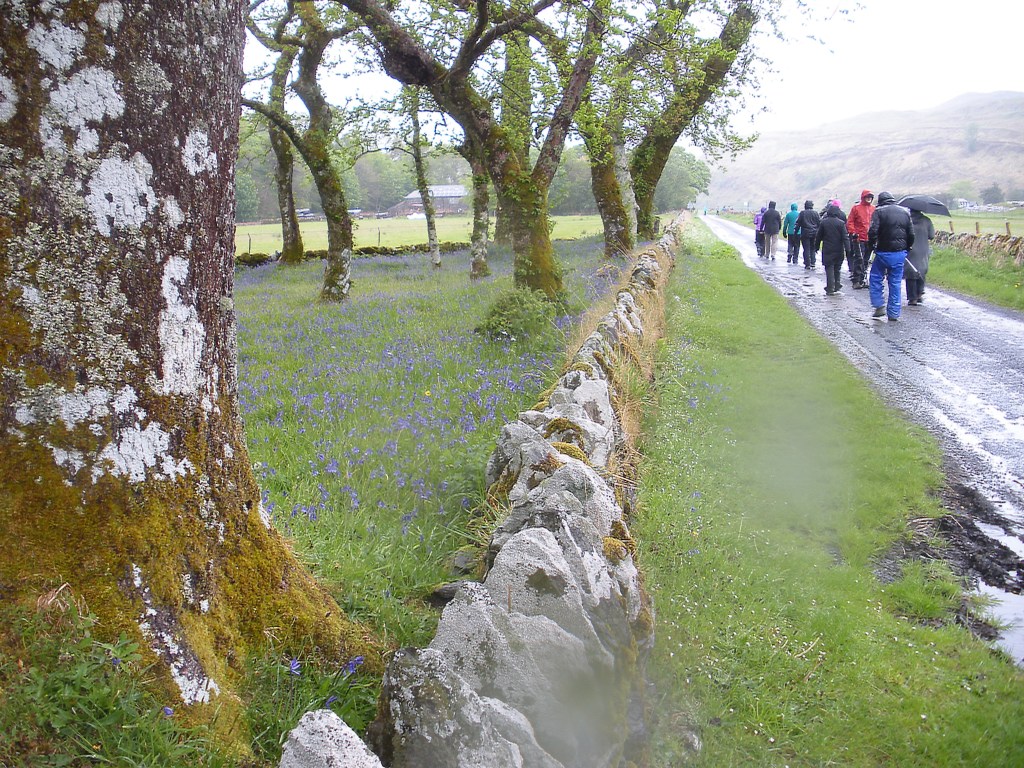
I am steeped in British landscapes and literature, so when our family planned a vacation in Great Britain years ago, the Lake District rose immediately as our desired destination.  Wordsworth, Coleridge, even Beatrix Potter would await me among fields of daffodils overrun with charming bunnies.  The tourist brochures reinforced my imagination illustrating landscapes bathed in sunshine, broken only by a few errant clouds that gave dimension to the sheep-dotted rolling hills between iconic lakes.  Photos and walking maps depicted happy hikers taking the entire route on foot, no doubt stopping on the way at cozy pubs.  We arrived there on an August day that felt like November in Seattle.  Rain fell relentlessly.  I had been unable to persuade my husband and daughter to tour the Lakes on foot, but we passed clumps of tourists who did, easily recognized by their heavy slickers glowing with water, their walking maps encased in plastic folders dripping from chains around their necks.

“There you are,” my husband teased as he spotted one soaked woman emptying her boots by the front door of a pastry shop.  But the pastry shop!  I wanted to stop there, having noticed its sign that read “Authentic English Shortbread.” 

“Stop!” I begged, “Let’s go in and get some,” But my husband was trying to negotiate a roundabout, and so held me off with a promise to return before we left the area the next day. He forgot, and I forgot to remind him as we headed south to Northumberland.  I could only sulk alongside him.  Once in a village near Robin Hood’s woods, my husband entered a bakery and returned with two large cookies, hoping to soothe my spirit. 

“These won’t be the same,” I complained, while reluctantly taking a bite out of the large, rather plain cookie.  And it wasn’t likely the same cookie we missed buying in Windermere.  It was, however, identical in size, weight and flavor to my Grandma Cartwright’s cookie, her only cookie she baked on her wood stove, every summer we visited her modest Wisconsin farm.  The sun came out as I looked up the cobblestone street to other shops in the English village.  I felt as if I had been there a hundred years before.  My ancestors emigrated from England in the 1800’s, and at the moment of that cookie bite, I felt I was, in a way, returning home. Connection!  Perhaps some Italian-American immigrants feel a kindred spirit when they taste a marinara sauce in the Tuscan Hills, or an Irish immigrant visits Dublin and savors stout.  I am not suggesting that cookie recipe was passed down mother-to-daughter for over a hundred years.

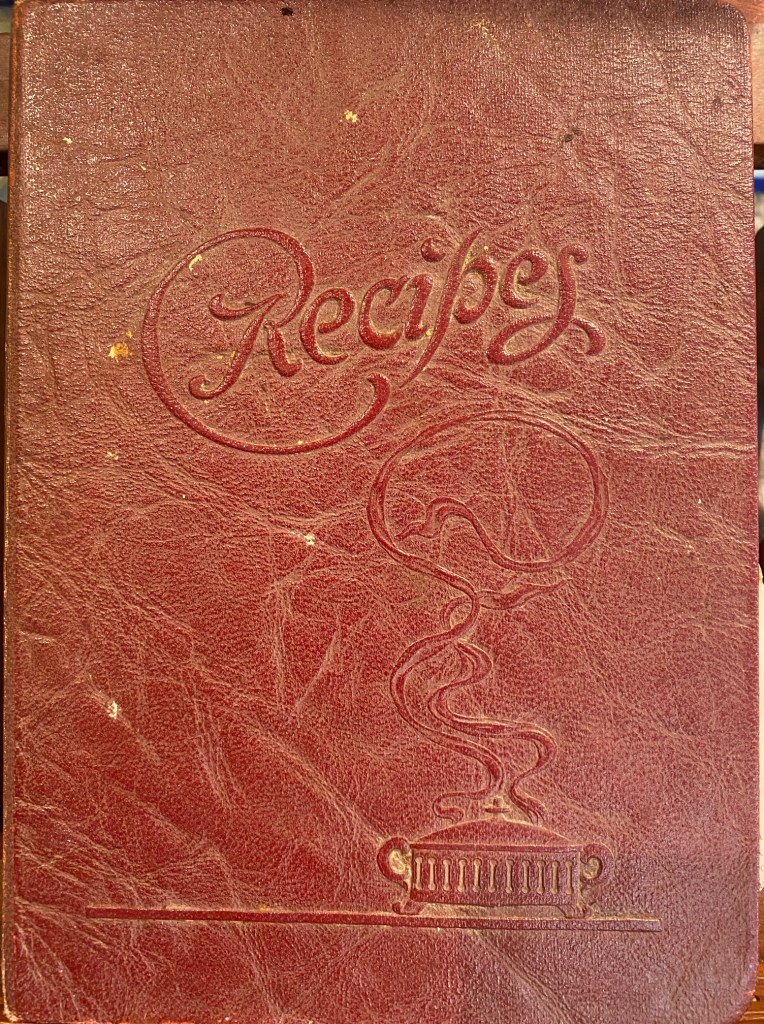
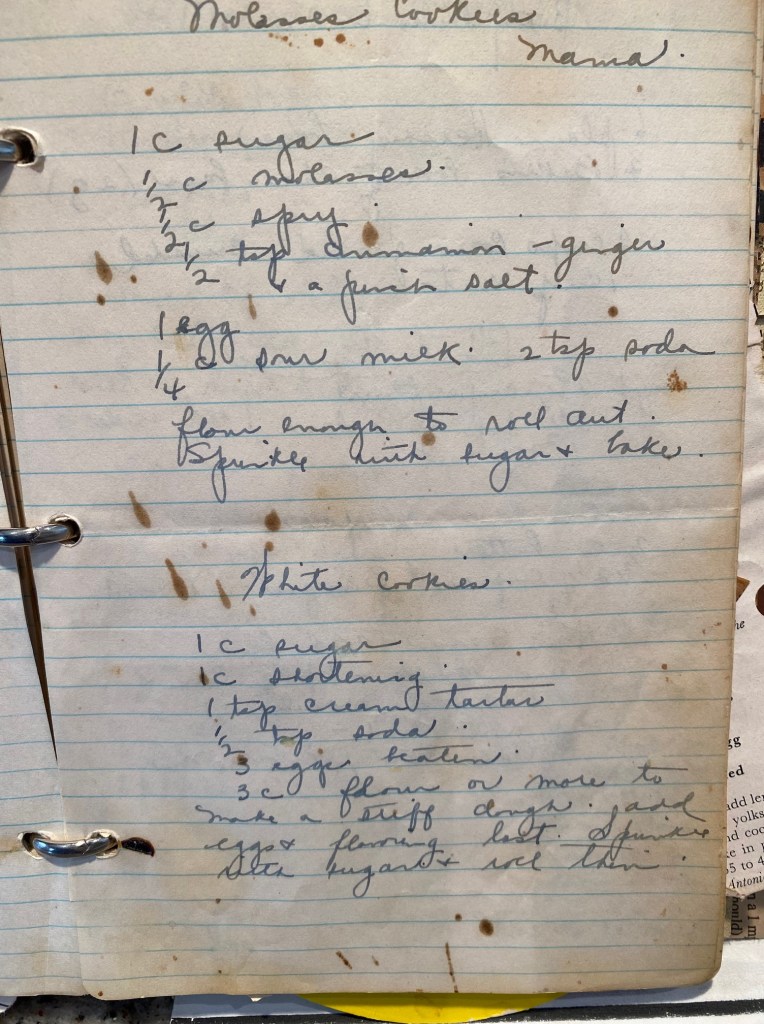
I still have my mother’s cookbooks on my kitchen shelf.  There in a scuffed three-ring notebook, my mother hand copied recipes from gelatin salads to tuna casseroles.  I rarely recreate one of those recipes, but I love reading them, all in my mother’s characteristic penmanship.  To see her handwriting is to see her.  Now that recipes are flashed by email, my daughter will not have a favorite dish described in her mother’s script.  But I do, and when I turned to the cookie section, there I found the recipe spotted with drips of what must be molasses.  (Favorite recipes all had splatters of ingredients on the pages).  In the upper right-hand corner, Mom wrote the name of the person who provided recipes –Mrs. Cooper, or Hilda Deck. On this cookie recipe I felt a solid connection with my mother and my grandmother for on the top right-hand corner, I see “Mama.”

RATS

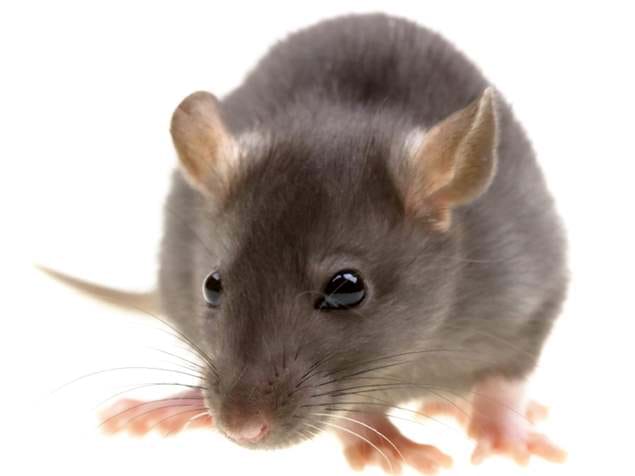
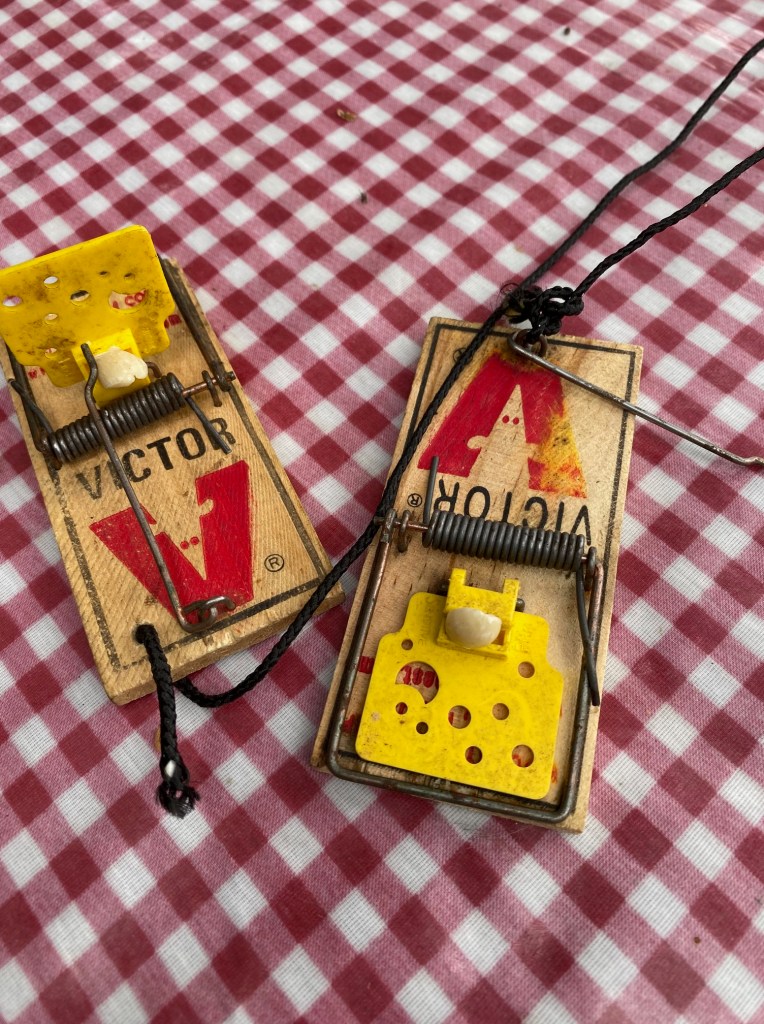
Nothing evokes terror quite like RATS – except decaying rats – especially having been trapped, when they decompose beneath the floorboards under your bed.   The foundation of our Quilcene cottage rests on stilts and beams, a short hundred feet from shoreline, so vulnerable to wildlife shinnying up the posts to seek a home in our home.  Mid-August presages winter for all of them, consequently we are accustomed to spotting spiders emerging from kitchen sink drains, or signs of mice who scrounged insulation for nests beneath the range.  Our visiting granddaughter, sleeping upstairs in the loft, alerted us that mice raced through the walls behind her bed during the night: “I live in Brooklyn, Nana, so I know the sound of scampering mice.”

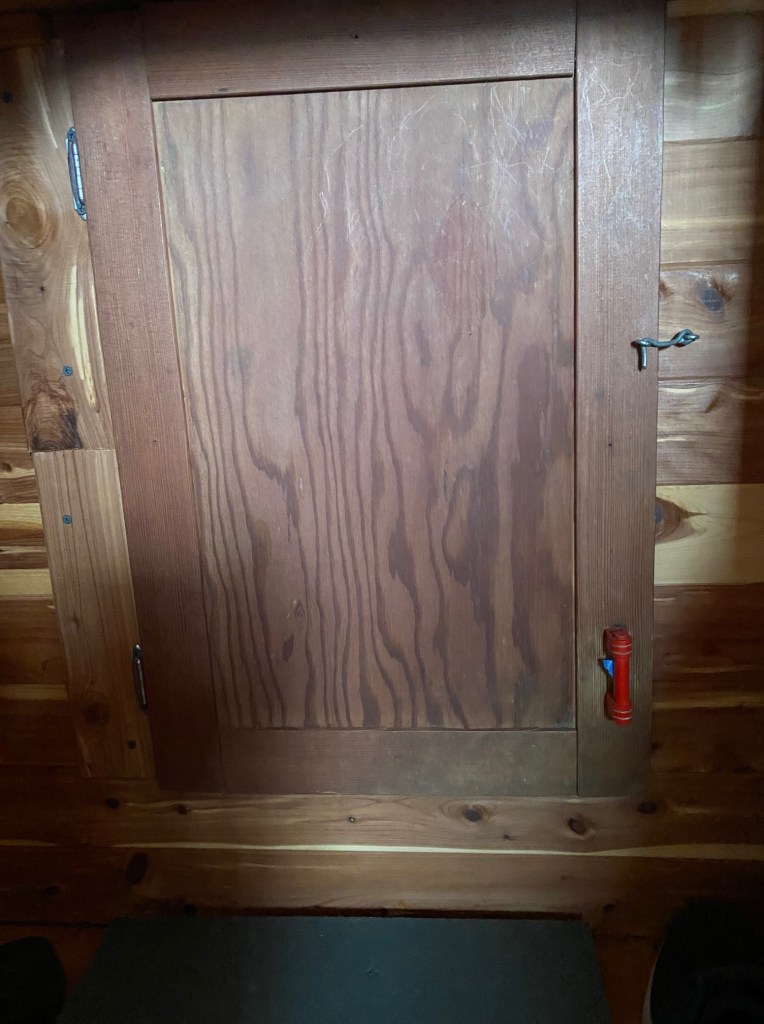
            Allan fetched traps from the garage that he strategically placed in the kitchen, bedrooms, and two out-buildings (garage and studio). The very next day two mice bit the peanut, then bit the dust in the garage.  He set a larger rat trap in the closet by our bed, a small door within the closet opening to access plumbing and, by extension, the underflooring of our cottage set on stilts.  

            This weekend, we returned not to that trap wrested from its perch but to a smothering stench sifting through our bedroom.  No trap, no rat within reach.  After midnight, donning rubber gloves and aiming a flashlight, Allan plunged through the door opening to the floorboards, and grasped the corpse of an eight-inch rat (sans tail).  Under a full moon, he tossed the rat over the front fence where incoming tides will carry it to rat heaven.

            Despite a sleep deprived night, I awoke today dismissing the stench and considering why I am predisposed to despise rats. Without them, where would medical advances be?  Then the beloved literature of my childhood – Ratty, the most intelligent, compassionate creature in Wind in the Willows? Not to exclude Ratatouille, a Pixar heart stealer.

FF98Y1 ‘WIND IN THE WILLOWS’. /nWater Rat & Sea Rat: drawing by Paul Bransom from 1st edition, 1908, of Kenneth Grahame’s Wind in the Willows.

            When I served as a child advocate for foster children, nine-year-old Colin was found by CPS surviving under a Seattle bridge.  Having escaped an abusive home, he lived day-to-day on his own wits, both ill and hungry. His anger and fear affected his behavior, so he was transferred from one foster placement to another for four years before the perfect patient and wise couple from NY State invited him to their home. In one foster placement, Colin was allowed a pet.  He chose a rat whom he adored.  On my visits I would find him curled on an overstuffed couch, his arm stretched out so his pet rat could scamper up to nestle by his cheek.  It is no accident that Colin identified with a creature known to be lowly and despised.

            Before breakfast, I put away my rodent reflections to check my email.  I had been sent a blog post from a writer from Mississippi, a writer whose name slumbered in my memory. Rather than immediately read it or delete it, I rested on “Mississippi.”  Why would I read something from a Mississippian who probably has a far-right scree to send?  It is a state whose schools are historically inferior, that bans abortion rights, a state that voted for Donald Trump with 57.8% of the votes in 2016. No rat in my meditation, but I had been invaded with that predisposition to judge.  Luckily, I set it aside, clicked on the blog post and enjoyed an insightful essay about poetry, memoir and location by Beth Ann Fennelly, a poet whose poem I had copied one month for the poetry box.  My request for her permission put me on her mailing list. Her writing felt like a gift.  What a creative start to my day.

Mid-Winter

“In the midst of winter, I found there was, within me, an invincible summer.” (Albert Camus)

If December 21st is the first day of the Winter Solstice, the exact date of Mid-Winter, this year was February 3, 2023, half-way between Winter Solstice and Spring Equinox.  Stopping to note this day is much like my childhood self, plaintively calling from the back seat of our ‘51 Buick ,“Are we there yet?’  My impatience for arrival at a desired destination could be calmed by familiar guideposts along the way.  “We just passed the city limits sign” would suffice.

 In early February, ignoring morning temperatures in the ‘30’s, I seek signs of spring’s arrival.  The trails around the woods are slippery with sodden, decomposing leaves shaken loose from big leaf maples by bitter January winds.  No leaf remains clinging to the tree; the only ones still above my head are cradled in dark cedar broughs.  Death dominates the day from gloomy dawn t0 dusk at 5:00PM.

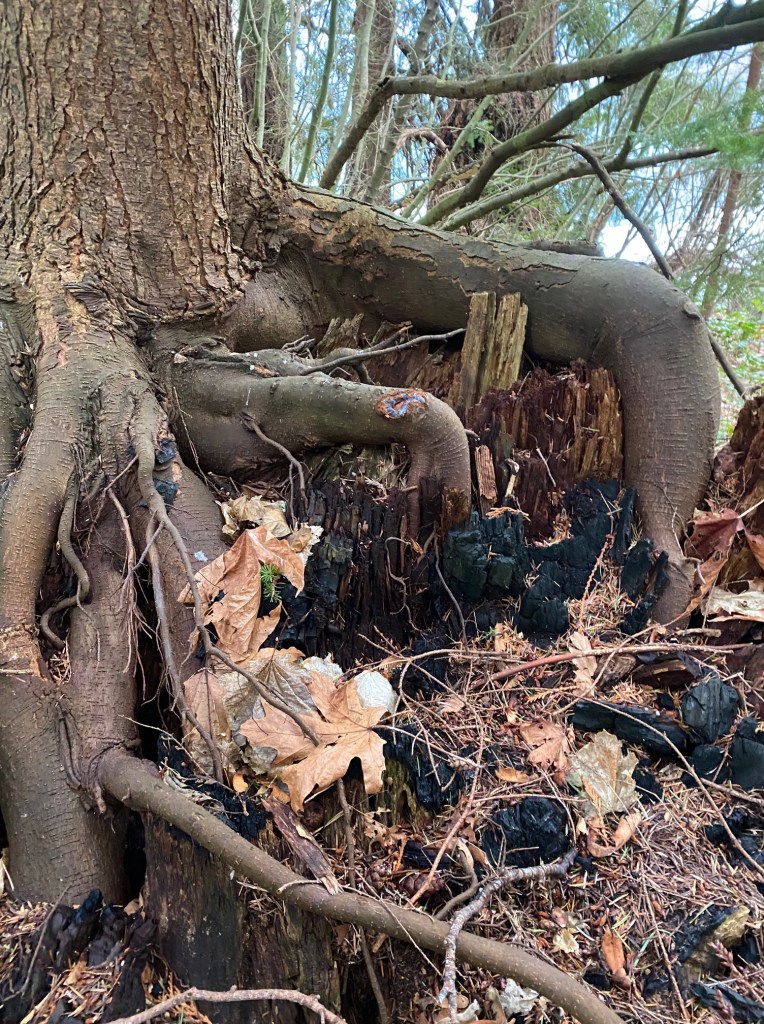
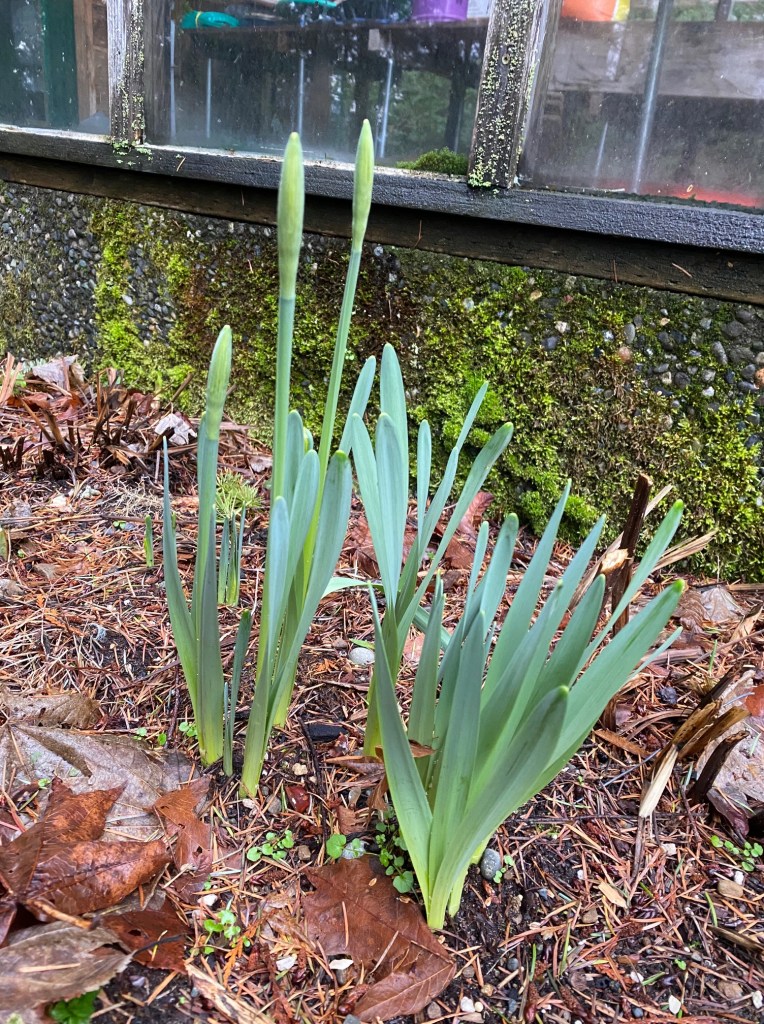
Because I want to “get there” to spring, I comfort myself with Camus’s often quoted  “In the midst of winter, I found there was, within me, an invincible summer.” I make a point of finding life within death in the natural landscape where I am walking.  Decades ago, someone logged the woods where I walk, leaving stumps to die.  But did they die? The stumps continue to decompose from which entwined, serpentine roots of a giant hemlock emerge.   So much for death! Those roots are like a Michelangelo sculpture.  Admiring it, I feel a spring in my step, all the way to the flower border by the greenhouse.  More decomposing leaves and windblown detritus from cedar and pines.  But there, as eagerly  as raised hands, emerge a row of daffodils.  “Oh my!”  I want to worry them back under the leaves, for winter isn’t over yet.  “Don’t jump the gun, young flowers. It is still mid-winter.”  Opposite that flower bed and behind a deer fence is my vegetable garden, frosty and fallow but showing off pink protruding noses of rhubarb.   Spring is undaunted and not far away. We will get there by the signs of the city limits.

And so before returning for morning coffee by the wood stove, I recite Camus’s oft-quoted lines, not only because I spotted OUTSIDE myself the inevitable return of summer in freezing February.  Rather I am engaged with Camus, the man who found WITHIN himself that invincible summer.  Surely, he too could have simply spotted signs of life in death, but he phrases his discovery as one within himself, an act of will.  And it is not just any summer he discovers, but an invincible summer, as if a skirmish had raged before finding summer surviving there on winter’s battleground.  Summer, HIS summer, was invincible.

Here I am marching off to metaphor again, and there is something about my latter years in a world of war and natural disaster when I might be forgiven for raising the white flag of surrender.   But today I find victory in the human will. 

The Bucket List


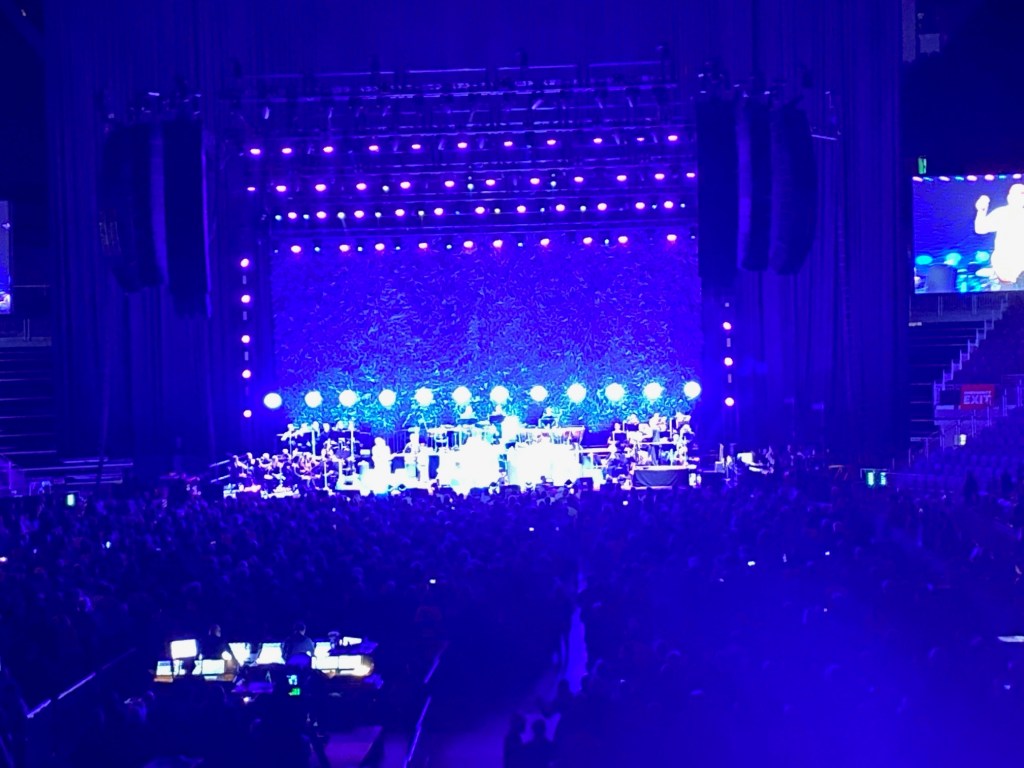
            Last year, a group of my longtime women friends gathered for an every-two-month Zoom chat.  Joined in friendship for having exercised between 5:30 and 7:00 AM at the Washington Athletic Club, and having shared the same mirror for applying make-up before heading off to various jobs, we remained friends through ensuing decades and retirement.  Now we exercise in Seattle, Sacramento, Billings, Newport – all separated from the communal mirror, but we remain a supportive group, encouraging one another as we move past “significant” birthdays.  It was while we were cheering on Sylvia, walking across her 80-year milepost, when we recalled all she had done in her productive life, yet also what she had not done. In all of her eighty years, Sylvia had not attended a rock concert.

            “That’s it,” Nikki chimed in.  “We have to take Sylvia to a rock concert, a critical item for her bucket list.” Sylvia has been a parent, wife, Director of Children and Family Services for the State of California, just one of many social agencies she headed up. There isn’t much Sylvia has failed to accomplish nor experience.  Yet, within minutes, the group was assigning each other to locate accessible rock concerts that would not involve too much travel or expense, and then to acquire tickets.  We settled on The Who, a rock-concert scheduled a year down the road in Seattle’s newly refurbished Climate Pledge Arena.  Since some of us still live in Seattle, we could host those who had moved away.  Perhaps committing to such a distant date made it easier for me to go along, not being inclined to expose myself to decibels of ear shattering instruments nor crowds of baby boomers trying to rock back into their teens.  I agreed to go, because it would mean a weekend with my dear friends, women with whom I share a history.

            Here I am, having survived the rock concert, yet still reflecting on the notion of a bucket list.  I sought out Wikipedia for a definition, even though it is a common idiom made popular by the Jack Nicholson/ Morgan Freeman movie.  We know it evolves from the phrase “kick the bucket,” ie. die.  And “kicking the bucket” for death goes back to the 1700’s when it may have referred to a condemned man standing on a bucket before the gallows.  When the bucket was kicked out from under him, the noose gripped and ……

            A bucket list is a list of experiences one hopes to experience before death.  But why?  What is there about our society that expects death to be more palatable if it is preceded by a life filled with random experiences: travel, childbearing, financial success, sports, hobbies , attending rock concerts?   Or is having a bucket list a way of forestalling death?  “Can’t go now, Grim Reaper.  I have a rock concert to attend.”

            The bucket list allows a forward gaze.  Who doesn’t like to have something for which we can look forward?  Yet let’s look at the attendance at the Who concert.  There were no teenagers jumping, waving arms, throwing themselves on the stage.  Surely there were teenagers in the audience, but many were brought along by their parents or grandparents.  From where we sat mid-center across from the lights flashing on stage, I have not seen so much gray hair — gray hair for those who still had hair.  I should confess here that although I was vaguely aware of the Who in the 1970’s, I was preoccupied as a single parent with a toddler and teaching high school, so that I was oblivious to popular music beyond the Beatles.  Yet there I sat surrounded by folks my age who were mouthing lyrics I could not discern through the amplification while they thrust out their arms in remembered gestures that accompanied those songs, gestures made when both the Who and the audience were much younger. The opposite of looking forward, is looking backwards.  Surely, we were looking both ways.

            Americans are proudly always on the move.  I have the attention span of fly in a sugar factory, so I understand this split between “the good old days,” and “what’s next?” Yet one of the benefits of aging is the way the body slows down.  How comforting to do nothing but sit, observe, feel.  In Milton’s sonnet “On His Blindness,” Milton despairs that his fading eyesight prohibits him from writing; whereas writing was his vocation, literally his calling to serve God.  After bemoaning his blindness in the first eight lines of the poem, Milton arrives at an understanding that God doesn’t need Milton’s gifts, that “Those also serve who only stand and wait.”  I keep that line in my pocket, even when stuck in a sluggish line at a grocery store.  How obsessed I can be with Chronos, with sequential time, years passing; whereas, Kairos focuses on qualitative time.  Was the Rock Concert important to do before death?  Certainly not, but qualitative time with my friends is a treasure.  

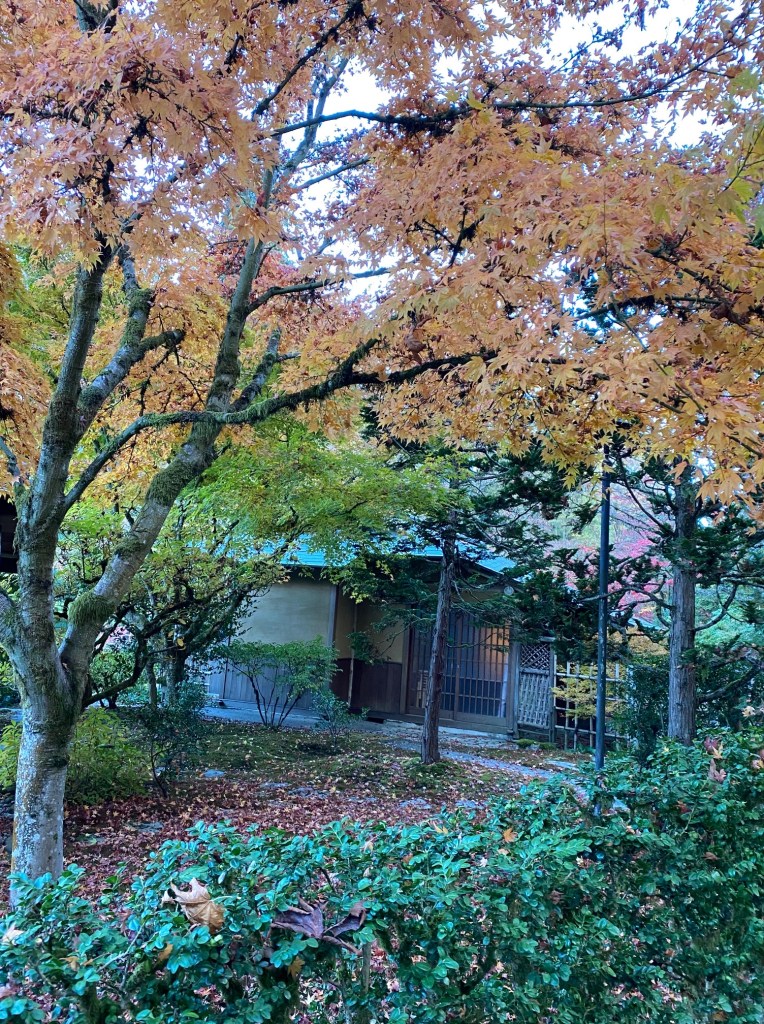
Japanese Tea House. Arboretum, Seattle

LAWN DAISIES

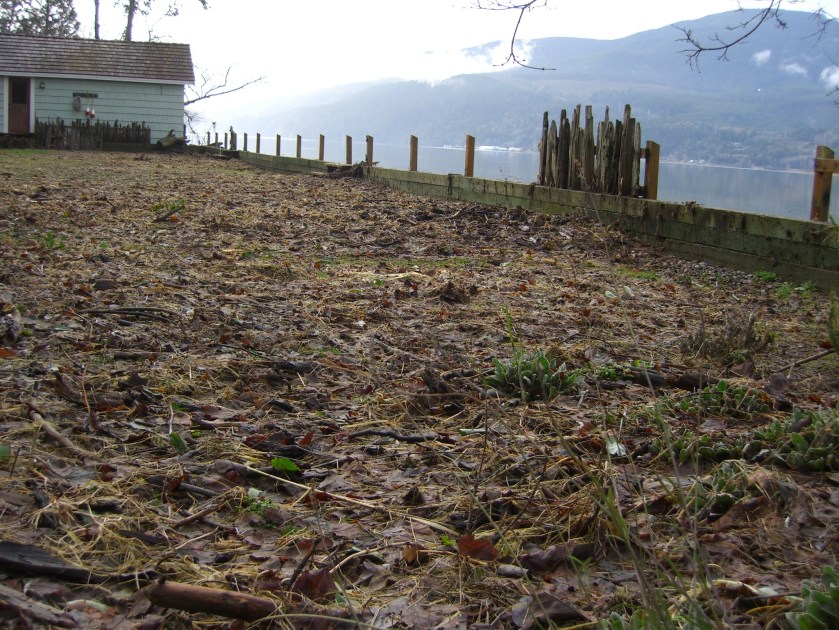
When I am feeling low, to lift my spirits I head for the garden – any garden — my vegetable garden, or this weekend, the square of earth surrounding a dogwood tree that might bloom pink any day now.  Around that tree, wild grasses, forget-me-nots, dandelions and escaped strawberry plants elbow for space around lavender and rosemary, even a large hydrangea we surrounded with seasonal bulbs for daffodils and tulips.  That square is a melting pot of chosen and undesired intruders that all stake their claim on an eight-by-eight-foot square that suffers intrusive saltwater damage in winter when high tides seep over our driftwood fence.

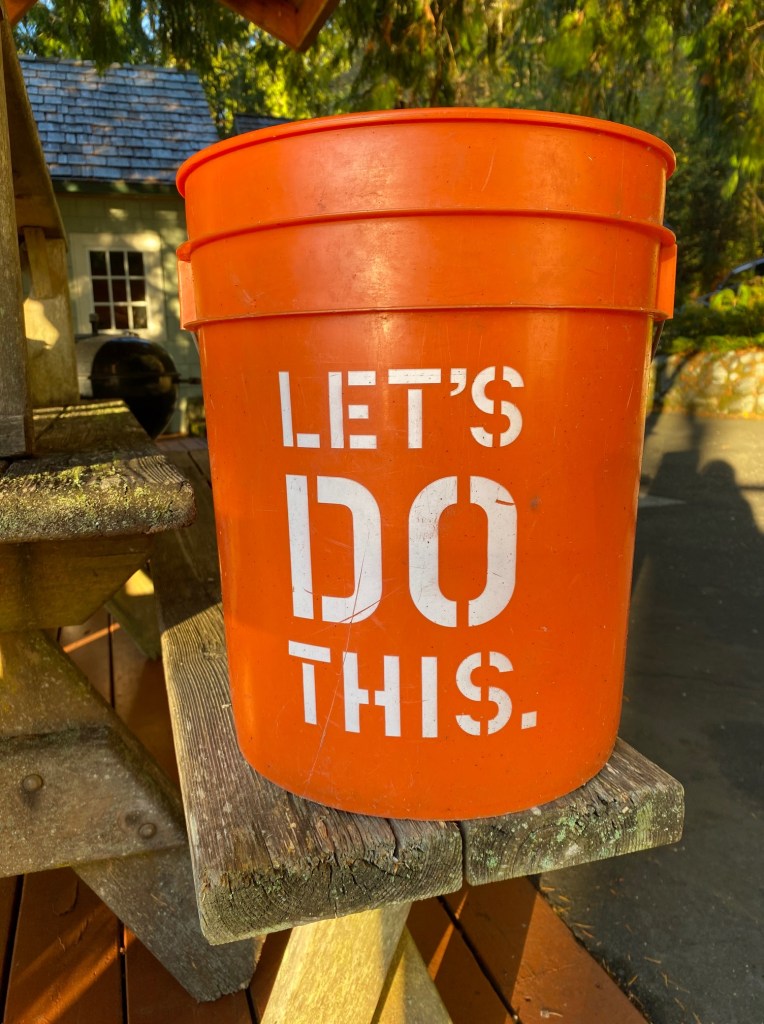
Last weekend, I carried a big orange bucket holding spades and clippers, plopped it alongside the wooden boards that separate the garden from our lawn and dropped to my knees to begin weeding.  My knees sunk into the soil, a rather soft landing that came to meet me in my sorrow.  I had taken with me feelings of despair following recent weeks of gun violence.  Despair would not let go its grip on my helpless heart.  Perhaps, unconsciously, I expected that spading and pulling out those weeds would lift me into hopefulness, the kind of hope that springs from an illusion of control.

How did my mother deal with sorrow? It was always clear when my mother was troubled.  I would find her on her hands and knees scrubbing the kitchen floor.  When she aged and housekeeping challenged her arthritic limbs, I offered to pay for a housekeeper to do that hard scrubbing.  She dismissed the housekeeper after one cleaning, because the woman used a mop at the end of a stick, refusing to get down on hands and knees.  I should have known, however, that the task was never about cleanliness.  It was keening, the kind of rhythmic movement made by Irish women when a death has occurred.   That back and forth, the reaching into corners with sore fingers, the scraping with fingernails a stubborn gooey blob under the kitchen table.  When my parents were not getting along, our kitchen floor was an advertisement for Aero Wax. 

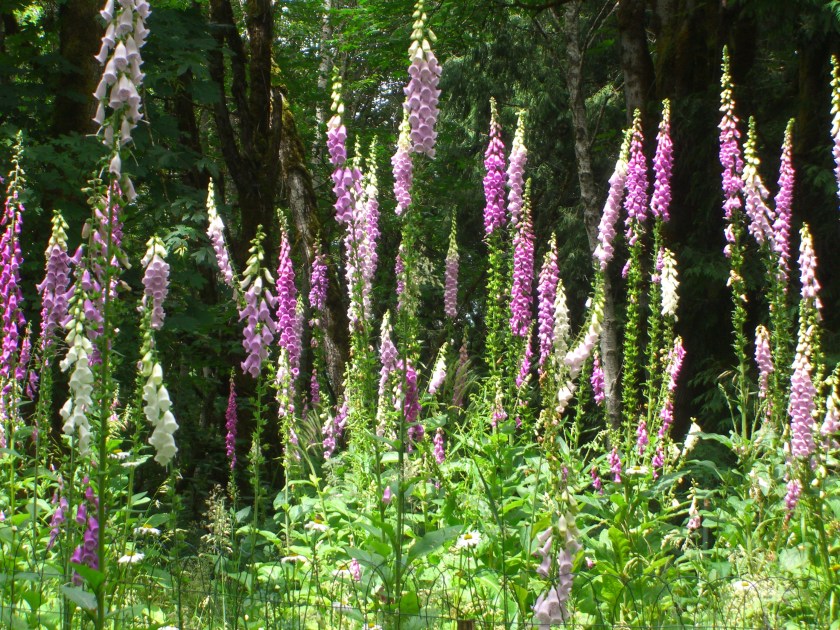
What kind of humility, what kind of praying is the down-on-knees pulling of weeds?  I was not there to rescue the children.  I too was a teacher back when school shooting was so unheard of it would never reach my imagination.  I get down on my knees where I try to discern the weeds from the wildflowers, what to pull out, what to save, because even though self-seeded, the poppies are joyful orange and yellow, the foxglove a vibrant pink, and when clustered, they wave a snappy salute across the lawn. 

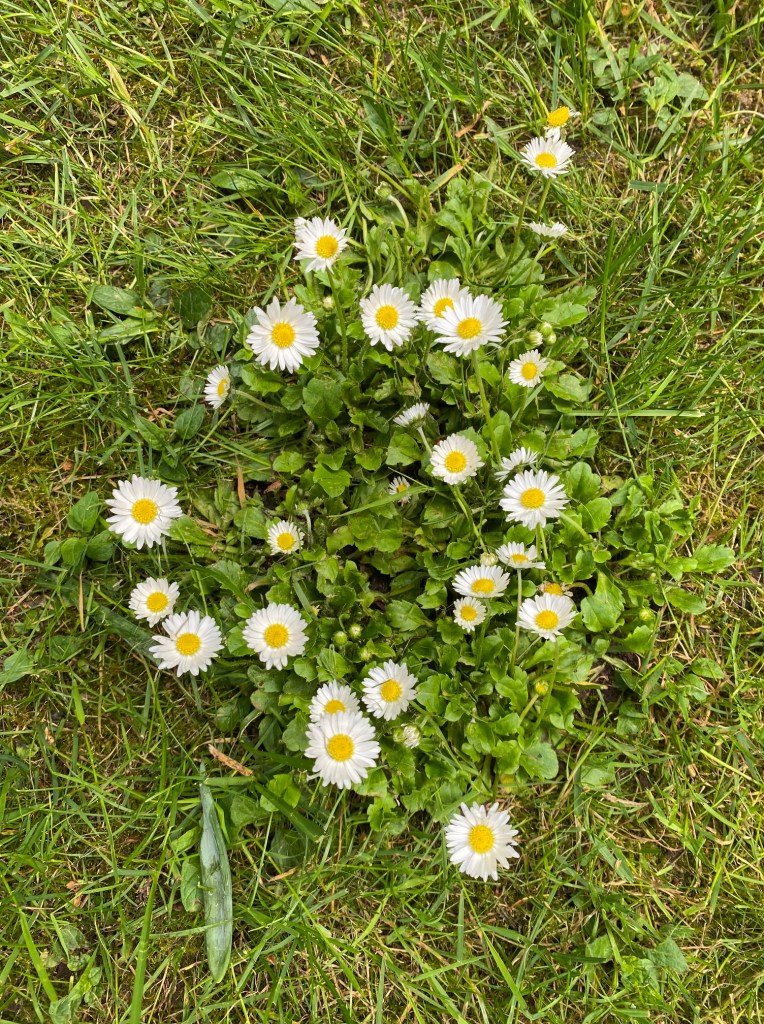
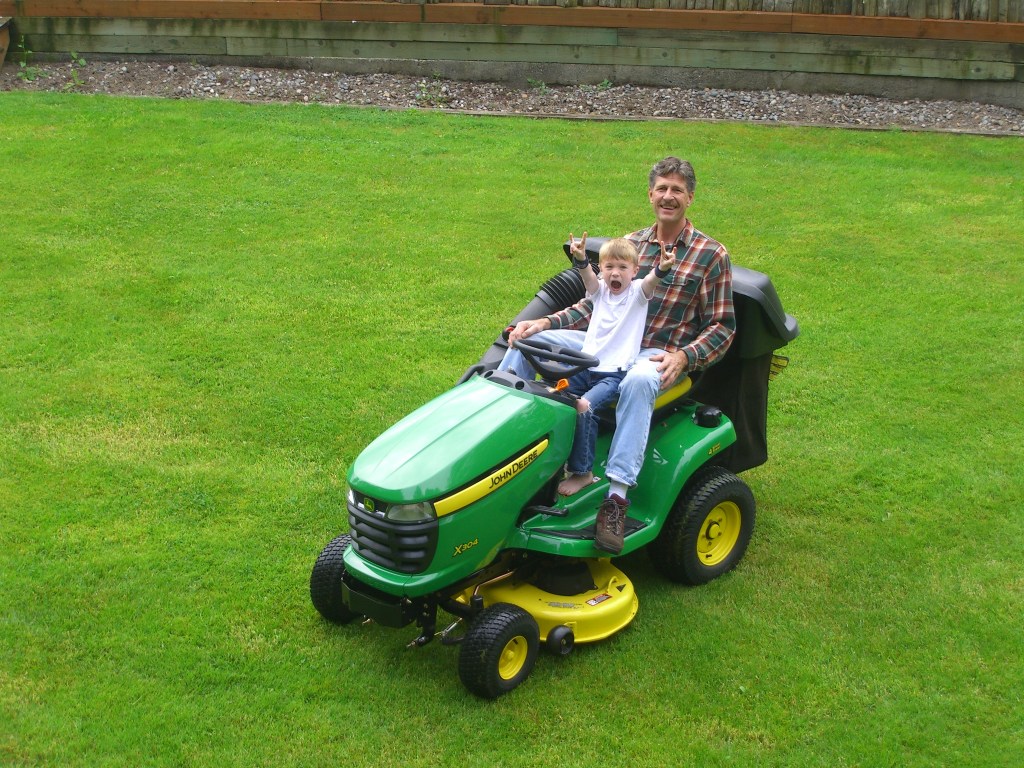
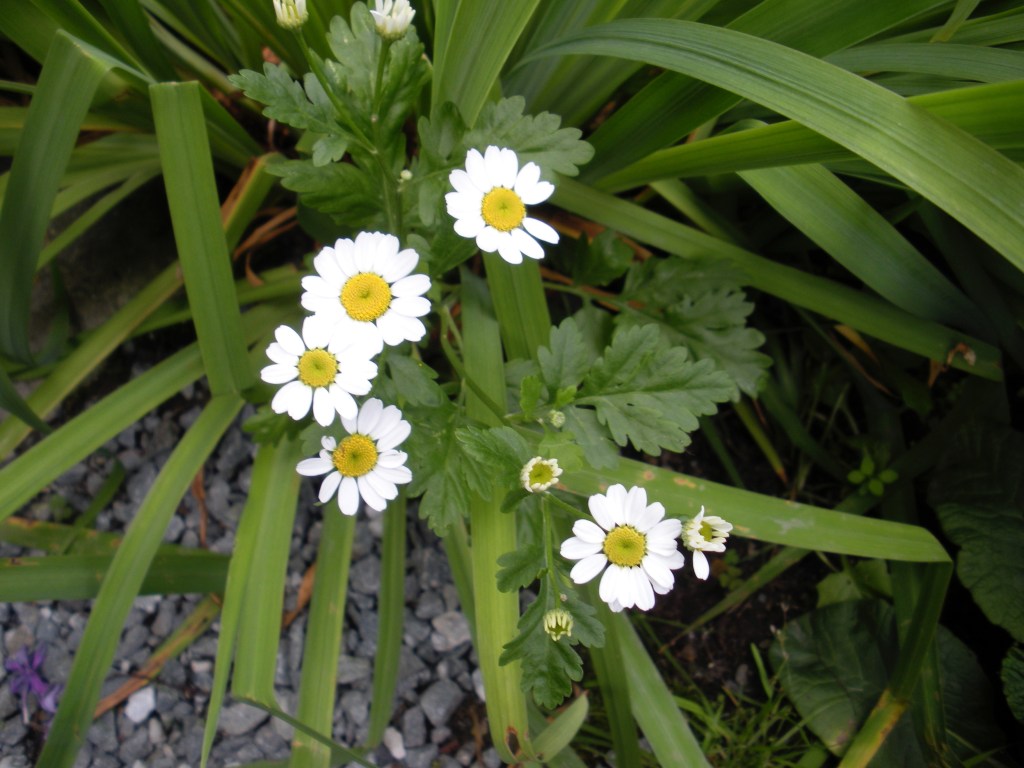
Today, while I am purging my grief with what are becoming sore fingers, I hear the familiar hum of the John Deere lawn mower.  Allan, perched like a prince on a dais, is riding around the yard cutting the rapidly growing grass.  I stop to watch him speeding around in circles or diagonals, clearly enjoying himself, little filaments of green flinging from under his machine.  He is headed toward a patch of small white daisies clustered mid-lawn.  “Lawn daisies,” I called them when I took my grandchildren to the park, and we found them salted across the park lawn.  So many, surely our picking a handful would not diminish their plenty.  We picked and we laced them together, making bracelets for small wrists.  Or we took one separately and plucked away –one white petal at a time, chanting “She/he loves me . . she/he loves me not” until we felt loved or rejected for one moment on a spring day.

Allan and grandson Oscar years ago

I yell at Allan to stop, but he is wearing ear protectors.  I jump up from my weeding and race to the confident green mower just as it bore down on the circle of daisies. 

“Please,” I shout, circling the daisies in a protective dance.  He cannot see me, but understands he is to leave the flowers.  Perhaps they were his weeds in the lawn.  He stops, and the daisies live on now, white and fragile as remembrance.

MID MARCH


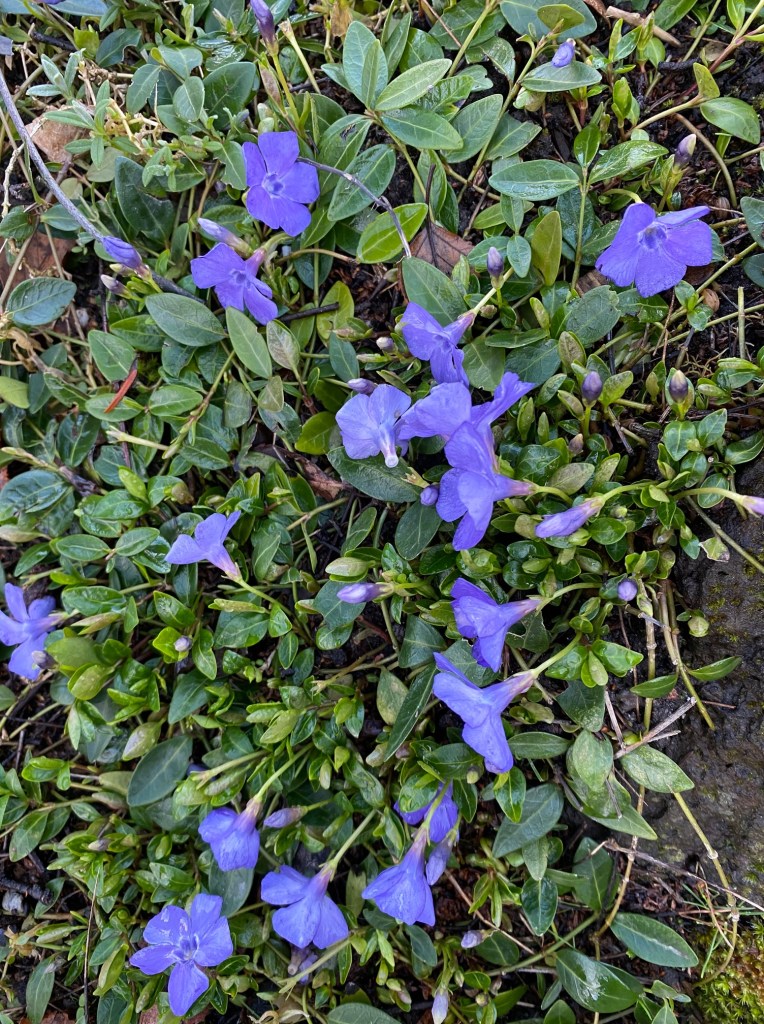
In March I scrape a metal rake down periwinkle hill
lifting off the crisp brown leaves 
that maples dropped in their autumnal parting.
For half a year leaves lay flat like wide brim hats
tossed atop the vinca minor
and would disguise the yearning there
for purple spring.  Such fragile flowers
that want to paint the hill . . . and will
if all the leaves that warmed them winter long
are gone, as a secret reveals itself
after cloaked in silence. 

Early spring is such a stealthy time
a surreptitious mime on mid-March days
when winter would just as soon 
grab us by the collar 
and throw us to the wind.
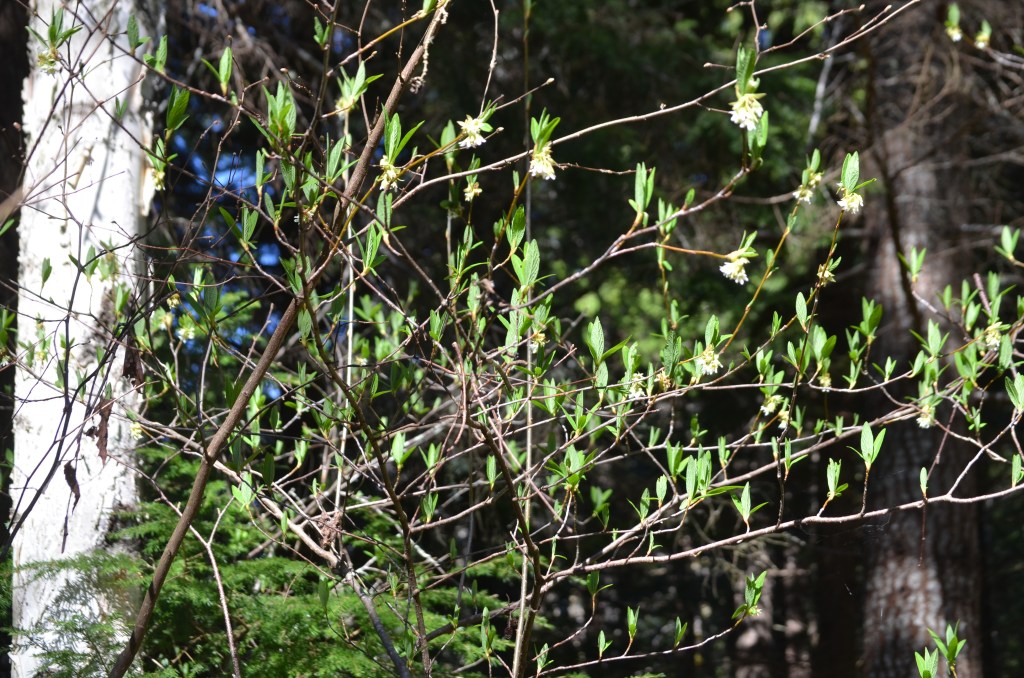
Covert buds cling to wild plums
and we’d be done with chilling rain
if only flowers would return again.
Now ferns want clipping of their drooping fronds
and moss in thick disguise consumes the lawn.
My interventions with rake and shears
may bring spring near, may bring it here
sung closer by frogs beside the pond.  

Mary Kollar
Copyrighted 2022


Wild plum blossoms

Who Has Seen the Wind?

Who has seen the wind?
Neither I nor you:
But when the leaves hang trembling,
The wind is passing through.
 
Who has seen the wind?
Neither you nor I:
But when the trees bow down their heads,
The wind is passing by.
 
Christina Rossetti

Lines my Victorian-loving father recited to me.   Today, winds waft in from the Southwest forming greedy tongues on the surface of Quilcene Bay.  High tide surges in as if  pushed by an eager parent sending a child on a swing.  Waves carry fallen logs snatched along shorelines, and those logs are cradles rocking recklessly on the incoming tide. If this January tide is high enough, logs will be battering rams to wipe out our driftwood fence, falling each picket like a domino collapsing its neighbor.  Then the waters will laugh through the gaps and surge across the lawn, all the way to our front deck.  In past years, we have looked over the deck’s railing at roiling salt water.  We looked down and held our waiting breath for ebb tide to return.

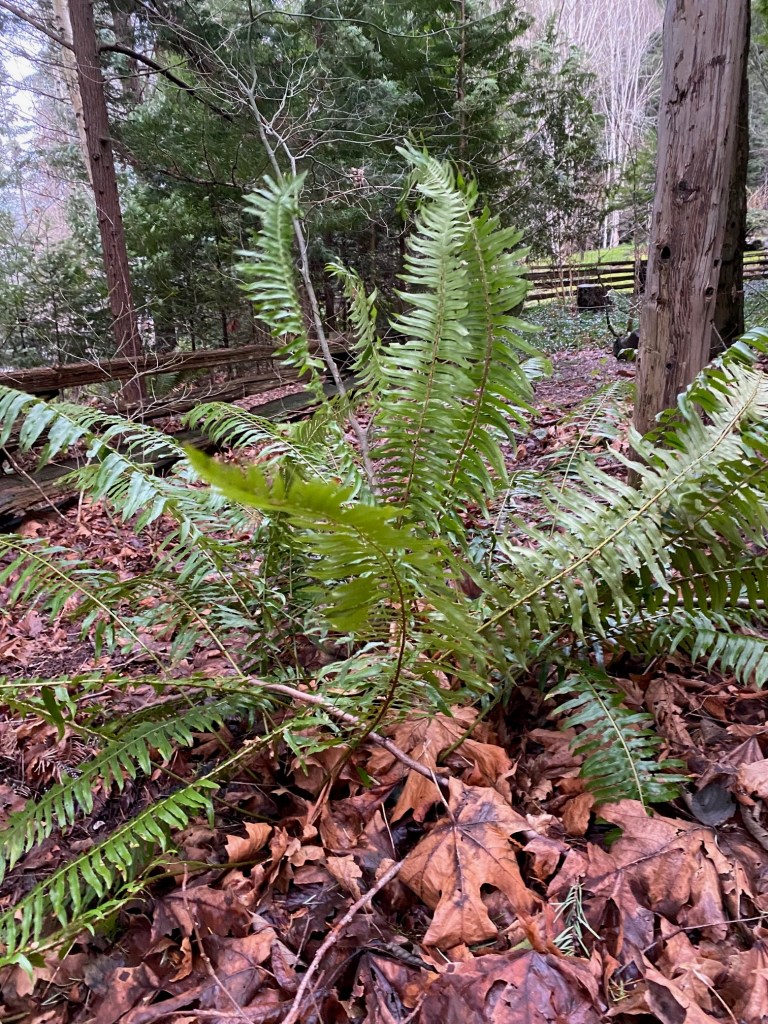
 In the surrounding woods, cedars and Douglas Firs dance as if the band won’t take a break.  Ferns lean over, revealing under fronds like girls who toss their hair over their heads to dry in the sun.  There is no sunshine today.  January 2, 2021 blows in the New Year, and I am celebrating fresh air.  Barring a brittle alder limb crashing over my head as I walk the trails, and ignoring the threat the power could go out in the cabin, I am having fun.

                When my daughter was between three and six-years-old, together we took Windy Day Walks, usually on October afternoons, another gusty month in the Pacific Northwest.  Holding hands and skip-walking among falling leaves and plopping acorn hats, we recited Winnie the Pooh’s winter poem titled, simply, “Pooh’s Poem” in which my little girl played Piglet to my Pooh:

The more it snows, Tiddely Pom
The more it goes, Tiddely Pom 
The more it goes, Tiddely Pom
On snowing.
And nobody knows, Tiddely Pom
How cold my toes, Tiddely Pom
                      Are growing.                         

My daughter was always on cue with her tiddely poms increasing with exuberance as if we were a pas de deux.  I confess that I devised the game to encourage us to get exercise on a windy day.  She might have enjoyed more to stay indoors with Sesame Street.  Poetry, a line and refrain, kept one skipping foot ahead of another until we were around a half dozen blocks and back home sipping tea.  

     “Who can see the wind / neither you nor I. ” Yes, unseen forces inspire  our imagination.  Today’s wind is the brushwork of the creative God, reminding me on this second day of a New Year the immensity of forces surrounding me.  I am never alone in the woods or on the waters.  I might as well have fun and inhale all the fresh air of a New Year.

Raking Leaves in the Wind

IMG_2671

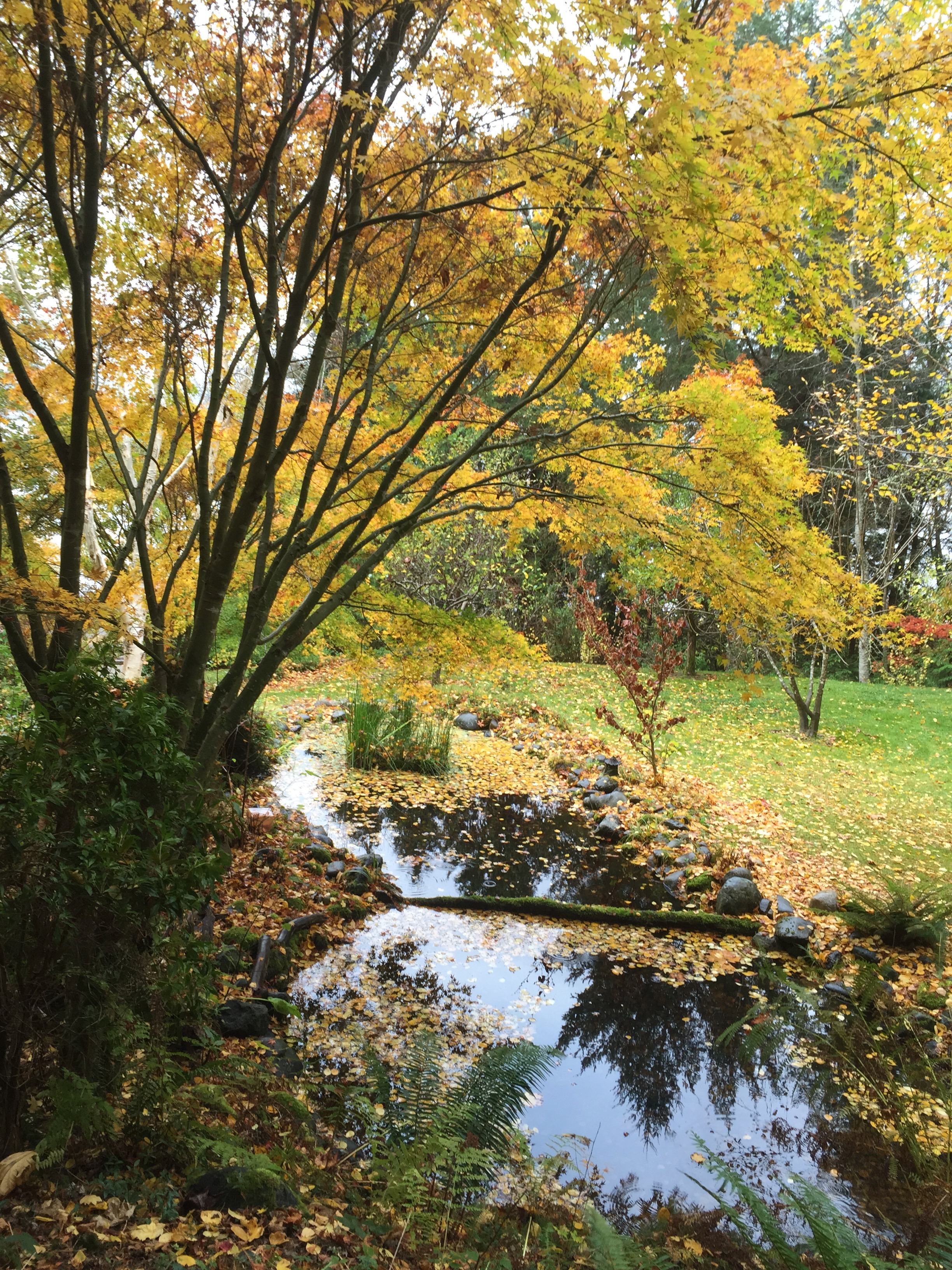
What is more ludicrous than raking leaves on a windy day? Yet when you feel like testing your power against the world, it is a perfect activity, therapeutic, in fact, especially for those of us who mistakenly think they should be in control of life.  This morning, our usual pre-breakfast walk around the property takes us to a bench above the pond.  There we sit to look down on the pond’s surface, last week covered with the slimy vestiges of duck weed that I skimmed off,  but today littered with a confetti of yellow birch leaves as if all of the trees were celebrating the Biden victory and decided to shake themselves silly with joy.  The pond accepts it all, summer or fall, duck weed or autumn leaves.  I have a difficult time looking at Nature without seeing a metaphor in the whole experience.  Could scooping duck weed or raking leaves around the pond teach me how better to live my life? 

Today the wind has been bellowing down from the north, but the sky and bay are so crystal blue, no self-respecting Northwesterner would stay inside.  After all, any day now the rain will return.  So up the hill to the greenhouse I go in my rubber boots to fetch a metal rake and the wheelbarrow.  I wedge the rusty wheelbarrow the best I can through the barn door while the wind slaps the door back in my face as if it knows two hours of raking leaves around the pond will be futile.   

Do we ever do anything from pure reason?  Every act has its collateral experiences.  Raking leaves against a spirited wind allows me to feel my muscles, the pull on my left elbow, the stretch around my ribs as I bend to scoop up piles of crisp yellow and brown leaves.  I will not have to go inside for physical therapy today.  The cold wind fills my lungs with the freshest air.  Leaning on my rake for a moment of gratitude, I realize that only a month back, standing on this same place, I choked on smoke from wildfires in Oregon.  I will never take for granted the pure, cedar-laced air of the Pacific Northwest.  And so,  I draw a swath of leaves to me, turn to the right and repeat until I am circled with leafy dikes that shed their top leaves with each new gust of wind.  Pull, pile, pause, and watch the top few flee as if back to the birches from which they came.  

Acceptance is another virtue that needs restoring.  See the leaves rise from my pile, lift into the air, settle down back in the middle of the pond where my rake will not reach them.  Acceptance is much like resignation, unless you play with it.  I pause to admire how lovely the one or two yellow leaves float in a little whirlpool in the middle of the pond. If keeping the pond clear was what motivated my raking,  I lost on that leaf pile, but how easy to turn a loss into a win for aesthetics’ sake. 

All the senses surround leaf raking.  The sound of the soft scratching the rake makes across the mossy grass.   Gratitude again.  I could have asked my husband to bring out his heavy gas-powered leaf blower and roar clean all around the pond, even releasing those stubborn leaves strangled by heather plants.  I didn’t ask him.  I hate the arrogance of leaf blowers, the angriest of tools.  That soft scratching of rake on yard, even on sidewalk, although a bit like nails on a chalkboard, evokes memories.  

I have lived long enough to recall TBLF, Time Before Leaf Blowers, when you could judge the distance of your neighbor on a Saturday afternoon by how within earshot the soft scratch of rakes, a scratch that must feel good on the grass, for it perks up to an erect green until the next tree sheds.  There is an airy, fluffy sound when the person raking swoops up a pile, one armful atop another.  

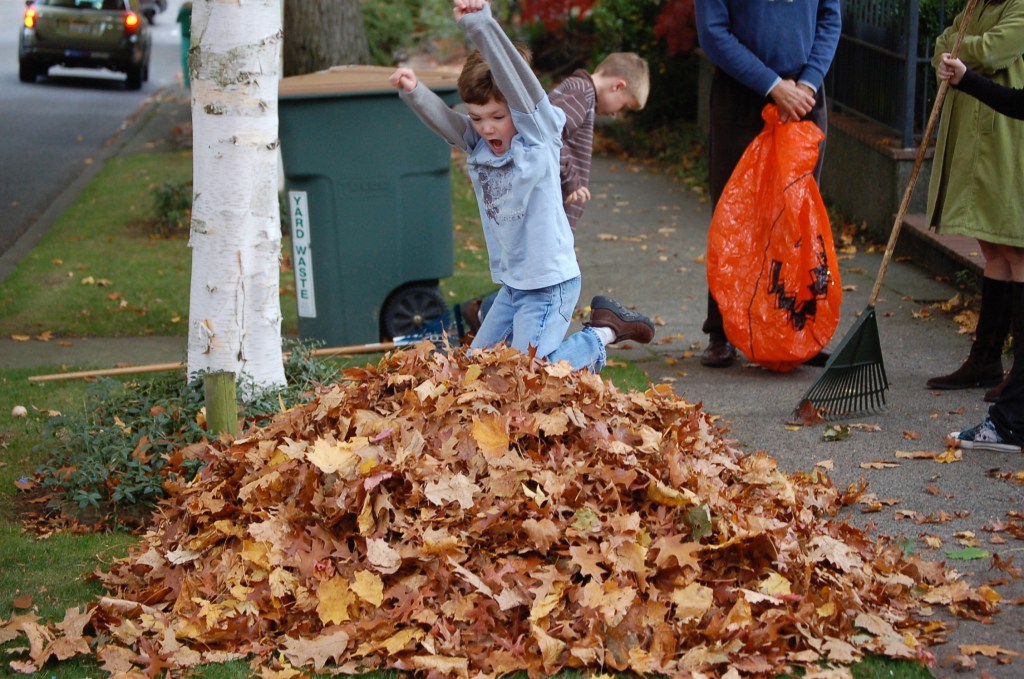
When I was a child, I waited at the end of the drive until my father had a handsome edifice of leaves.  

Then in the most self-sacrificing parental affection, he would let me take a hardy run down the driveway until I leapt full-body into the pile, scattering what must have been an hour’s work for him.  No wind can destroy a pile of leaves as does an autumn-loving child.  When we had completed raking and jumping enough times to exhaust me, I returned to the house, leafmeal sticking to my corduroys, the fragrance of leaf dust in my nose.  Then Dad would take the well-used pile to the corner of the drive where it met the street, would stoop down with his cigar lighter and ignite the whole pile until it diminished to ash.  The smell of burning leaves was intoxicating generations before I associated its kinship to the aroma of someone smoking marijuana. Yes, in the ‘40’s and 50’s composting succumbed to air pollution.

Today, four excursions of a full-brimmed wheelbarrowing to the compost pile left me ready to return to the cottage and the wood stove.   Once inside, my wind-blushed face felt taut and young.  I let Metaphor speak to me and here it is. As the presidential election approached, the weeks became increasingly tense.  No, that is not true. Not the weeks, but I had been increasingly tense.  Before this election, I felt as helpless as dry leaves tossed in the wind.  I had done what I could, working on encouraging other Americans to vote and voting myself.  Was I raking leaves against a wind?  Many of us feel as if we have been doing so for many years.  Perhaps that is why it feels so good literally to rake those leaves, relieving anxiety I have felt for myself, my family and for our nation.  I accept the metaphor of the task.  I accept the reality that I will never clear away all the fallen leaves from the pond’s perimeter.