After three weeks of February freeze, we have enjoyed a couple of promising weekends that the local forecaster calls “false spring.” That’s to keep our optimism in check, not that many are optimistic these days. Those who are still listening to national news are ricocheting between what is true and false, so much so that despair chills us from our toes to our ears, just like those icy February days. We who have abandoned the news in preservation of our mental health, may still flounder for a sense of purpose.
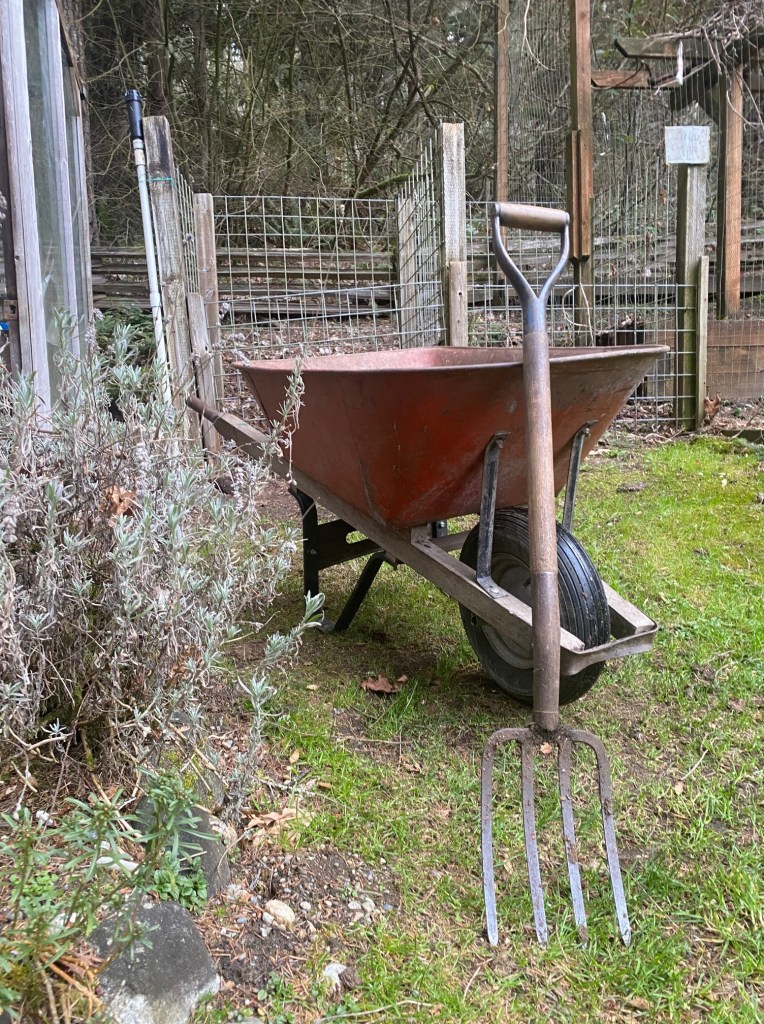
Then here comes “false spring,” and I throw my gardening arms around it like a prodigal child who has returned home just when I was longing for reunion. I lift pitchfork and rakes from standing attention in the shed behind the greenhouse and call them to work, composting and turning the soil in my vegetable garden. For an eighty-one-year-old woman this is muscle work beyond her actual strength. But I have always excelled at denial, ignoring the arthritic elbow or the challenge of getting up quickly after I have bent over to harvest a row of wintered-over beets.
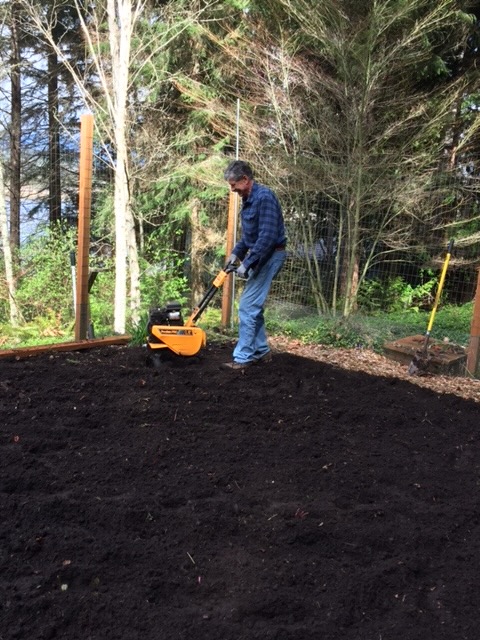
I love my compost bin, a wire and wood enclosed structure just feet from the garden gate. I back up the red wheelbarrow while chanting William Carlos William’s poem: “ So much depends on a red wheelbarrow . . .”, I spear a heavy chunk of composted leaves and grass with my pitchfork and swing the load over until the compost mound in the wheelbarrow is my little Vesuvius to spill like lava on my garden. Over and over, eight times I do the trip before shaking on six bags of steer manure. I call for my husband who pushes out the rototiller from the shed, its winter-chilled motor spitting and coughing before it starts to plunge and rise through the soil as Allan disciplines it like a willful animal. Soil, compost and manure blend together in a farm fragrance only a gardener would love. I inhale it mixed with the late winter salt air from the bay below the hill. This is sensuous. This is loving the land and feeling the land love back.
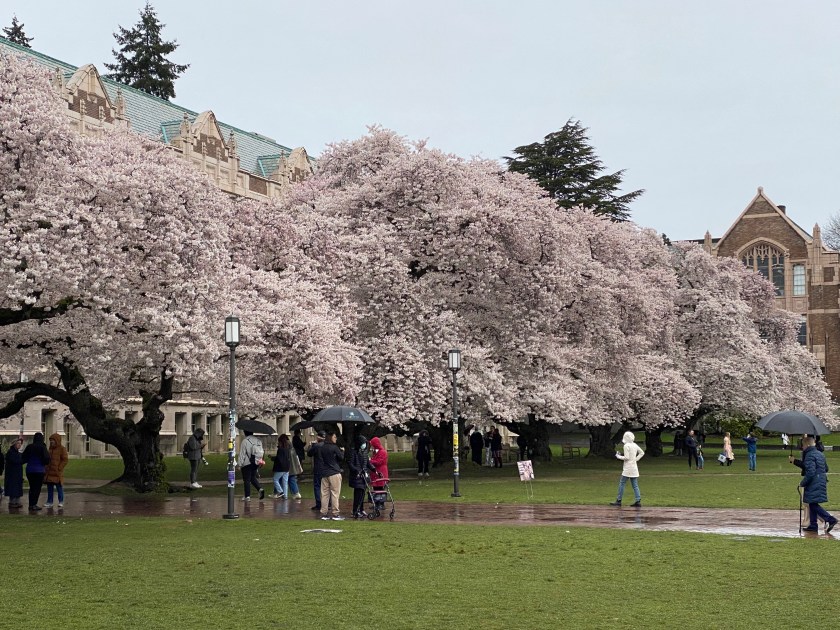
This quarter, at the University of Washington, I am taking a class in Literature and the Environment. The texts include writings by Charles Darwin, Aldo Leopold, Rachel Carson and more. Subjects evoke awareness of all the crimes we have wrought on our environment from pesticides, plastics, fossil fuel emissions . . . Each day I leave campus more informed but grieved. I walk through the Quad where cherry blossoms crouch tightly in their buds. In a few weeks visitors and students will swarm below those trees, taking selfies among the delicate pink blossoms. Brides will pose for wedding photos. Japanese children, dressed in diminutive kimono or lacy party dresses will pose for their parents’ cameras. This bountiful gift of nature arrives each spring, yet I know now that those blossoms are a false spring as well. Sadness chokes me even as I luxuriate beneath the warm spring sun in an overheating planet.
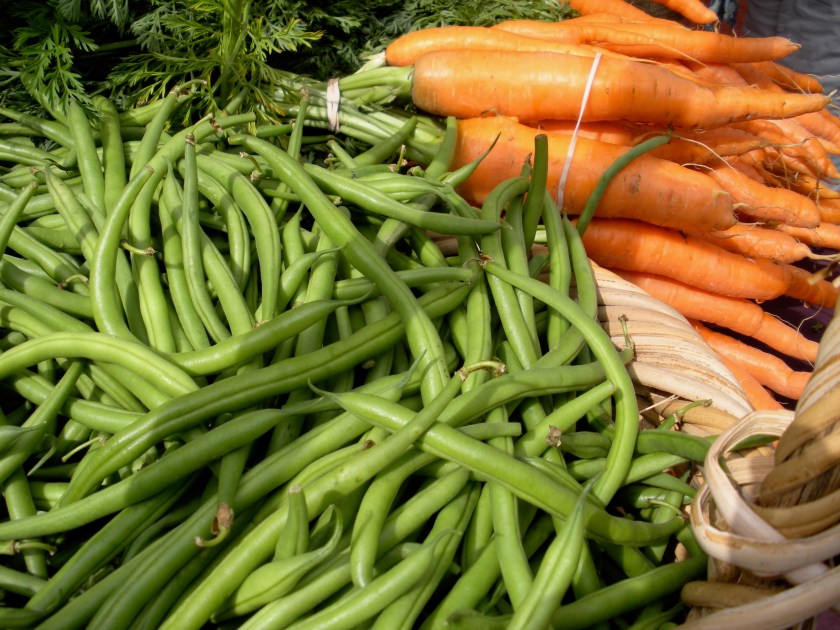
I can only evade the news so long. This past week, Donald Trump announced his intention to encourage logging for profit in the National Parks, leading to fewer trees to absorb the excess CO2 emissions — excess CO2 from proliferate use of fossil fuels. Here I am preparing soil for a garden, for vegetables my family will eat all summer and early fall. I will bag up beans and carrots for my neighbors. There will be plenty to take to the local food bank as well. There is dirt under my fingernails. I am aware of it as I wring my hands in despair at the disregard for our planet exhibited by enough people in our country who thought Donald Trump would “take care of them.” My grief and rage diminish somewhat in the fresh air and in my preparation for a garden. Why should I experience anger while I prepare for nourishment?
Today’s reading for the Literature and the Environment class is from Terry Tempest Williams ’Refuge (Third Vintage edition, 2018. P.137). Williams relates a conversation with an African woman: “I am Kikuyu. My people believe if you are close to the Earth, you are close to people. . . What an African woman nurtures in the soil will eventually feed her family. Likewise, what she nurtures in her relations will ultimately nurture her community. It is a matter of living the circle. Because we have forgotten our kinship with the land, our kinship with each other has become pale. We shy away from accountability and involvement. We choose to be occupied, which is quite different from being engaged. In America, time is money. In Kenya, time is relationship. We look at investments differently.”
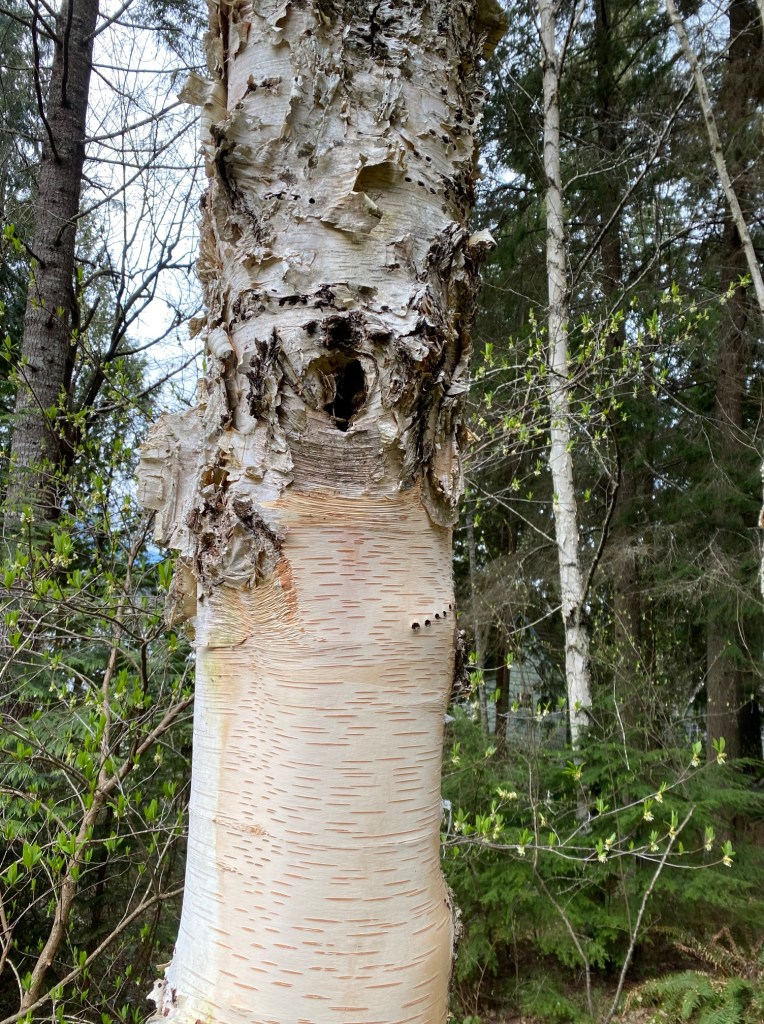
Engaging with the land may be an unusual octogenarian occupation, especially as my harvest years will be fewer, but we all need hope for regeneration. I am slower in my gardening tasks. I am easily distracted after latching the garden gate to return down a path to the cottage. I pass a bark-shedding birch tree we planted twenty-five years ago. The old, grayed bark cracks its way up the thirty-foot height of the tree. Hundreds of holes, large and small, tell a story of invasion by insects and foraging for those insects by red-headed sapsuckers. Some page-sized sheets of bark have shed to the ground. I reach to experience the satisfying release of more bark, coming like wallpaper peeled from an ancient wall. The exposed trunk stands in striated caramel and cream. I lay my hand against it. The surface is moist as the flesh of a newborn child.

 Mary's Room With a View
Oh, Mary! This is precious. You have captured so many of my feelings. I’d like to take th
LikeLike
Hi Marci
Thanks for reading and responding. I have been writing my monthly turn on the Comma blog for church but have ignored my personal blog for many weeks. IT does lift my spirits and connections to get back to that. Our guest sermon today was good. A couple of years ago I joined a small group from church to his location at his Whidbey Island home.
I saw on TV the Grandmothers Against Gun Violence group on the steps of the state Capitol. Were you there?
Peace
Mary
Sent from my iPhone
LikeLike
You obviously haven’t lost your knack, Mary. I missed today’s church service — the first time in months. I just needed a day off. I haven’t been very active in the Grandmothers group recently, but the group is stiil doing great things.
>
LikeLike