

Recently I returned from the remote village of Rabuor, Kenya where I attended a celebratory opening of its primary school, clinic and community center. Upon following a high-stepping scout troop welcoming our group to the school, I note inscribed on the first building: The Mwanzo WETU Centre of Excellence. Continuing with the young scouts to the stage for the celebration, I pass another sign: Hope Has a Home Here. Indeed! So many phrases store themselves in my writer’s consciousness as I am consumed with the celebration, phrases I will share here, but none more poignant than Married to the Grave.
Like most tribal villages in Kenya, the men of Rabuor village, reaching the age to marry, must seek a bride from another village, or tribe. Upon marrying, some women arrive fifty to a hundred kilometers from their native homes. They not only marry the man, they marry the village. The bride’s job is to cook for her husband and to bear and raise their children. She is not given, nor is she trained for any other job. Sadly, this village was decimated by the AIDS epidemic, a plague that killed many more men than women, leaving a community of widows with little or no sustainability. Even the forests mirror the devastation of AIDS, acres having been clearcut for wood to make coffins. Coming from another tribe, the widows were not supported by those living in Rabuor, although neighbors might have an interest in supporting their children. The widows are, in their own words, married to the grave.
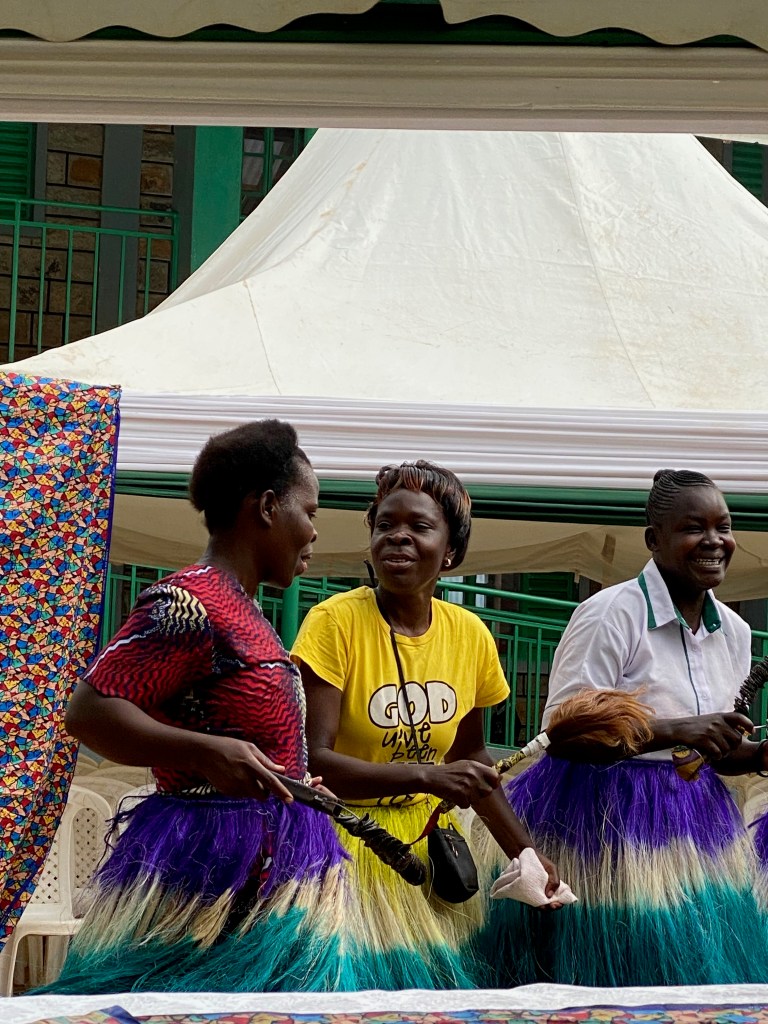
At the point of starvation, a group of widows arrived at the doorstep of the village’s matriarch, Mama Rosemell. It was she who gathered over a dozen malnourished children into her home, a gathering that led to a preschool and eventually what is now Mwanzo’s primary school from preschool through grade eight. Mwanzo is a school and community project now overseen by her daughter, Loyce Ong’udi. A woman of bountiful compassion, Mama Rosemell secured seed money to provide an incentive for the widows to start a business whereby they could support themselves and their children. The women’s group bonded and grew, even attracting women and a few men from other villages. Now they have a sustainable income from raising chickens and running a catering business. Their healthy pride and ambition are palpable. When it is time for the women’s group to share their ventures with us visitors, they lead us to our chairs under a tent that shades us from the African sun. Like the scouts, they welcome us with chanting, drumming, dancing in vibrant skirts of purple, blue and white, hips swaying to thrilling, melodious music. My chest swells with shared joy for sisters who are surviving. And yes, it is a communal glee, as each woman receives a unique introduction, a chance to tell her story. Kenyans love speeches. No one is overlooked. Words form the community.
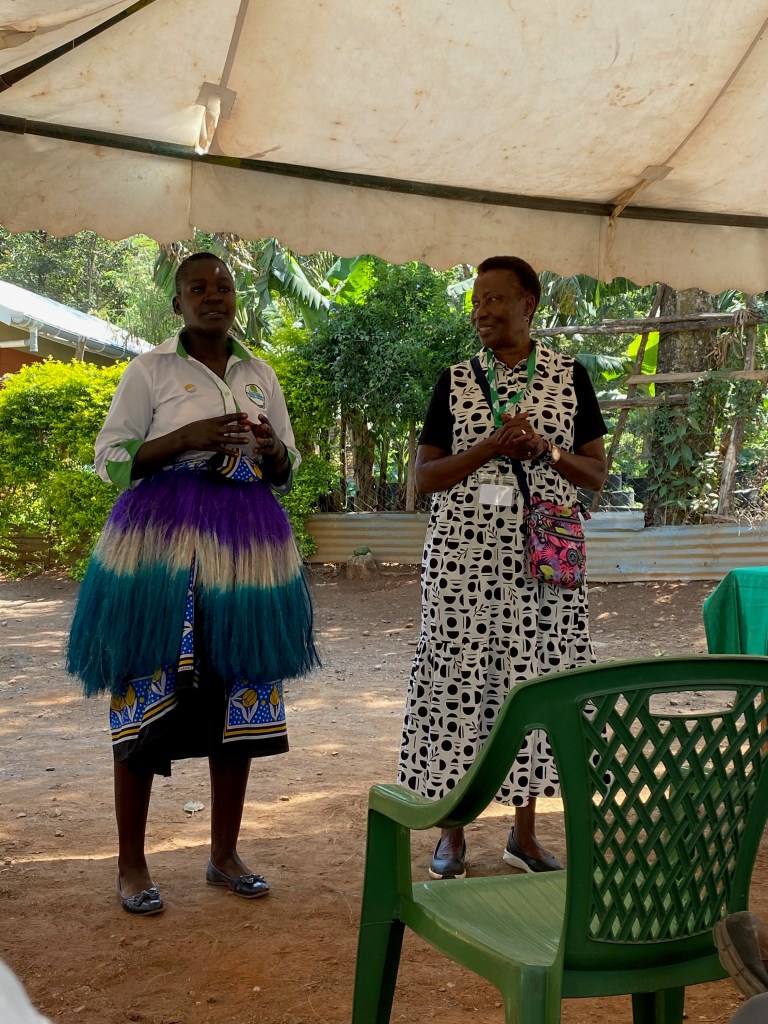
And here comes another phrase often repeated during my visit: You are someone’s child, so you are here to help someone’s child. Madame Director, Loyce Ong’udi, repeats that phrase almost daily, but the words blossom with significance when also spoken by those in the women’s group as well as by the teachers whose classrooms fill with children eager for education.
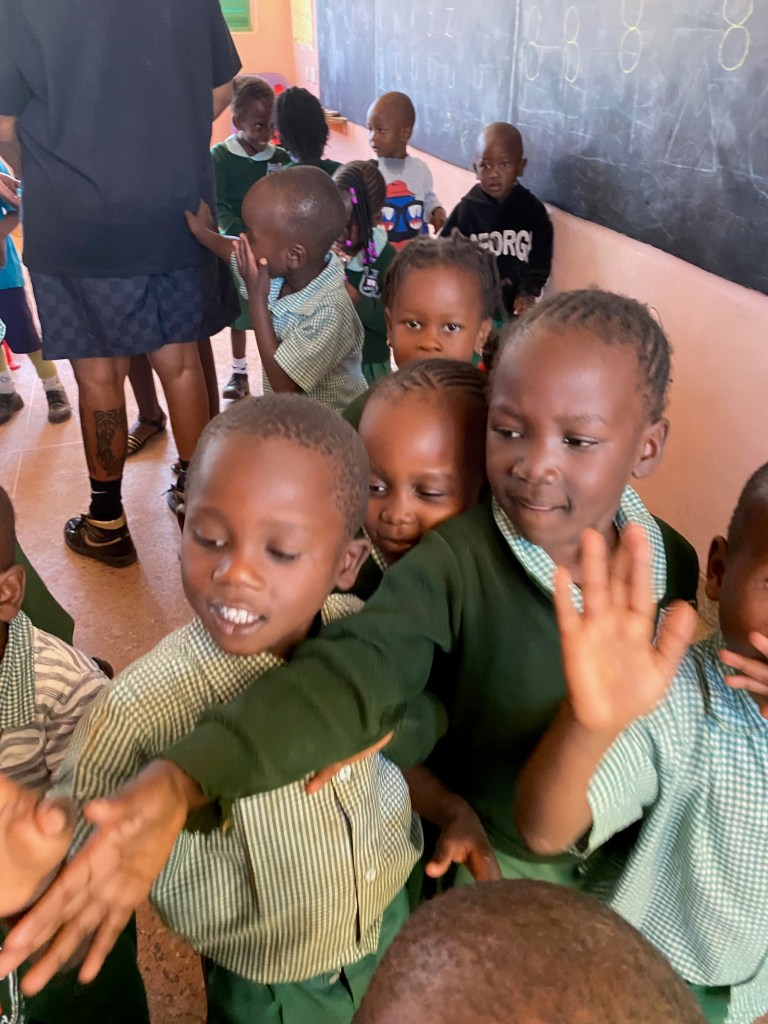
Perhaps the two phrases together speak to me of immortality. Metaphorically, how often have I remained married to the grave, in other words consumed with the passing of my life, with the frequent deaths of friends and family? Surely it is hard to look beyond one’s own life. Or is it? If I think of my life as being that of one child born to help another child, my influence can be immortal. The children reach out to shake my hand. All the children of the school follow each visitor, reaching out to shake our hands.

 Mary's Room With a View
Hi Mary,
This is a beautiful blog post. I love the photos! The children are gorgeous and look happy! I can almost hear the singing and see the dancing. What a wonderful experience sharing Rabuor’s excitement and hope for their new community. I love the words “You are someone’s child, so you are here to help someone’s child.” In our culture we may say “Paying it Forward.” Their words are much more beautiful! I wish the women would expand to an international market with their tribal artwork, jewelry, and clothing. The tribes of the Amazon are beginning to find ways to bring their culture into the world. It is profitable in helping them fight the decimation of their forest lands. I’m sure your presence touched many lives. Thank you for sharing your experience and supporting this sacred work!
LikeLike
Thank you, Mary, for drawing this remarkab
LikeLike
Thanks for an insightful trip update. I’m glad you went and I feel I learned something from your post
Cheers
Ruth
Get Outlook for iOShttps://aka.ms/o0ukef
LikeLike