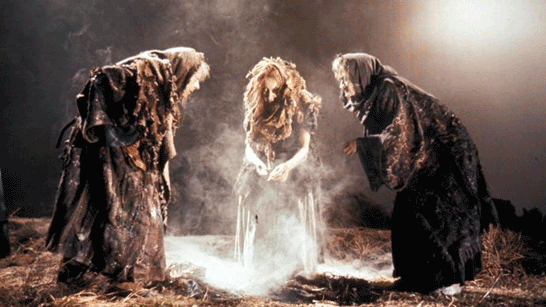
Macbeth:
How now, you secret, black, and midnight hags.
What is't you do?
All:
A deed without a name.
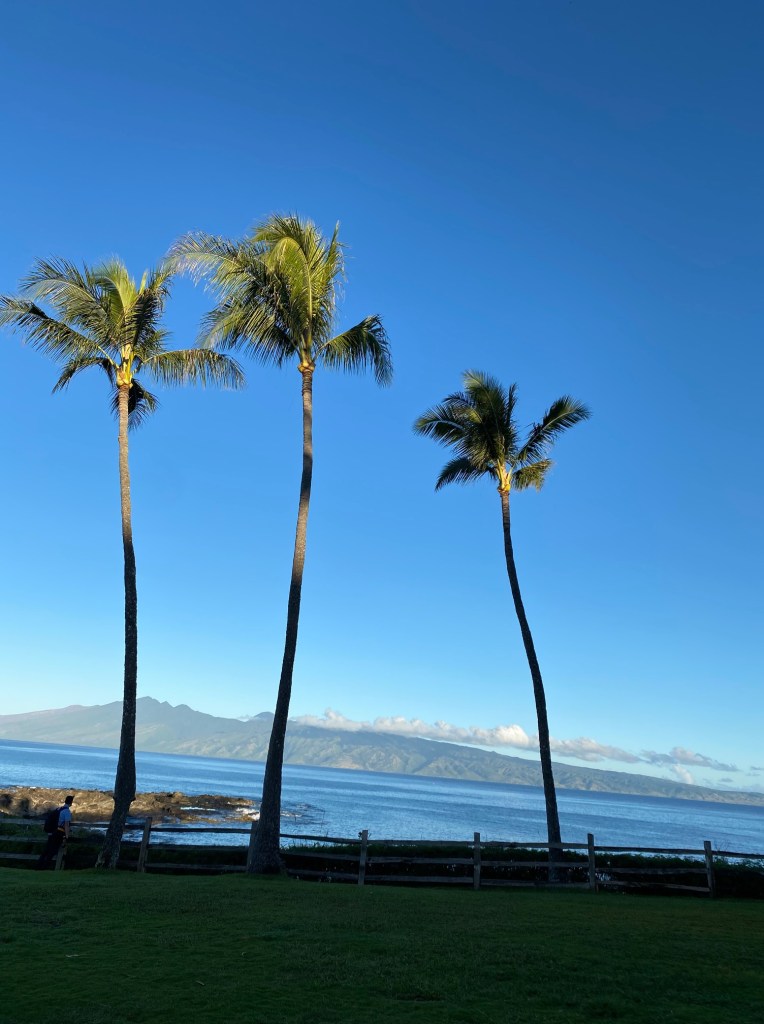
On this morning’s walk from Kahana to Kapalua, I watched the sun rise over tall evergreens lined up between golf courses. My path followed low hedges with delicate purple flowers, their soft yellow stamens pointing out to the sun. If I were walking along my road in Washington State, I would be spotting cedars, Douglas firs, spring daffodils, vegetation for which I have a name. But I knew none of the names of the trees and shrubs I passed on my walk in Maui.
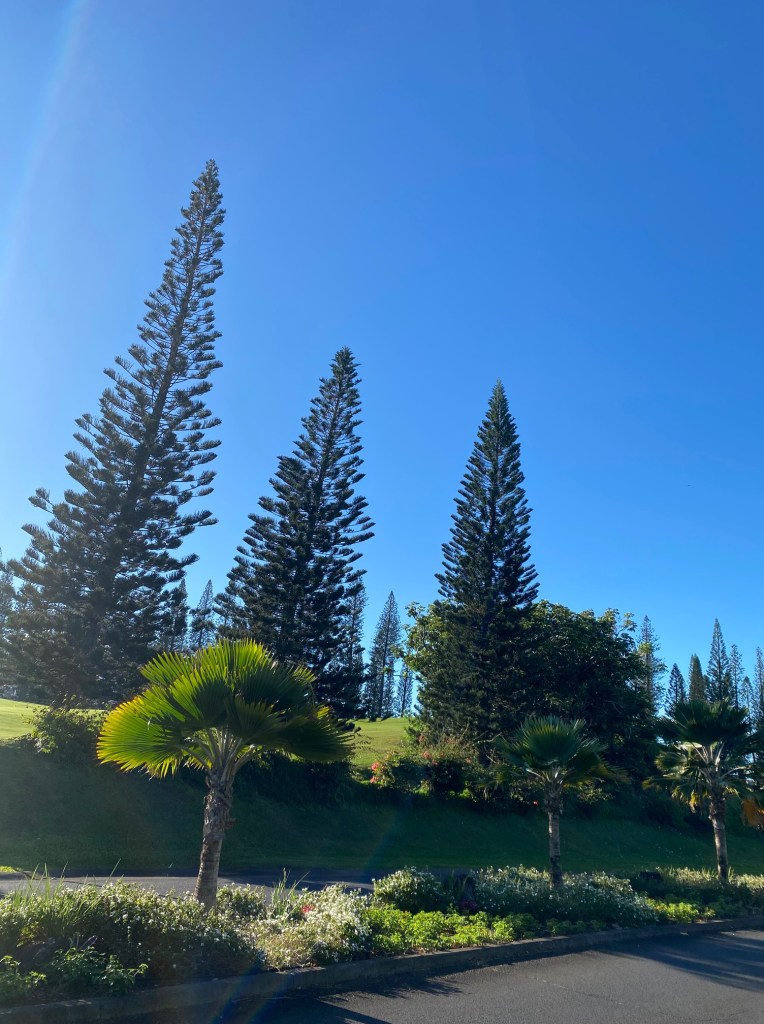
Was the scene less lovely? More intriguing because I couldn’t name what I passed? What echoed in my mind was “without a name.” Here Shakespeare joined my walk calling up that phrase. Next followed a quotation from Romeo and Juliet, when the lovers realize their surnames are enemies, and Juliet challenges the feud: “What’s in a name? That which we call a rose/ By any other name would smell as sweet.”
My fascination with language kicks in with thoughts of naming and being known. When I began my blog, Thoughts After Seventy, I hoped to contemplate that desire to be known. I had recently attended memorial services where I listened to stories of the departed’s identity. In the narthex before entering the sanctuary for the service, I passed opened photograph albums covering the deceased’s life from birth to death: schooling, careers, family, travels. Some memorials included slide shows or short videos, the soundtrack composed of voices and favorite songs from previous decades. If I didn’t completely know the person before attending the memorial, on leaving I came closer to kinship. But what is the connection between naming and being known and remembered?
There is value in namelessness. The Tomb of the Unknown Soldier would not be embraced by millions of descendants of fallen soldiers if we knew who was buried there. Anonymity allows us all to identify with the pervasive sacrifice of war. Romeo and Juliet fell intuitively in love until the name issue arose. Fortunately, their love surpassed the significance of Montague and Capulet. However, what about the names Republican or Democrat, Russian, American? As soon as those names attach themselves to someone, kinship is tempered with judgement.
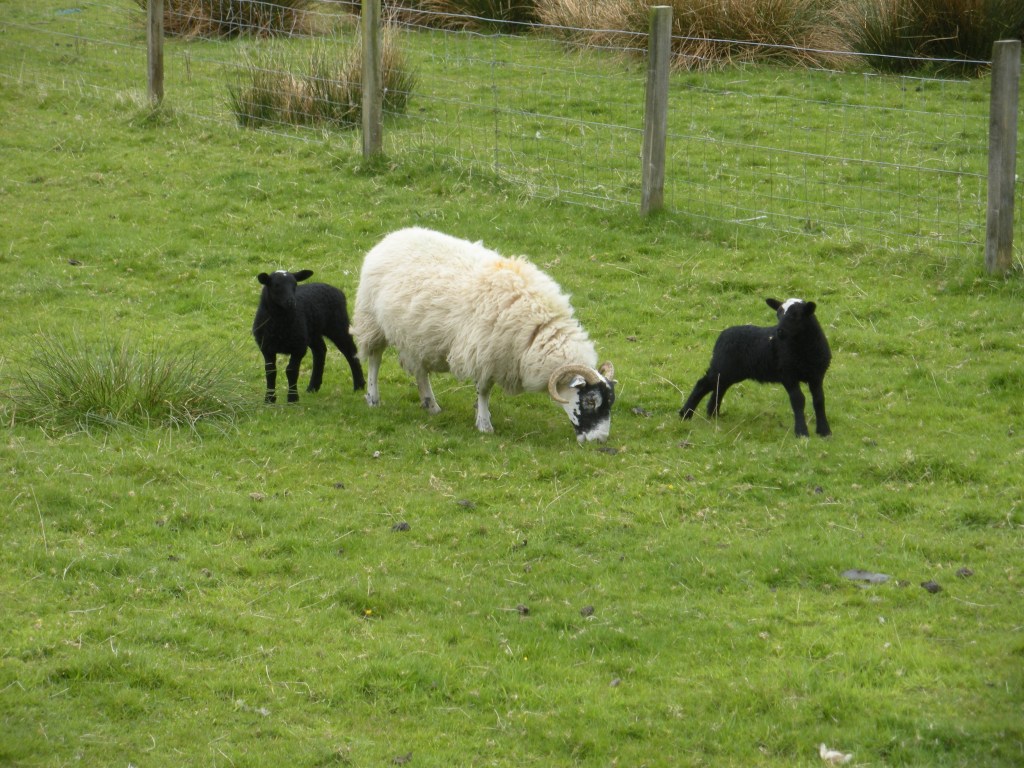
Catherine is a shepherd whose lambs are sent for lamb chops. On visiting her farm, and delighting in the frolicking lambs, the first thing we want to know is their names. “I can’t name them,” she explains. “If I named them, I couldn’t send them to slaughter.” At best, they have numbers. My husband tells a story from his childhood when he had a pet duck his father plucked for a Sunday dinner. Enjoying the tender meat, Allan asked his mom what it was. She explained it was duck. That was tasty, until he learned it was Huey.
Is there any doubt why people marching for racial justice chant “Say their names!” followed by a litany of Breonna Taylor, George Floyd . . . ? Names add sanctity to the cause; they personalize it. George Floyd is someone we feel we know, and so by extension we can advocate for racial justice in his name.
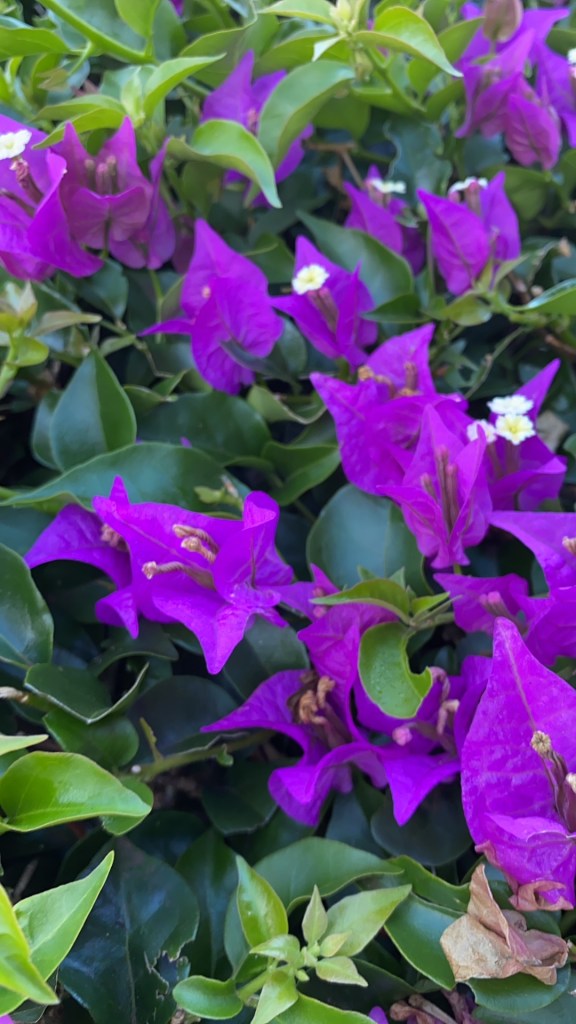
Back to my Maui morning walk, I feel pulled to know the names of the trees and flowers I admire as I walk along, serenaded by mynah birds and doves. I have an app on my phone that I can use to photograph a plant, even a leaf, and learn the name and genus of vegetation. I give in to it. That delicate purple flowering bush: Lesser Bougainvillea. Here the language addict in me jumps to ask, “Why lesser?” Is there a Greater Bougainvillea? Without a name, would I enjoy the shrub’s beauty more or less?
As soon as I returned to my laptop, I searched for “without a name,” adding Shakespeare to my search because I was certain the phrase floated in my ocean of Shakespearianisms. There I found it in Act IV, Scene 1 of Macbeth. Macbeth has once again sought out the witches for their prophecy. They are tossing in their cauldron newts, thumbs of drowned sailors, all sorts of spine-chilling ingredients, when they answer his question: “A deed without a name.” Searching further for literary analysis of the speech, I came across an interpretation that reminds us in a Catholic society, a child is sanctified at baptism when he/she is baptized with a name. No name equaled a destiny that didn’t include heaven. Thus, to the Elizabethan audience, the namelessness of the witches’ activities would signal their damnation.

We will continue to embrace naming. We name children after ancestors that might insure their belonging. Perhaps we can continue to name with cognition and empathy with what we are naming and why, always considering the community within which the name will exist. Naming is one of my greatest pleasures, particularly naming a cat. I could adopt another one just for the pleasure of naming it. Thus far, we have named two cats after artists: Toulouse Lautrec and Winslow Homer. Our creative cats have yet to learn to paint, but we have loved them for their purring heritage with those names.

 Mary's Room With a View