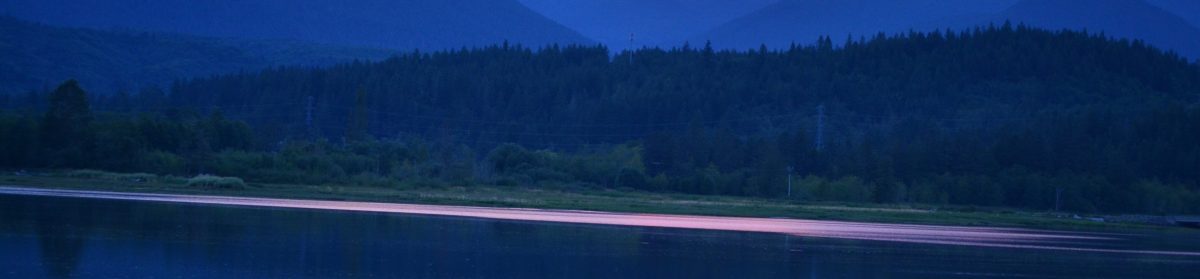
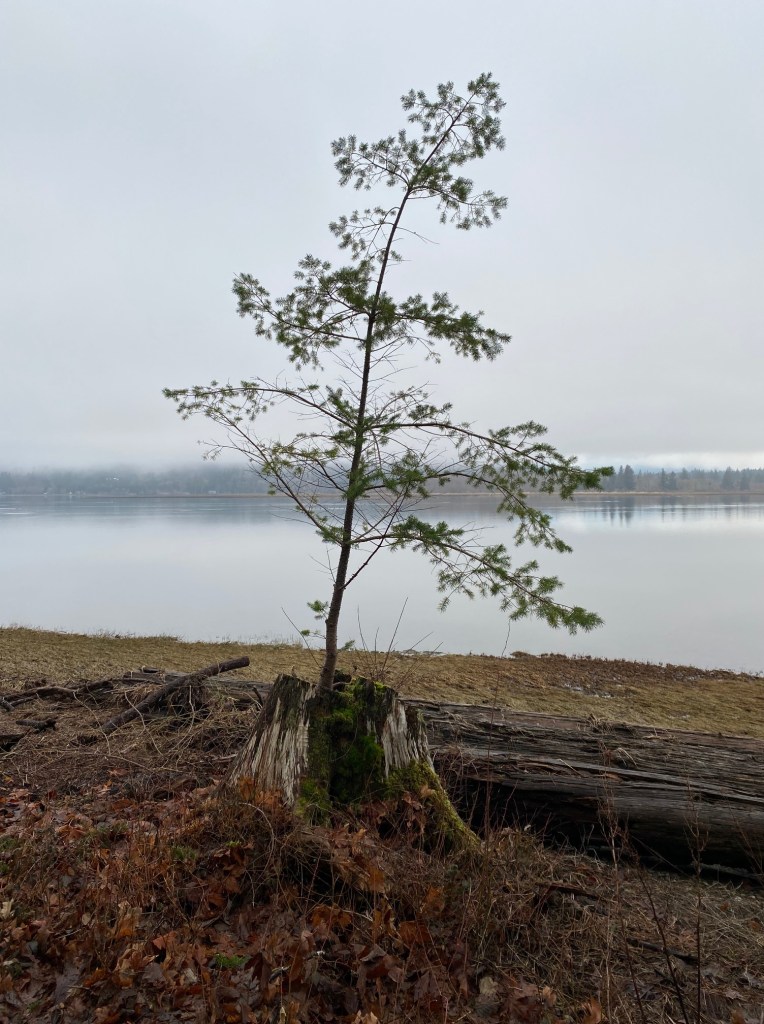
One of the stops on our morning walk is a bench at the edge of a sandy beach, facing west across Quilcene Bay. The former owners clear-cut the property before we purchased it, carrying off magnificent Douglas firs, yet many of the stumps remain hugging the shoreline, where they witness the rise and fall of seasonal tides. Recently the beach and the bay endured subnormal temperatures and above normal tides, what is called a King Tide, adding two feet to water already at thirteen-foot peaks in winter months. Much of the beach is littered with detritus from the risen tide, something to rake away before spring. Smack in the middle, blocking what would be an unimpeded view of Mt. Walker is a stump from which rises a thin child of a fir. How vulnerable it appears, as if holding its breath until spring, all seven to eight feet of it. We recall when it was but a slight green burst, inches high erupting from the stump. We watch it. We let it grow, although were we to cut it down, a panoramic view of the bay and Mt. Walker would open before us.
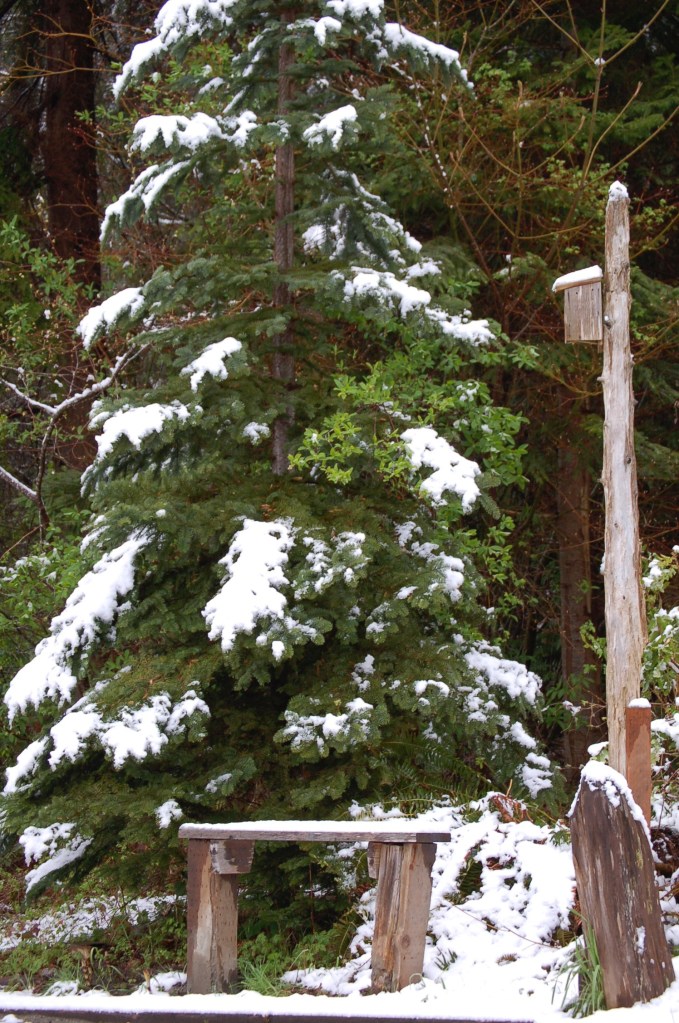
This New Year’s month, I sit on the bench arranging my thoughts about ways to embrace another turning of the calendar. Some people meditate on the year that passed. I could do that, but let’s face it . . . last pandemic year was disappointing. I could reflect on what was lost, or who died, just as I could mourn what appears to be a dead stump of a tree whose grandeur I never witnessed. Instead, I am admiring this skinny Doug fir that chose the fractured stump for its foundation.
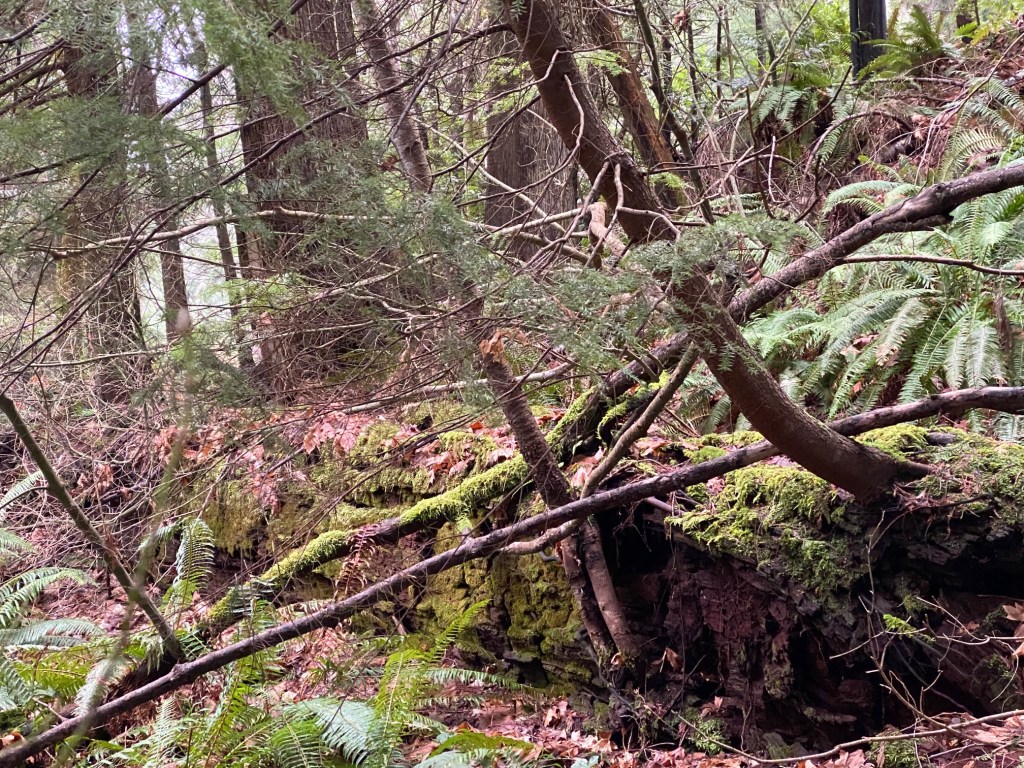
After that clear-cut, we left most of the acreage to restore itself without landscaping. So many trees in various cycles of life provide a sermon of hopeful resurrection. The loggers left one massive cedar to decay, covered with pernicious English ivy that we removed as an invasive growth, each sawed off end baring deep cuts as if made by the incisors of determined beavers. Its rippled bark, spread with a patina of soft moss like a birthing blanket for vine maples and fir seedlings. Thus, the name “nurse log” botanists give to downed but still nurturing trees.
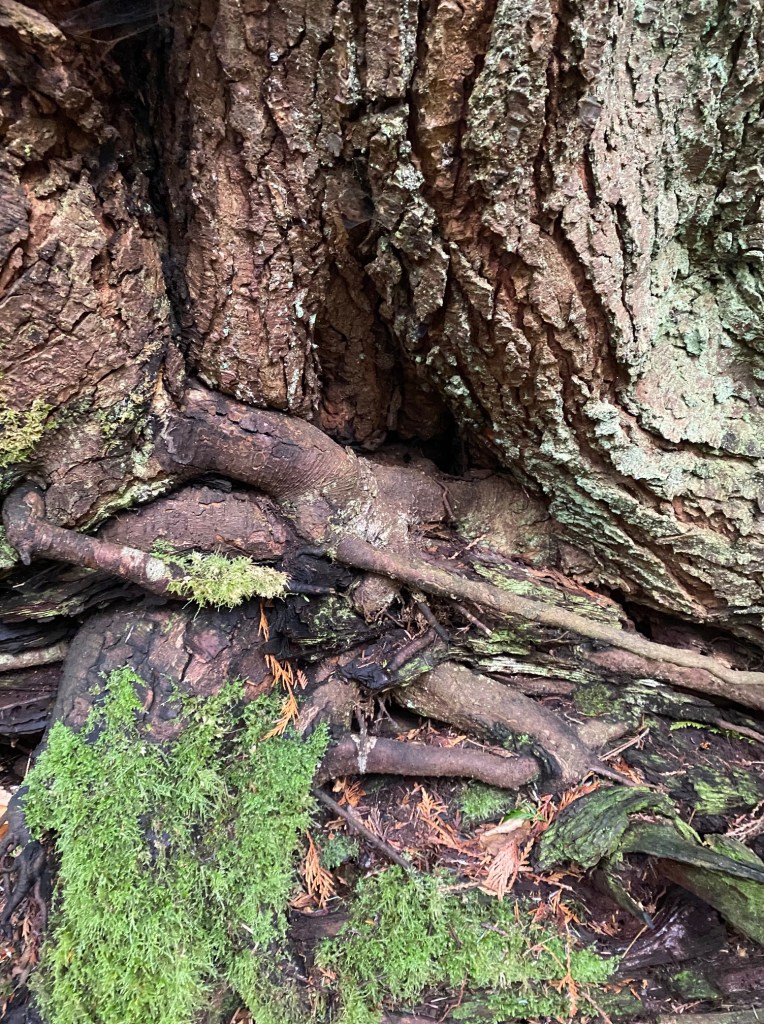
When I take time to examine most of the trees along our path, few seem to have rooted solely from soil. The main trunk grips a gnarled fist of former life as if the decline or apparent death of the former is necessary to generate new growth. Here my poetry memory kicks in, and I think of Shakespeare’s 73rd sonnet: “In me thou see’st the glowing of such fire /That on the ashes of his youth doth lie.” If not ashes, there were certainly gnarled branches from which I matured.
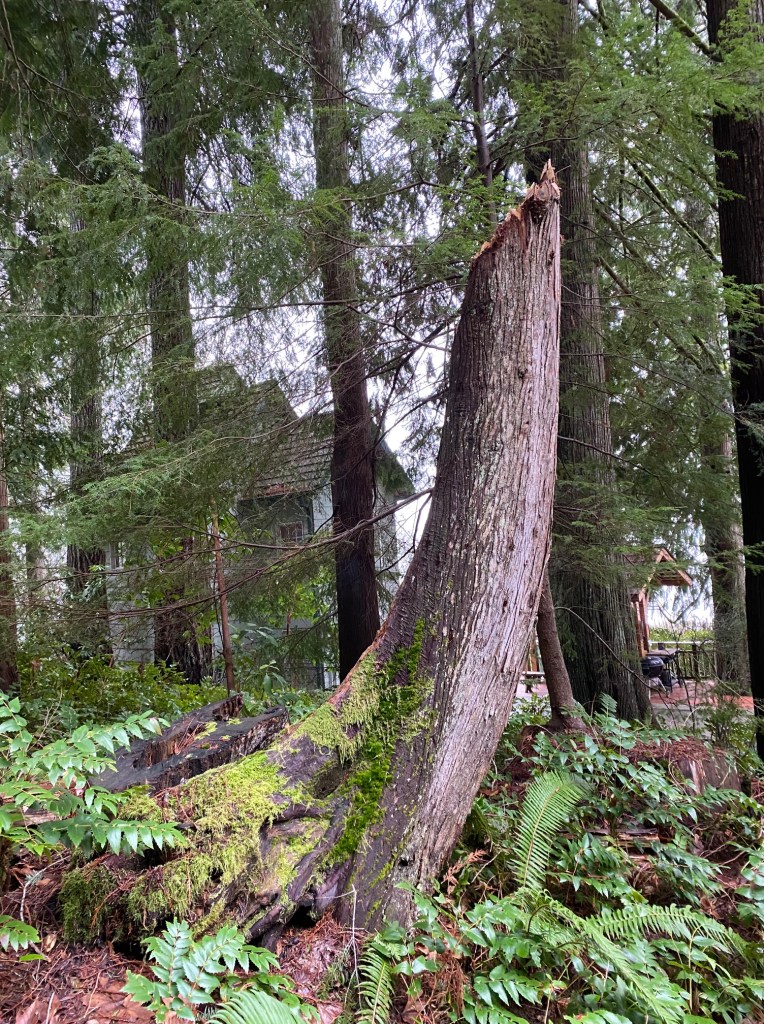
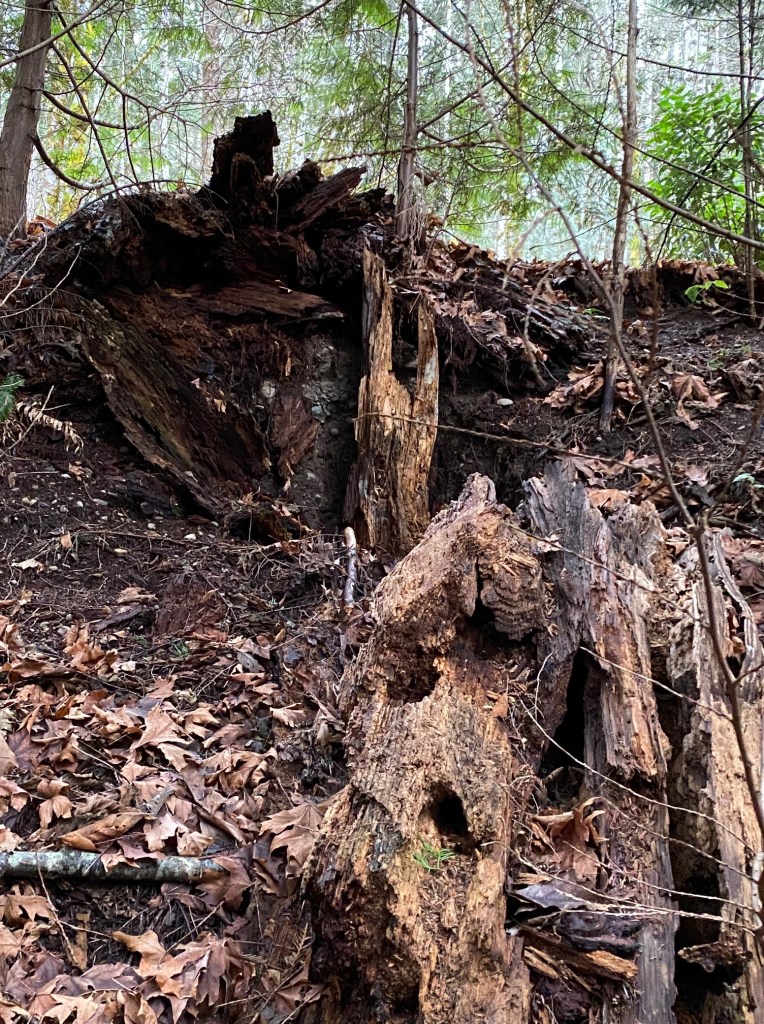
Trees decay, they topple in windstorms, they need topping to prevent branches from falling on power lines. If one needs to be cut, we don’t saw at its base but leave ten to fifteen feet for a natural decay. Over ensuing years, woodpeckers hammer through bark for bugs, and small birds nest in remaining cavities. Nonetheless, even that tall stand will topple, as one cedar did last weekend, its big root pulling up in the collapse and leaving a large cavern on a bank beneath the road. The large hole might risk erosion, because that tree could have held the bank in place. Perhaps the hole will become a winter home for squirrels or raccoons feeling the slow burning warmth of decaying cedar.
Time to leave my bench where I seek philosophy among the trees. There are the day’s promises to keep as I walk uphill from 2021 toward 2022, not to escape the gnarled roots of a pandemic year but to imagine wherein resurrection grows. A short prayer for the expanse of all time to secure understanding as we take root from a disappointing year toward a hopeful new one. Reflection and prayer. I recall Ralph Waldo Emerson’s definition: “Prayer is the contemplation of the facts of life from the highest point of view.”

 Mary's Room With a View