“There is no delight in owning anything unshared.”
— Seneca
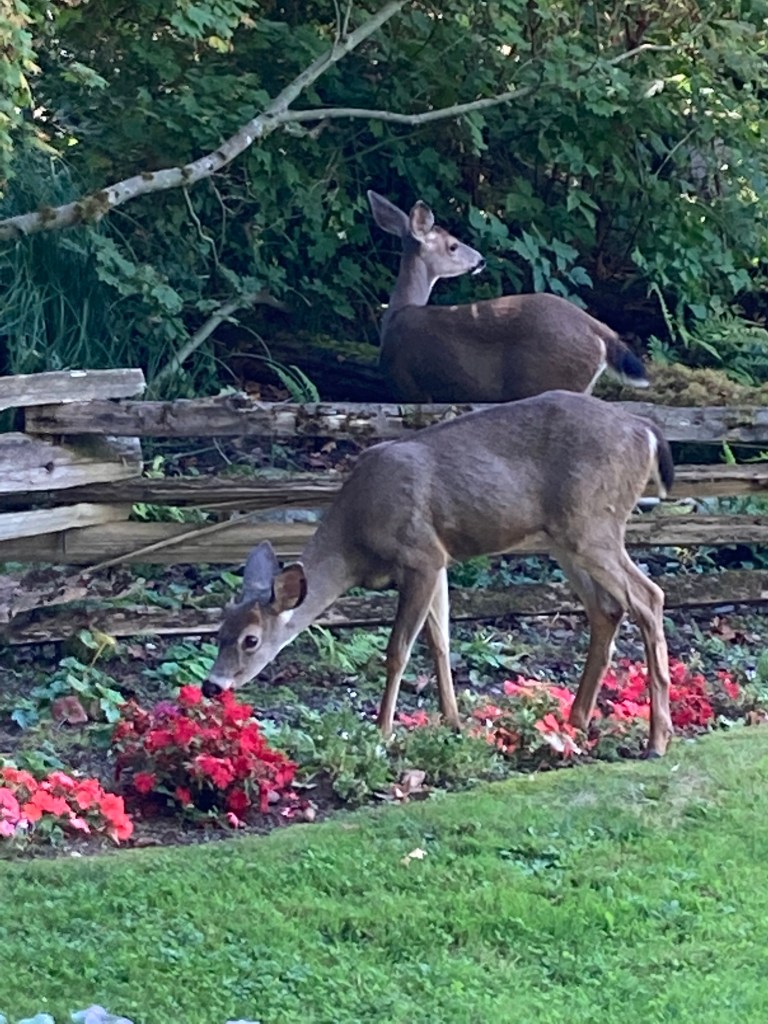
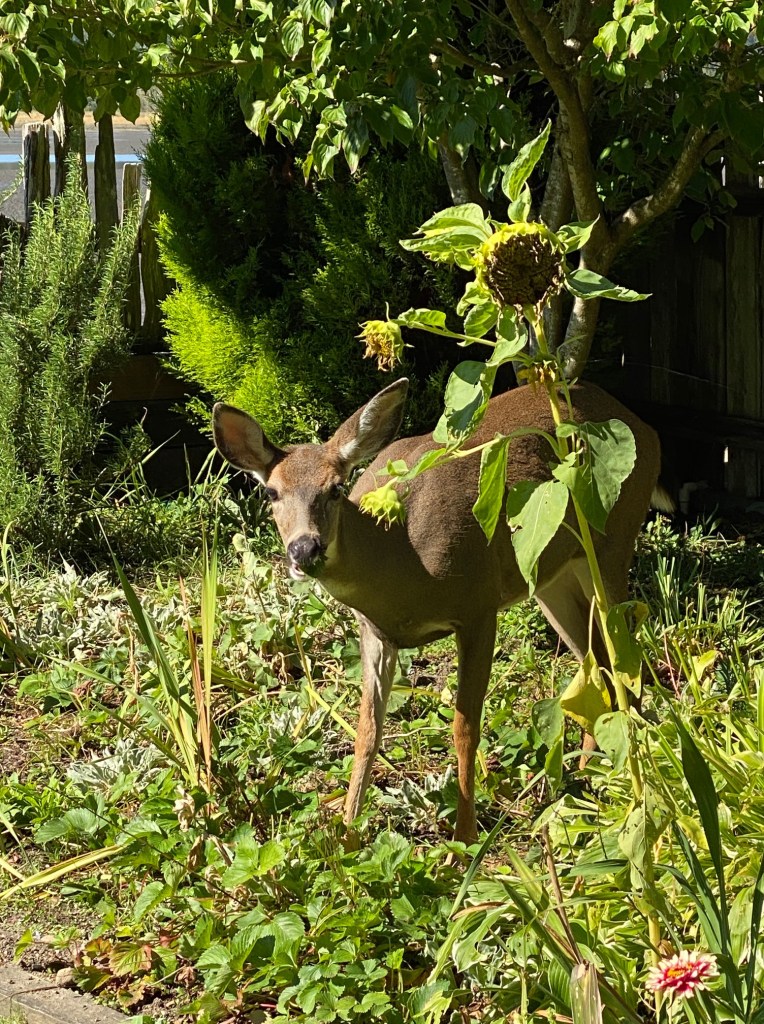
The afternoon opened with two visitors to the front yard. Allan alerted me: “There are a couple of ladies here to see you.” I ran from the back yard to greet who I thought would be neighbors stopping by for a visit. Instead, I spotted two does helping themselves to the impatiens on one side of the front lawn before ambling across the grass to a square of wildflowers adjacent to the crab shack. There they munched through random strawberry plants while I held my I-phone camera close . . . closer . . . Did they not worry the least bit at my presence? Our space had become their space. Who was intruding on whom?
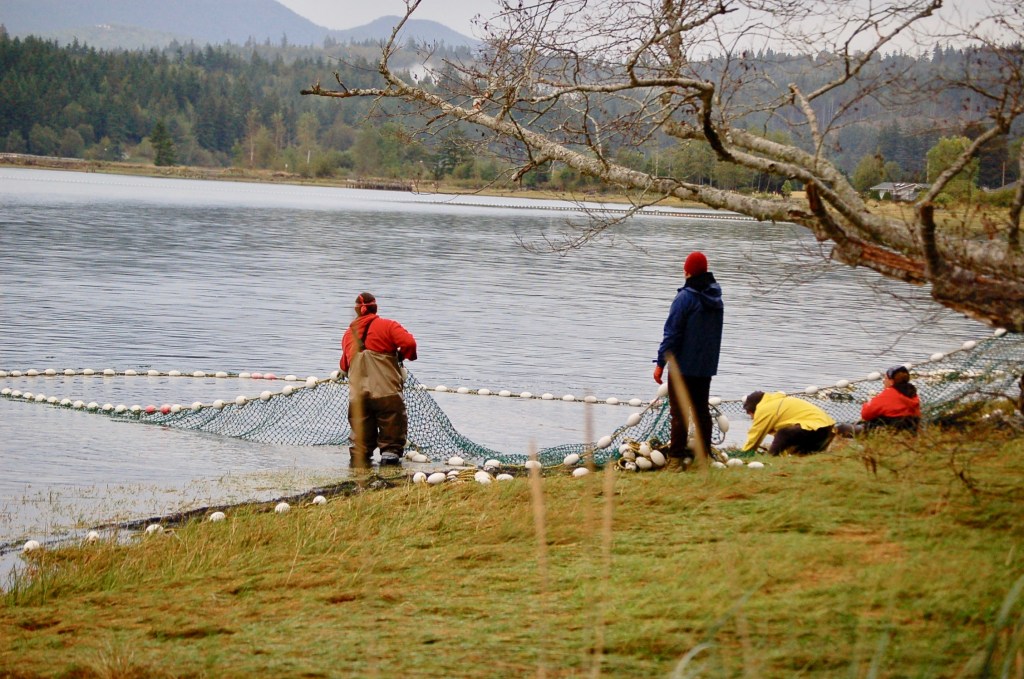
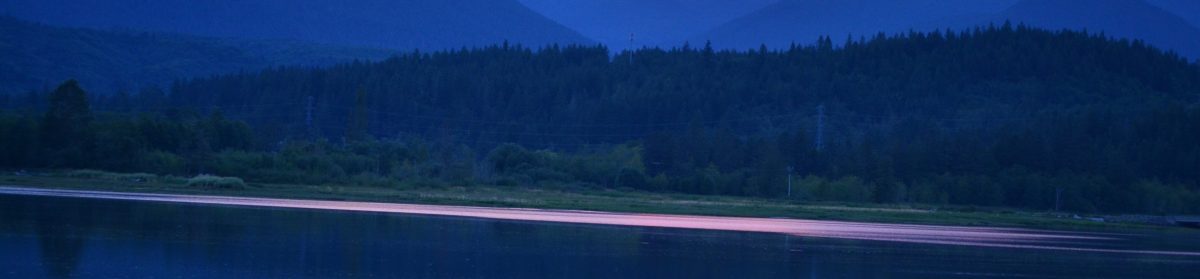
I have been thinking about the notion of shared spaces. Quilcene Bay, for example, I call “my bay” or “our beach” along the bay. My husband, editing my poems, has called attention to possessive pronouns and the superiority they suggest: “our cottage” or “our beach.” Once alerted, I realize the beach is not ours. Early September, when the tribal boats enter the bay to harvest migrating salmon, the native families extend nets and pull the heavy fish-filled harvest to shore as their ancestors did before any colonization by Europeans. Is the beach theirs?
There is so much power in pronouns. Sometimes those possessive pronouns are expressions of identification rather than possession, such as when I introduce a friend as one “who graduated from my high school.” No one assumes that “my” suggests I own the school, but rather I was affiliated with it, much as when I refer to my beach. Yet, possessive pronouns can also be capitalistic little things that suggest ownership and division, one person from another. Years ago, I was enjoying an exhibition of American paintings brought to Seattle by Christie’s Auction House. Standing before a stunning and expensive portrait by John Singer Sargent, I commented to Betty Balcom, who was also admiring the work, “Wouldn’t it be wonderful if that portrait could be ours?”
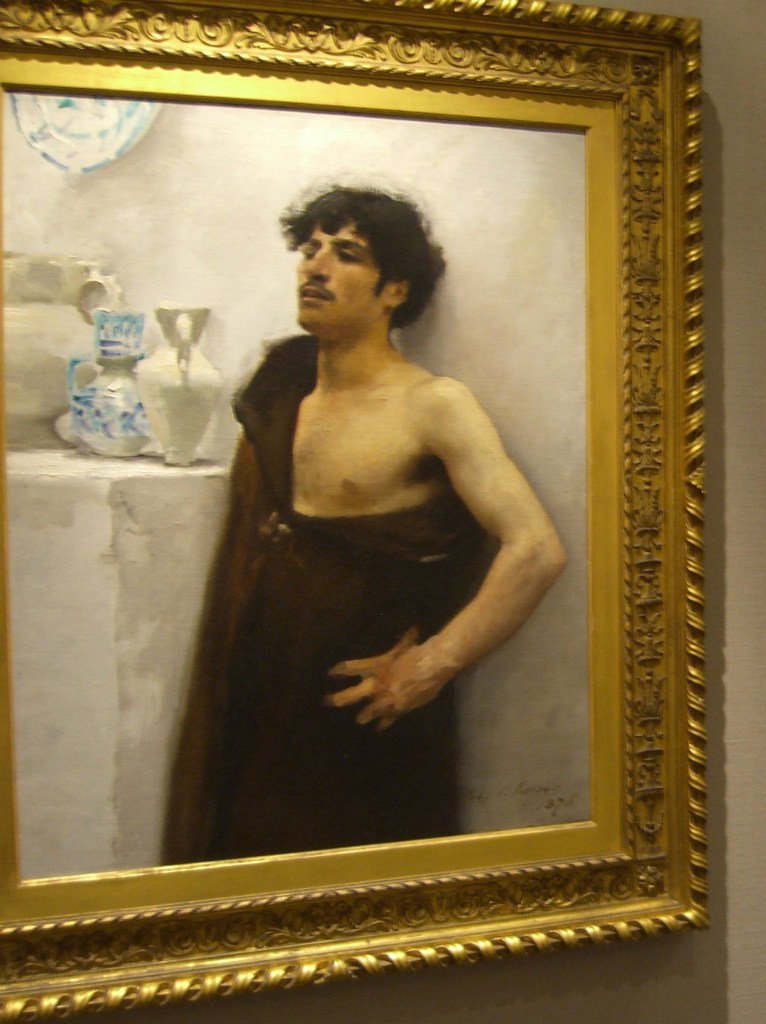
Betty replied, “We never own fine art. We are the caretakers of the work for a period of time.”
Her words resonate with me when I look at the art temporarily hanging in the house. I think of that art not exclusively as “our” collection. Sharing, rather than owning, is not only a privilege, it is also a responsibility. That means keeping those works away from too much heat, moisture or light, conditions that would damage the works.
Sharing can be a challenge. Watch any toddler to discover the evolution of ownership. “Mine” is one of the first words a child uses.
“You need to share your toys with your brother or sister” are among the first words from the child’s parent. Sharing may not be an instinctive behavior. It must be taught.
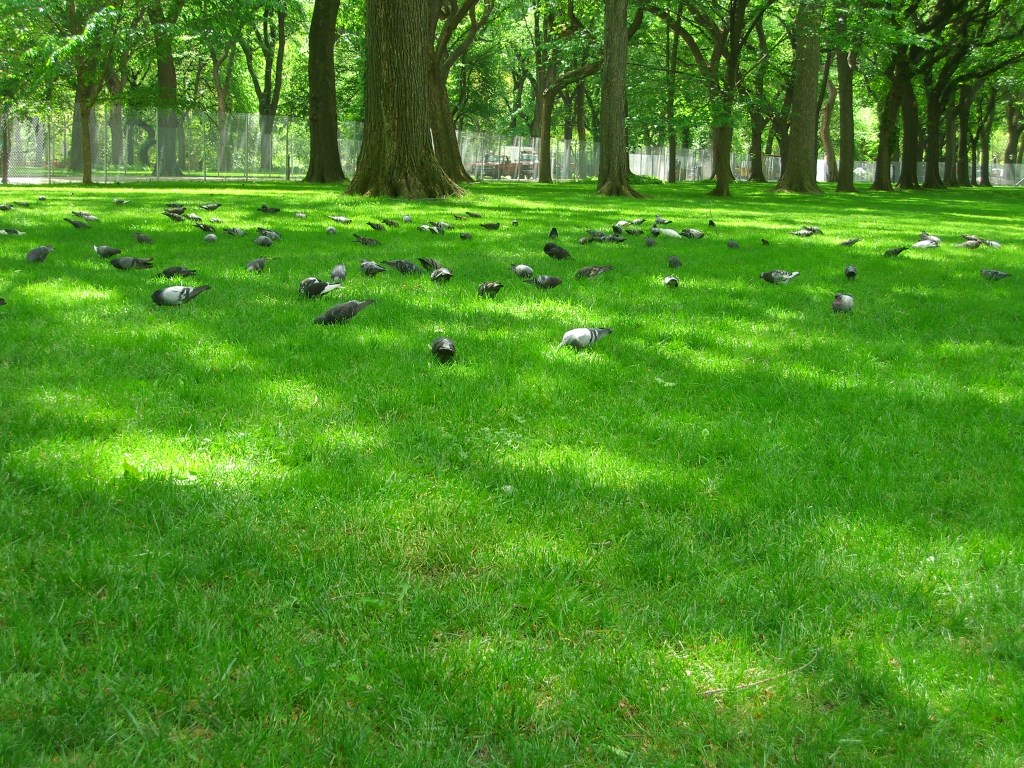
I admit that I struggle with shared space. Over the past few years, tents filled with homeless people cover our city parks and sidewalks. Along with this human habitation comes refuse, some of it drug paraphernalia. The parks and sidewalks are not mine to share, although my taxes contribute to their maintenance. Yet, when I see encampments spread over the parks, even playgrounds adjacent to local schools, I feel threatened and invaded. The proliferation of these communities is a shared concern of our city, county and nation.
Have you noticed in the past year how many organizations begin gatherings with a land acknowledgement? Programs at the Seattle Art Museum and services at churches now begin with the featured speaker acknowledging that the audience is gathered on the traditional lands of indigenous people. Shared Spaces – even when those peoples may not have wished to share their space, have been driven from the space, are, in some places, extinct from the space.
Back to pronouns. I have written a blog about recent changes in pronoun usage, changes that acknowledge the identities of gender, departures from demanding agreement in number between subject and verb so that a person who doesn’t want a binary pronoun can be included in conversation with a gender-neutral pronoun: they rather than he or she. Perhaps we should look at those possessive pronouns as well. The planet is OUR planet, and until we acknowledge the way we share the precious resources of the planet, we are in danger of losing what is mine, what is yours.
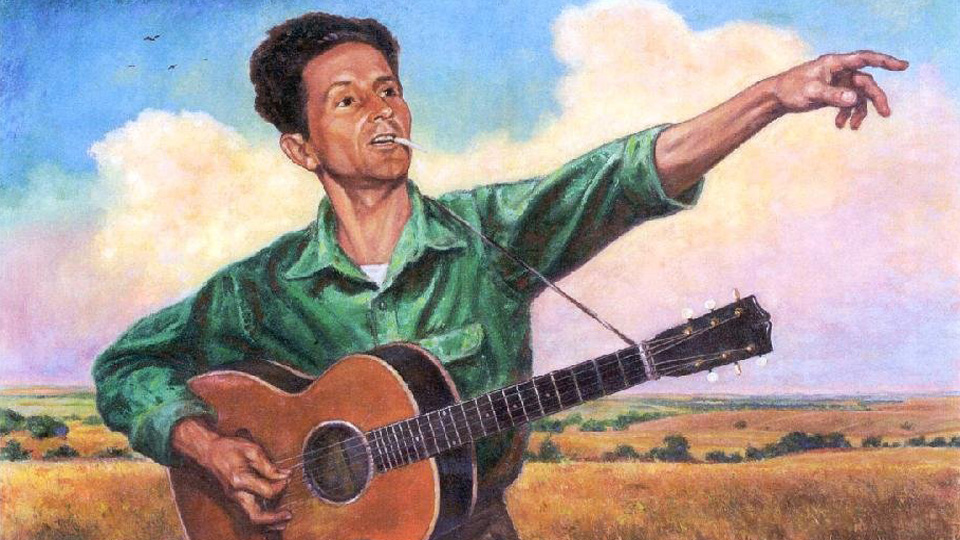
Woody Guthrie sang “This land is your land, and this land is my land.” We all know the tune and the words. Our hearts lift to it as we join in on the chorus. It is a song where “my” and “yours” are synonymous with “ours.”
I didn’t plant those flowers or strawberries for the deer who found them delectable. Yet, seeing them quietly enjoying my produce makes me smile. Without them, I have more greenery. With them feeding there, I have beauty and that peaceful aura of deer, in their graceful meandering.

 Mary's Room With a View