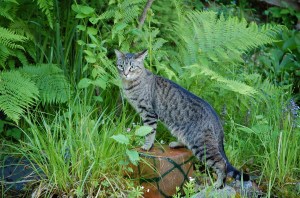
Mondays, before leaving Quilcene Bay to return to Seattle, I take my cottage journal on our morning Kitty Walk.

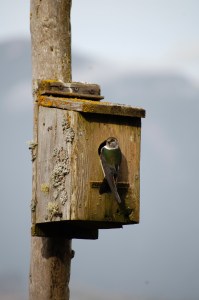
Pausing at one of the benches on the way I record the date and what happened worth noticing that weekend – the first sighting of violet green swallows investigating the birdhouses, or rototilling our garden and planting the first cool-crop seeds.
Most years, I don’t look back through the journal to see if nature progresses “on schedule.” However, this year seems so out-of-sync, I flipped back a calendar year in search of normalcy. This has been a cool April. I did not plant arugula or potatoes by the end of March, as I did other years. Am I waiting for warmth? If you read the instructions on seed packets, most insist soil temperatures must reach 55 degrees for germination. In the Pacific Northwest, that would be summer expected in spring. I substitute light for heat, counting on the lengthening of daylight to summon growth.
 In any season we hear advice to slow down, pause, notice life unfolding. But like a stern mother whose advice wasn’t heeded, Mother Nature and the Coronavirus have forced us to narrow the circumference of our activity, making time for noticing. In these weeks, the media has elevated poetry to the popularity of rock music. Poets are known to take notice. Forced to touch each other only through cyberspace, we email to our friends, poems, words of wisdom, images of sunrises and blossoms.
I am fortunate to have a wooded acre and a small vegetable garden to notice in my forced slowness. Others within small, city apartments may have only a potted violet on a windowsill to watch nature unfold. For the first time, their meditation may center on the endearing way their child butters a slice of bread.
This day, April 25, 2020, I photograph one of many ferns unfurling. How otherworldly their serpentine fronds. 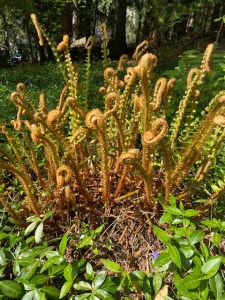 For weeks I have passed tight-fisted knuckles in their hearts, for in late winter I had pruned last year’s large, browning fronds. Regardless of my watching, they uncurl in their own time; but I also have last April’s memory of supple green ferns spreading across the hill. Almost May 1st, I am comforted, looking forward to where their funny, twisting dance is going.
Planting in the Year of a Pandemic
Last April, arugula greened
in fine lines, while spinach and lettuce
followed in their own leafy time.
Make a record of planting
so next year
if frost grips the soil
and black earth stares blankly back
in a year of illness,
you can look back
and say I had seeded by now.
Open the packets of promise.
If you have forgotten
the earth at fifty-five degrees,
imagine then the light
beckoning longer days,
the sun pushing gently against dusk.
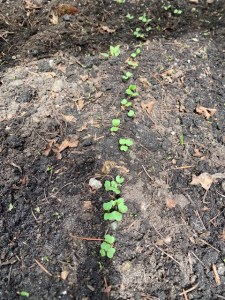
In the garden soil
make a clean V in the shape
of geese migrating over the bay,
then mound the chilled dirt
like a dike in Amsterdam.
Drop each seed a safe distance
from the one beside it.
Cover them with one inch
of humus you enriched
with compost from summer grass.
Pat the seeded earth
with your own warm hands.

 Mary's Room With a View
This is wonderful, Mary. I savored your words. They remind me that life still goes on: birds sing, plants grow and kitties roam, inspite of this devastating time. Thank you.
I’m envious of your lush vegetable garden.
LikeLike
Since I am now living in a compound with many family members who are farmers, your journal entry makes sense to me in a way that it would not have last year. With three parcels of land combined we have about an acre – lots of room for flowers, vegetables, and fruit trees. I only take credit for getting six tomato plants started. The rest of the plantings, thankfully, are in in the hands of the experts, and your poem beautifully captures tasks they are undertaking.
LikeLike
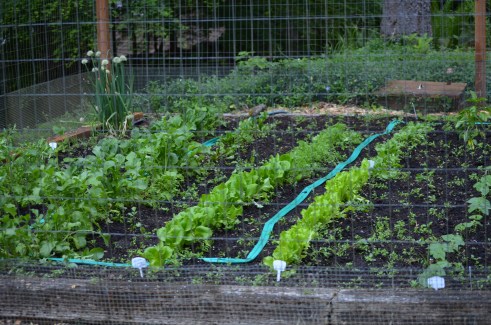
There is something very soothing about these words along with the photo of your garden in full bloom. The promise of summer is healing.
LikeLike